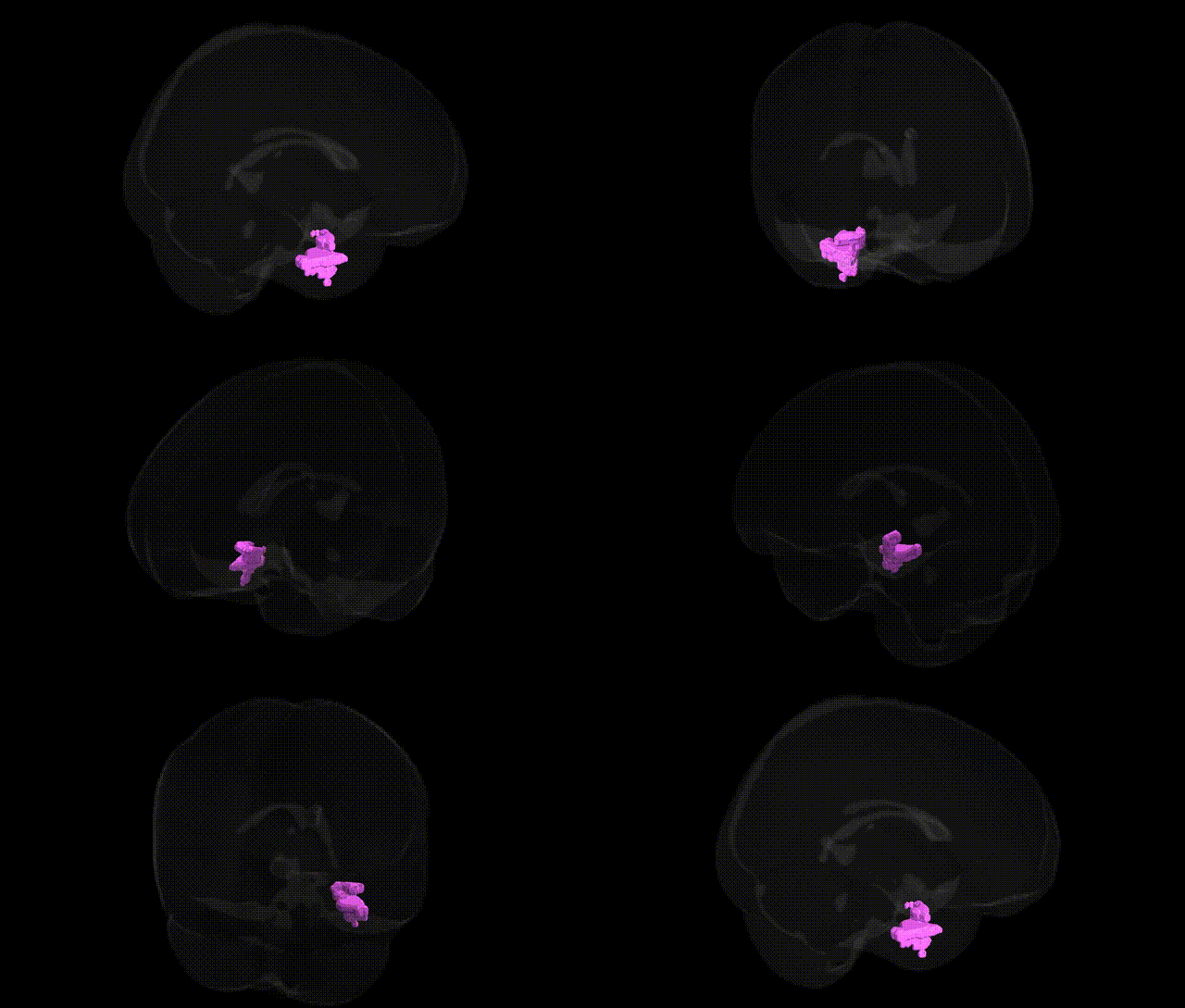
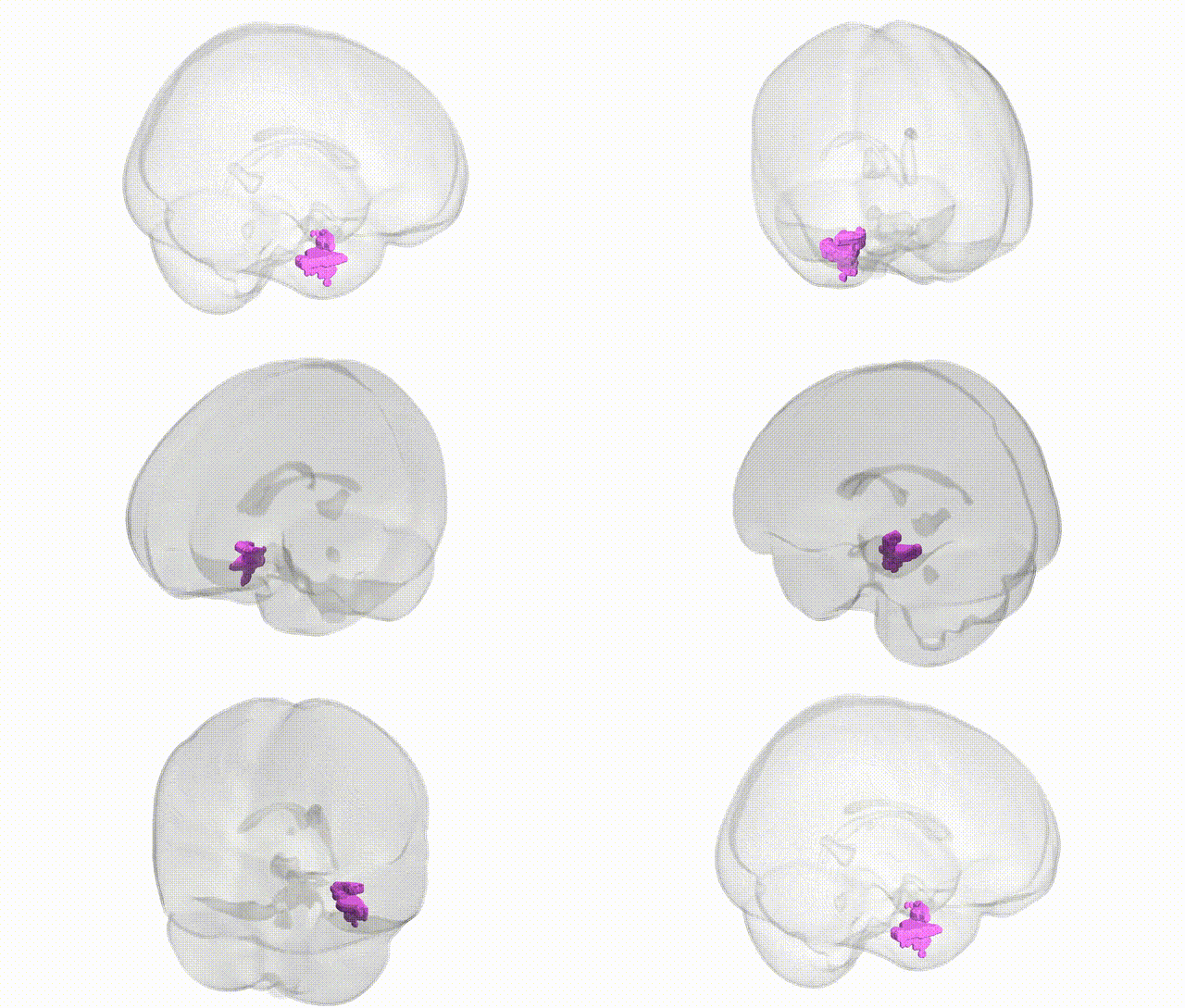
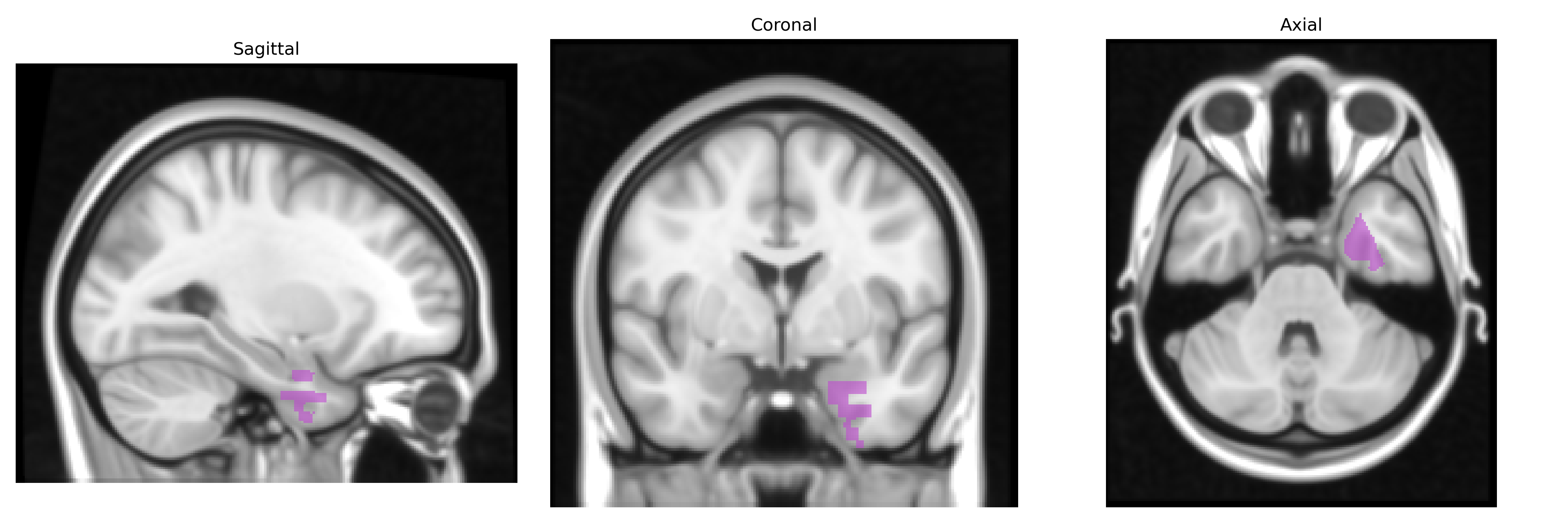
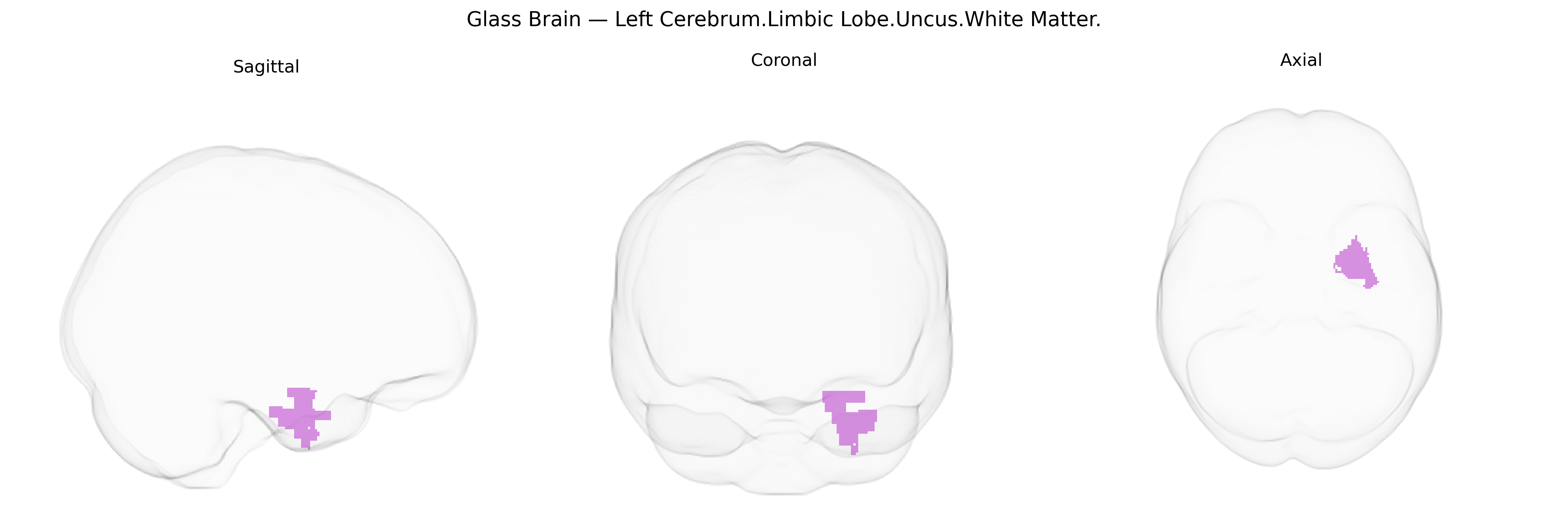
The bilateral Left Cerebrum.Limbic Lobe.Uncus.White Matter corresponds to the deep myelinated fiber tracts within the uncus, a medial protrusion of the anterior parahippocampal gyrus that forms part of the limbic lobe on the ventromedial temporal surface. These white matter pathways include short association fibers linking the uncus with adjacent mesial temporal structures and longer connections integrating olfactory, limbic, and hippocampal circuitry, thereby contributing to functions such as olfaction, emotional processing, and memory encoding. The uncus lies adjacent to the amygdala and hippocampal formation and is clinically notable because of its involvement in medial temporal lobe epilepsy and its tendency to herniate medially under increased intracranial pressure. There is no direct link for this specific white matter label; the closest related cortical/limbic structure is the Uncus.
Genetic associations specific to the bilateral left cerebrum limbic lobe uncus white matter, as defined in the Talairach 1 mm atlas, are not well characterized at the fine-grained regional level, but converging evidence from imaging genetics and GWAS of related medial temporal and limbic structures (notably parahippocampal gyrus, amygdala-hippocampal region, and adjacent white matter tracts such as the uncinate fasciculus) implicates several loci and pathways; variants in APOE (especially ε4) and CLU, PICALM, and BIN1 have been associated with white matter microstructural changes and neurodegeneration in medial temporal/limbic networks relevant to Alzheimer’s disease, while schizophrenia and bipolar disorder GWAS highlight polygenic influences (e.g., CACNA1C, ZNF804A, MIR137-related loci) that correlate with altered limbic white matter integrity and connectivity, including tracts linking the uncus with orbitofrontal and anterior temporal regions. Large-scale imaging-GWAS consortia (e.g., ENIGMA, UK Biobank) report that common variants in genes involved in axonal guidance, myelination, and neurodevelopment (such as NTRK2, MAG, and other oligodendrocyte- and myelin-related genes) contribute to interindividual variability in temporal lobe and limbic white matter fractional anisotropy and volume, traits that are in turn associated with risk for major depressive disorder, anxiety, psychosis, and cognitive performance; however, most findings are reported at the level of broader temporal/limbic white matter regions rather than the uncus specifically, and current genetic evidence should be interpreted as implicating networks and tracts encompassing the uncus rather than a uniquely defined “uncus white matter” locus.
Overview generated by GPT-4o (2026).
Region ID: 25
Hemisphere: bilateral
Atlas: Talairach labels 1mm
Full Quality Version: Download MP4
Full Quality Version: Download MP4
Wali Sidiqyar*, Gaurav Rudravaram*, Elyssa M. McMaster, Trent M. Schwartz, Adam M. Saunders, Kurt G. Schilling, Bennett A. Landman "Introducing SPINS: A Shared Public Visualization Library of Neuroanatomical Structures." Medical Imaging with Deep Learning- short paper
This resource is licensed under CC0 1.0 Universal (Public Domain).