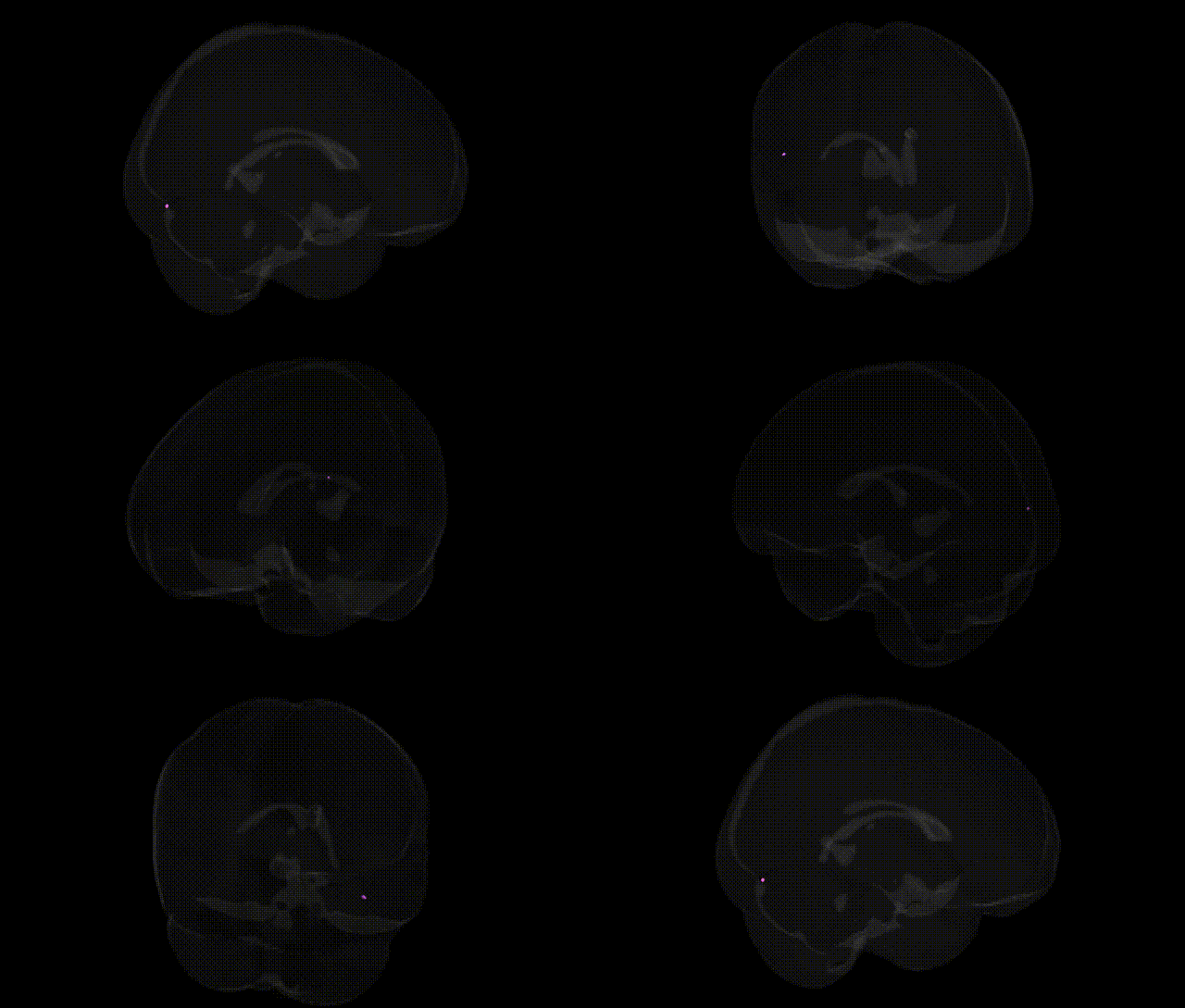
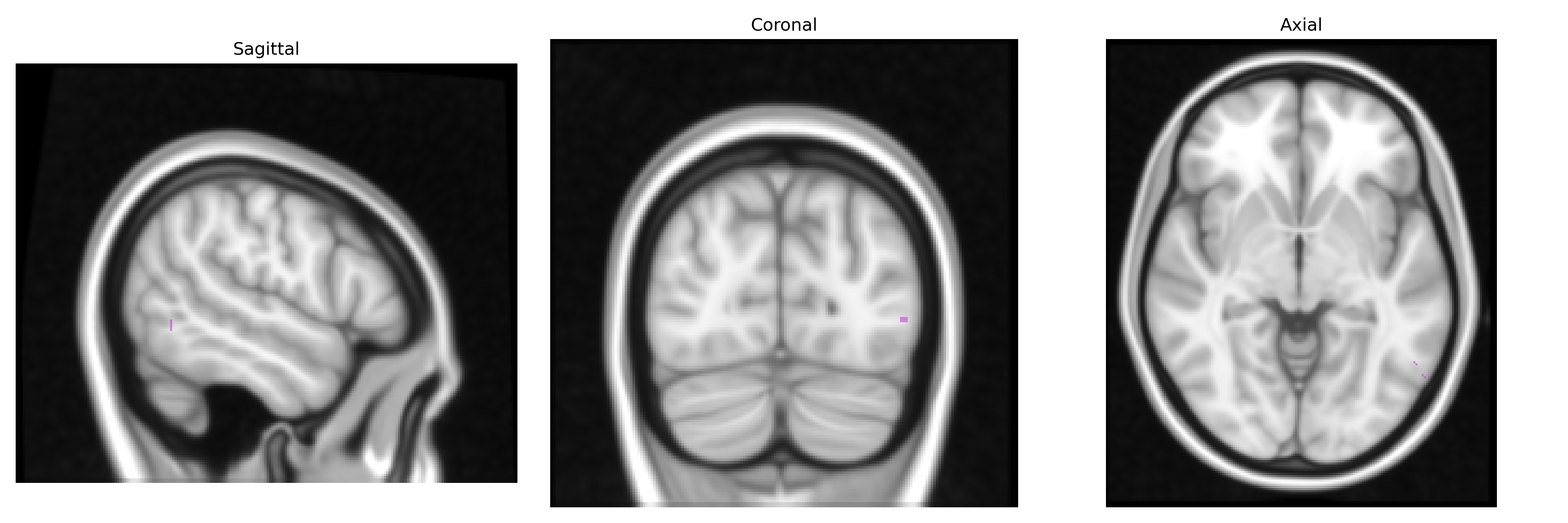
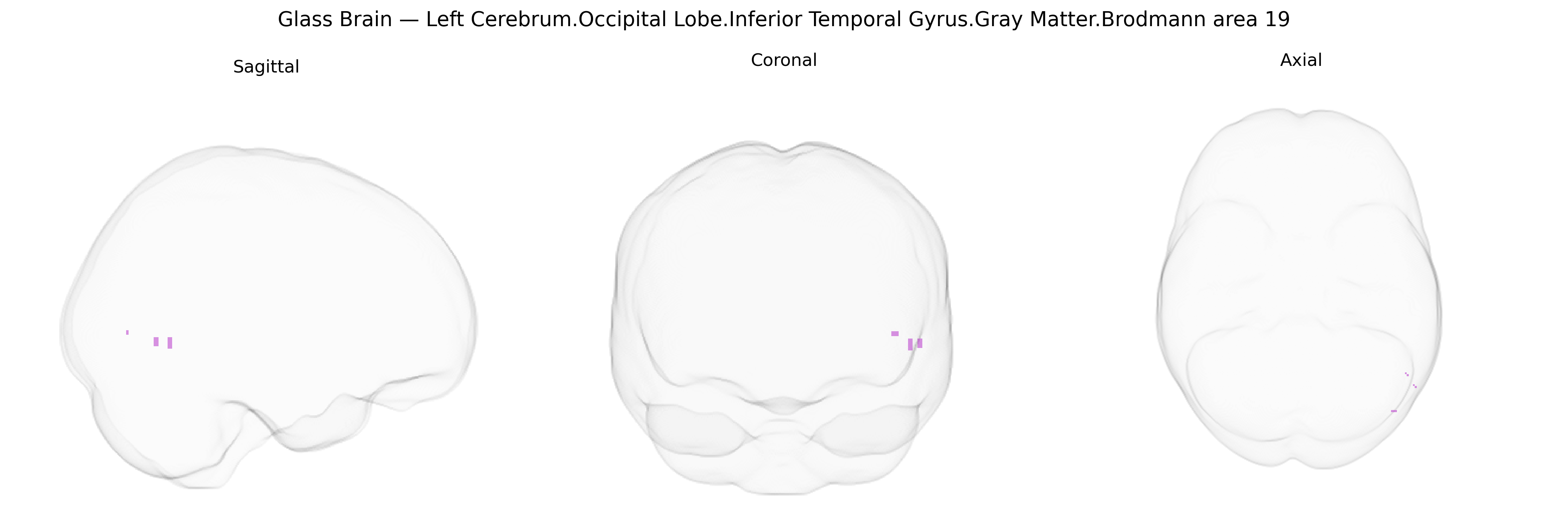
The bilateral Left Cerebrum.Occipital Lobe.Inferior Temporal Gyrus.Gray Matter.Brodmann area 19 corresponds to higher-order visual association cortex situated at the junction of the occipital and inferior temporal regions, integrating complex visual information beyond primary and secondary visual areas. As part of Brodmann area 19, this region participates in the analysis of form, motion, color, and object features, contributing to object recognition and visual pattern processing through extensive connections with other occipital, temporal, and parietal association areas. Neuronal populations here receive convergent input from earlier visual areas (BA17 and BA18) and relay processed information to ventral temporal regions involved in category-specific recognition, supporting visual perception, visual memory, and aspects of visually guided behavior. There is no direct link for this exact composite Talairach label; a related structure is Brodmann area 19.
Genetic associations with the bilateral left occipital lobe inferior temporal gyrus (Brodmann area 19) primarily emerge from imaging genetics and GWAS of brain structure, functional networks, and visual/semantic processing traits rather than from this Talairach-defined parcel specifically. Large-scale GWAS of cortical thickness and surface area (e.g., ENIGMA, UK Biobank) have identified variants in and near genes involved in neurodevelopment and synaptic function—such as MIR137, TBR1, GRIN2B, and other glutamatergic and axon guidance genes—that influence occipital and ventral temporal morphology, including lateral occipital and inferior temporal regions overlapping BA19. Polygenic risk for schizophrenia, autism spectrum disorder, and major depressive disorder has been associated with structural and functional alterations in occipito-temporal cortex, including BA19, consistent with broader genetic effects on visual association and high-level perceptual networks. Variants near genes implicated in visual cognition and face/word recognition networks (e.g., those affecting fusiform and adjacent inferior temporal regions) have been linked to individual differences in reading ability, face processing, and related traits, which functionally recruit BA19 and its neighboring visual association areas. GWAS of resting-state connectivity and visual network organization have also implicated common variants in synaptic plasticity and neurodevelopmental pathways that modulate connectivity between occipital BA19 and temporal association cortices. However, no major study has isolated a single gene uniquely tied to the Talairach “Left Cerebrum.Occipital Lobe.Inferior Temporal Gyrus.Gray Matter.Brodmann area 19” label; instead, genetic influences on this region reflect shared polygenic architectures affecting occipital–temporal visual association systems more broadly.
Overview generated by GPT-4o (2026).
Region ID: 421
Hemisphere: bilateral
Atlas: Talairach labels 1mm
Full Quality Version: Download MP4
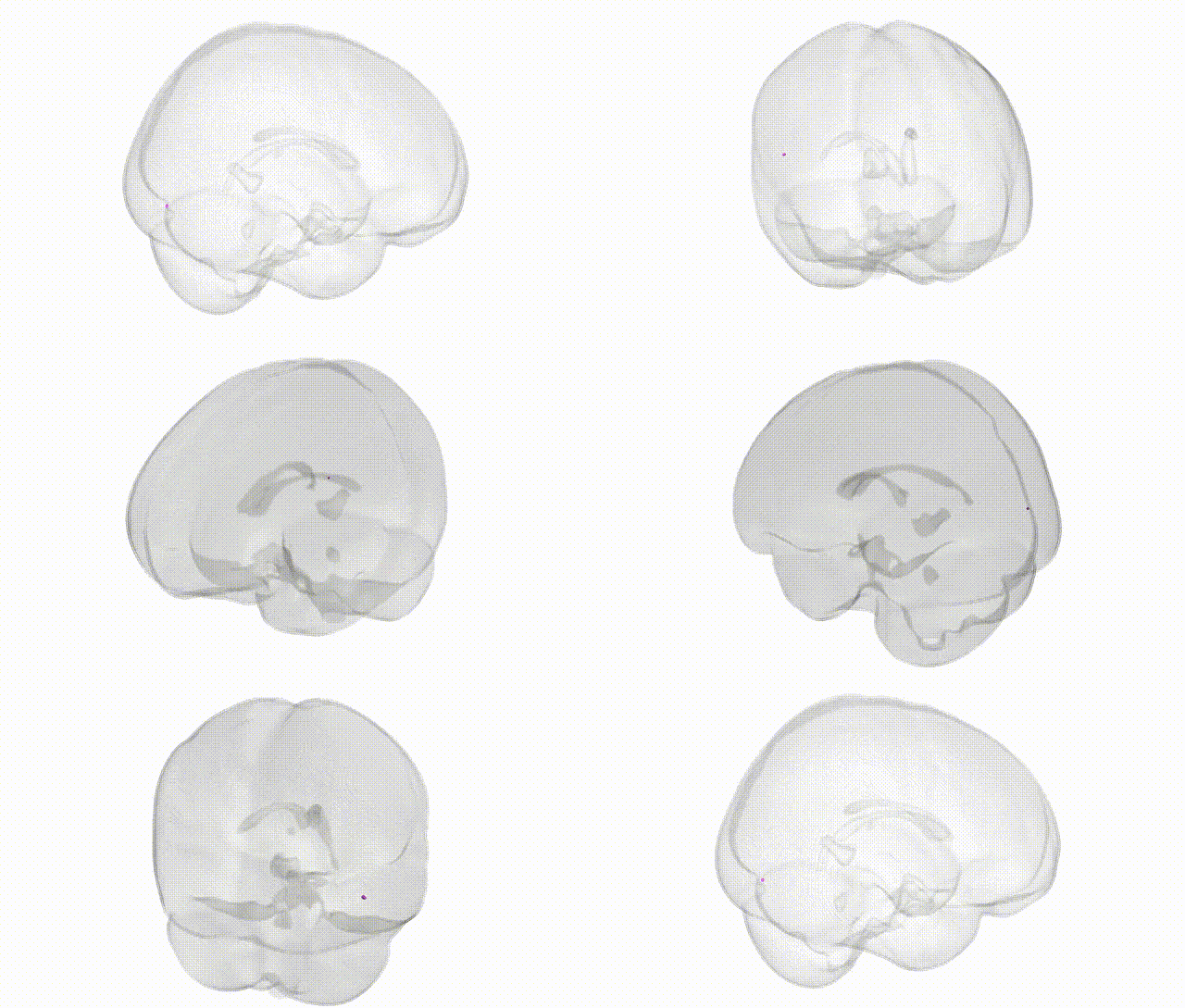
Full Quality Version: Download MP4
Wali Sidiqyar*, Gaurav Rudravaram*, Elyssa M. McMaster, Trent M. Schwartz, Adam M. Saunders, Kurt G. Schilling, Bennett A. Landman "Introducing SPINS: A Shared Public Visualization Library of Neuroanatomical Structures." Medical Imaging with Deep Learning- short paper
This resource is licensed under CC0 1.0 Universal (Public Domain).