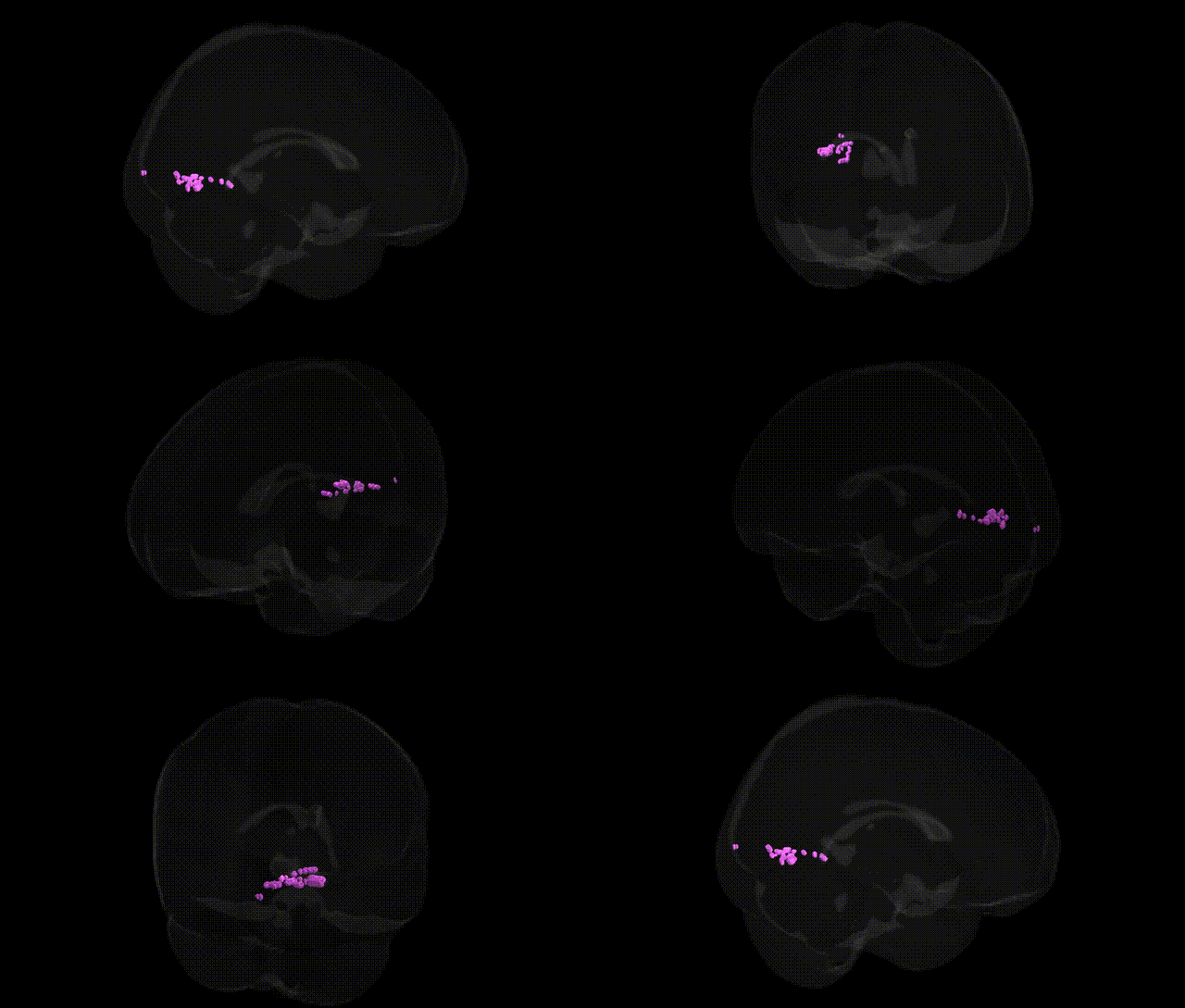
The bilateral Left Cerebrum.Occipital Lobe.Lingual Gyrus.Gray Matter corresponds to cortical gray matter within the lingual gyrus of the occipital lobe, a medial occipitotemporal structure that extends along the ventral surface of the occipital region and continues anteriorly toward the fusiform gyrus. This region is heavily involved in early and mid-level visual processing, including analysis of complex visual patterns, color, and form, and contributes to higher-order functions such as visual memory, word and letter recognition, and aspects of scene and face perception as part of the ventral “what” visual pathway. It receives inputs from primary and secondary visual cortices and participates in networks supporting reading and visual imagery, with functional segregation along its posterior–anterior axis for progressively more abstract visual representations.
The bilateral left cerebrum occipital lobe lingual gyrus gray matter (Talairach 1 mm) is a ventral occipital region implicated in visual processing (including complex shape, word-form, and scene perception), and genetic associations largely emerge from imaging-genetics and GWAS of cortical morphology and visual traits. Large-scale brain MRI GWAS (e.g., ENIGMA and UK Biobank–based studies) have identified SNP-based heritability and multiple loci influencing occipital and ventral visual cortex thickness and surface area, with variants in pathways related to neuronal development, axon guidance, and synaptic signaling (such as genes in Wnt signaling, cell-adhesion molecules, and calcium-channel genes) contributing to interindividual differences in lingual/occipital gray matter volume and surface area. Polygenic risk for schizophrenia, bipolar disorder, major depression, and autism spectrum disorder has been associated with structural alterations (typically reduced gray matter or altered thickness) in the lingual and adjacent ventral occipital regions, suggesting shared genetic architectures that affect early visual and higher-order perceptual systems. GWAS of visual acuity and refractive error (e.g., myopia) also implicate genes involved in visual pathway development and occipital cortex structure, consistent with heritable variation in primary and secondary visual areas that include the lingual gyrus. Additionally, genetic variants associated with dyslexia and other reading-related traits have been linked to functional and structural differences in the left ventral occipitotemporal/lingual region, often interpreted as part of a genetically influenced reading network, while Alzheimer’s disease and other neurodegenerative polygenic risks show weaker but detectable associations with atrophy patterns that include medial occipital cortex.
Overview generated by GPT-4o (2026).
Region ID: 541
Hemisphere: bilateral
Atlas: Talairach labels 1mm
Full Quality Version: Download MP4
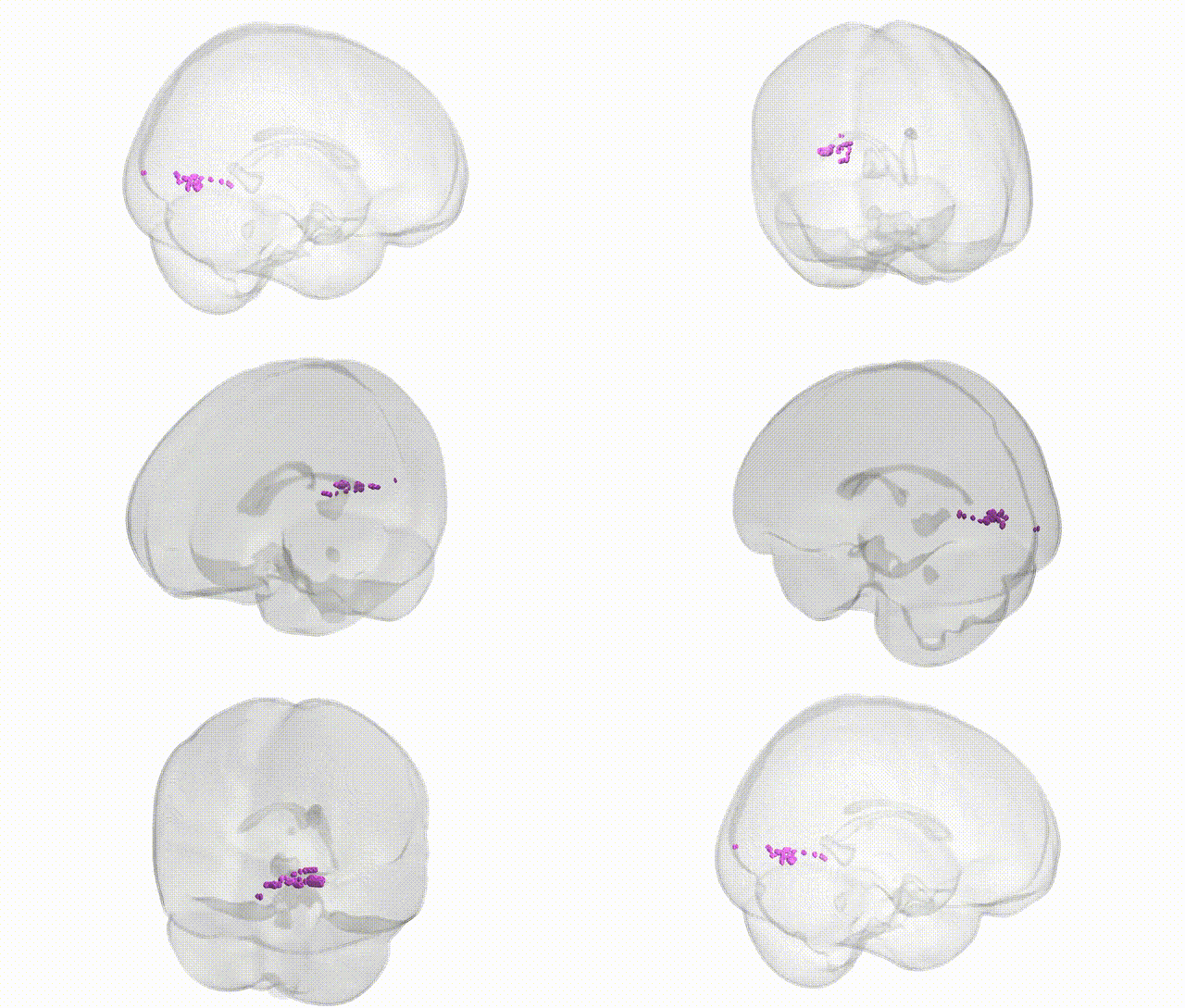
Full Quality Version: Download MP4
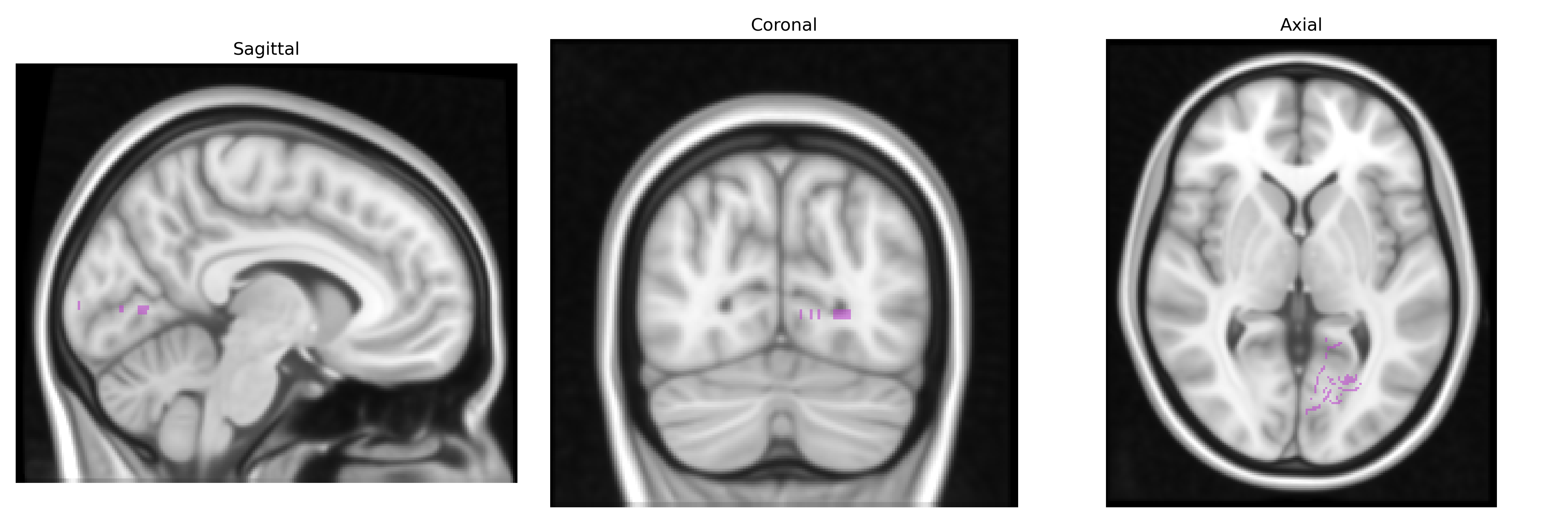
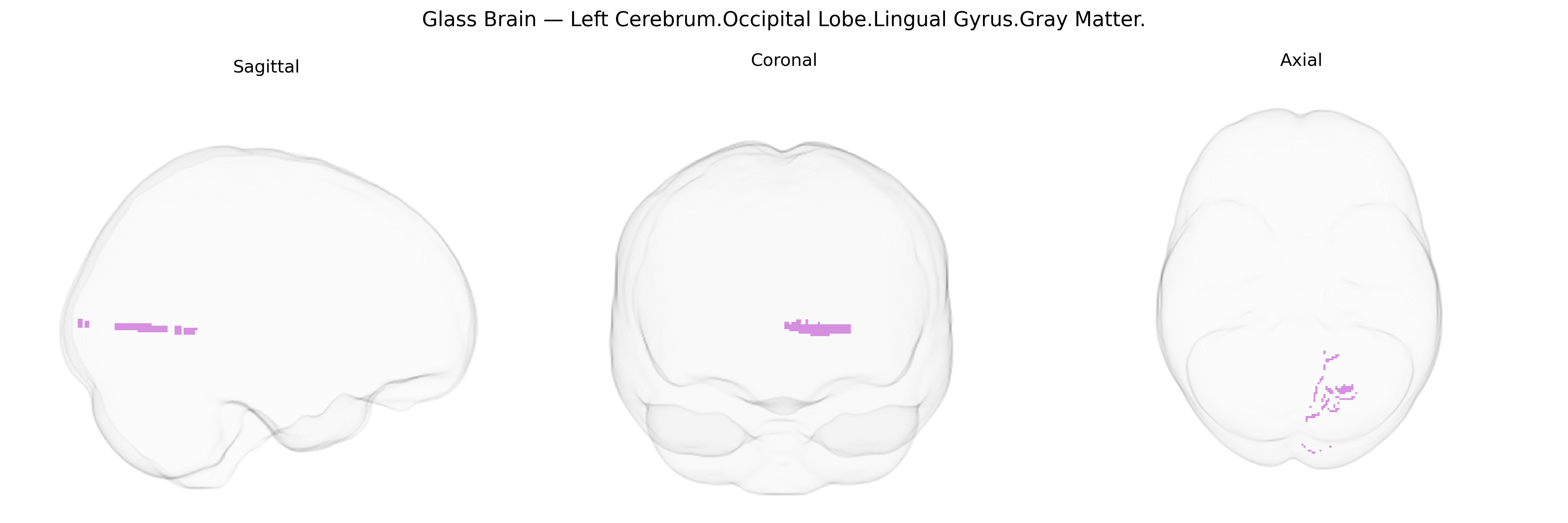
Wali Sidiqyar*, Gaurav Rudravaram*, Elyssa M. McMaster, Trent M. Schwartz, Adam M. Saunders, Kurt G. Schilling, Bennett A. Landman "Introducing SPINS: A Shared Public Visualization Library of Neuroanatomical Structures." Medical Imaging with Deep Learning- short paper
This resource is licensed under CC0 1.0 Universal (Public Domain).