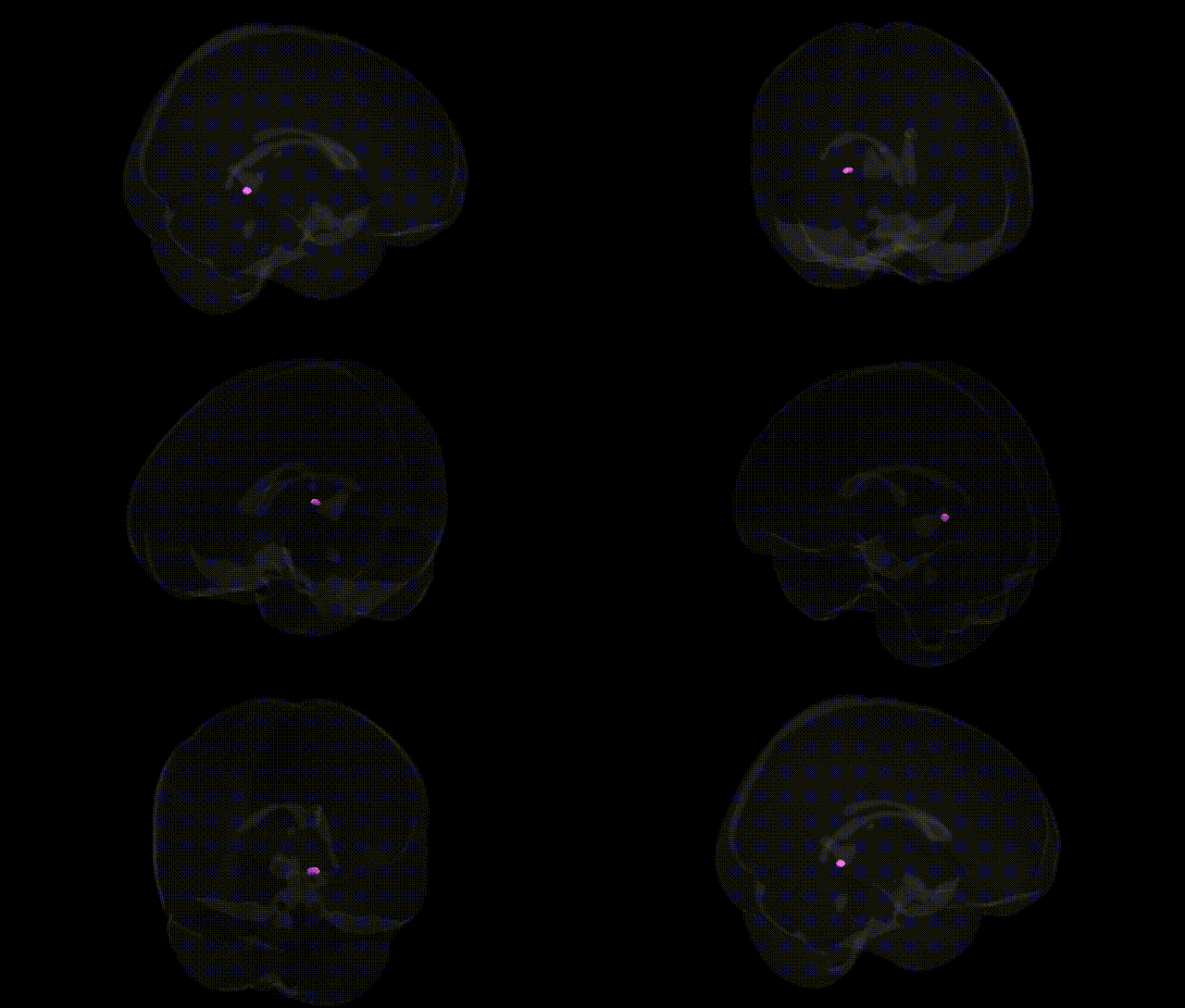
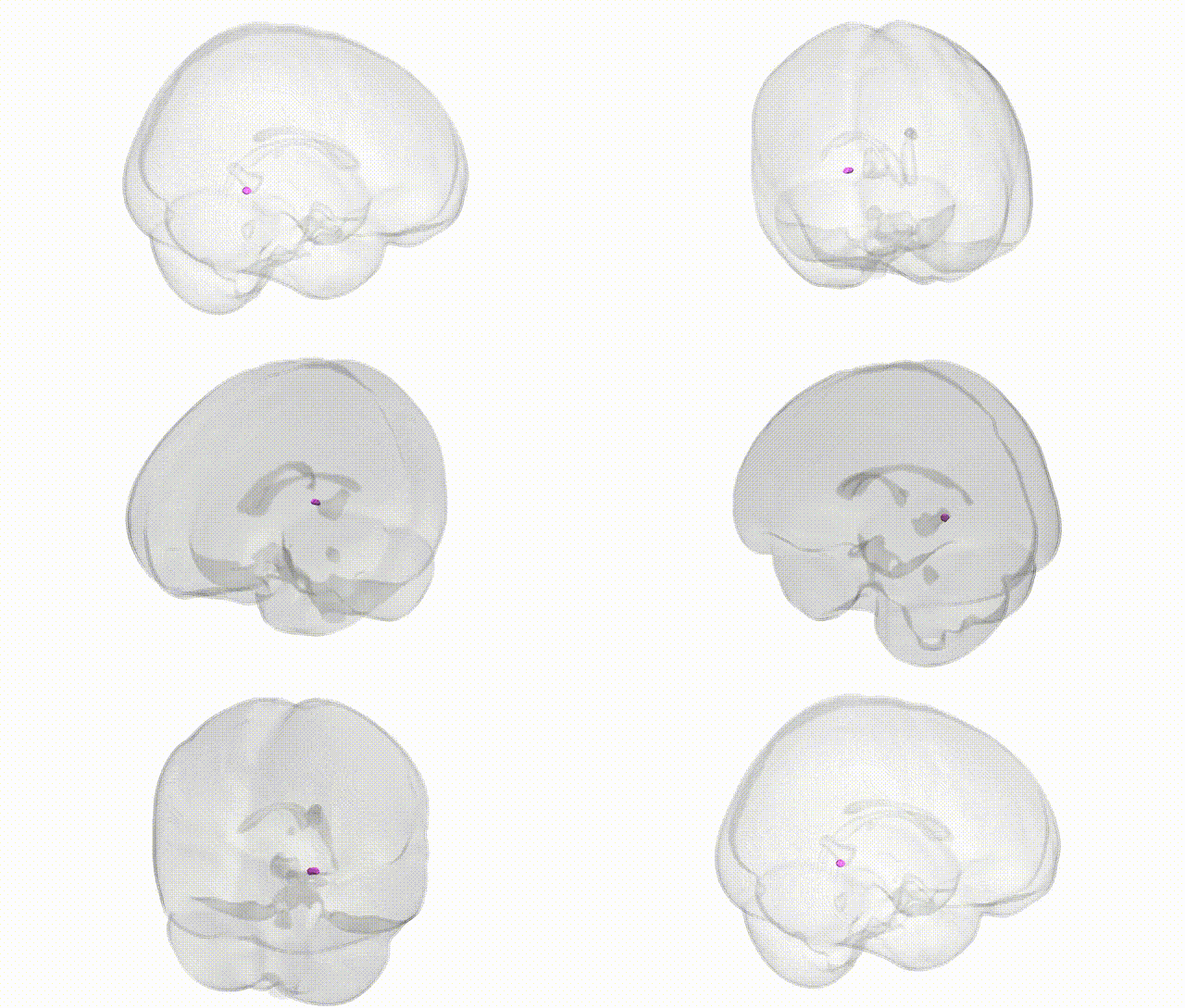
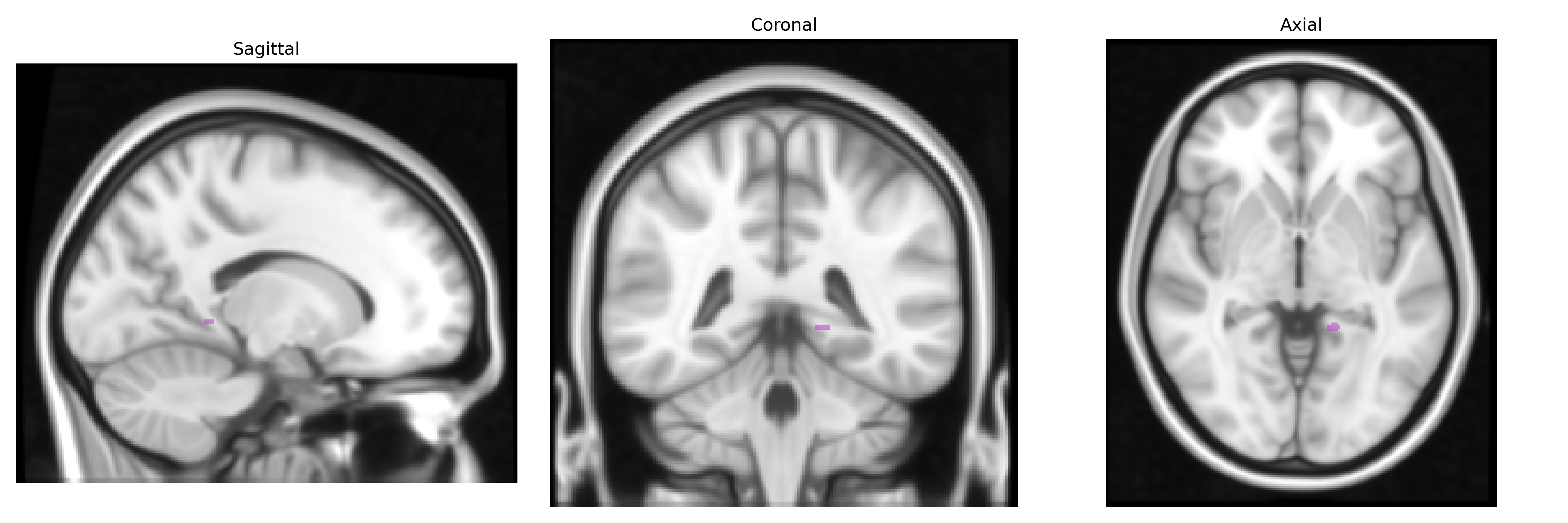
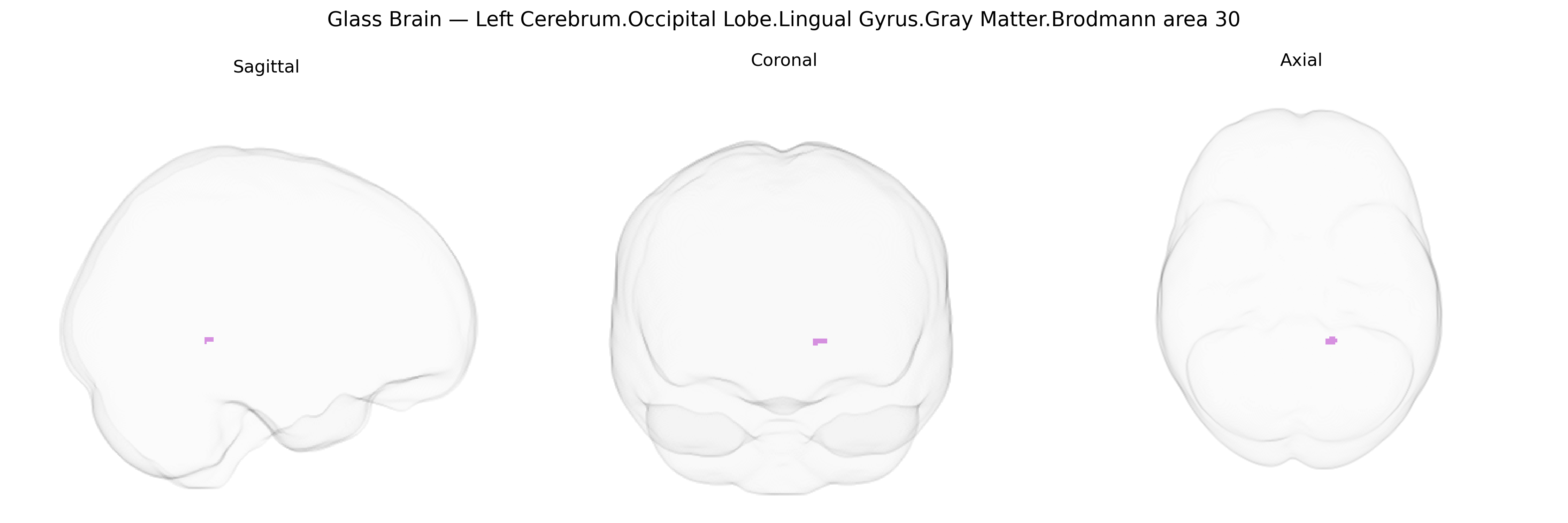
The bilateral Left Cerebrum.Occipital Lobe.Lingual Gyrus.Gray Matter.Brodmann area 30 corresponds to a retrosplenial cortical sector located in the medial occipitotemporal region, embedded within the lingual gyrus and extending toward the posterior cingulate/retrosplenial cortex. Brodmann area 30 is part of the limbic-associated cortex and is implicated in episodic memory, visuospatial processing, and contextual scene analysis, often functioning within the broader default mode and memory-related networks. Its gray matter cytoarchitecture is characterized by a relatively thin, granular cortex with transitions toward adjacent visual and cingulate areas, receiving multimodal input from both visual association regions and limbic structures such as the hippocampal formation. There is no direct link for Brodmann area 30 in the lingual gyrus; a related structure is Retrosplenial cortex.
The bilateral left occipital lingual gyrus gray matter in Brodmann area 30, as defined in the Talairach 1 mm atlas, has been implicated in genetic and imaging‑genetics studies primarily through its roles in visual processing, memory, and affective functions, though direct, region‑specific genetic associations are relatively sparse and usually arise from broader occipital, medial occipitotemporal, or cingulate network analyses. GWAS and large imaging consortia (e.g., ENIGMA, UK Biobank) have reported associations between occipital and lingual gyrus cortical thickness or volume and common variants in genes involved in neurodevelopment, synaptic function, and axonal guidance (such as variants near HMGA2, MIR2113, and other loci influencing global or posterior cortical morphology), indicating polygenic influences on this region’s structure. Lingual gyrus involvement in GWAS of cognitive traits (e.g., general intelligence, reading and language skills, and visual memory) is typically mediated through imaging‑genetics pathways, where polygenic scores for cognitive ability or educational attainment correlate with lingual gyrus gray‑matter measures rather than single variants being uniquely specific to BA30. In psychiatric genetics, structural and functional alterations of the lingual/occipital region have been repeatedly noted in schizophrenia, bipolar disorder, major depression, and PTSD, and these alterations often track with polygenic risk scores for these disorders, suggesting shared genetic architectures that affect posterior cortical circuits; however, no single risk gene is uniquely tied to BA30. In neurodegenerative and demyelinating disorders, such as Alzheimer’s disease and multiple sclerosis, occipital and lingual gyrus atrophy or lesion load correlate with risk variants in APOE (particularly ε4) and HLA loci, respectively, again reflecting network‑level rather than region‑exclusive genetic effects. Overall, genetic influences on the left lingual gyrus BA30 region appear highly polygenic and pleiotropic, with associations emerging from distributed cortical genetic architectures that affect visual, memory, and affective networks, rather than from specific genes confined to this anatomical label.
Overview generated by GPT-4o (2026).
Region ID: 481
Hemisphere: bilateral
Atlas: Talairach labels 1mm
Full Quality Version: Download MP4
Full Quality Version: Download MP4
Wali Sidiqyar*, Gaurav Rudravaram*, Elyssa M. McMaster, Trent M. Schwartz, Adam M. Saunders, Kurt G. Schilling, Bennett A. Landman "Introducing SPINS: A Shared Public Visualization Library of Neuroanatomical Structures." Medical Imaging with Deep Learning- short paper
This resource is licensed under CC0 1.0 Universal (Public Domain).