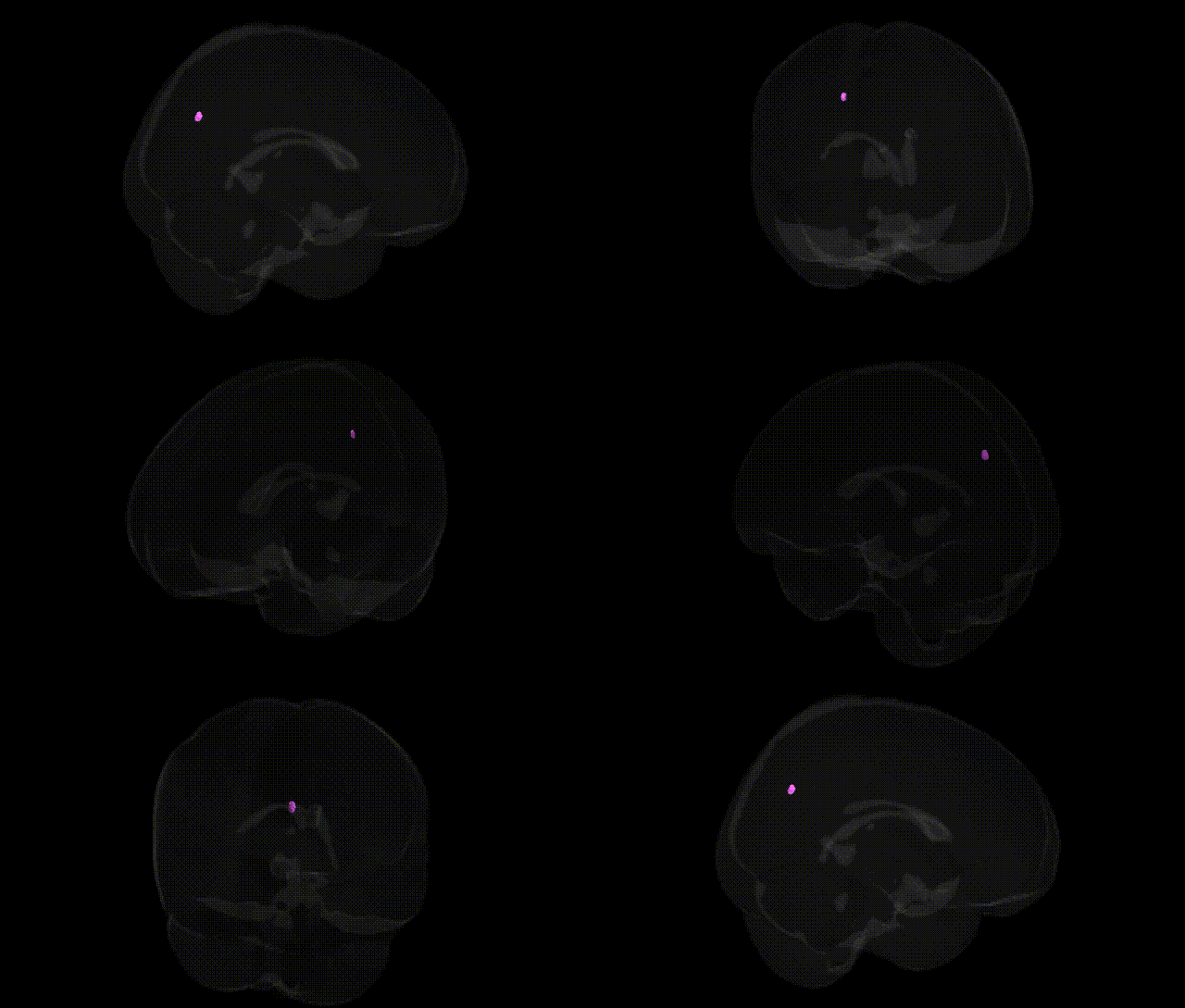
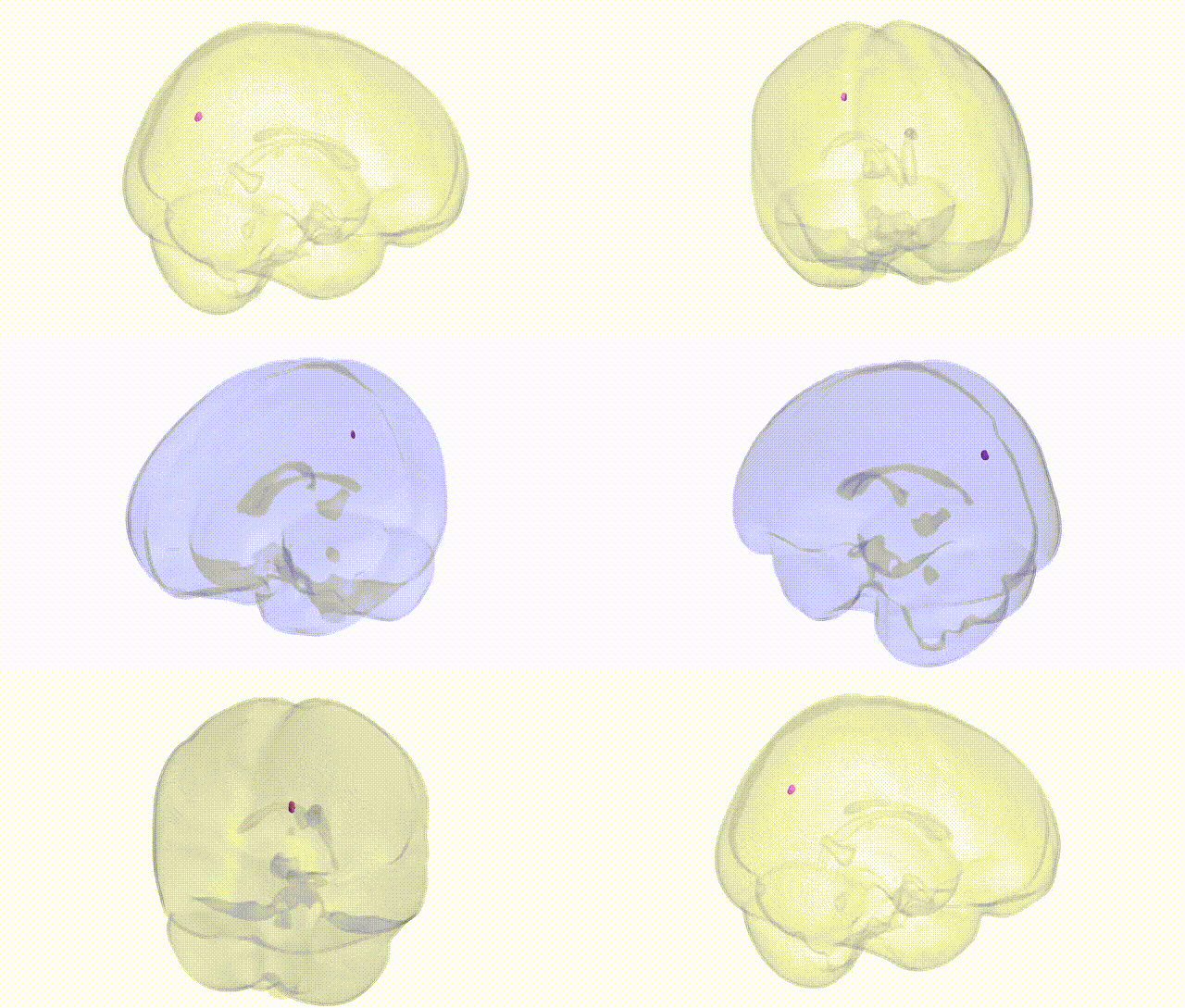
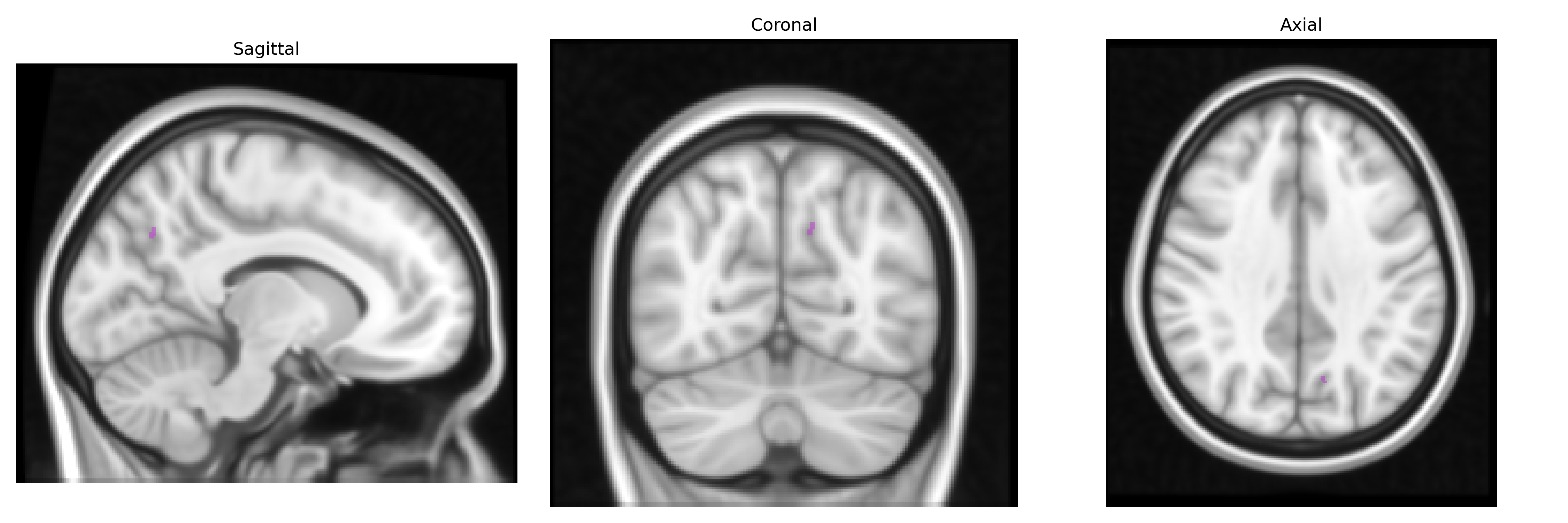
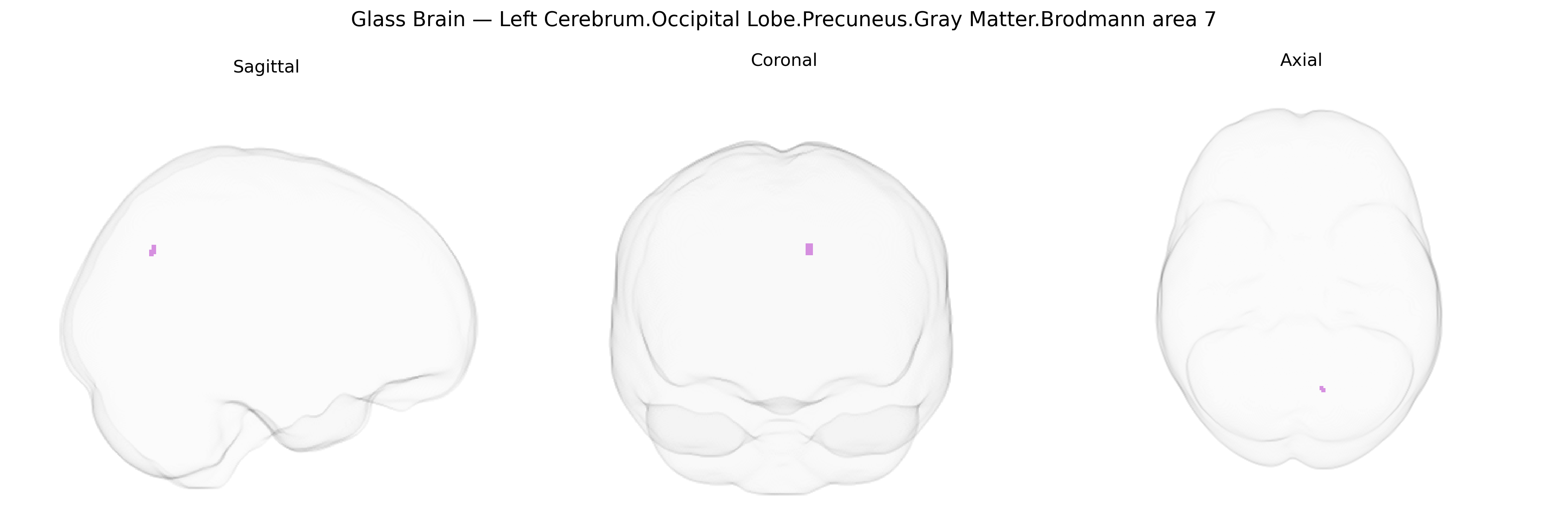
The bilateral Left Cerebrum.Occipital Lobe.Precuneus.Gray Matter.Brodmann area 7 corresponds to a dorsal posterior parietal region that extends medially into the precuneus and participates in higher-order visuospatial integration, sensorimotor transformation, and aspects of attention and visuomotor coordination. In the Talairach 1 mm Atlas, this label denotes gray matter within Brodmann area 7 situated near the parietal–occipital junction on the medial wall, functionally linked to processing of spatial relationships, visually guided movements, and integration of somatosensory and visual inputs. Neuronal populations in this area contribute to constructing an internal representation of extrapersonal space and are engaged in tasks such as mental imagery, visuospatial attention, and coordination of eye and limb movements based on visual feedback. Brodmann area 7
The bilateral left precuneus (Brodmann area 7 in the occipital–parietal transition) has been repeatedly implicated in imaging‑genetics and GWAS studies of brain structure and function, with many associations overlapping broader parietal and default mode network regions rather than being precuneus‑specific. Large-scale brain MRI GWAS (e.g., ENIGMA, UK Biobank) show that gray matter volume, cortical thickness, and surface area in precuneus/parietal regions are moderately heritable and influenced by common variants in genes involved in neurodevelopment, synaptic function, and axonal guidance, including loci near genes such as HMGA2, IGF1, WNT signaling components, and various calcium channel and synaptic genes, although precise, atlas-defined precuneus BA7 loci are not consistently isolated. Genetic risk variants for Alzheimer’s disease (APOE, CLU, PICALM, BIN1 and others) and other neurodegenerative or neuropsychiatric disorders (e.g., schizophrenia and major depression polygenic risk scores) have been associated with altered precuneus structure, metabolism, or connectivity, consistent with the region’s role in episodic memory, self-referential processing, and default mode network integrity. GWAS of cognitive traits, intelligence, and educational attainment also show that polygenic scores for these traits correlate with individual differences in precuneus morphology and activation, and variants in genes related to myelination and synaptic plasticity have been linked to interindividual variability in parietal/precuneus functional responses. Additionally, imaging–genetics studies in ADHD, autism spectrum disorders, and obsessive–compulsive disorder report associations between disorder risk variants and altered gray matter density or connectivity in the precuneus, though these findings often reflect distributed network-level effects rather than regionally specific, replicated loci tied uniquely to the Talairach-defined left cerebrum occipital lobe precuneus BA7 region.
Overview generated by GPT-4o (2026).
Region ID: 971
Hemisphere: bilateral
Atlas: Talairach labels 1mm
Full Quality Version: Download MP4
Full Quality Version: Download MP4
Wali Sidiqyar*, Gaurav Rudravaram*, Elyssa M. McMaster, Trent M. Schwartz, Adam M. Saunders, Kurt G. Schilling, Bennett A. Landman "Introducing SPINS: A Shared Public Visualization Library of Neuroanatomical Structures." Medical Imaging with Deep Learning- short paper
This resource is licensed under CC0 1.0 Universal (Public Domain).