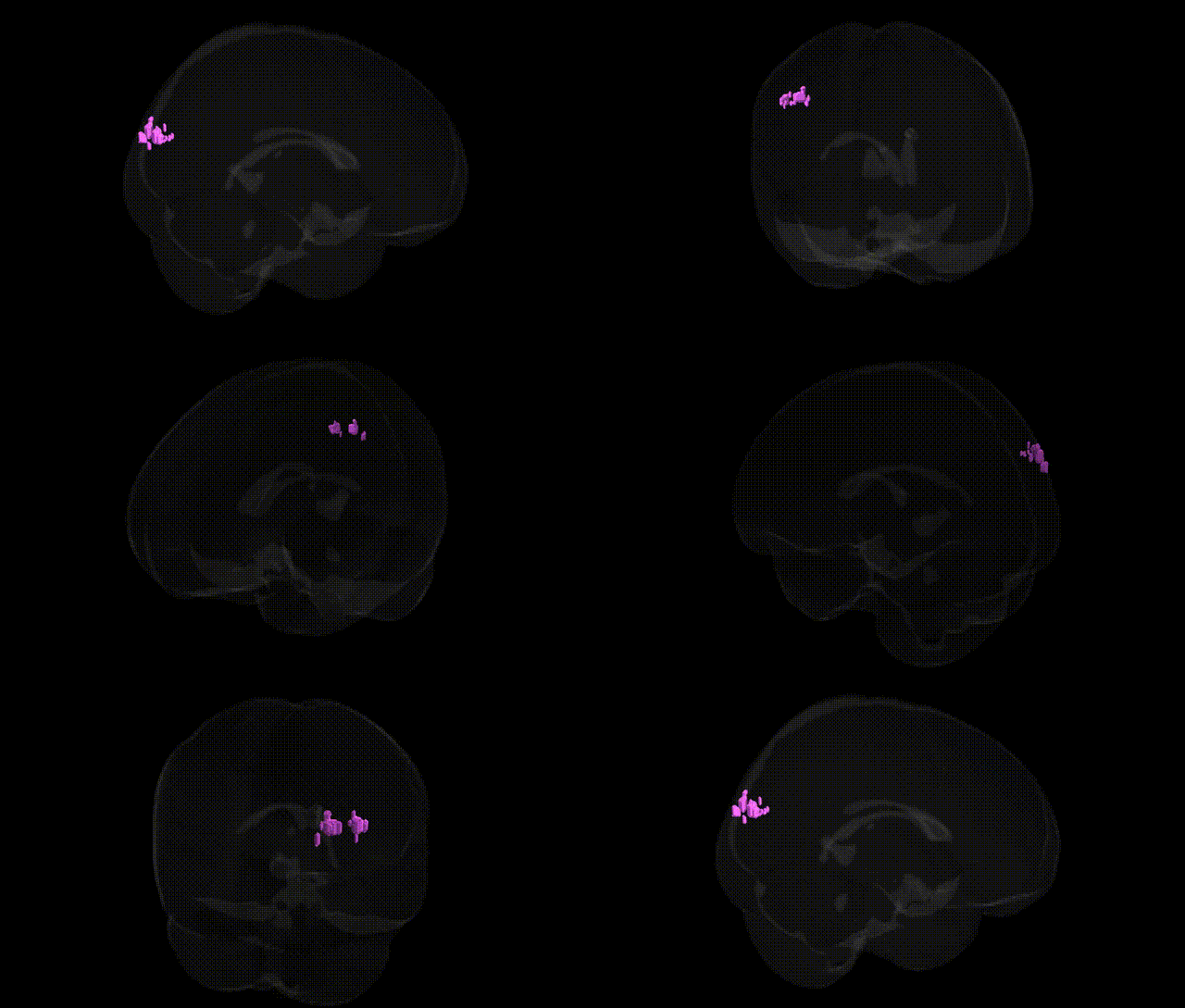
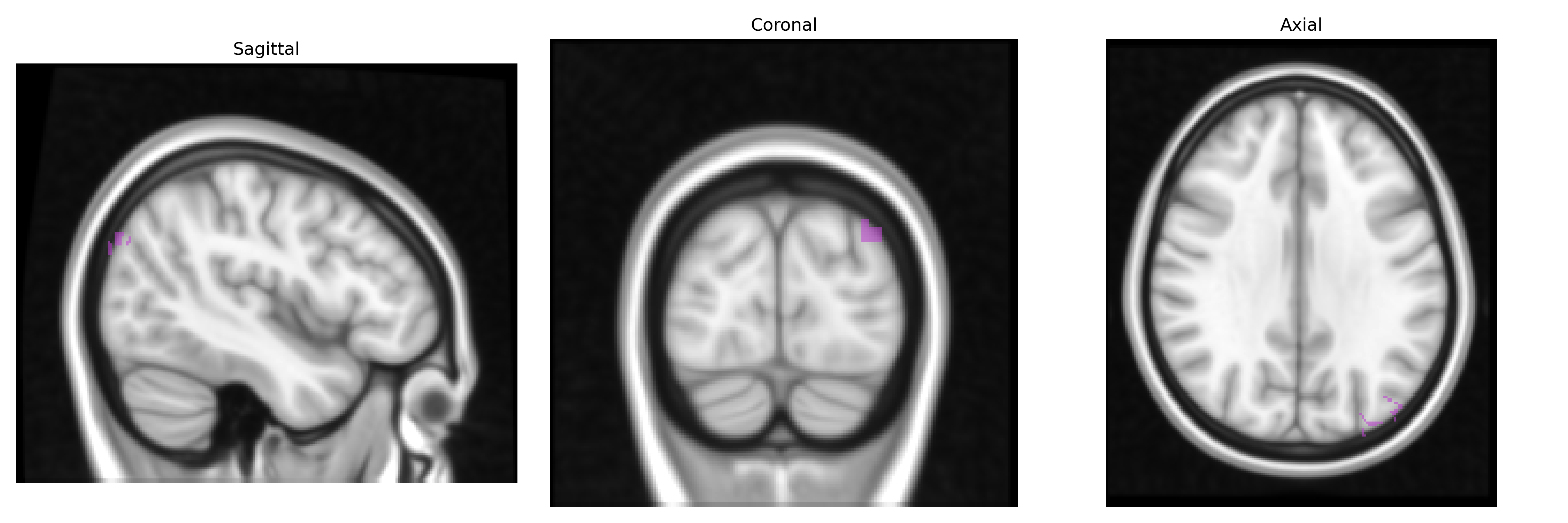
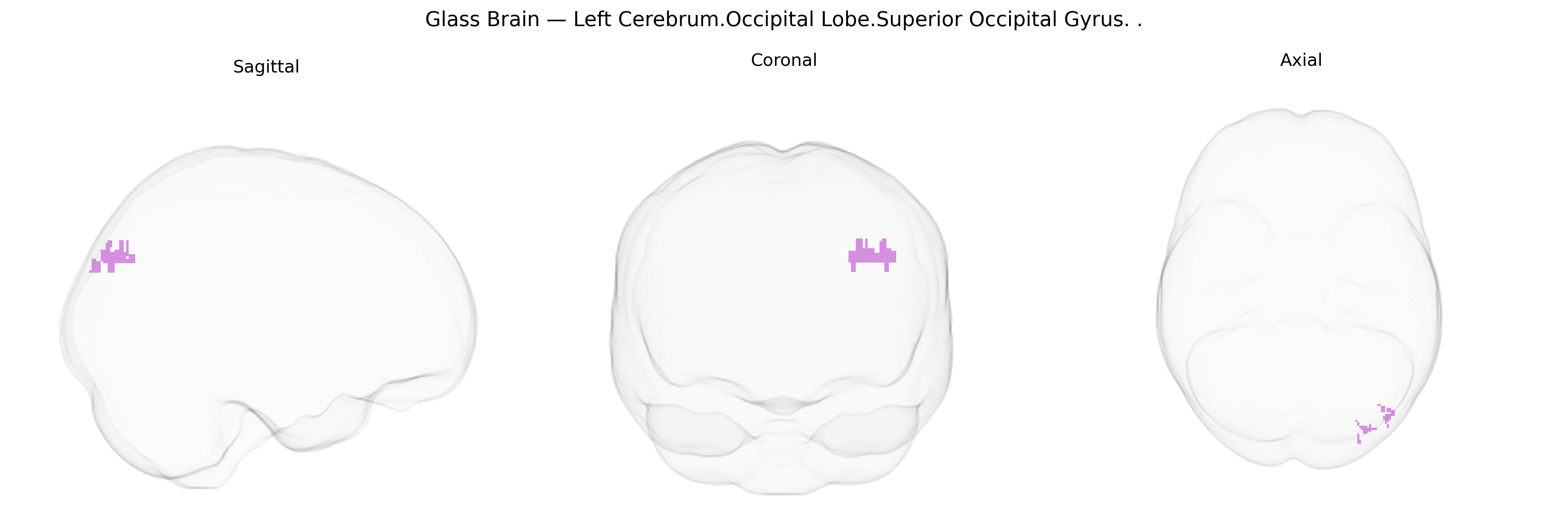
The bilateral Left Cerebrum.Occipital Lobe.Superior Occipital Gyrus corresponds to the dorsal portion of the occipital cortex situated above the middle occipital gyrus, extending along the superior aspect of the occipital lobe near the parietal–occipital boundary. This region participates in higher-order visual processing, including integration of visuospatial information, analysis of motion and complex visual patterns, and contributions to visually guided attention and eye–hand coordination, often in concert with dorsal stream parietal areas. Cytoarchitectonically, it includes portions of higher-tier visual areas beyond primary visual cortex (V1), and it is interconnected with both occipital and posterior parietal regions involved in spatial orientation and visuomotor transformation. There is no direct link for the superior occipital gyrus; a related structure is the Occipital lobe.
The bilateral left superior occipital gyrus, as defined in the Talairach 1 mm atlas, has not often been the sole focus of genetic studies, but imaging‑genetics and GWAS of brain structure and function implicate this region through broader occipital or visual cortical measures. Twin and SNP‑heritability studies show moderate to high heritability for occipital cortical thickness, surface area, and volume, with polygenic influences involving widespread neurodevelopmental and synaptic genes rather than single locus effects. Large‑scale ENIGMA and UK Biobank analyses have linked common variants in genes such as HMGA2, IGF1, and various Wnt and neurodevelopmental pathway loci to occipital lobe morphometry, which includes the superior occipital gyrus. Functionally, this region’s role in visual processing and attentional control has been reflected in genetic correlations between occipital measures and educational attainment, cognitive performance, and general intelligence, suggesting pleiotropic effects of cognitive GWAS loci on occipital structure. Psychiatric and neurological GWAS (e.g., schizophrenia, major depression, Alzheimer’s disease, and migraine) have identified risk variants that, in imaging‑genetics follow‑up, associate with altered occipital thickness or activity, though effects are usually distributed across multiple association cortices. In summary, genetic associations with the superior occipital gyrus arise primarily from polygenic influences on occipital and visual network development, cognition, and susceptibility to neuropsychiatric and neurodegenerative disorders, rather than from region‑specific loci uniquely tied to this gyrus.
Overview generated by GPT-4o (2026).
Region ID: 846
Hemisphere: bilateral
Atlas: Talairach labels 1mm
Full Quality Version: Download MP4
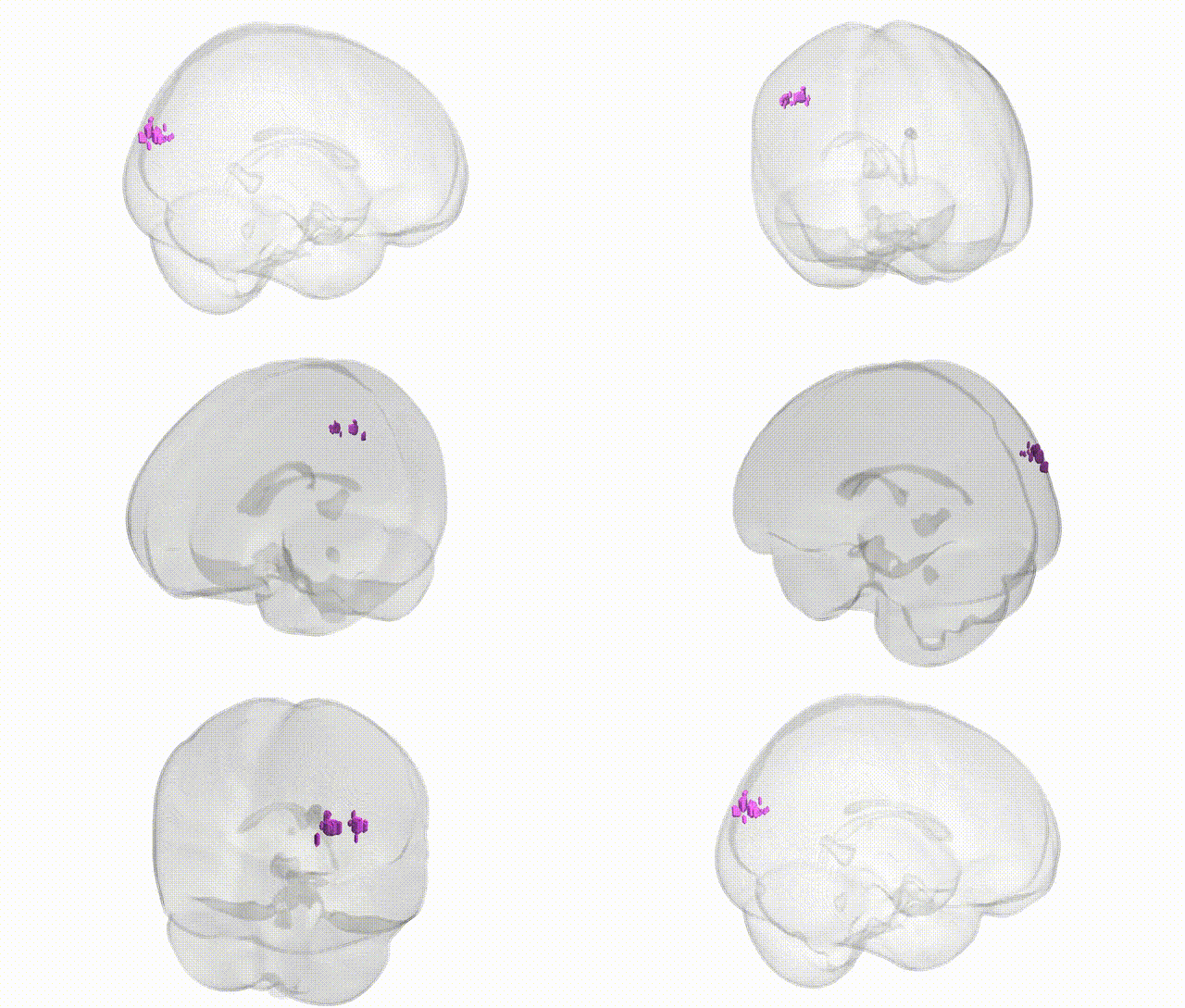
Full Quality Version: Download MP4
Wali Sidiqyar*, Gaurav Rudravaram*, Elyssa M. McMaster, Trent M. Schwartz, Adam M. Saunders, Kurt G. Schilling, Bennett A. Landman "Introducing SPINS: A Shared Public Visualization Library of Neuroanatomical Structures." Medical Imaging with Deep Learning- short paper
This resource is licensed under CC0 1.0 Universal (Public Domain).