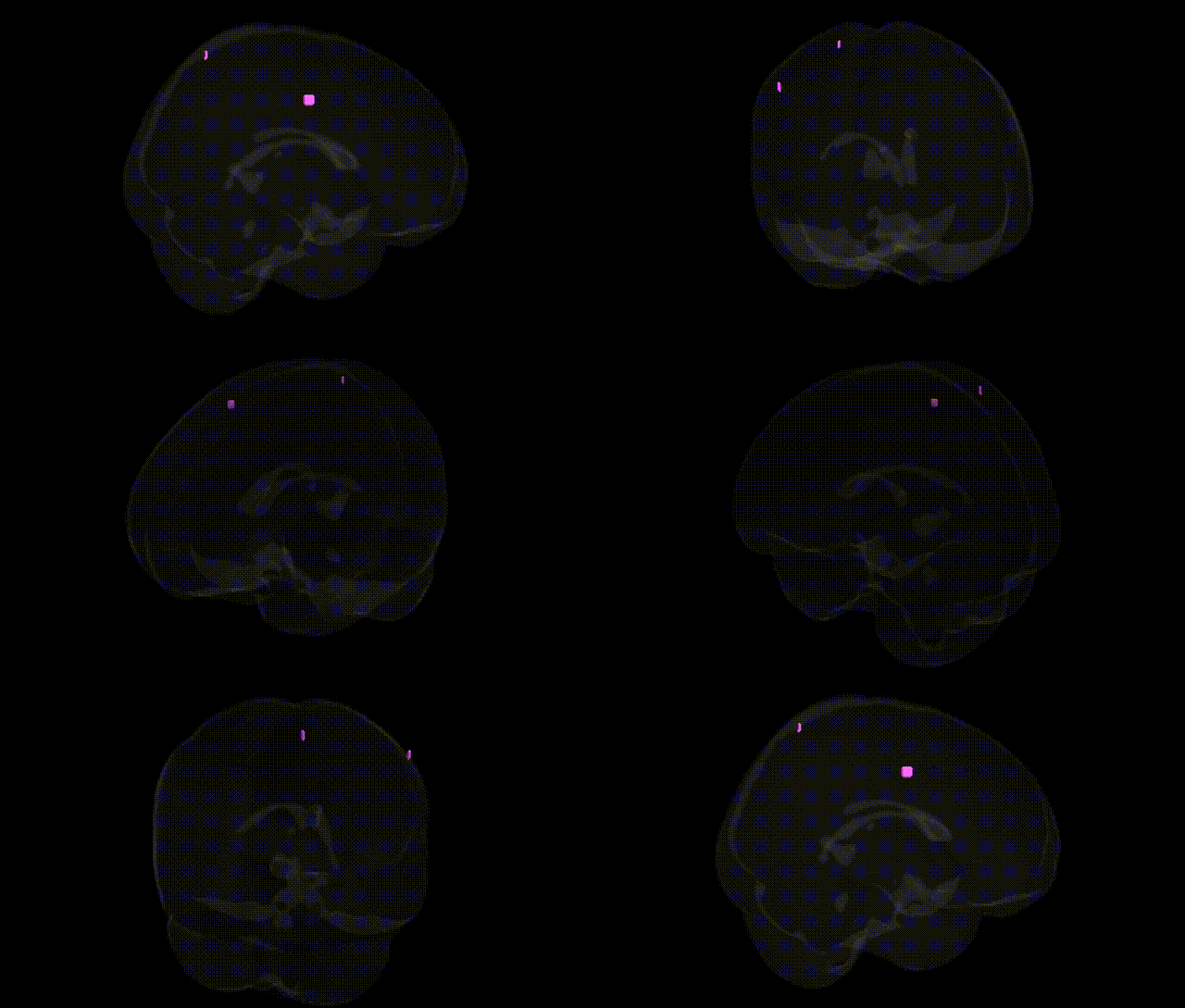
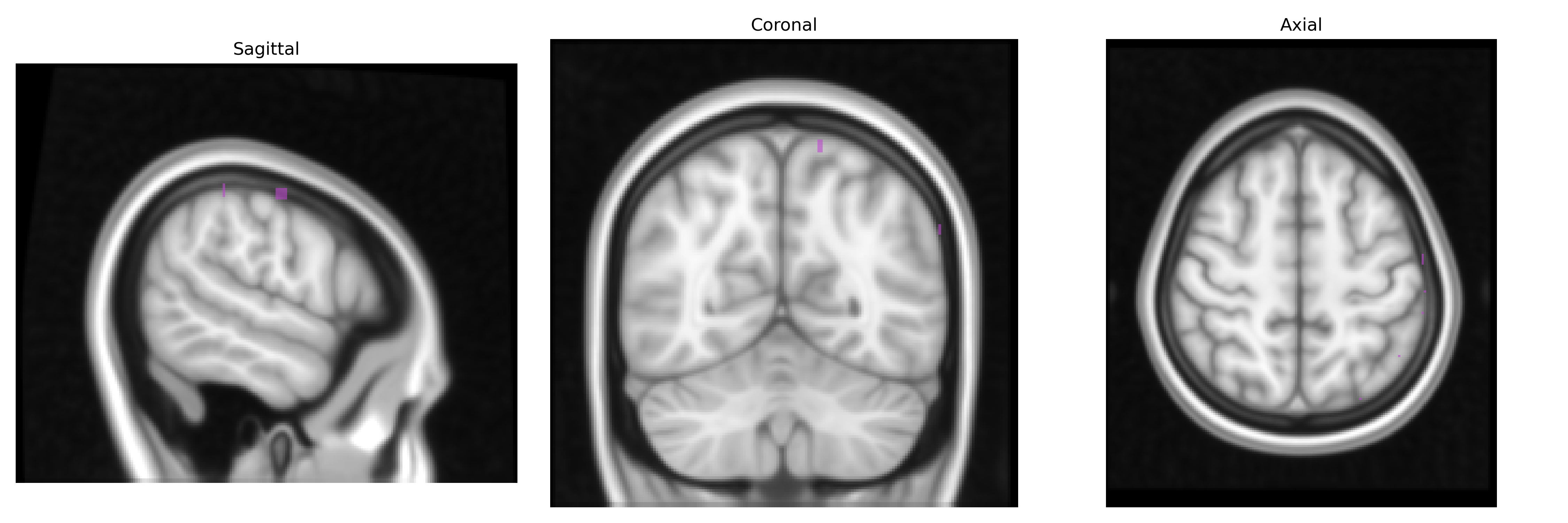
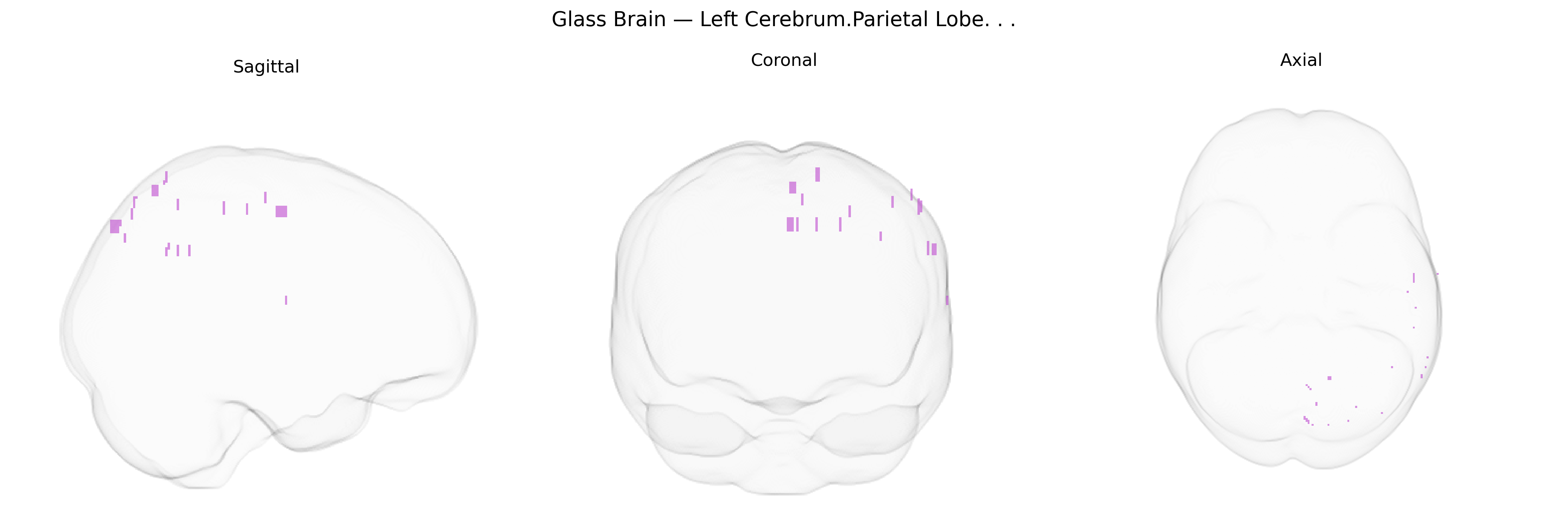
The bilateral Left Cerebrum.Parietal Lobe, as defined in the Talairach 1 mm atlas, encompasses dorsal posterior cortical regions of the left hemisphere involved in multimodal sensory integration, spatial orientation, and higher-order somatosensory processing. It receives and integrates input from primary somatosensory, visual, and auditory cortices to support functions such as tactile perception, sensorimotor coordination, visuospatial attention, body schema representation, and aspects of language-related processing (e.g., reading and praxis) in the dominant hemisphere. Parietal regions also contribute to numerical cognition and the transformation of sensory information into coordinated motor output, interfacing with frontal motor and premotor areas and participating in large-scale attentional and sensorimotor networks. Parietal lobe
The bilateral left parietal lobe, as defined in the Talairach 1 mm atlas, has been implicated in multiple genetic and genome‑wide association studies (GWAS) through its roles in cognition, language, and visuospatial processing. Variants in genes affecting cortical development and synaptic function (for example, common polymorphisms in CNTNAP2, DCDC2, KIAA0319, FOXP2, and ROBO1) have been associated with altered parietal structure or function in disorders such as developmental dyslexia, specific language impairment, and autism spectrum disorder, often involving atypical activations or morphometry in left parietal regions. Large imaging‑genetics consortia (e.g., ENIGMA and UK Biobank studies) have identified SNPs in loci related to neuronal growth and myelination (including genes near MIR137, TBR1, and others on chromosomes 3, 6, and 15) that are associated with individual differences in parietal cortical thickness, surface area, and gyrification, as well as with general cognitive ability and educational attainment. GWAS of Alzheimer’s disease, schizophrenia, and ADHD have linked risk variants in genes such as APOE, CLU, PICALM, CACNA1C, and DRD2 to structural and functional alterations in parietal networks, including the default mode and dorsal attention systems that prominently involve the left inferior and superior parietal lobules. Additionally, polygenic scores for intelligence, working memory, and mathematical ability correlate with activation and morphology of the left parietal cortex, suggesting a distributed genetic influence on this region’s contribution to higher cognitive functions, although specific causal variants and mechanisms remain incompletely defined.
Overview generated by GPT-4o (2026).
Region ID: 799
Hemisphere: bilateral
Atlas: Talairach labels 1mm
Full Quality Version: Download MP4
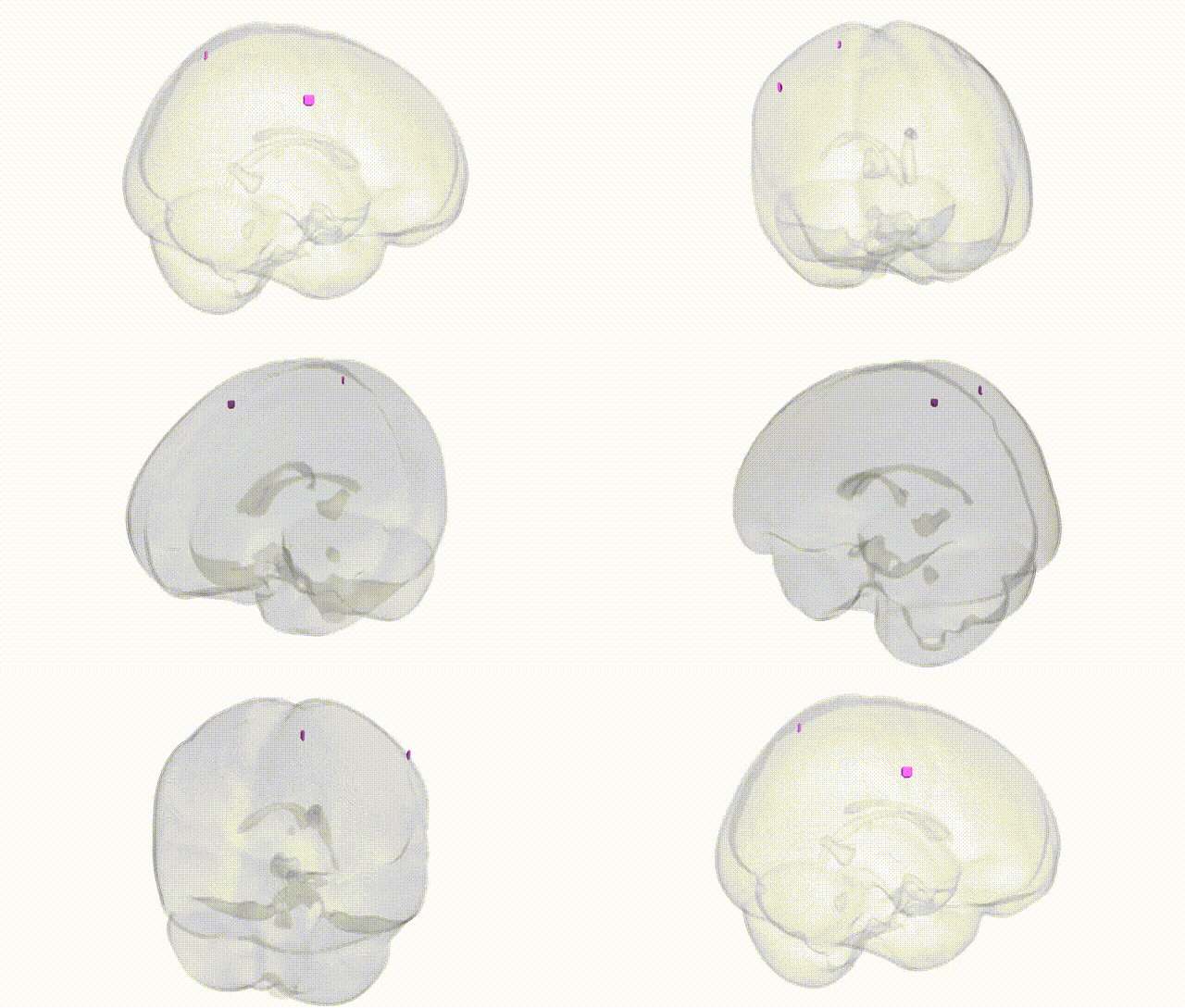
Full Quality Version: Download MP4
Wali Sidiqyar*, Gaurav Rudravaram*, Elyssa M. McMaster, Trent M. Schwartz, Adam M. Saunders, Kurt G. Schilling, Bennett A. Landman "Introducing SPINS: A Shared Public Visualization Library of Neuroanatomical Structures." Medical Imaging with Deep Learning- short paper
This resource is licensed under CC0 1.0 Universal (Public Domain).