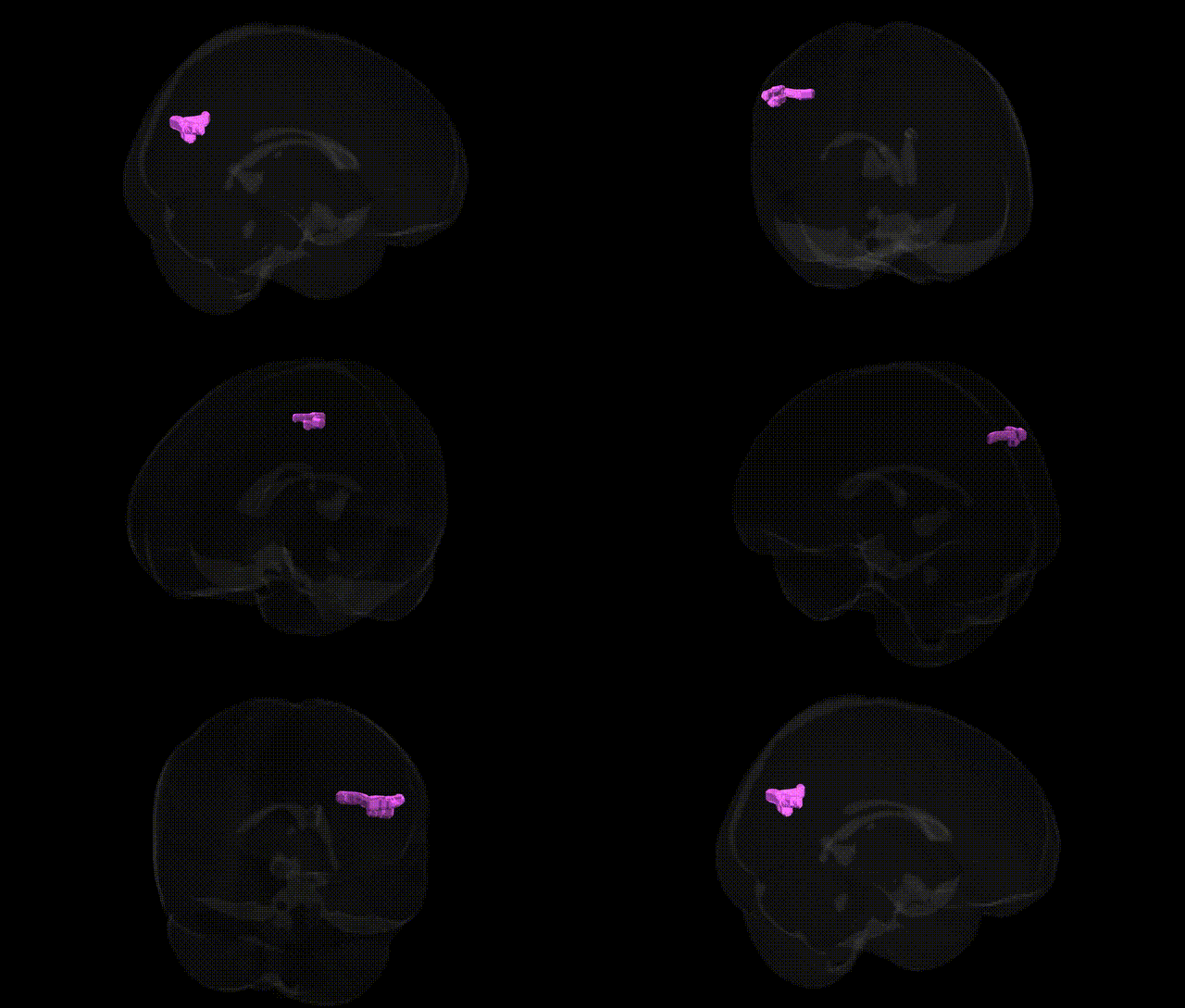
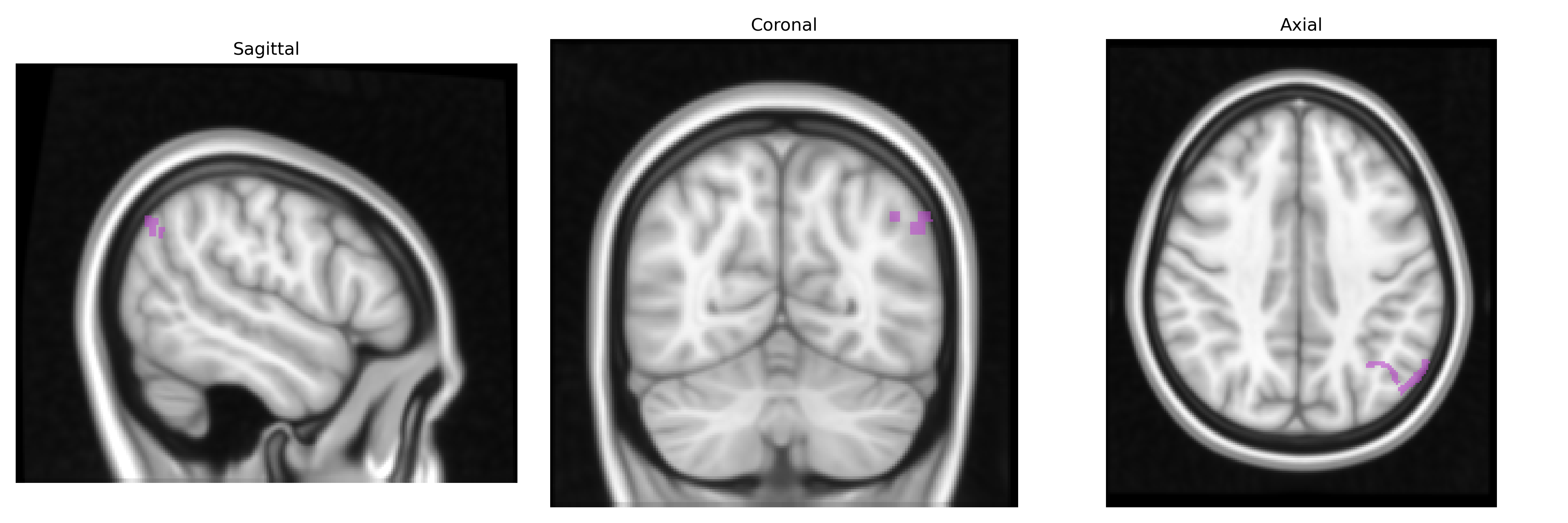
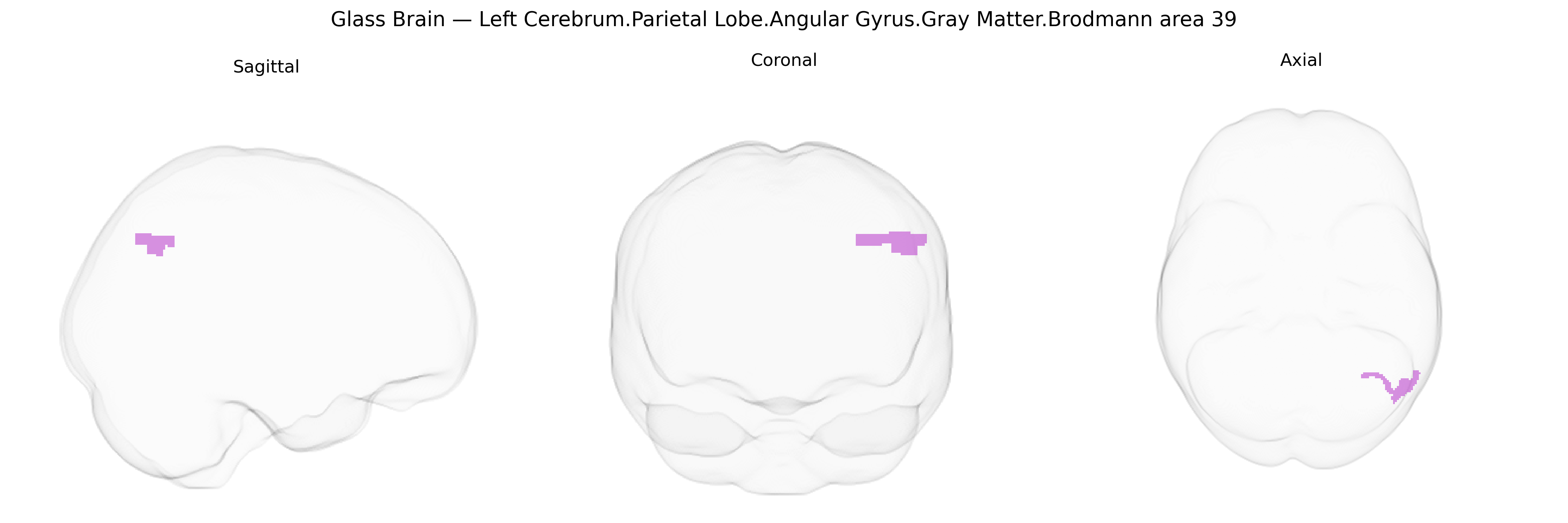
The bilateral Left Cerebrum.Parietal Lobe.Angular Gyrus.Gray Matter.Brodmann area 39 corresponds to a heteromodal association cortex located in the posterior part of the inferior parietal lobule, at the junction of the parietal, temporal, and occipital lobes. Cytoarchitectonically classified as Brodmann area 39, this region integrates multimodal sensory inputs and is implicated in complex language functions (including reading and semantic processing), number processing, spatial cognition, and aspects of theory of mind and memory retrieval. The angular gyrus shows strong connectivity with temporal, frontal, and occipital association areas and forms part of large-scale networks subserving default-mode, language, and attention-related processes, with lateralization of certain functions (such as language) more prominent in the left hemisphere. Angular gyrus
The bilateral angular gyrus (left and right Brodmann area 39 in the parietal lobe) is a multimodal association region implicated in language, number processing, spatial cognition, theory of mind, and memory, and genetic associations typically emerge via imaging genetics and GWAS of brain structure and function rather than region-specific sequencing. Large MRI-based GWAS (e.g., ENIGMA, UK Biobank) have identified variants in genes involved in neurodevelopment and synaptic function (such as HMGA2, DLG2, and multiple loci in the 3p24–3p26 and 10q regions) that influence cortical thickness and surface area in parietal association cortex, often encompassing the angular gyrus; several of these loci overlap with general cognitive ability (IQ), educational attainment, and neurodevelopmental traits. Functional imaging genetics has linked common polymorphisms in genes such as COMT (dopaminergic signaling), BDNF (neuronal plasticity), and APOE (lipid transport, Alzheimer’s risk) to altered activation or connectivity in temporo‑parietal junction and angular gyrus during tasks involving episodic memory, semantic processing, or social cognition. GWAS of reading and language-related disorders (dyslexia, specific language impairment) have implicated loci such as KIAA0319, DCDC2, and FOXP2-related networks that modulate the structure and functional recruitment of left temporo‑parietal language areas including the angular gyrus. In psychiatric and neurological disorders, schizophrenia, major depression, autism spectrum disorder, and Alzheimer’s disease show disease‑risk polygenic scores associated with altered angular gyrus volume, cortical thinning, or connectivity, with overlapping genetic architecture in glutamatergic, GABAergic, and synaptic pathway genes. Overall, genetic influences on the angular gyrus reflect broad polygenic effects on association cortex development, cognitive abilities, and vulnerability to neuropsychiatric and neurodegenerative conditions rather than single region‑specific genes, and GWAS typically report effects at the level of parietal or temporo‑parietal cortex that include Brodmann area 39 rather than isolating it explicitly.
Overview generated by GPT-4o (2026).
Region ID: 967
Hemisphere: bilateral
Atlas: Talairach labels 1mm
Full Quality Version: Download MP4
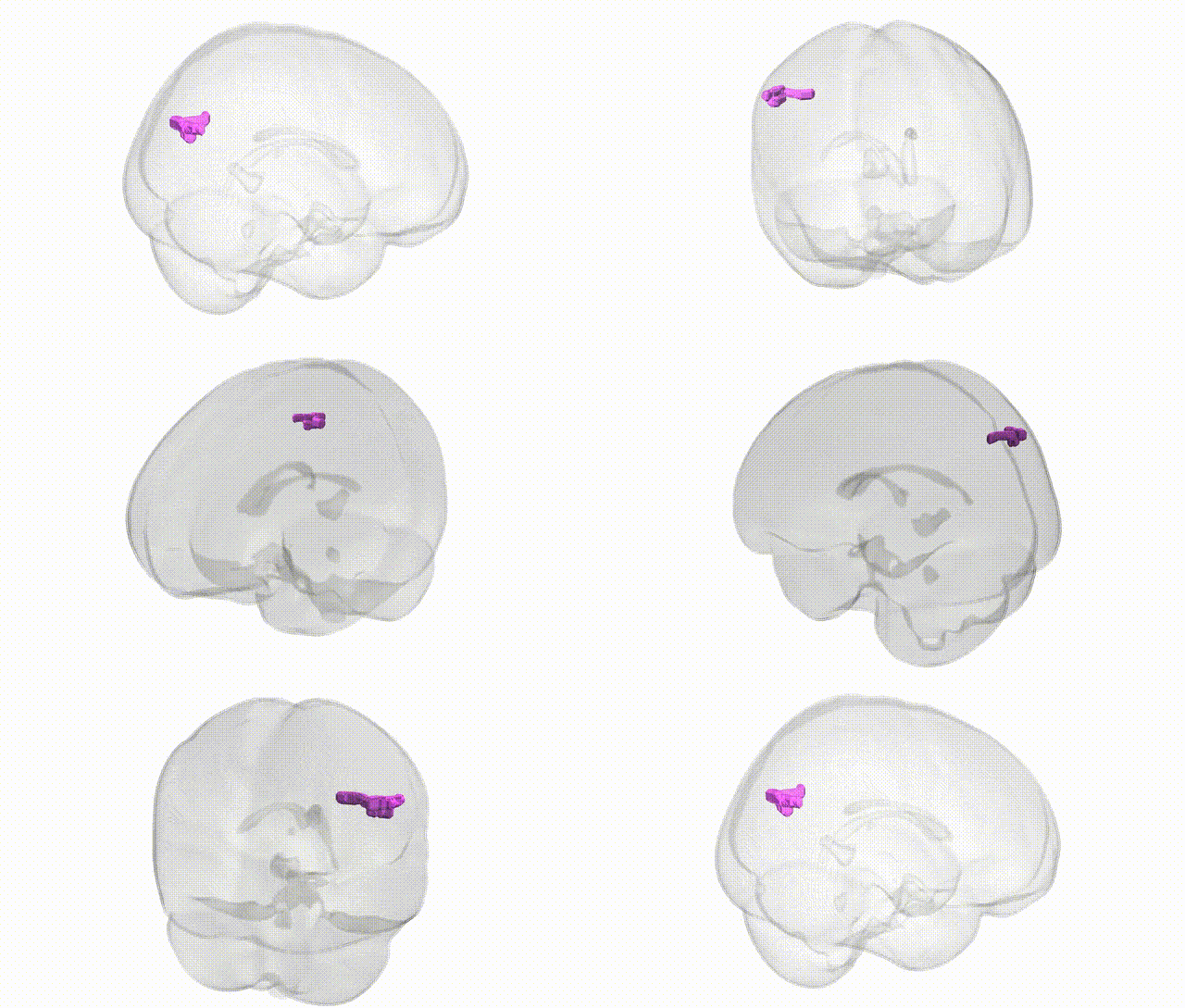
Full Quality Version: Download MP4
Wali Sidiqyar*, Gaurav Rudravaram*, Elyssa M. McMaster, Trent M. Schwartz, Adam M. Saunders, Kurt G. Schilling, Bennett A. Landman "Introducing SPINS: A Shared Public Visualization Library of Neuroanatomical Structures." Medical Imaging with Deep Learning- short paper
This resource is licensed under CC0 1.0 Universal (Public Domain).