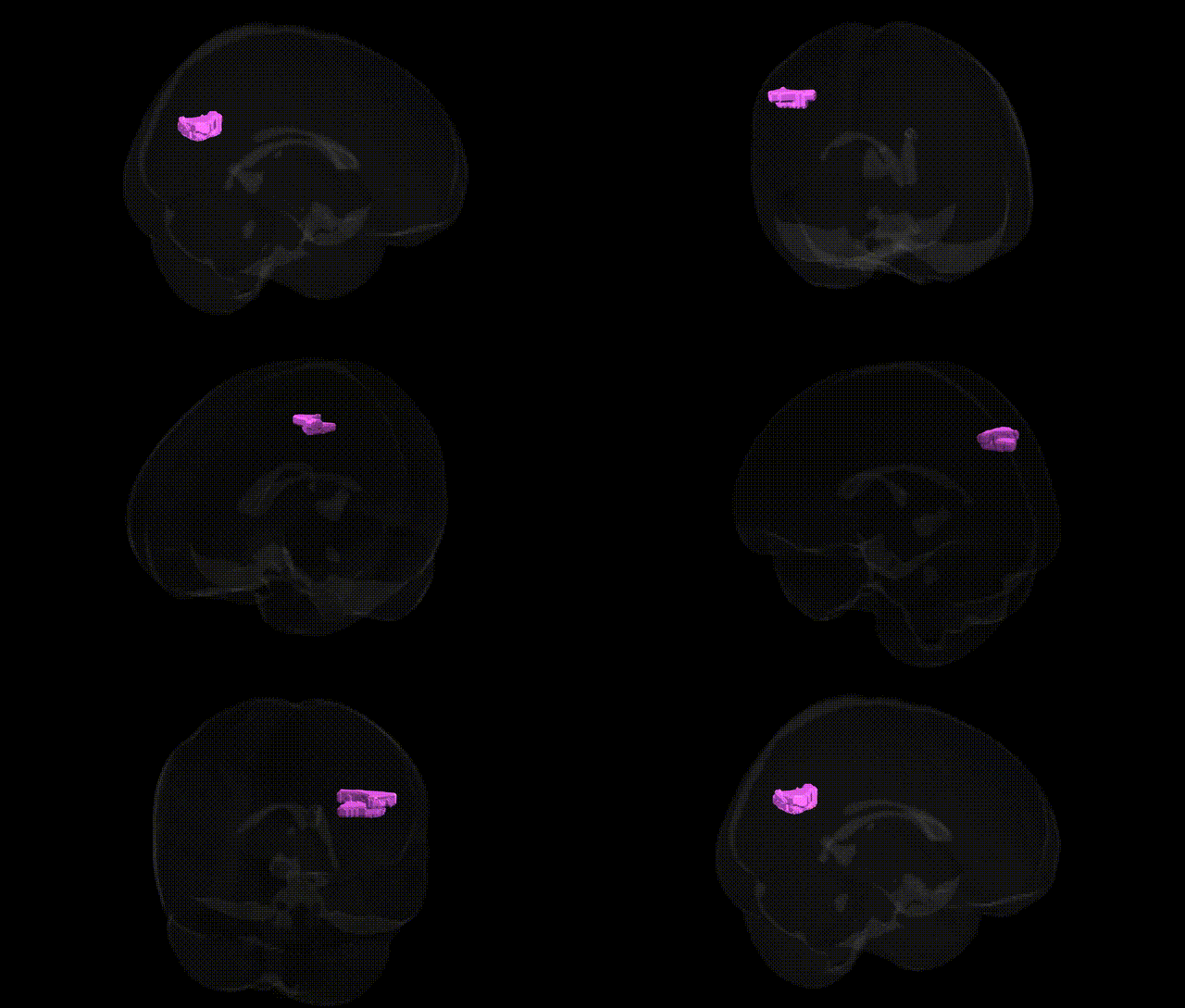
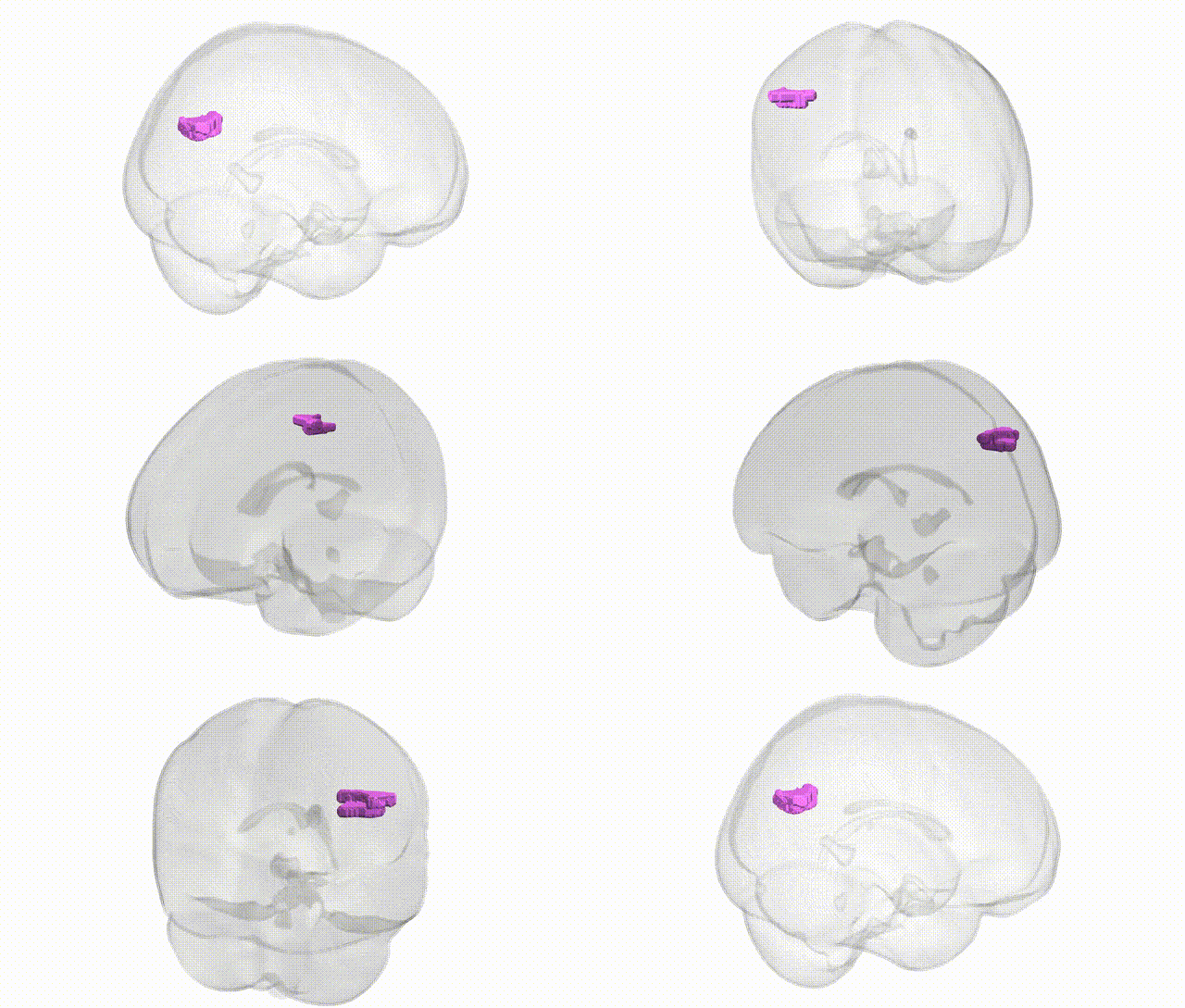
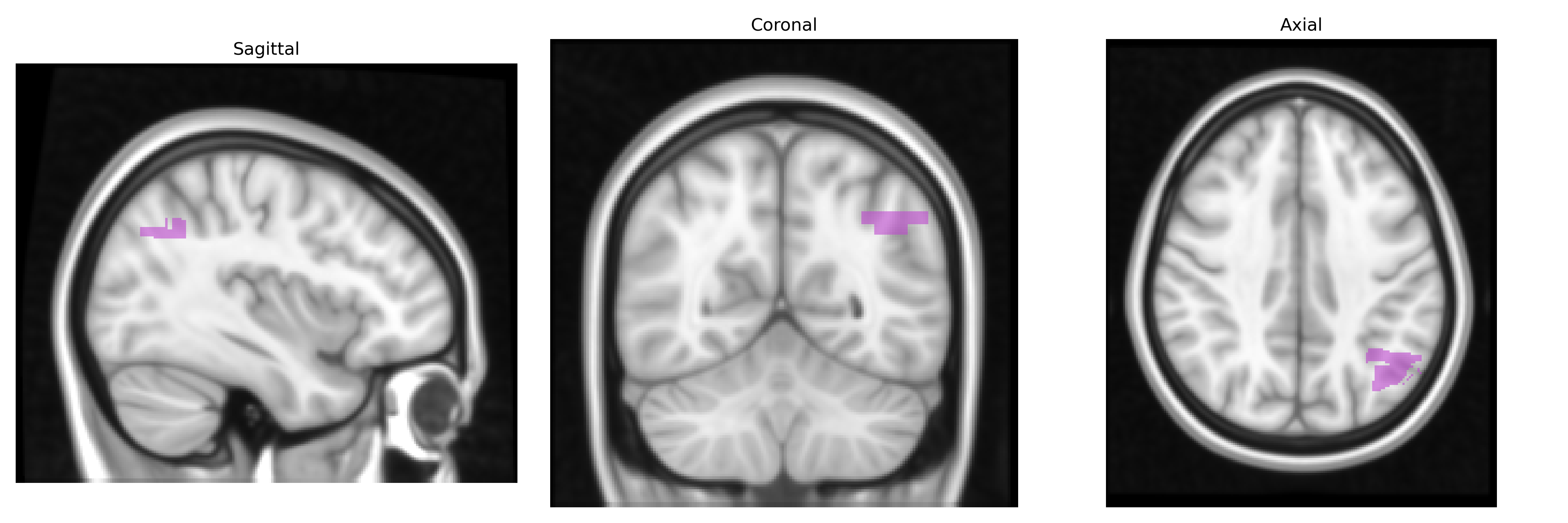
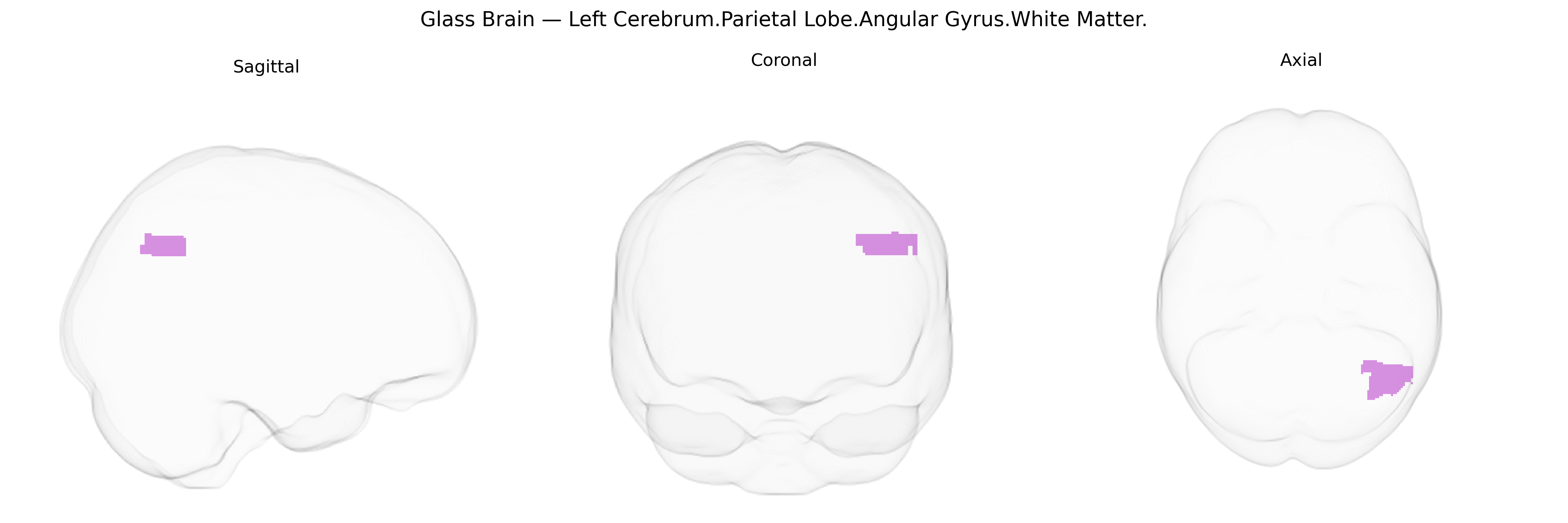
The bilateral Left Cerebrum.Parietal Lobe.Angular Gyrus.White Matter corresponds to the subcortical myelinated fiber pathways underlying the angular gyrus in the inferior parietal lobule. These white matter tracts include association fibers that interconnect the angular gyrus with adjacent parietal, temporal, and occipital cortices, contributing to large-scale networks involved in language, reading, numerical cognition, spatial awareness, and multimodal integration. The region participates in transmitting processed sensory and conceptual information between cortical hubs, supporting functions such as semantic processing, attention reorientation, and aspects of default mode network activity. There is no direct Wikipedia article for this exact white matter label; see the related cortical region: Angular gyrus.
The bilateral left cerebrum parietal lobe angular gyrus white matter corresponds primarily to association fiber pathways linking posterior temporal, parietal, and frontal regions, including segments of the superior longitudinal fasciculus and related tracts, and has been implicated in genetic studies of language, reading, and higher cognitive function. GWAS and imaging‑genetics work (e.g., ENIGMA, UK Biobank) have shown that common variants in genes involved in axon guidance, myelination, and synaptic plasticity (such as CNTNAP2, FOXP2‑regulated networks, and general neurodevelopmental loci like DCC, NRG1, and genes within 3p26, 16p11.2, and 22q11.2 CNV regions) are associated with structural measures—volumes, cortical thickness, and white matter integrity—of temporo‑parietal and angular gyrus–adjacent white matter, often in the left hemisphere. These genetic influences relate to risk or intermediate phenotypes for dyslexia and other specific learning disorders, autism spectrum disorder, schizophrenia, and major depressive disorder, where altered connectivity of the angular gyrus region has been repeatedly observed. Polygenic scores for educational attainment, general cognitive ability, and language proficiency have also been associated with variation in white matter microstructure and connectivity in posterior parietal and angular gyrus pathways, supporting a role for widely distributed, small‑effect variants rather than single locus specificity. Overall, current evidence links genes involved in neurodevelopmental patterning, white matter maturation, and synaptic signaling to individual differences and disorder‑related alterations in the white matter underlying the angular gyrus, although no single gene or variant is uniquely or exclusively tied to this Talairach‑defined region.
Overview generated by GPT-4o (2026).
Region ID: 965
Hemisphere: bilateral
Atlas: Talairach labels 1mm
Full Quality Version: Download MP4
Full Quality Version: Download MP4
Wali Sidiqyar*, Gaurav Rudravaram*, Elyssa M. McMaster, Trent M. Schwartz, Adam M. Saunders, Kurt G. Schilling, Bennett A. Landman "Introducing SPINS: A Shared Public Visualization Library of Neuroanatomical Structures." Medical Imaging with Deep Learning- short paper
This resource is licensed under CC0 1.0 Universal (Public Domain).