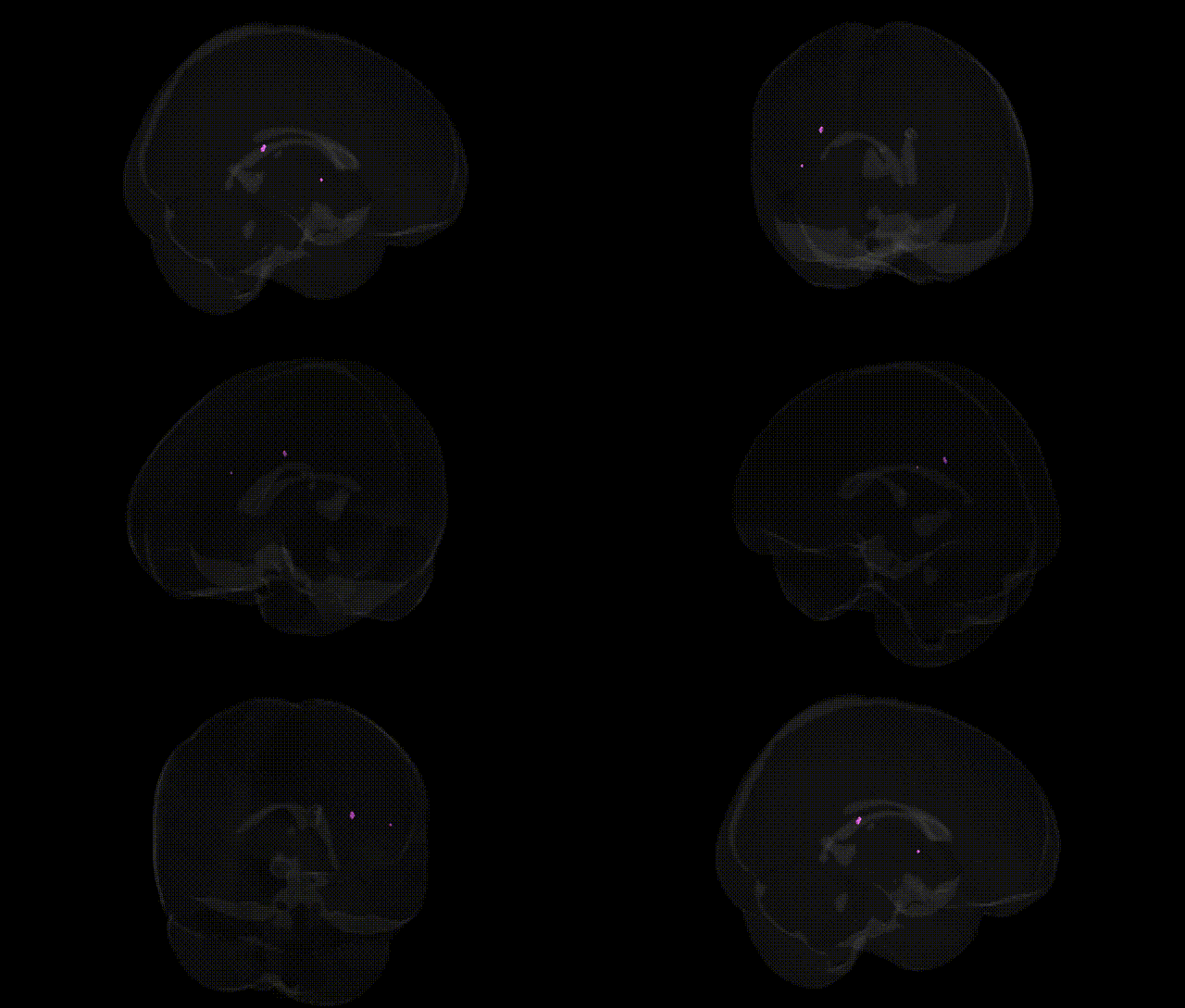
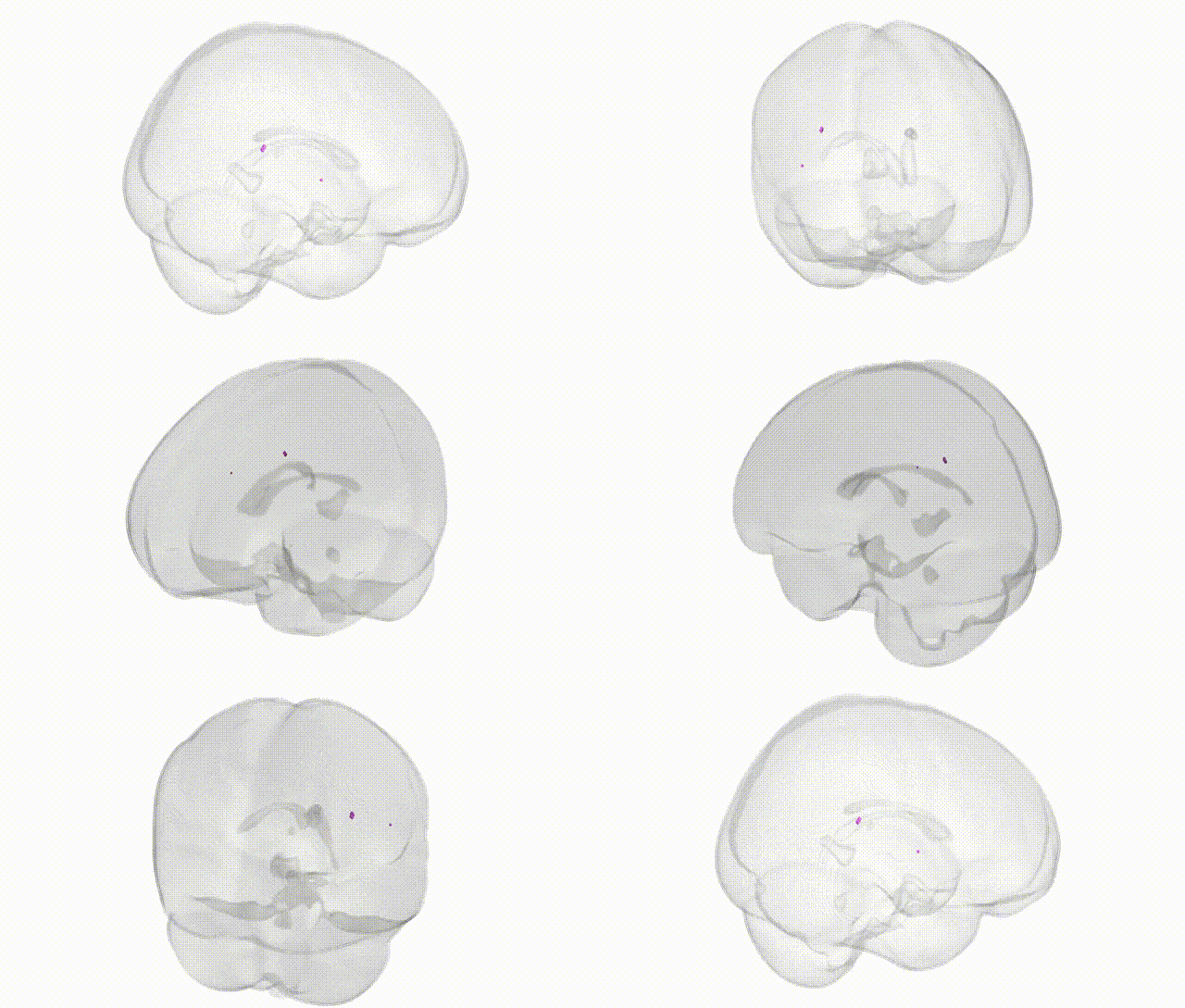
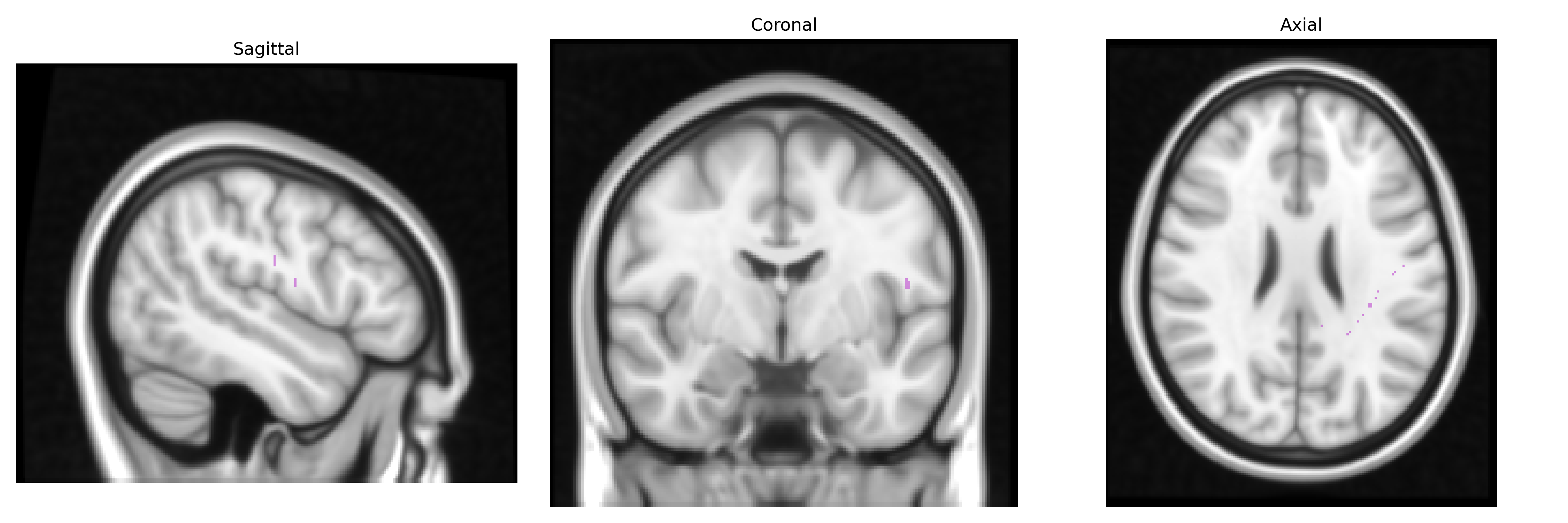
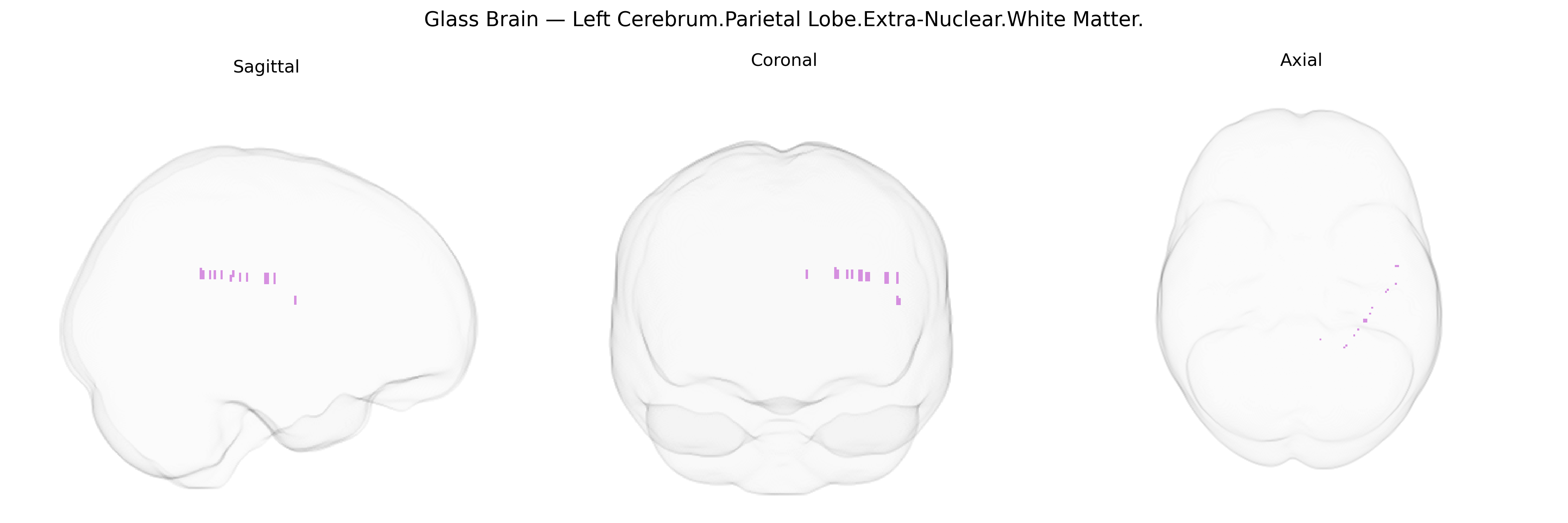
The bilateral Left Cerebrum.Parietal Lobe.Extra-Nuclear.White Matter region in the Talairach 1 mm atlas refers to subcortical white matter tracts located within the parietal lobe but outside of distinct nuclear (gray matter) structures. This area contains bundles of myelinated axons that interconnect parietal cortical regions with each other and with distant areas such as frontal, temporal, and occipital cortices, as well as thalamic and subcortical nuclei. Functionally, parietal white matter pathways support integration of somatosensory, visuospatial, and multimodal information important for spatial attention, sensorimotor coordination, and higher-order associative processing. Damage to these fibers can disrupt connectivity underlying functions such as spatial perception, body awareness, and aspects of praxis and attention. There is no direct link; see the related structure Parietal lobe.
The bilateral Left Cerebrum Parietal Lobe Extra-Nuclear White Matter region, as defined in the Talairach 1 mm atlas (encompassing association and projection fibers underlying parietal cortex), is implicated in several genetic and genome-wide association (GWAS) findings through imaging-genetics and disorder-based studies. Large-scale GWAS of white matter microstructure (e.g., diffusion tensor imaging metrics) have shown that common variants in genes related to axonal guidance, myelination, and oligodendrocyte function (such as those in or near MAG, NRG1, CNTN4, and LINGO1) influence fractional anisotropy and mean diffusivity within parietal white matter tracts, including portions of the superior longitudinal fasciculus and adjacent association fibers. Polygenic risk scores for schizophrenia, bipolar disorder, and major depressive disorder have been associated with altered structural connectivity or reduced white matter integrity in parietal regions, suggesting that shared psychiatric risk variants contribute to microstructural differences in this area. Similarly, GWAS and candidate-gene studies in attention-deficit/hyperactivity disorder, autism spectrum disorder, and dyslexia point to variants in neurodevelopmental genes (e.g., FOXP2-related networks, DCDC2, ROBO1, and other axon guidance genes) that have been linked to altered parietal white matter connectivity, aligning with the role of this region in attentional control, visuospatial processing, and language-related pathways. In aging and neurodegenerative contexts, APOE ε4 and other Alzheimer’s disease risk variants (e.g., in CLU, PICALM) have been associated with white matter hyperintensities, microstructural degradation, and connectivity loss involving posterior and parietal white matter, while vascular risk loci (e.g., in NOTCH3 and other small-vessel disease genes) contribute to leukoaraiosis affecting periventricular and deep parietal white matter. Collectively, these findings indicate that genetic variation in pathways governing neurodevelopment, synaptic and axonal maintenance, myelination, and vascular integrity exerts measurable effects on the structure and connectivity of parietal lobe white matter, linking this region to a range of cognitive traits (such as intelligence and working memory), neuropsychiatric conditions, and neurodegenerative or vascular brain disorders.
Overview generated by GPT-4o (2026).
Region ID: 801
Hemisphere: bilateral
Atlas: Talairach labels 1mm
Full Quality Version: Download MP4
Full Quality Version: Download MP4
Wali Sidiqyar*, Gaurav Rudravaram*, Elyssa M. McMaster, Trent M. Schwartz, Adam M. Saunders, Kurt G. Schilling, Bennett A. Landman "Introducing SPINS: A Shared Public Visualization Library of Neuroanatomical Structures." Medical Imaging with Deep Learning- short paper
This resource is licensed under CC0 1.0 Universal (Public Domain).