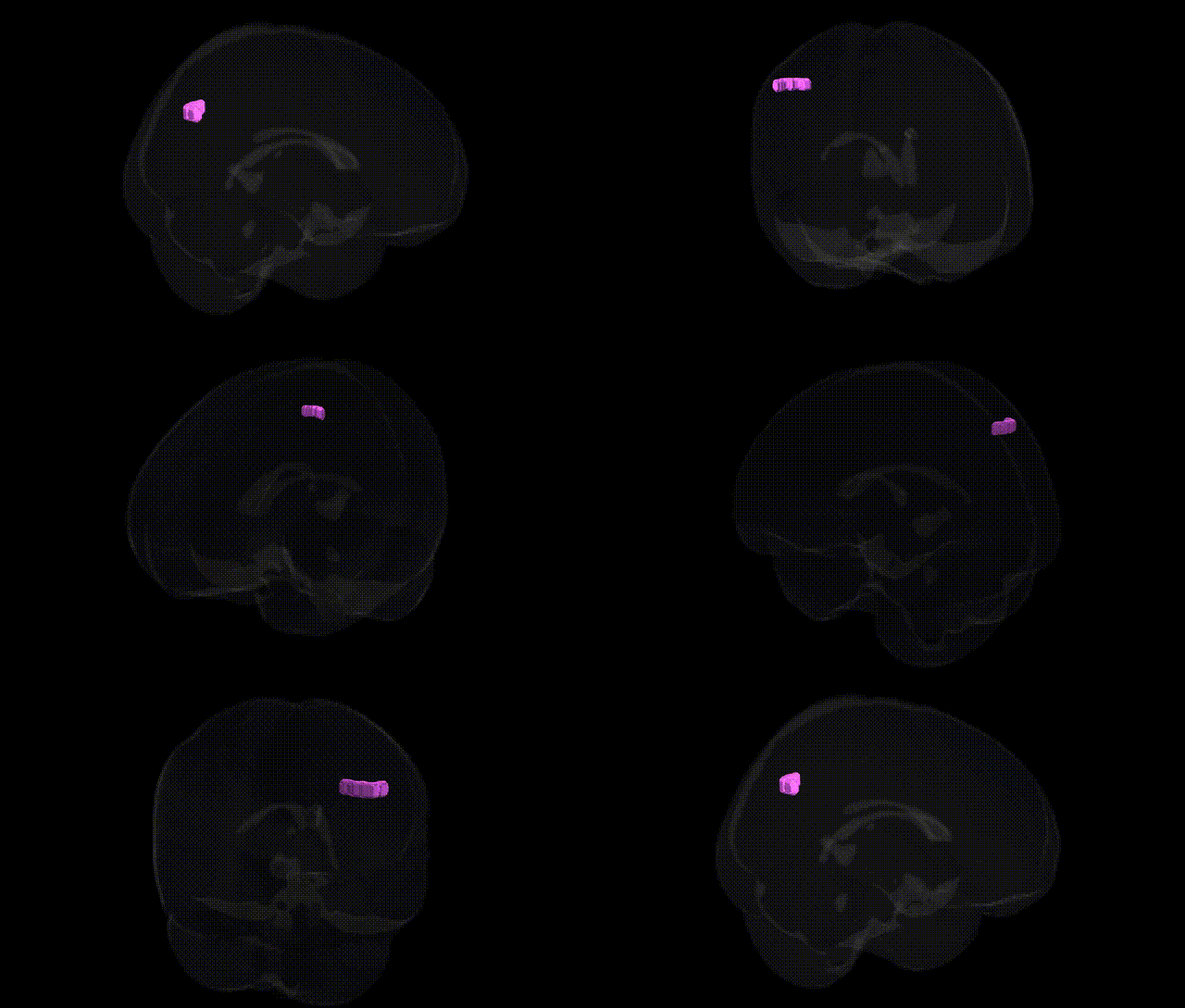
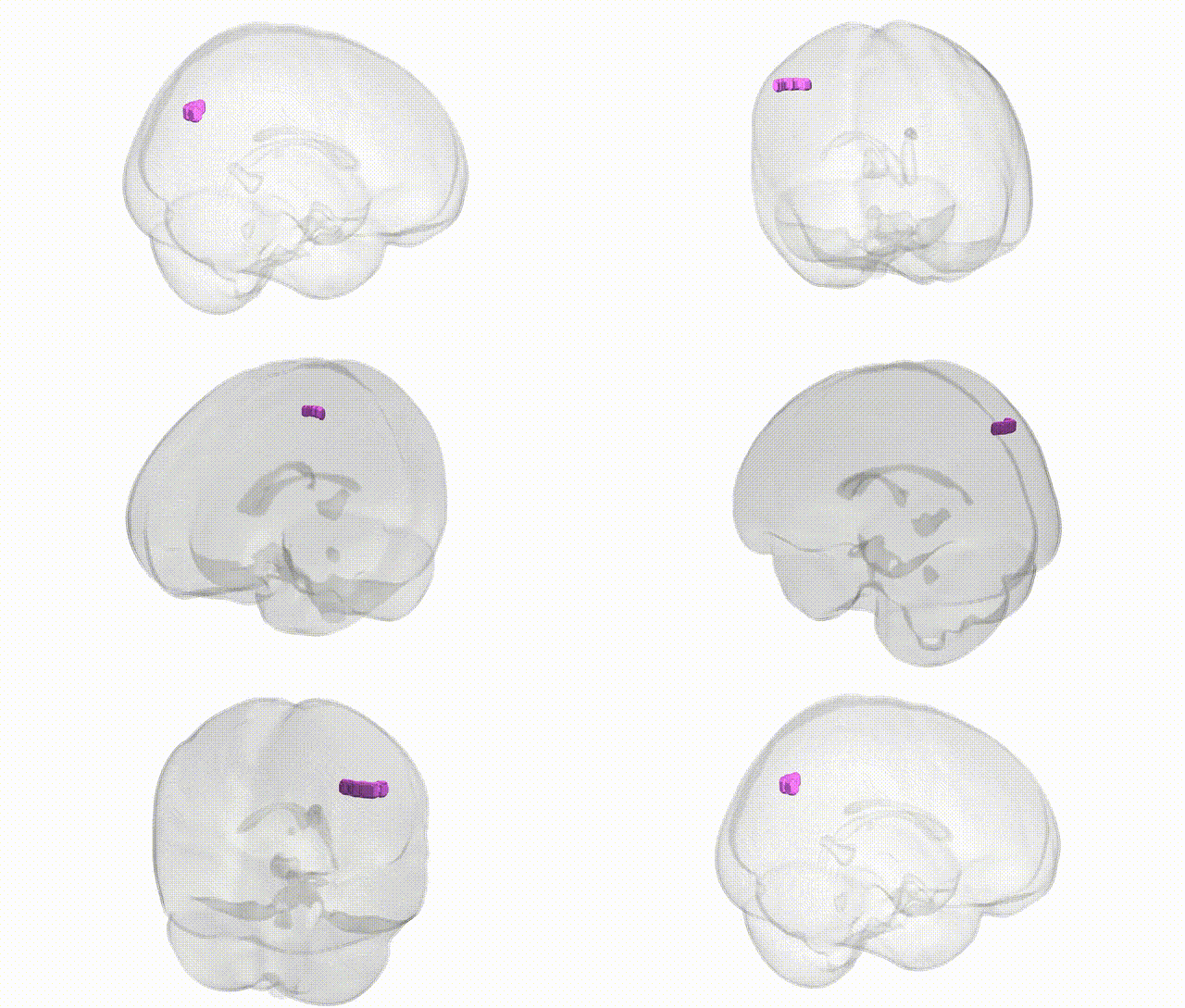
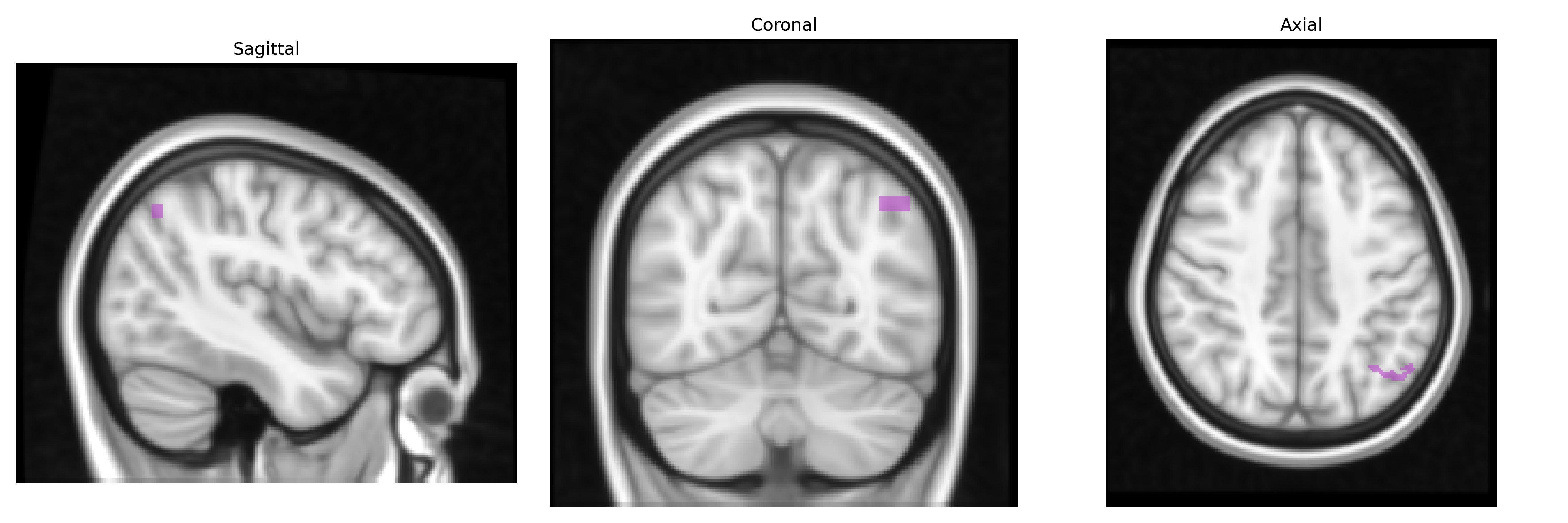
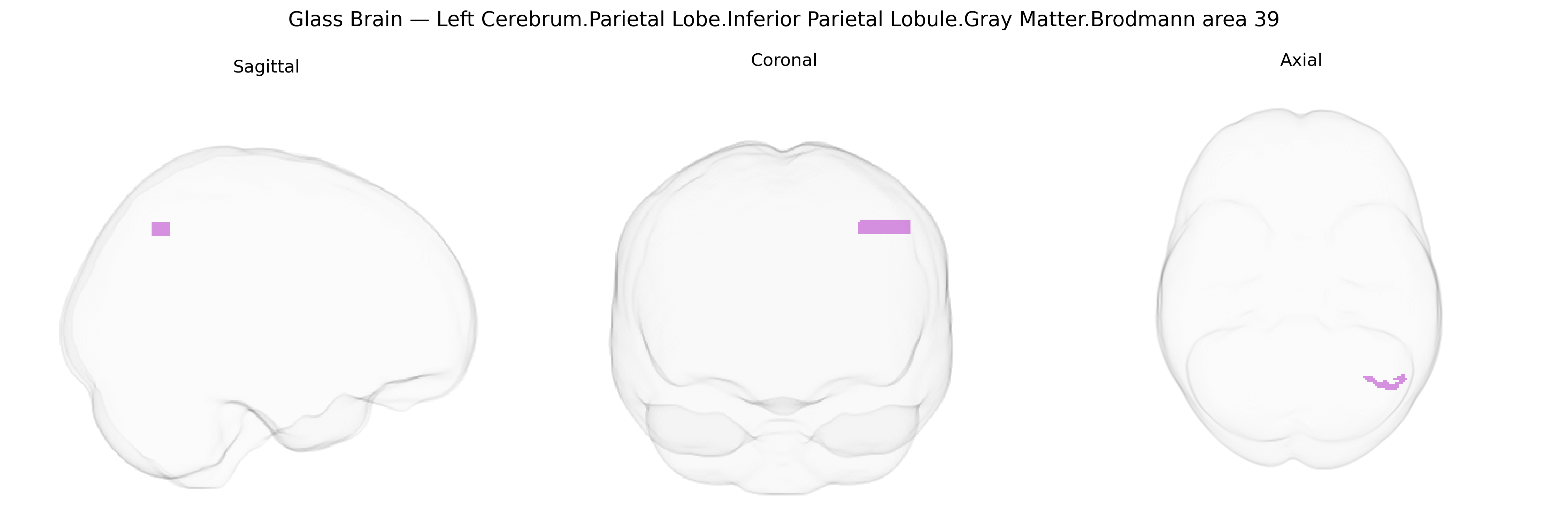
Brodmann area 39 of the inferior parietal lobule (gray matter) in the left cerebrum is a multimodal association cortex located primarily in the angular gyrus, bordering the temporal, occipital, and parietal lobes. It integrates visual, auditory, and somatosensory inputs to support high-level cognitive functions including language comprehension (especially reading and writing), semantic processing, number processing, spatial cognition, and aspects of theory of mind and episodic memory retrieval. This region forms part of the dominant-hemisphere perisylvian language network and is heavily interconnected with adjacent parietal areas, the superior temporal gyrus, prefrontal association cortices, and occipital visual regions, facilitating cross-modal integration and symbolic representation. Lesions in this area are classically associated with components of Gerstmann syndrome and certain aphasic and alexic syndromes. No direct Wikipedia article exists for “Brodmann area 39,” but it is encompassed within the Angular gyrus.
The bilateral inferior parietal lobule (Brodmann area 39, angular gyrus) has been implicated in multiple genetic and genome-wide association studies, particularly in the context of higher-order cognition, language, and neuropsychiatric risk. GWAS of brain morphology and cortical thickness/volume (e.g., ENIGMA and UK Biobank–based studies) have identified common variants in genes involved in neurodevelopment and synaptic function—such as microtubule-associated and axon-guidance–related genes—associated with structural variation in the inferior parietal cortex, including BA39. Polygenic risk scores for schizophrenia, autism spectrum disorder, and major depressive disorder show associations with altered gray matter volume or functional activation in this region, consistent with its role in default mode and language networks. BA39 has also emerged in imaging-genetics studies linking APOE and other Alzheimer’s disease–related loci (e.g., CLU, PICALM) to regional atrophy and hypometabolism, reflecting its vulnerability in early and prodromal Alzheimer’s disease. Variants associated with educational attainment, general cognitive ability, and reading and language-related traits have been correlated with structural and functional differences in the inferior parietal lobule, highlighting a genetic contribution to interindividual variability in semantic processing, number cognition, and working memory that depends heavily on this parietal association cortex.
Overview generated by GPT-4o (2026).
Region ID: 1014
Hemisphere: bilateral
Atlas: Talairach labels 1mm
Full Quality Version: Download MP4
Full Quality Version: Download MP4
Wali Sidiqyar*, Gaurav Rudravaram*, Elyssa M. McMaster, Trent M. Schwartz, Adam M. Saunders, Kurt G. Schilling, Bennett A. Landman "Introducing SPINS: A Shared Public Visualization Library of Neuroanatomical Structures." Medical Imaging with Deep Learning- short paper
This resource is licensed under CC0 1.0 Universal (Public Domain).