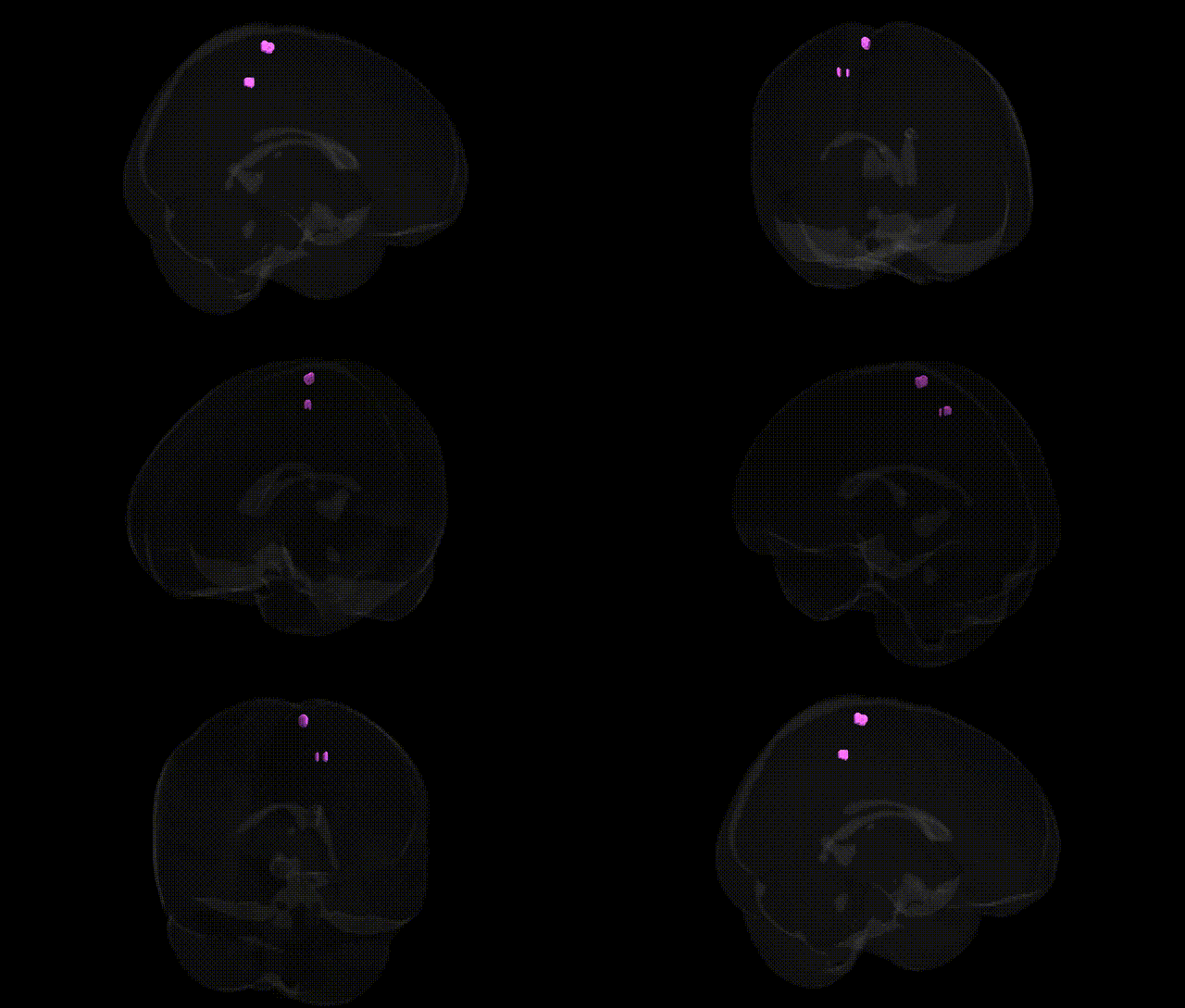
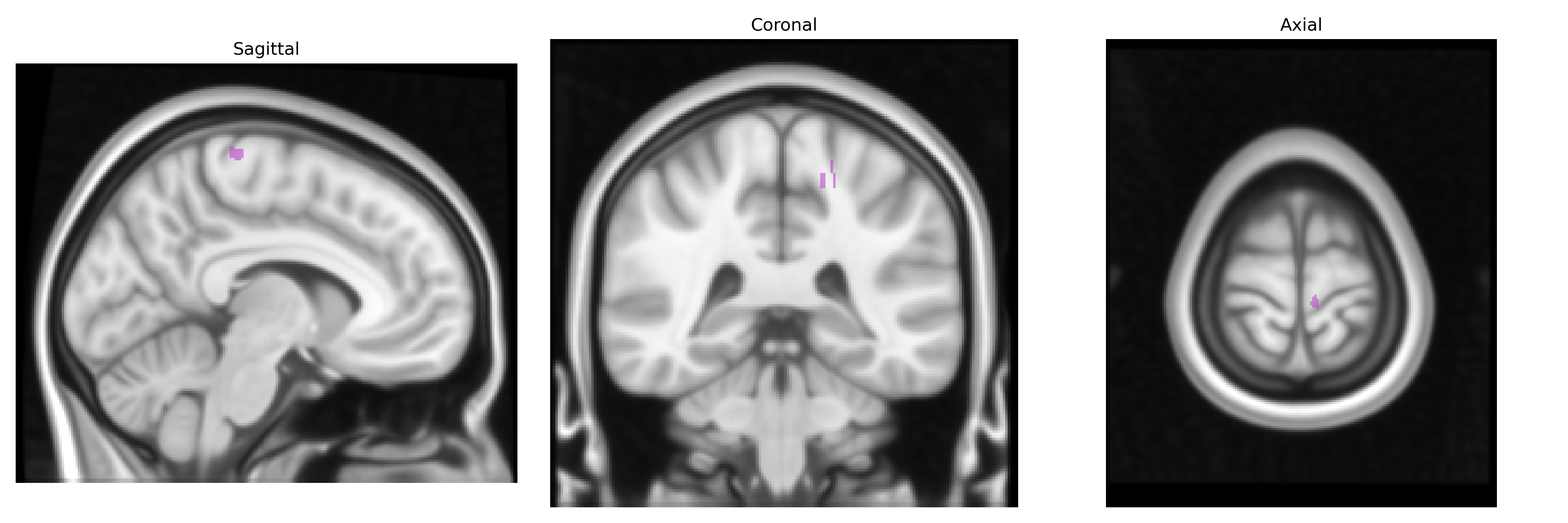
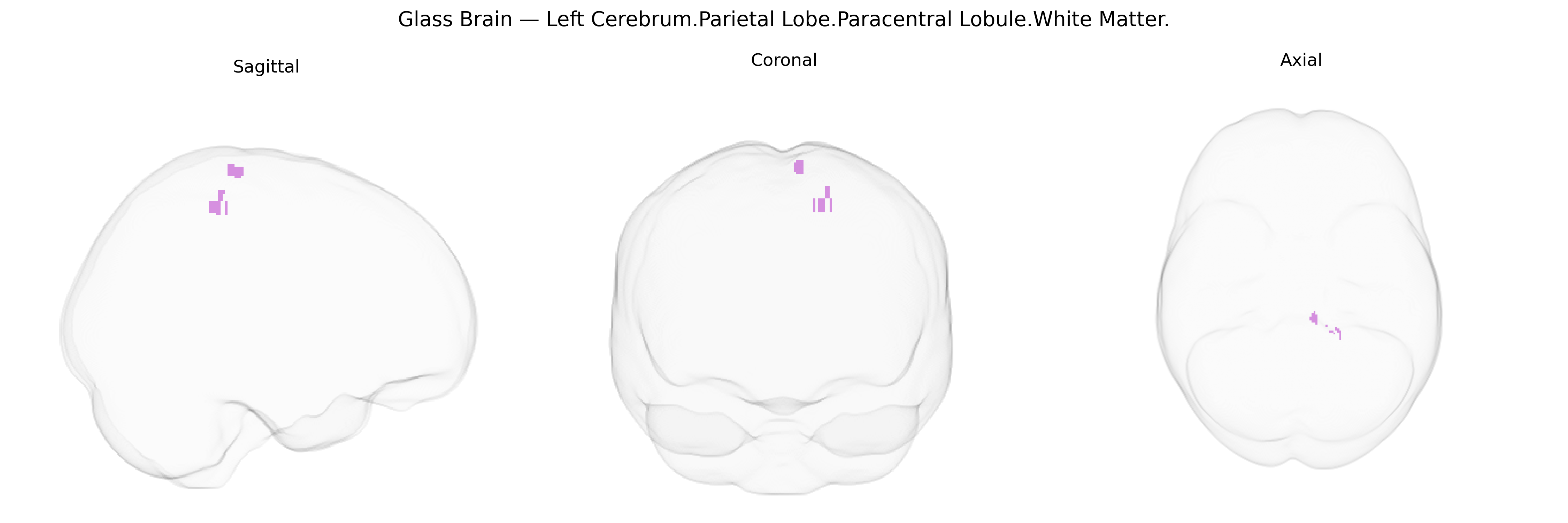
The bilateral Left Cerebrum.Parietal Lobe.Paracentral Lobule.White Matter corresponds to the deep myelinated fiber tracts underlying the paracentral lobule on the medial surface of the parietal lobe, bridging primary motor and primary somatosensory cortices around the medial extension of the central sulcus. These white matter pathways integrate motor and sensory information related primarily to the contralateral lower limbs, contributing to voluntary movement, somatosensory processing, and coordination of leg and pelvic functions such as gait and, to some extent, sphincter control. As part of the superior medial parietal region, this white matter connects with premotor, supplementary motor, and other parietal association areas, supporting sensorimotor integration and the execution of complex, lower-limb–focused motor programs. There is no direct link for this exact white matter label; a related cortical structure is the Paracentral lobule.
The bilateral left paracentral lobule white matter, as defined in the Talairach 1 mm atlas within the parietal lobe, has been implicated in several genetic and GWAS-based associations, largely through imaging-genetics studies of white matter microstructure and cortical connectivity rather than region-specific candidate genes. Diffusion MRI GWAS (e.g., UK Biobank) have identified common variants in genes involved in axon guidance, myelination, and cytoskeletal dynamics—such as CNTNAP2, NRG1, MAG, and LINGO1—associated with fractional anisotropy and mean diffusivity in midline sensorimotor and paracentral white matter tracts, which support motor and somatosensory functions. Polygenic risk scores for multiple sclerosis, schizophrenia, major depressive disorder, and autism spectrum disorder have been linked to altered paracentral or adjacent frontoparietal white matter integrity, suggesting shared genetic architectures affecting myelin and neurodevelopmental pathways. In addition, loci related to neuroinflammation and immune regulation (including HLA-region variants) have shown associations with lesion load or microstructural damage in periventricular and parasagittal white matter that encompasses paracentral regions in demyelinating diseases such as multiple sclerosis. However, no single gene or locus has been uniquely and reproducibly assigned to the left paracentral lobule white matter in isolation; instead, this region participates in distributed networks whose structure and vulnerability reflect polygenic influences on white matter development, maintenance, and susceptibility to neuropsychiatric and neurodegenerative disorders.
Overview generated by GPT-4o (2026).
Region ID: 1063
Hemisphere: bilateral
Atlas: Talairach labels 1mm
Full Quality Version: Download MP4
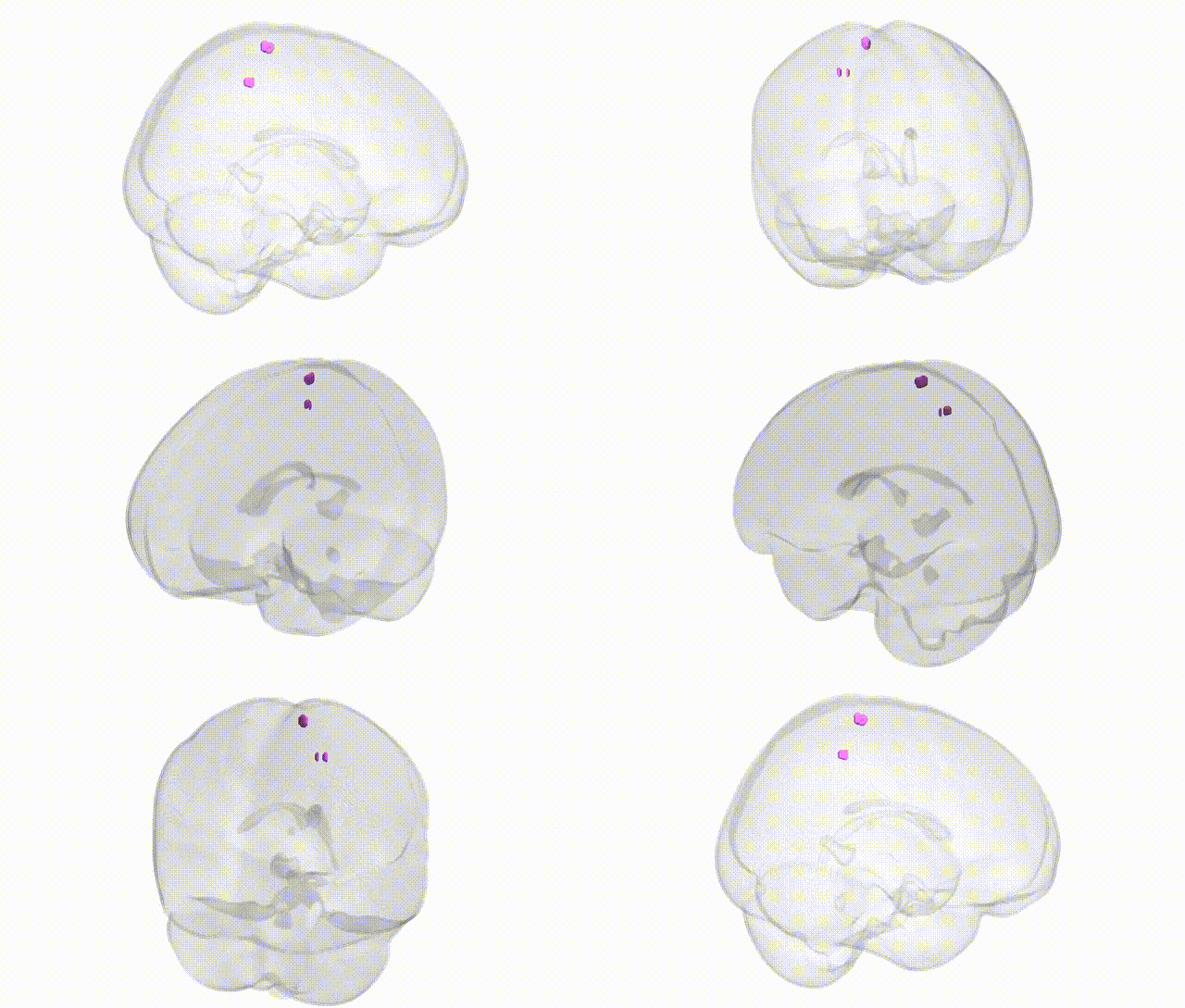
Full Quality Version: Download MP4
Wali Sidiqyar*, Gaurav Rudravaram*, Elyssa M. McMaster, Trent M. Schwartz, Adam M. Saunders, Kurt G. Schilling, Bennett A. Landman "Introducing SPINS: A Shared Public Visualization Library of Neuroanatomical Structures." Medical Imaging with Deep Learning- short paper
This resource is licensed under CC0 1.0 Universal (Public Domain).