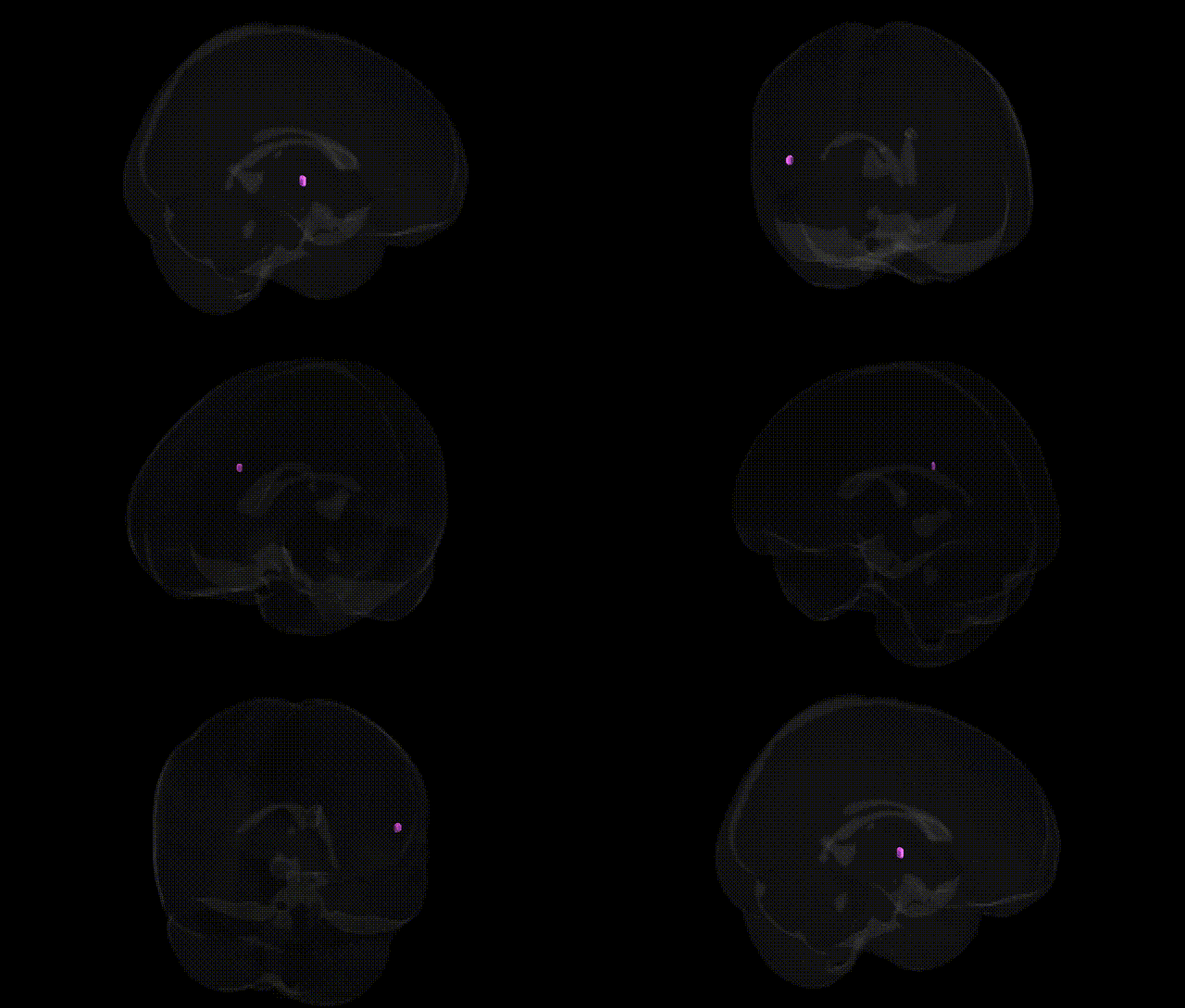
The bilateral Left Cerebrum.Parietal Lobe.Postcentral Gyrus.Gray Matter corresponds primarily to the primary somatosensory cortex (Brodmann areas 3, 1, and 2) located in the posterior bank of the central sulcus and the immediately adjacent postcentral gyrus of the parietal lobe. This region receives dense thalamocortical input from the ventral posterior nuclei of the thalamus and is organized somatotopically, forming the sensory homunculus that represents cutaneous, proprioceptive, and some nociceptive information from the contralateral side of the body. Neuronal populations here participate in fine tactile discrimination, vibration and joint position sense, and the early cortical processing of body surface and deep receptor inputs, providing essential substrates for sensorimotor integration and conscious perception of bodily states. Although defined here as “left” in the atlas nomenclature, the description applies symmetrically across hemispheres, with lateralization depending on specific functional networks and connectivity patterns. Postcentral gyrus
The bilateral Left Cerebrum Parietal Lobe Postcentral Gyrus gray matter (primary somatosensory cortex; S1) has been implicated in multiple genetic association studies that link structural and functional variation in this region to both common and rare variants, although few findings are specific to the exact Talairach-defined label. Large-scale MRI–GWAS consortia (e.g., ENIGMA, UK Biobank) have identified SNPs near genes involved in neurodevelopment, synaptic function, and cortical patterning (such as MIR137, TBR1/EMX2-related loci, and various glutamatergic and cytoskeletal genes) that associate with cortical thickness or surface area within parietal and postcentral regions, often as part of broader sensorimotor or parietal lobule measures. Polygenic risk scores for schizophrenia, major depressive disorder, and autism spectrum disorder have been correlated with gray matter alterations in the postcentral gyrus, and rare copy number variants (e.g., 22q11.2 deletion, 16p11.2 CNVs) show downstream effects on somatosensory cortex morphology and connectivity. GWAS of pain sensitivity, tactile perception, and motor coordination, as well as traits like hand preference, also implicate somatosensory and adjacent parietal regions through genetically driven differences in cortical organization. In neurodegenerative and neurodevelopmental contexts, genes associated with Alzheimer’s disease (e.g., APOE ε4) and frontotemporal dementia, as well as ASD- and ADHD-related loci, have been linked to postcentral/parietal atrophy or atypical development in imaging–genetics studies, indicating that the postcentral gyrus is a convergent site where genetic variation influences somatosensory processing, sensorimotor integration, and higher-order cognitive traits.
Overview generated by GPT-4o (2026).
Region ID: 794
Hemisphere: bilateral
Atlas: Talairach labels 1mm
Full Quality Version: Download MP4
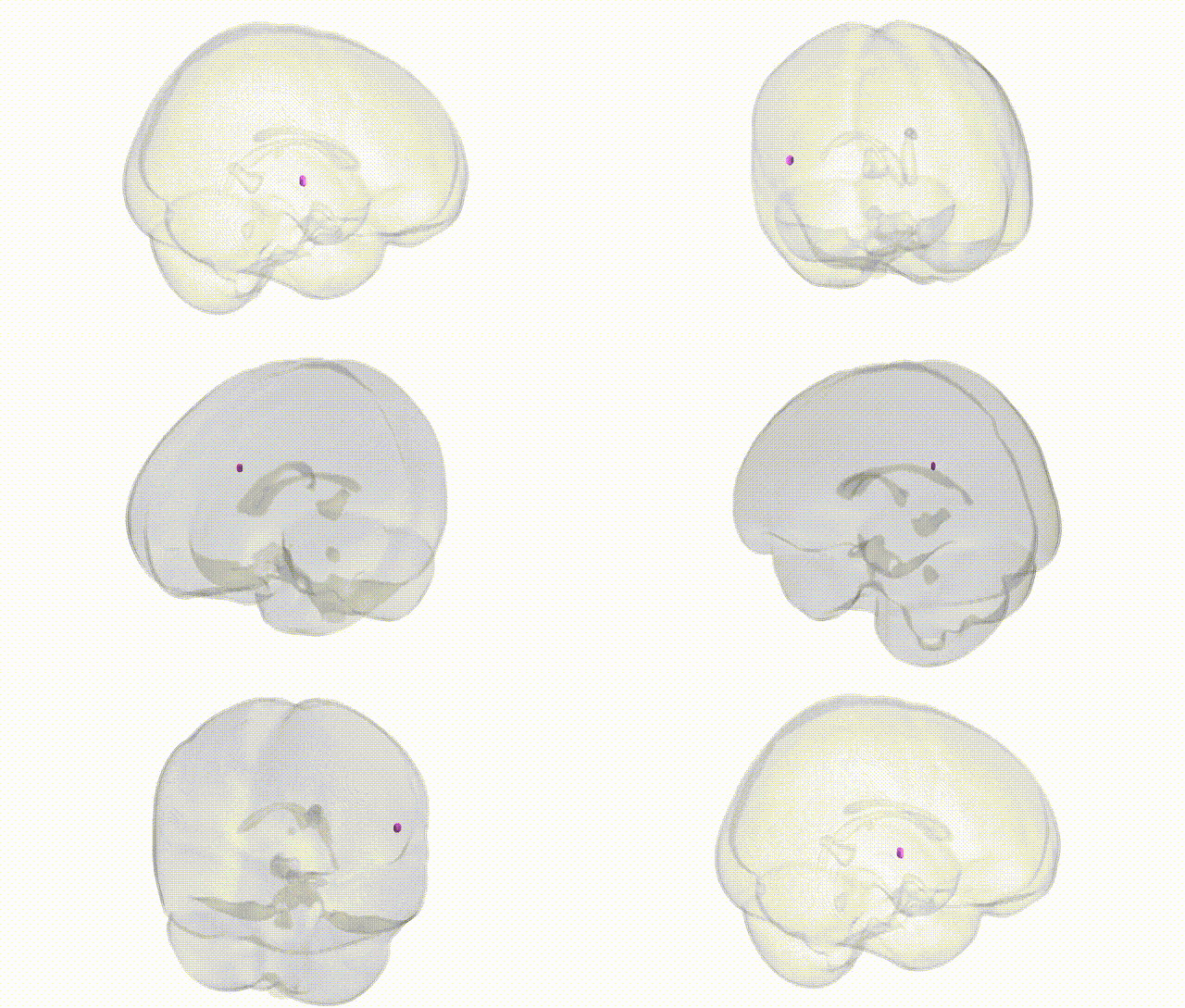
Full Quality Version: Download MP4
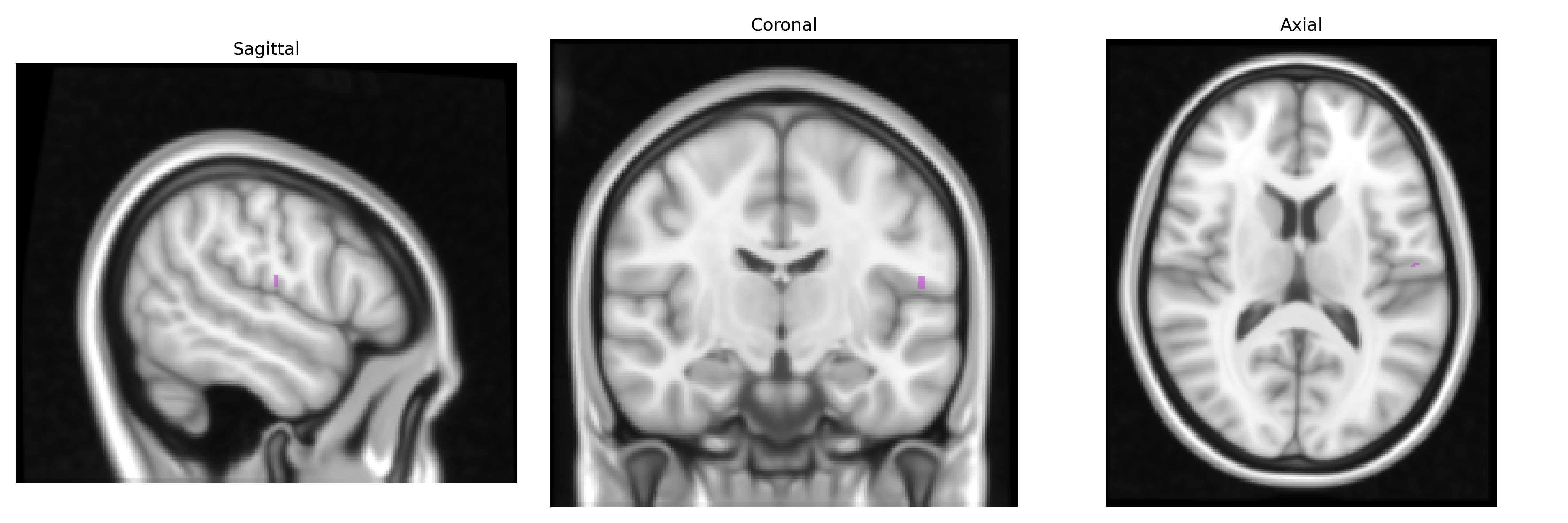
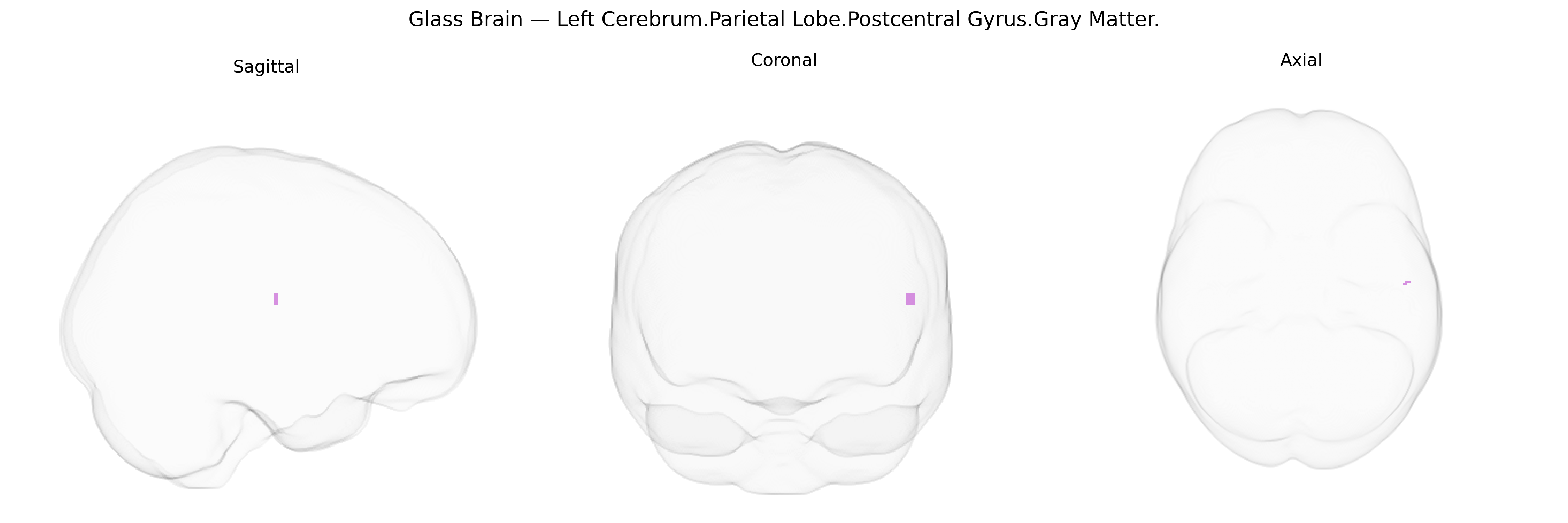
Wali Sidiqyar*, Gaurav Rudravaram*, Elyssa M. McMaster, Trent M. Schwartz, Adam M. Saunders, Kurt G. Schilling, Bennett A. Landman "Introducing SPINS: A Shared Public Visualization Library of Neuroanatomical Structures." Medical Imaging with Deep Learning- short paper
This resource is licensed under CC0 1.0 Universal (Public Domain).