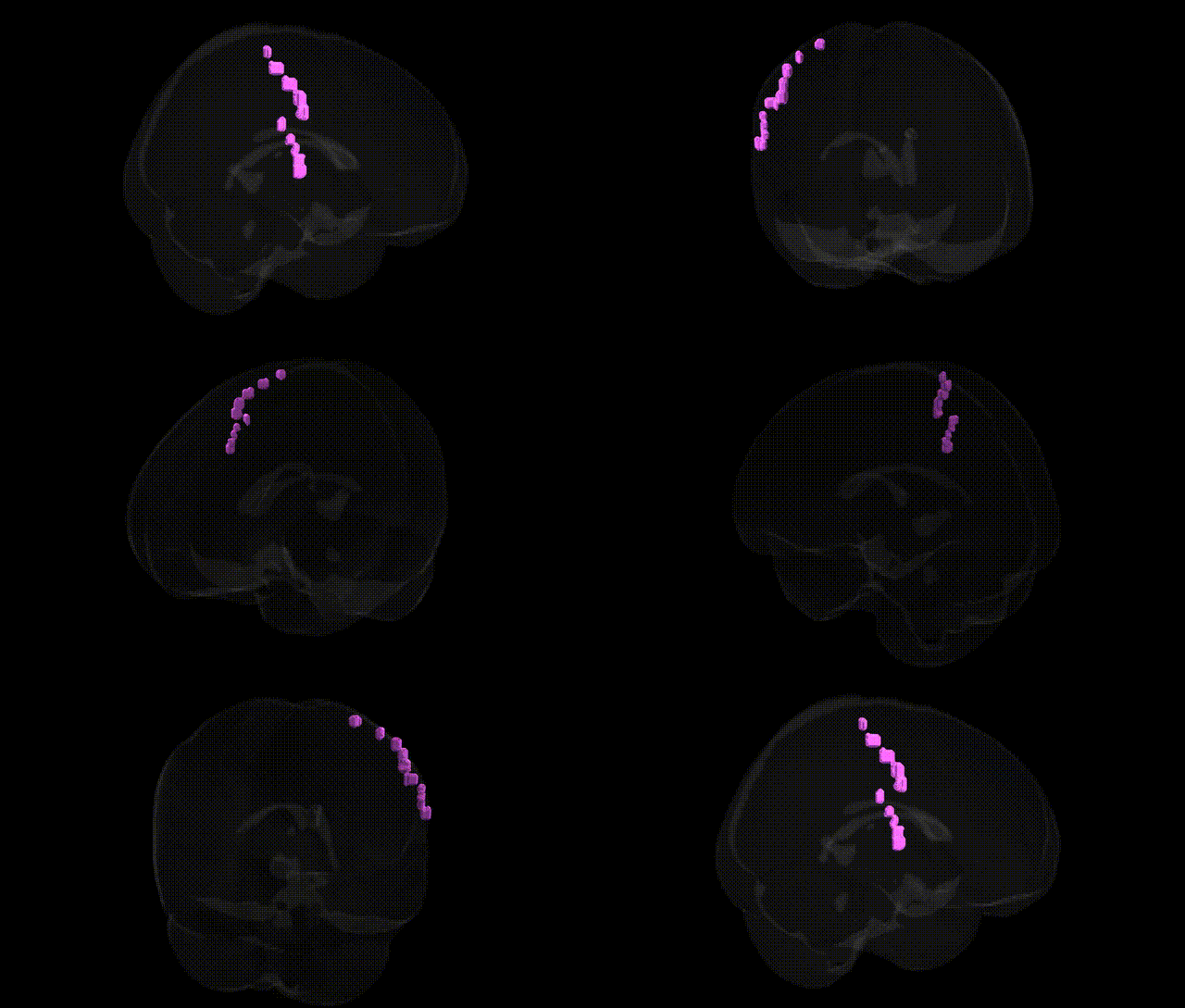
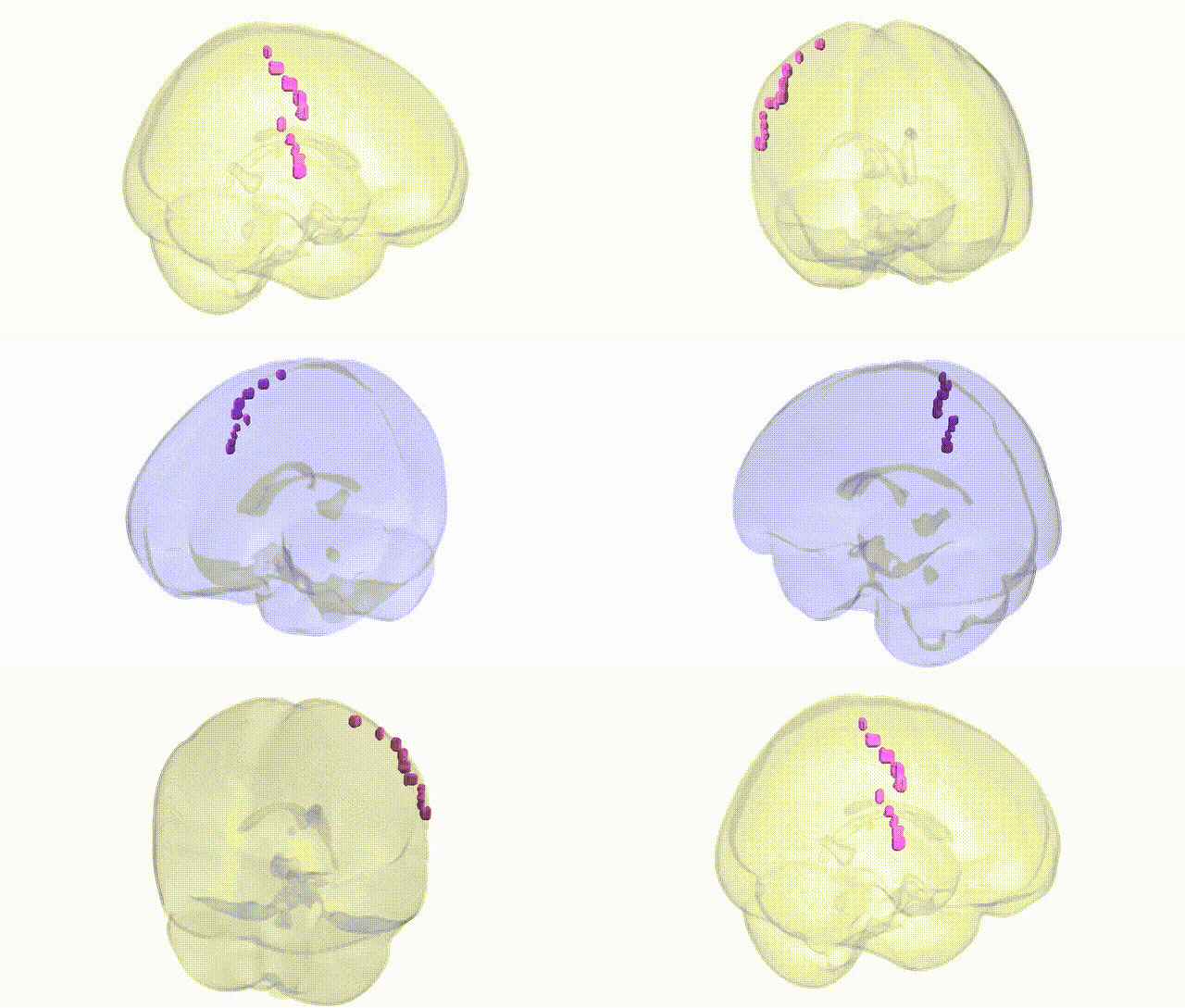
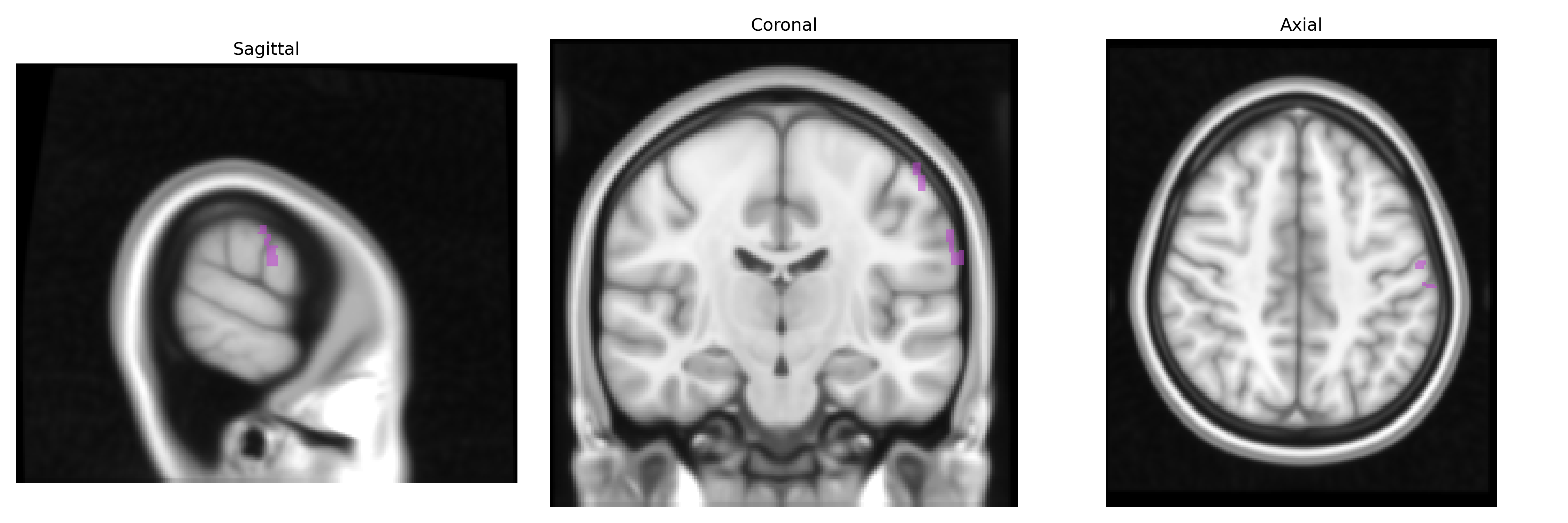
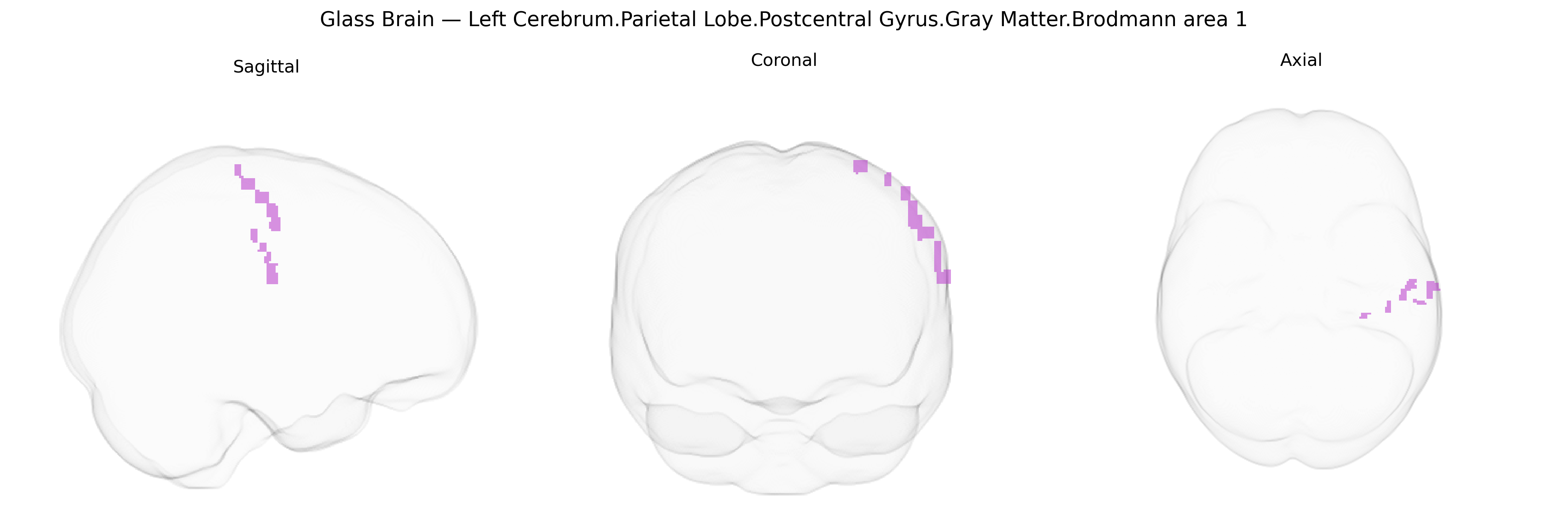
Bilateral Left Cerebrum.Parietal Lobe.Postcentral Gyrus.Gray Matter.Brodmann area 1 corresponds to a primary somatosensory cortical field located in the postcentral gyrus of the parietal lobe, immediately posterior to the central sulcus. Brodmann area 1 receives dense thalamocortical input (primarily from the ventral posterior nucleus) and integrates tactile information such as texture, light touch, and vibration from the contralateral body, forming part of the somatotopically organized sensory homunculus. Functionally, it participates in conscious perception of cutaneous stimuli and contributes to higher-order processing and discrimination of somatosensory inputs in concert with adjacent Brodmann areas 2 and 3. There is no direct Wikipedia article for “Brodmann area 1”; a closely related and encompassing structure is the Primary somatosensory cortex.
The bilateral postcentral gyrus (Brodmann area 1) in the parietal lobe, a primary somatosensory region, shows convergent genetic associations from imaging–genetics and GWAS studies implicating neurodevelopmental, synaptic, and cortical morphometry pathways. Large-scale brain MRI GWAS (e.g., ENIGMA and UK Biobank) have identified common variants in genes regulating cortical development, axon guidance, and synaptic signaling (such as MIR137, HMGA2, DRD2, and several loci near WNT and FGF pathway genes) that associate with postcentral gyrus thickness and surface area, often overlapping with broader parietal cortex measures rather than region-specific signals. Polygenic risk for schizophrenia, bipolar disorder, autism spectrum disorder, and major depression has been linked to structural and functional alterations in parietal somatosensory regions, including reduced cortical thickness or altered activation in the postcentral gyrus, suggesting shared genetic influences on sensory integration and higher-order cognition. GWAS of cognitive traits (general intelligence, educational attainment, working memory) and sensorimotor abilities report associations in loci that show enriched expression in somatosensory cortex, with the postcentral gyrus frequently highlighted in imaging–genetic overlap analyses. Furthermore, specific rare variants and copy-number changes affecting neurodevelopmental genes (for example, 22q11.2 deletions and mutations in genes such as CNTNAP2 and SHANK family members) have been associated with atypical somatosensory cortex development and parietal lobe anomalies, indirectly implicating Brodmann area 1 through structural and connectivity changes rather than single-region GWAS hits.
Overview generated by GPT-4o (2026).
Region ID: 893
Hemisphere: bilateral
Atlas: Talairach labels 1mm
Full Quality Version: Download MP4
Full Quality Version: Download MP4
Wali Sidiqyar*, Gaurav Rudravaram*, Elyssa M. McMaster, Trent M. Schwartz, Adam M. Saunders, Kurt G. Schilling, Bennett A. Landman "Introducing SPINS: A Shared Public Visualization Library of Neuroanatomical Structures." Medical Imaging with Deep Learning- short paper
This resource is licensed under CC0 1.0 Universal (Public Domain).