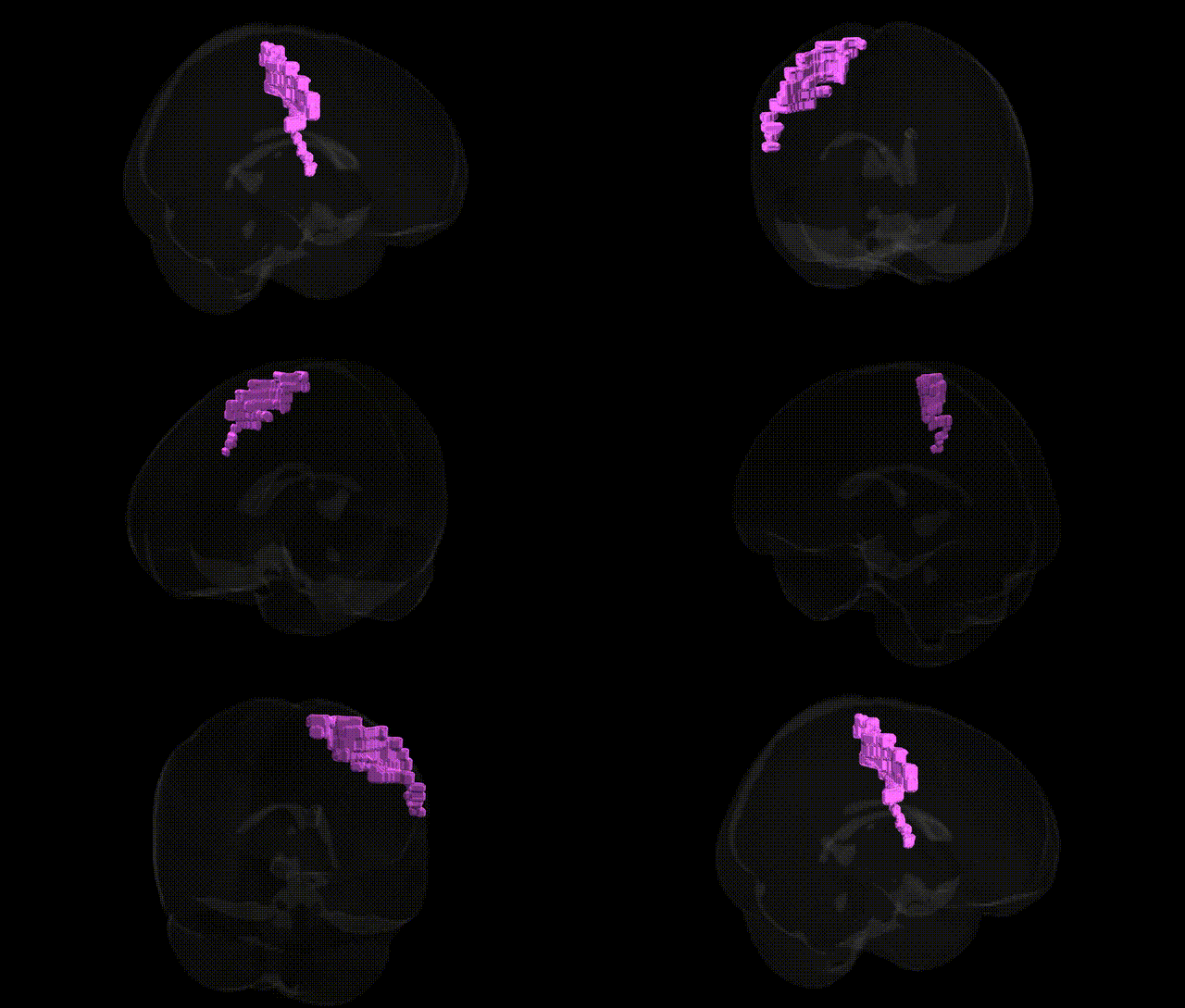
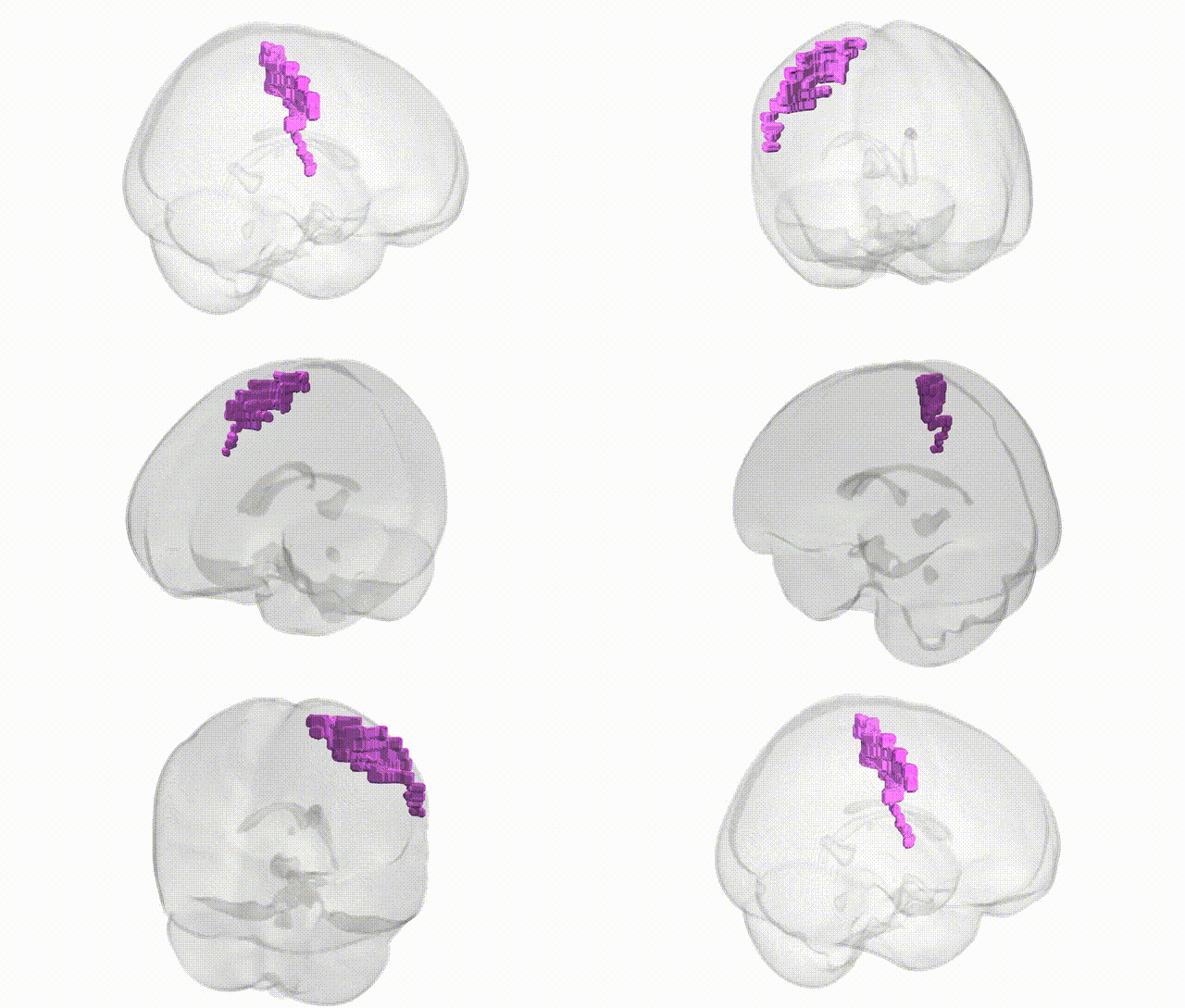
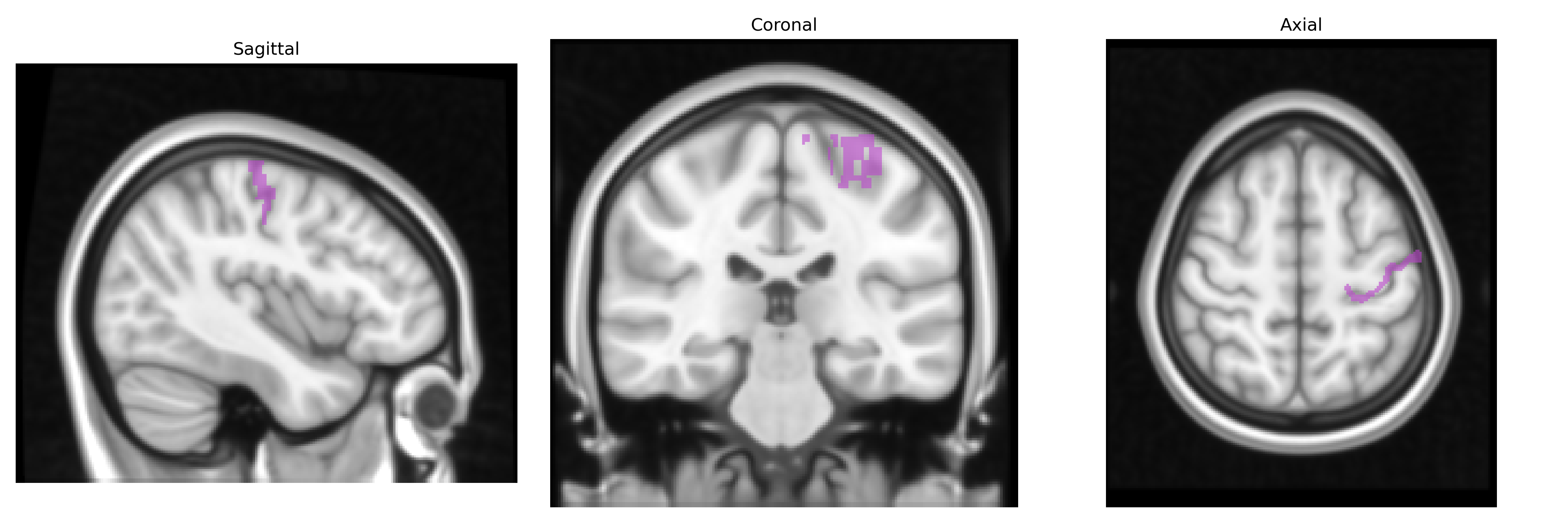
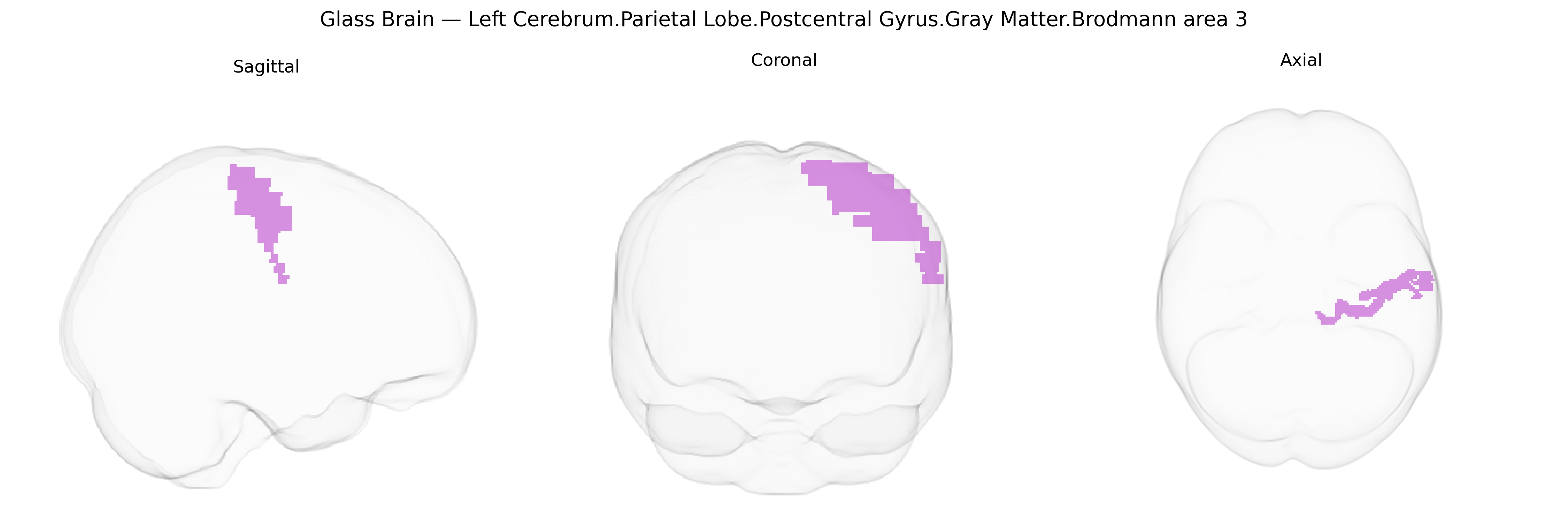
The bilateral Left Cerebrum.Parietal Lobe.Postcentral Gyrus.Gray Matter.Brodmann area 3 corresponds to the primary somatosensory cortex (S1) located in the anterior portion of the postcentral gyrus of the parietal lobe, immediately posterior to the central sulcus, and is organized somatotopically with a high density of granular layer IV neurons specialized for processing tactile and proprioceptive input from the contralateral body. This region receives dense thalamocortical projections from the ventral posterior nuclei of the thalamus and is critical for fine discriminative touch, vibration sense, and joint position awareness, forming the initial cortical stage of somatosensory processing that is further integrated with signals from adjacent Brodmann areas 1 and 2. Functionally, damage or dysfunction in Brodmann area 3 can result in severe deficits in basic tactile perception and impaired recognition of somatic stimuli, reflecting its role as a primary cortical recipient of somatosensory information. Primary somatosensory cortex
The bilateral postcentral gyrus (left parietal lobe, Brodmann area 3), a primary somatosensory cortex region defined in the Talairach 1 mm atlas, has been implicated in multiple genetic and GWAS findings that link structural and functional variation to both common and rare variants. Large-scale imaging–genetics studies (e.g., ENIGMA, UK Biobank) show SNP-based heritability for cortical thickness and surface area in primary somatosensory regions, with polygenic influences distributed across many loci, including genes involved in neurodevelopment, synaptic function, and axon guidance (such as variants near MIR137, MAPT, and cell-adhesion genes) that broadly affect cortical morphology. GWAS of brain somatosensory and pain-related traits implicate this region in the genetic architecture of chronic pain, tactile sensitivity, and migraine, often via shared polygenic risk with broader sensorimotor networks. Postcentral gyrus activation and morphology are also associated genetically with neurodevelopmental and psychiatric conditions—such as autism spectrum disorder, ADHD, and schizophrenia—where risk variants (for example in CNTNAP2, GRIN2A, and other synaptic genes) influence sensorimotor integration circuits that include Brodmann area 3. In addition, rare monogenic and copy-number variants affecting cortical development (e.g., in ASPM, TUBA1A, or 16p11.2 CNVs) can produce somatosensory cortical malformations that encompass the postcentral gyrus, linking genetic disruption of neurogenesis and cortical patterning to atypical gray-matter structure in this region.
Overview generated by GPT-4o (2026).
Region ID: 895
Hemisphere: bilateral
Atlas: Talairach labels 1mm
Full Quality Version: Download MP4
Full Quality Version: Download MP4
Wali Sidiqyar*, Gaurav Rudravaram*, Elyssa M. McMaster, Trent M. Schwartz, Adam M. Saunders, Kurt G. Schilling, Bennett A. Landman "Introducing SPINS: A Shared Public Visualization Library of Neuroanatomical Structures." Medical Imaging with Deep Learning- short paper
This resource is licensed under CC0 1.0 Universal (Public Domain).