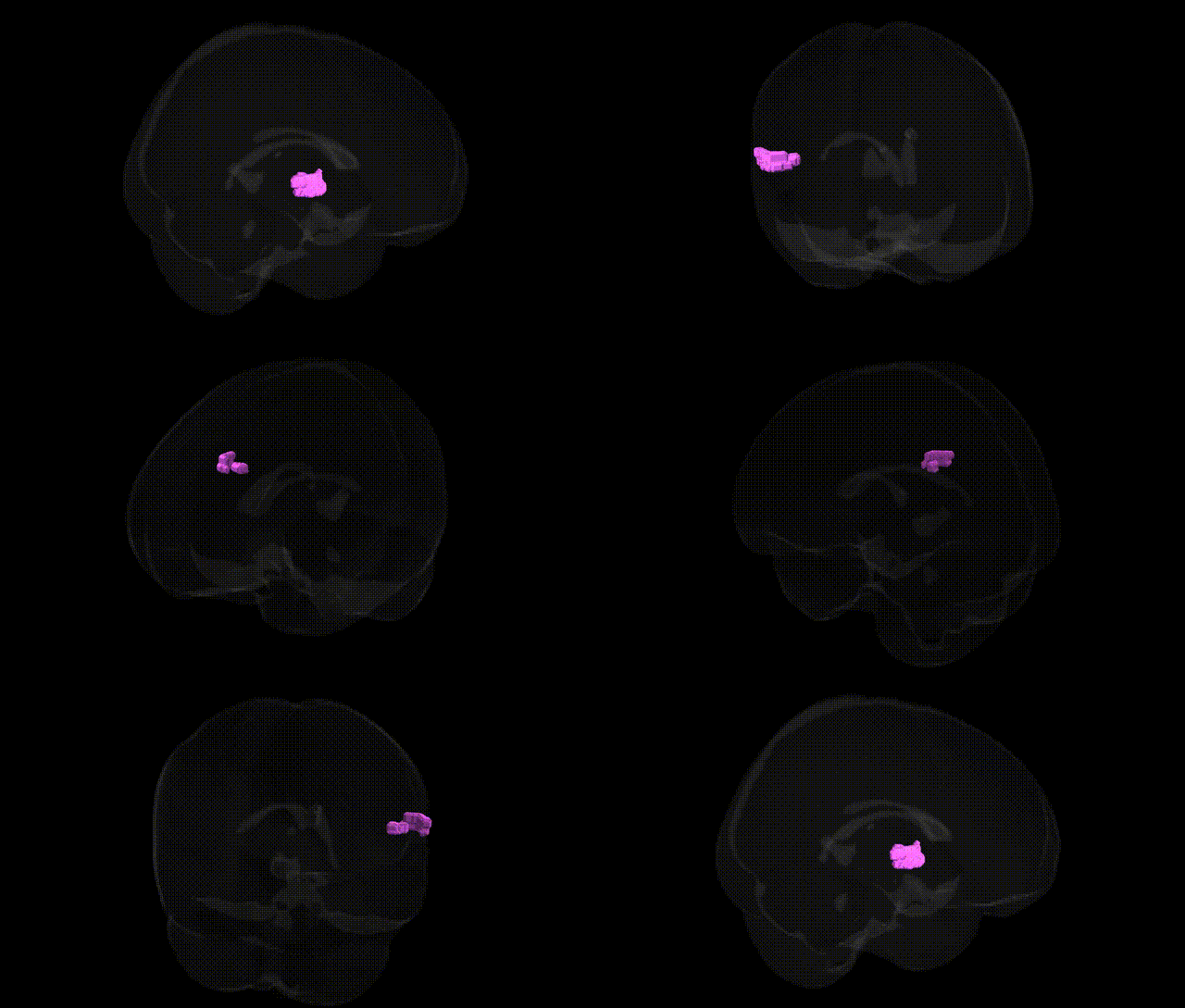
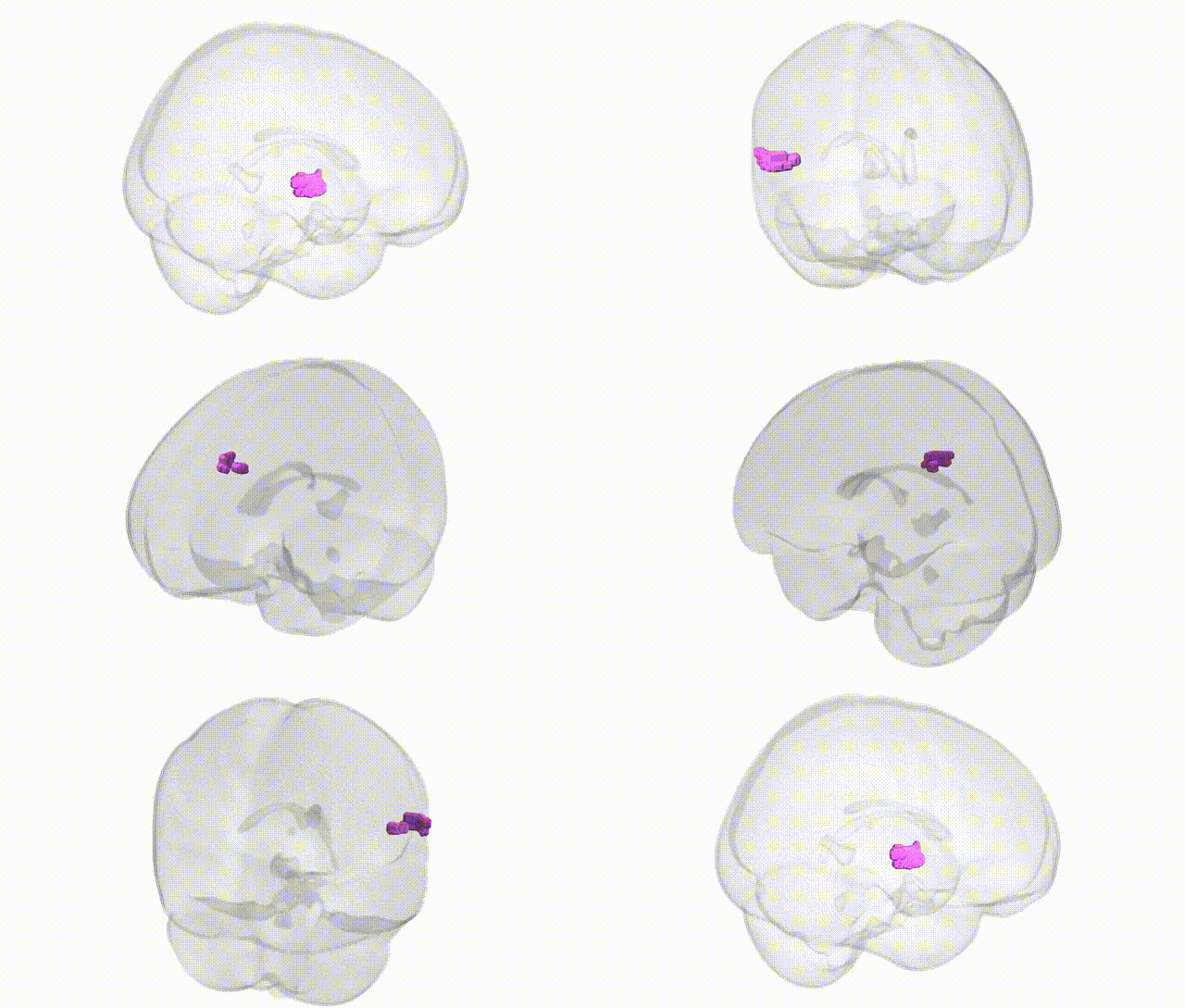
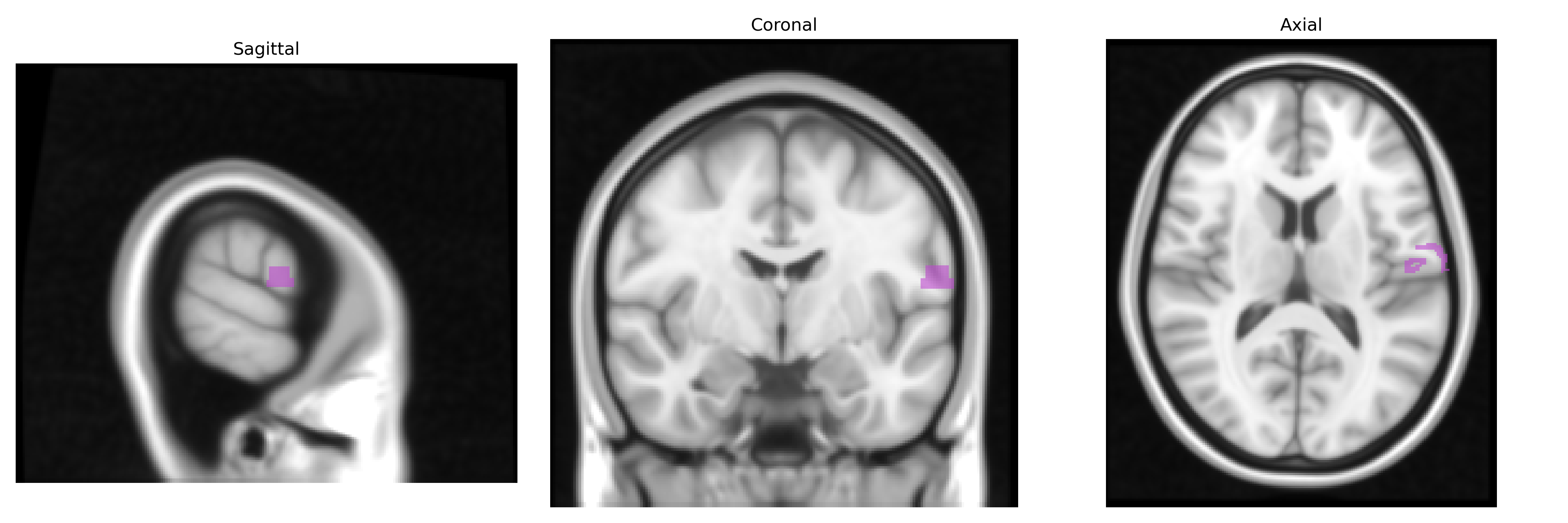
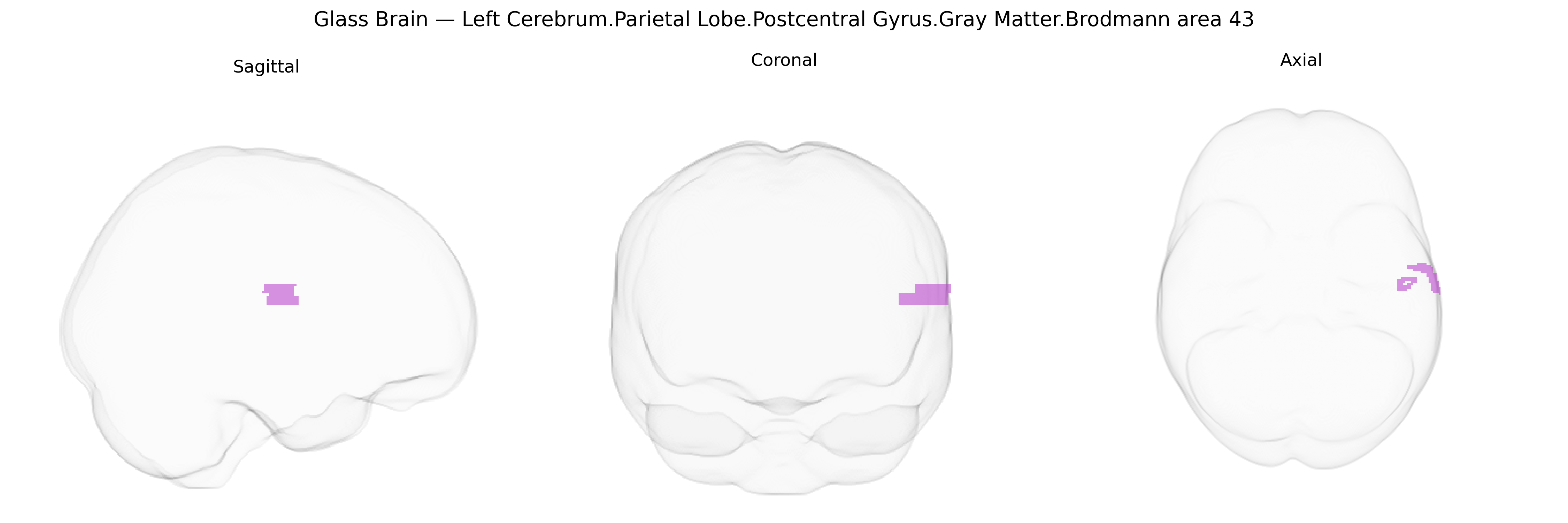
Brodmann area 43 in the bilateral Left Cerebrum Parietal Lobe Postcentral Gyrus gray matter corresponds to the subcentral area, a small cortical region situated ventral to the primary somatosensory cortex and near the lateral (Sylvian) fissure. It is associated with gustatory processing and multimodal sensory integration, receiving inputs related to taste, oral somatosensation, and possibly aspects of sensorimotor control of orofacial structures. Functionally, this area contributes to the perception and discrimination of taste and may participate in integrating gustatory information with somatic and visceral sensory signals. Cytoarchitectonically, it is distinguished from adjacent primary somatosensory and insular regions by its specific laminar organization, and it is often considered part of or closely linked to the human gustatory cortex. Brodmann area 43
The bilateral Left Cerebrum Parietal Lobe Postcentral Gyrus Gray Matter Brodmann area 43 (Talairach 1 mm Atlas) lies at the interface of primary somatosensory and gustatory processing, and genetic associations reflect this multimodal role. GWAS and imaging‑genetics studies implicate common variants in genes involved in synaptic function and neurodevelopment (such as BDNF, GRIN2B, CNTNAP2, and calcium‑channel genes like CACNA1C) in structural and functional variability of the postcentral/parietal regions, including BA43, often via cortical thickness or surface area measures derived from MRI. Large consortia (e.g., ENIGMA, UK Biobank) have identified polygenic influences on parietal somatosensory cortex morphology associated with general cognitive ability, educational attainment, and sensorimotor performance, although these findings typically treat the postcentral gyrus as part of broader parietal or somatosensory parcels rather than isolating BA43. Neurodevelopmental and psychiatric disorders—autism spectrum disorder, ADHD, schizophrenia, and major depression—show parietal/postcentral structural and connectivity alterations linked to polygenic risk scores and loci in genes regulating synaptic plasticity and cortical patterning (e.g., DISC1, NRXN1, and various glutamatergic pathway genes). Taste and orofacial sensorimotor functions attributed to BA43 intersect with genetic studies of obesity and eating behavior that relate parietal-insular circuits to variants in FTO, MC4R, and dopaminergic signaling genes, although these associations are regionally broader and not specific to BA43. Overall, current genetic evidence supports a polygenic, distributed architecture in which BA43 participates as part of larger somatosensory-parietal networks linked to cognition, sensorimotor integration, and neuropsychiatric risk, rather than as a uniquely isolated locus of genetic association.
Overview generated by GPT-4o (2026).
Region ID: 792
Hemisphere: bilateral
Atlas: Talairach labels 1mm
Full Quality Version: Download MP4
Full Quality Version: Download MP4
Wali Sidiqyar*, Gaurav Rudravaram*, Elyssa M. McMaster, Trent M. Schwartz, Adam M. Saunders, Kurt G. Schilling, Bennett A. Landman "Introducing SPINS: A Shared Public Visualization Library of Neuroanatomical Structures." Medical Imaging with Deep Learning- short paper
This resource is licensed under CC0 1.0 Universal (Public Domain).