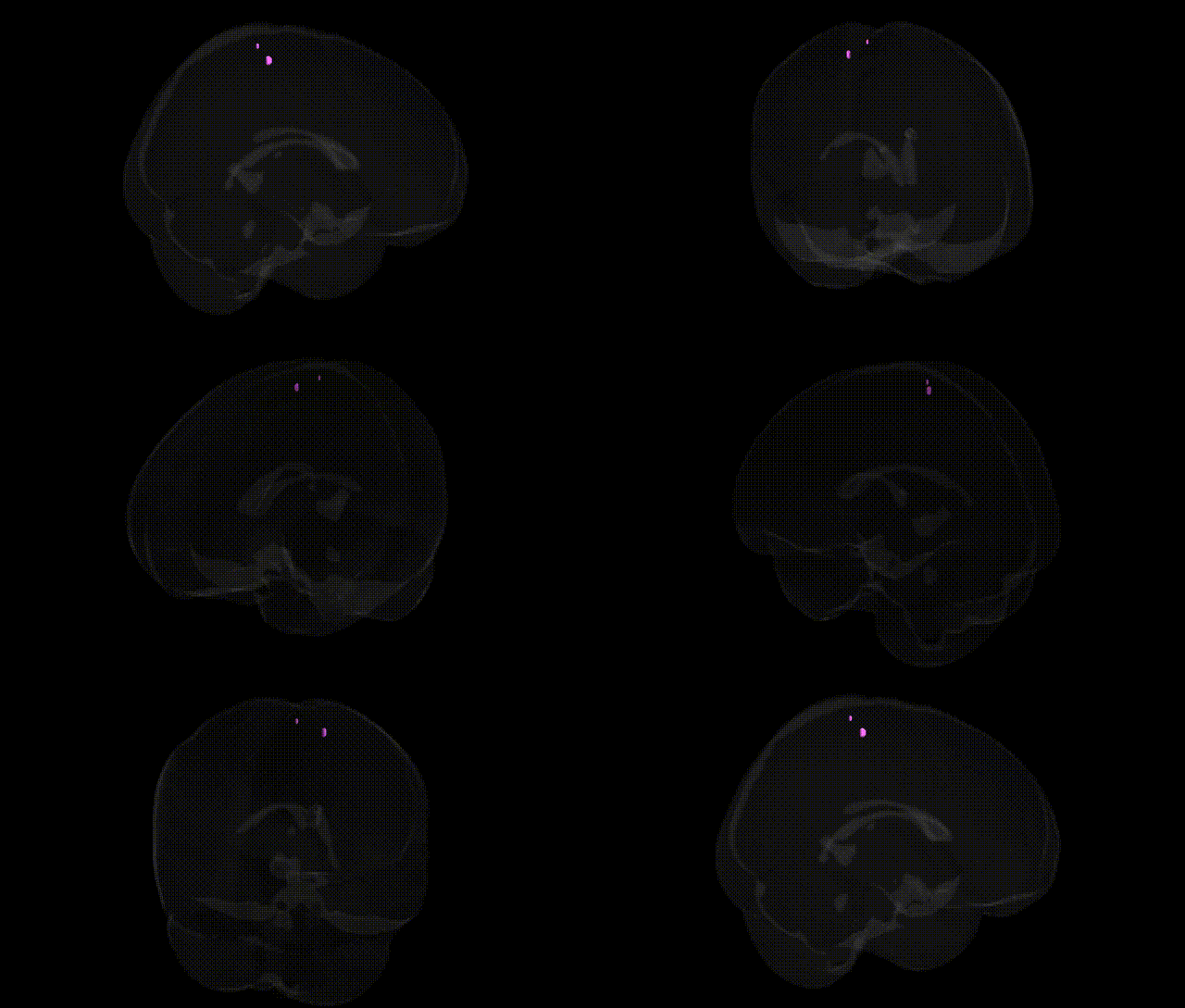
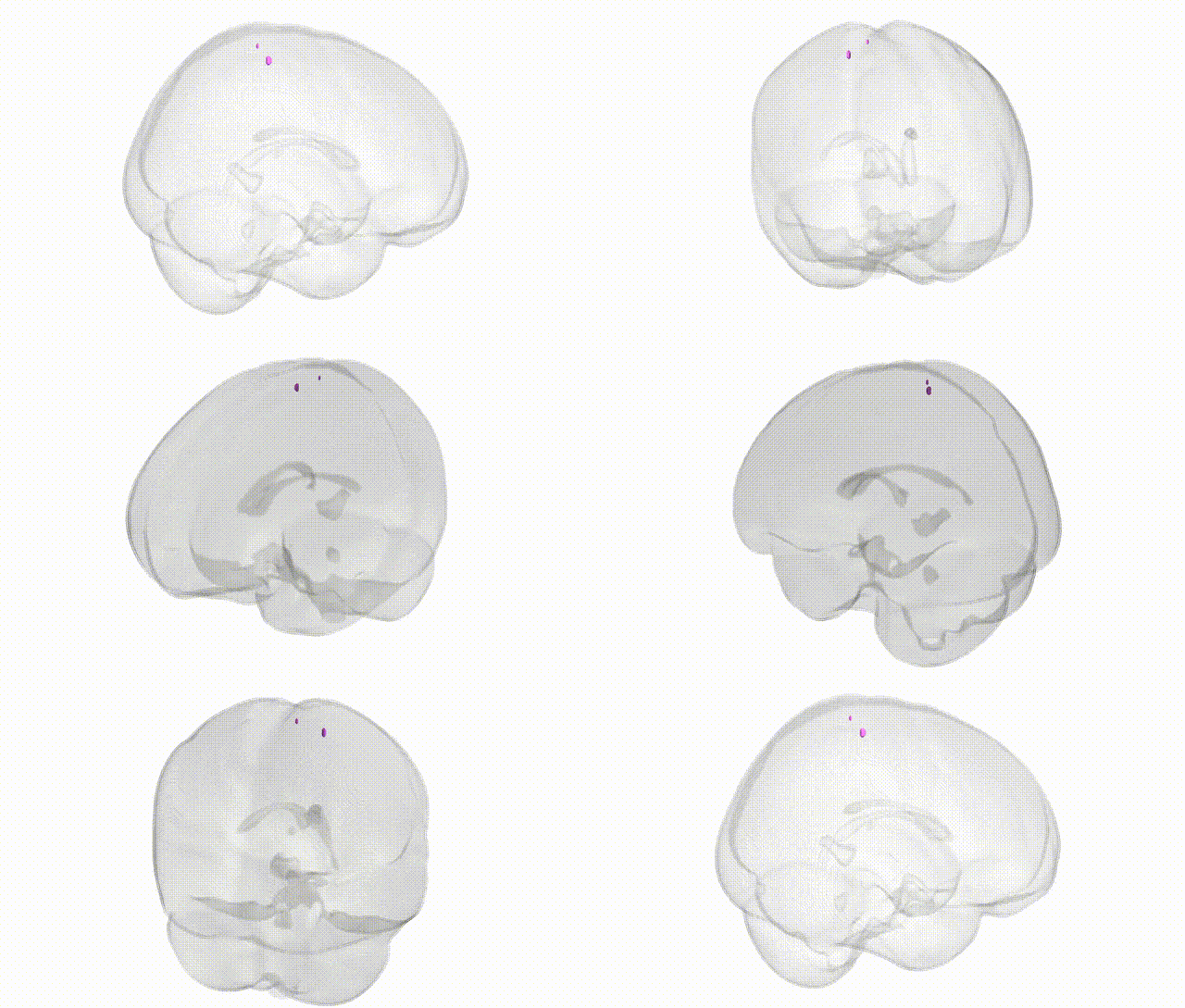
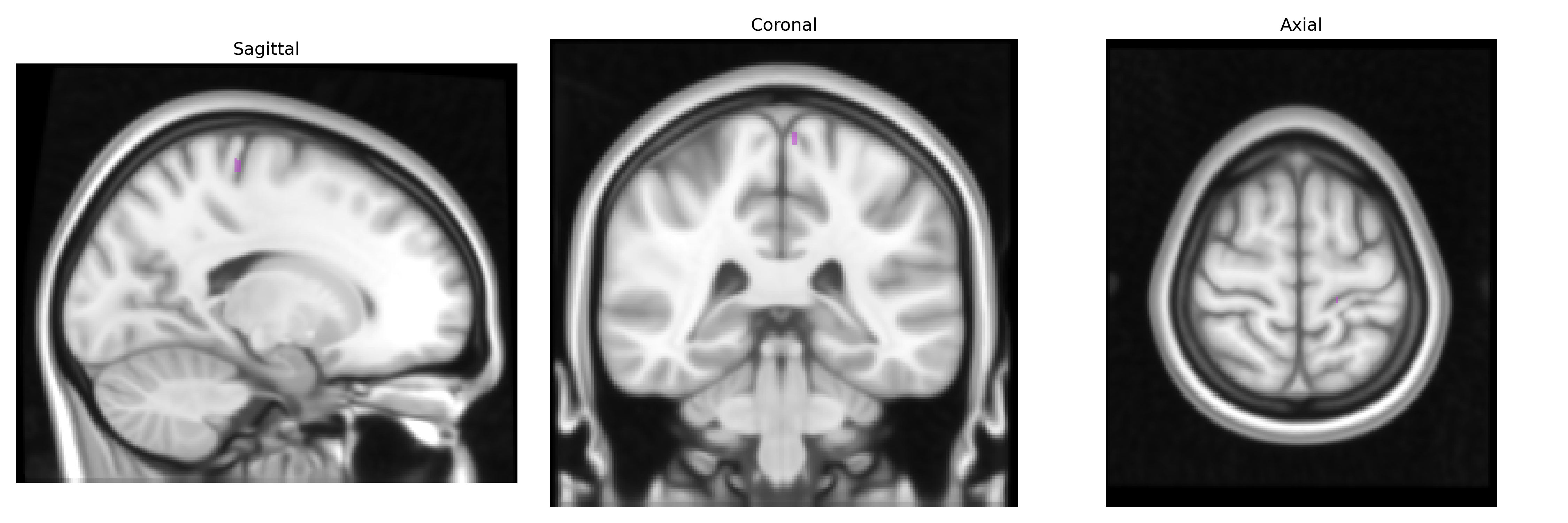
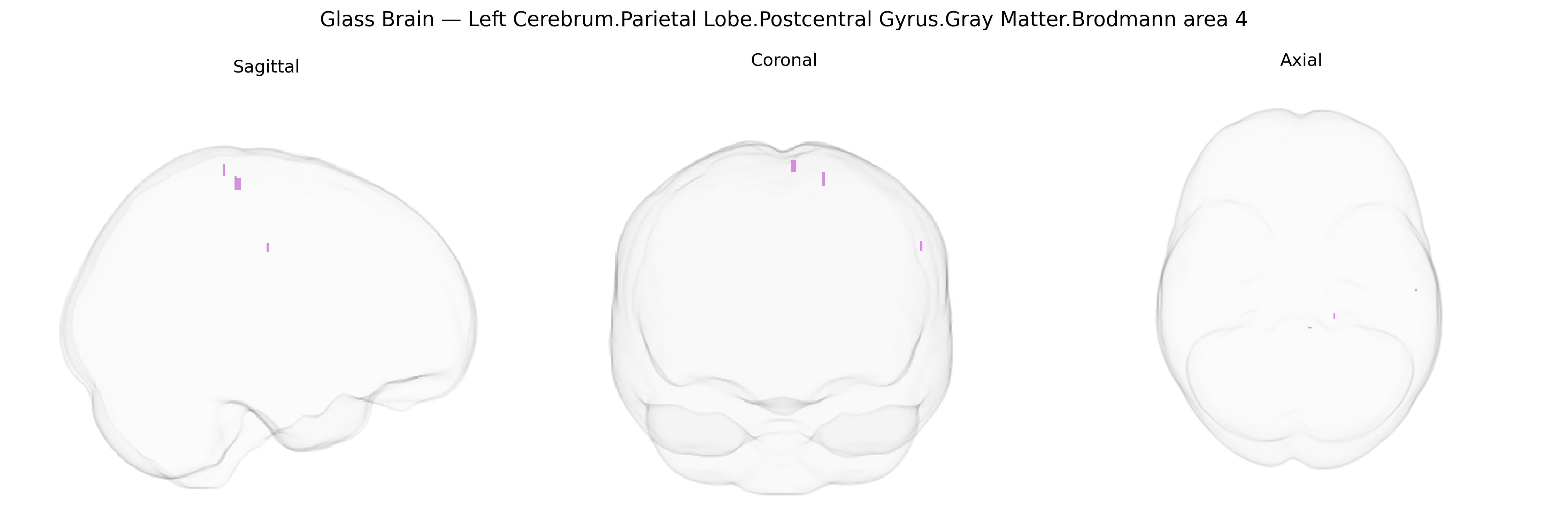
The bilateral Left Cerebrum.Parietal Lobe.Postcentral Gyrus.Gray Matter.Brodmann area 4 label from the Talairach 1 mm Atlas likely reflects misregistration or nomenclature overlap, as Brodmann area 4 (primary motor cortex) is classically localized to the precentral gyrus of the frontal lobe rather than the postcentral gyrus of the parietal lobe. Brodmann area 4 consists of agranular cortex with large pyramidal (Betz) cells, is somatotopically organized to represent the contralateral body musculature, and plays a primary role in the initiation and execution of voluntary movements via corticospinal and corticobulbar projections. Functionally, it integrates inputs from premotor, supplementary motor, and somatosensory areas to generate precise, force-graded muscle contractions, and lesions in this region typically cause contralateral weakness or paralysis with varying degrees of motor deficit. Brodmann area 4
The bilateral Left Cerebrum.Parietal Lobe.Postcentral Gyrus.Gray Matter.Brodmann area 4 region—anatomically overlapping primary sensorimotor cortex near the central sulcus—has been repeatedly implicated in genetic studies of motor and somatosensory function, neurodevelopment, and neuropsychiatric risk. GWAS and imaging-genetics work (e.g., UK Biobank, ENIGMA) have identified common variants influencing cortical thickness, surface area, and gyrification in this area, including loci near genes involved in axon guidance, synaptic plasticity, and neurodevelopment (such as MAPT, MIR137, and various glutamatergic and cytoskeletal genes), with downstream effects on motor performance, reaction time, and general cognitive measures. Structural and functional alterations in this region show heritable components and have been linked to polygenic risk for schizophrenia, bipolar disorder, major depression, and autism spectrum disorder, where altered postcentral/BA4 morphology or activation accompanies broader sensorimotor and social-cognitive deficits. Motor cortex–adjacent postcentral regions also show genetic associations with movement disorders such as dystonia and essential tremor, and with neurodegenerative conditions including amyotrophic lateral sclerosis and Parkinson’s disease, where risk loci affecting corticospinal neurons and motor network integrity (e.g., C9orf72, SOD1, LRRK2 in broader motor systems) correspond to atrophy or functional disruption in primary sensorimotor cortices. Overall, this Talairach-defined BA4/postcentral parietal area emerges as a convergent site where polygenic influences on motor control, somatosensory processing, and higher-order cognition intersect with susceptibility to multiple neuropsychiatric and neurodegenerative phenotypes.
Overview generated by GPT-4o (2026).
Region ID: 1003
Hemisphere: bilateral
Atlas: Talairach labels 1mm
Full Quality Version: Download MP4
Full Quality Version: Download MP4
Wali Sidiqyar*, Gaurav Rudravaram*, Elyssa M. McMaster, Trent M. Schwartz, Adam M. Saunders, Kurt G. Schilling, Bennett A. Landman "Introducing SPINS: A Shared Public Visualization Library of Neuroanatomical Structures." Medical Imaging with Deep Learning- short paper
This resource is licensed under CC0 1.0 Universal (Public Domain).