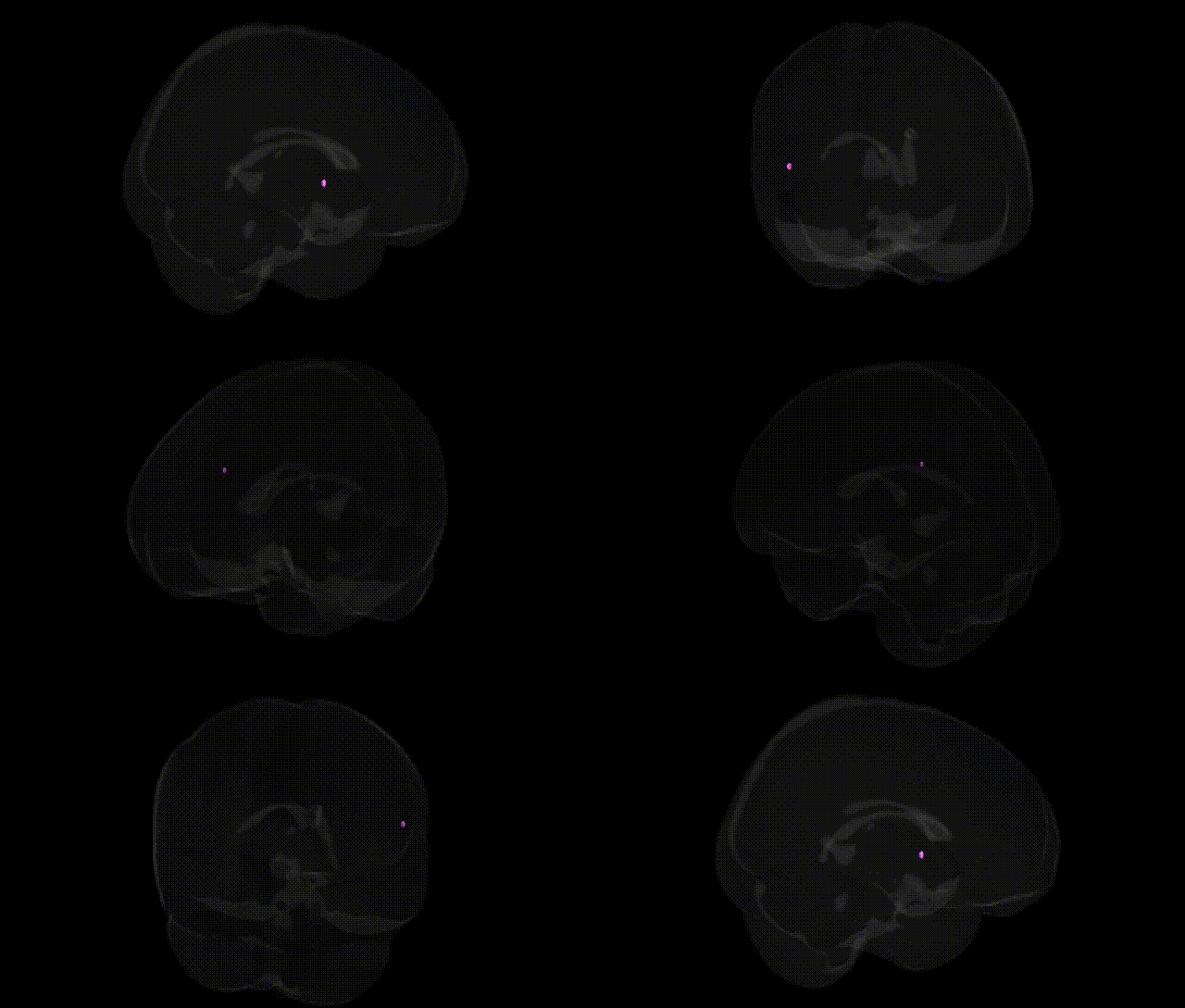
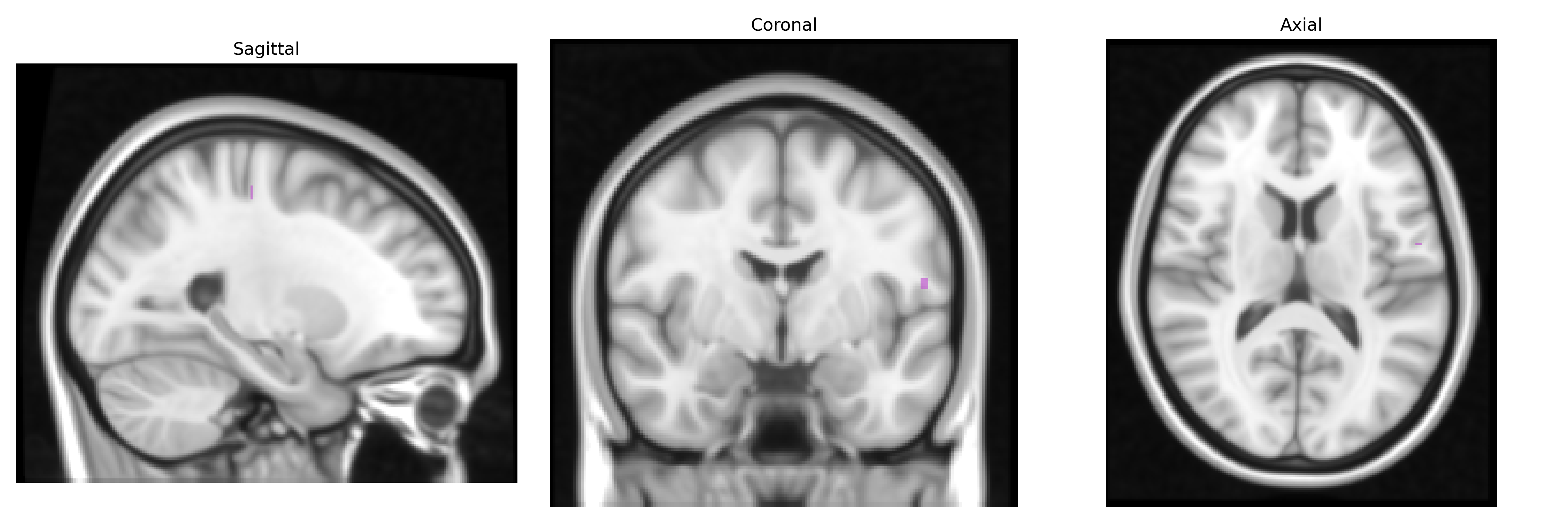
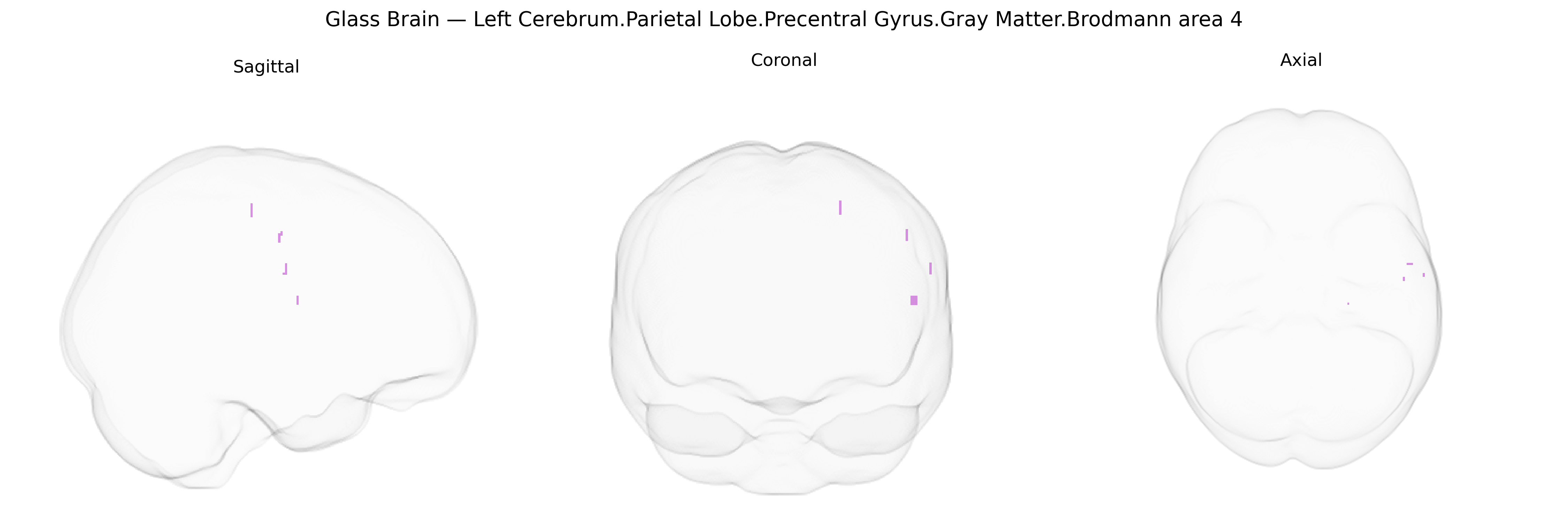
The bilateral Left Cerebrum.Parietal Lobe.Precentral Gyrus.Gray Matter.Brodmann area 4 corresponds to the primary motor cortex, a cytoarchitectonically defined region located in the precentral gyrus just anterior to the central sulcus, traditionally assigned to the frontal lobe but sometimes topographically labeled in relation to adjacent parietal structures in certain atlases. This region contains large pyramidal neurons (Betz cells) and exhibits a somatotopic organization of motor representation, controlling voluntary, fine, and fractionated movements of contralateral skeletal muscles through descending corticospinal and corticobulbar pathways. Functionally, it integrates input from premotor and somatosensory areas to generate precise motor commands, playing a crucial role in motor execution rather than planning. There is no direct Wikipedia article for this exact composite label; a related structure is Primary motor cortex.
The bilateral left precentral gyrus gray matter in Brodmann area 4 (primary motor cortex) has been implicated in multiple genetic and GWAS-based associations, particularly through imaging genetics studies linking common variants to cortical thickness, surface area, and activation of this region. Large consortia such as ENIGMA and UK Biobank have identified loci in or near genes involved in neurodevelopment, synaptic function, and axon guidance (for example, variants near or within genes like MAPT, KIAA0586, and microtubule- or cytoskeleton-related genes) that influence motor cortex morphology, although effects are typically polygenic and of small magnitude. GWAS of motor-related disorders, especially amyotrophic lateral sclerosis and primary lateral sclerosis, frequently highlight degeneration and structural/functional changes in the precentral gyrus, with risk loci in genes such as C9orf72, SOD1, TARDBP, and FUS indirectly associated through their contribution to upper motor neuron pathology. Imaging-genetic work in schizophrenia, autism spectrum disorder, and ADHD has shown that risk alleles in neurodevelopmental genes (for example, CNTNAP2, NRXN1, and other synapse-related loci) can alter structural measures or functional activation in motor and premotor regions, including BA4, often in the context of broader frontoparietal networks. Additionally, polygenic scores for traits such as general cognitive ability, educational attainment, and motor performance (e.g., grip strength, reaction time) have been associated with subtle variation in precentral gyrus volumes or activation patterns, reflecting a shared genetic architecture across motor execution, higher-order cognition, and neuropsychiatric liability rather than a single gene–region relationship specific to this Talairach-defined BA4 area.
Overview generated by GPT-4o (2026).
Region ID: 804
Hemisphere: bilateral
Atlas: Talairach labels 1mm
Full Quality Version: Download MP4
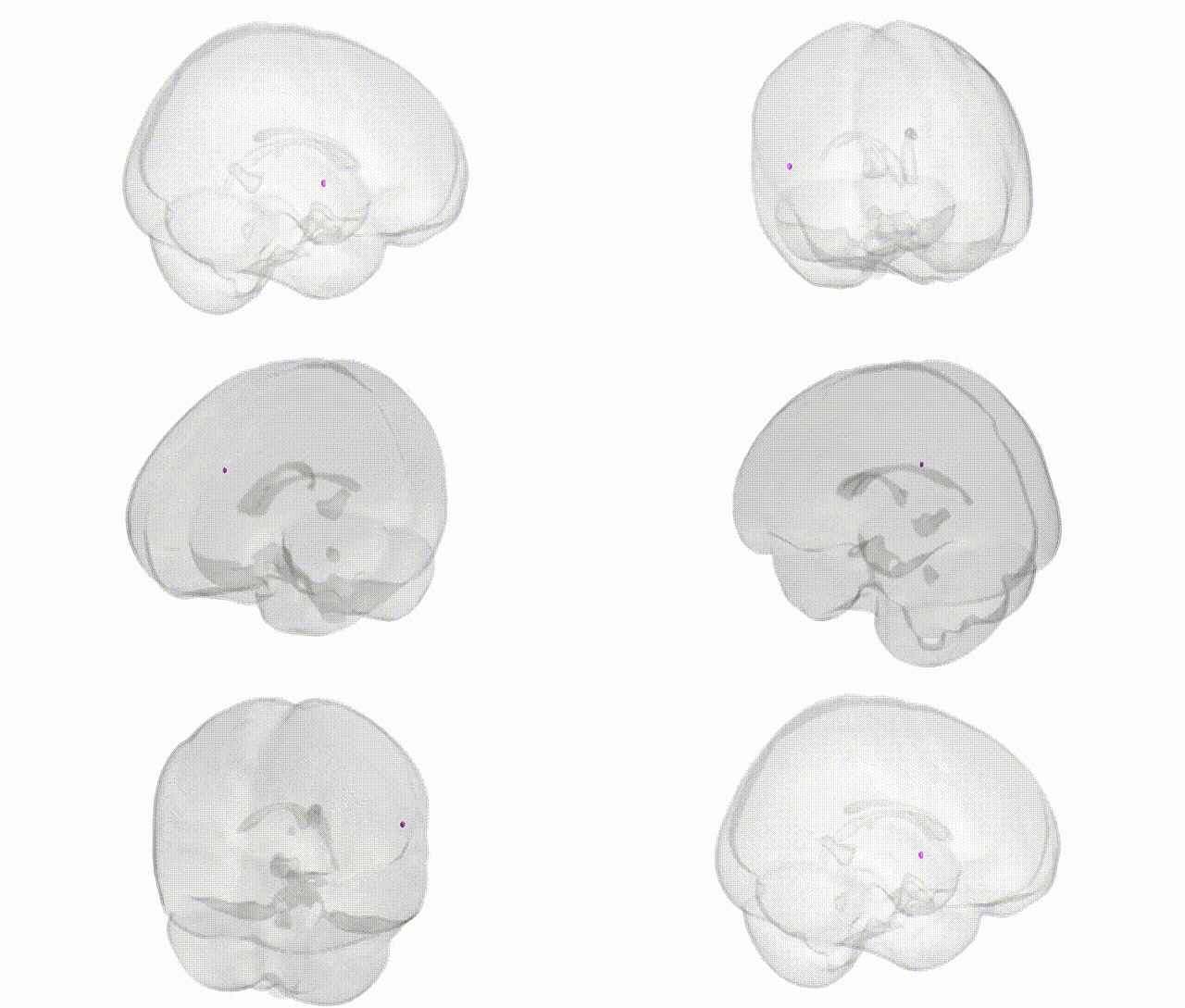
Full Quality Version: Download MP4
Wali Sidiqyar*, Gaurav Rudravaram*, Elyssa M. McMaster, Trent M. Schwartz, Adam M. Saunders, Kurt G. Schilling, Bennett A. Landman "Introducing SPINS: A Shared Public Visualization Library of Neuroanatomical Structures." Medical Imaging with Deep Learning- short paper
This resource is licensed under CC0 1.0 Universal (Public Domain).