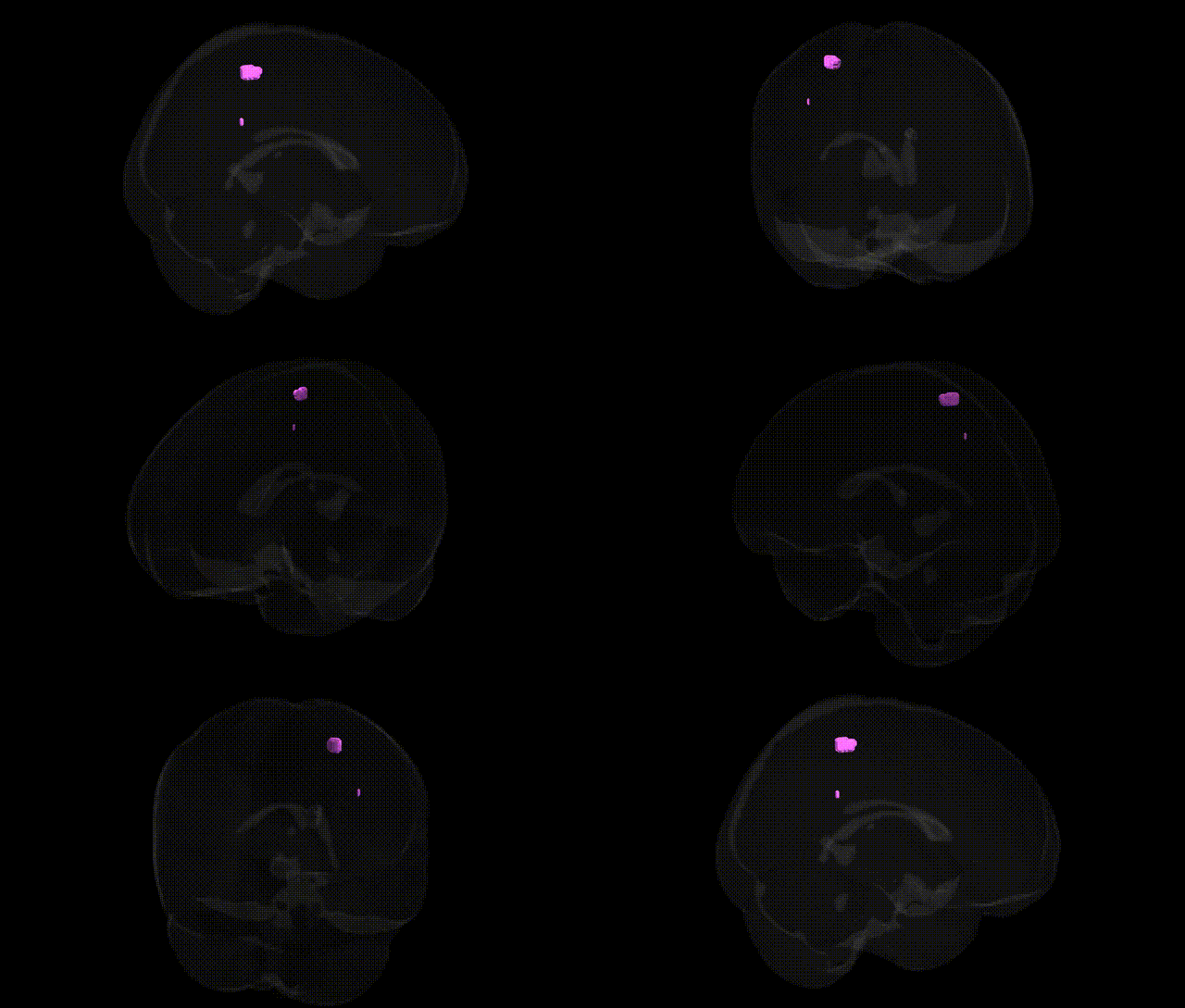
The bilateral Left Cerebrum.Parietal Lobe.Sub-Gyral.Gray Matter.Brodmann area 40 corresponds primarily to the supramarginal gyrus within the inferior parietal lobule, a multimodal associative region implicated in language, spatial attention, somatosensory integration, and praxis. Cytoarchitectonically defined by Korbinian Brodmann, area 40 receives convergent input from auditory, visual, and somatosensory cortices, supporting phonological processing, reading and writing, and the integration of sensory information for body schema and tool use. Functionally, this region is frequently engaged in tasks involving verbal working memory, articulation, and the mapping of heard speech to articulatory representations, and it forms part of distributed networks implicated in language comprehension and production, as well as in higher-order attentional and cognitive operations. Brodmann area 40
The bilateral left cerebrum parietal lobe sub-gyral gray matter corresponding to Brodmann area 40 (supramarginal gyrus/inferior parietal lobule) has been repeatedly implicated in genetic studies of cognition and neuropsychiatric disorders, although most findings come from region-level or network-level analyses rather than Talairach-label-specific work. Imaging genetics and GWAS of brain structure show that gray matter volume and cortical thickness in inferior parietal regions, including BA40, are influenced by common variants in neurodevelopmental and synaptic genes (e.g., CACNA1C, BDNF, DISC1, and multiple loci near genes involved in axon guidance, calcium signaling and transcriptional regulation), with heritability estimates for parietal morphology typically in the moderate range. Large neuroimaging GWAS consortia (ENIGMA, UK Biobank) have identified SNPs associated with parietal cortical surface area and thickness, some overlapping with loci linked to general cognitive ability, educational attainment, reading/spelling skills and language-related traits, consistent with BA40’s role in phonological processing and verbal working memory. Genetic risk for schizophrenia, bipolar disorder, major depressive disorder and ADHD has been associated with altered activation or structural measures in the inferior parietal lobule, including BA40, in polygenic risk score and case–control imaging genetics studies, suggesting that part of the effect of these risk variants is mediated through parietal circuitry. Variants in FOXP2 and other language-related genes show functional connectivity and activation differences in BA40 during speech and reading tasks, and GWAS of dyslexia and specific language impairment have pointed to parietal and temporo-parietal regions as key anatomical correlates, though individual loci are typically not specific to BA40. Additionally, APOE and other dementia-related risk genes are associated with atrophy and hypometabolism in parietal association cortex, including BA40, in Alzheimer’s disease and mild cognitive impairment. Overall, genetic associations with this region largely reflect polygenic influences on higher-order association cortex involved in language, attention, working memory and neuropsychiatric vulnerability, with BA40 serving as a consistent but not anatomically exclusive node in these pathways.
Overview generated by GPT-4o (2026).
Region ID: 999
Hemisphere: bilateral
Atlas: Talairach labels 1mm
Full Quality Version: Download MP4
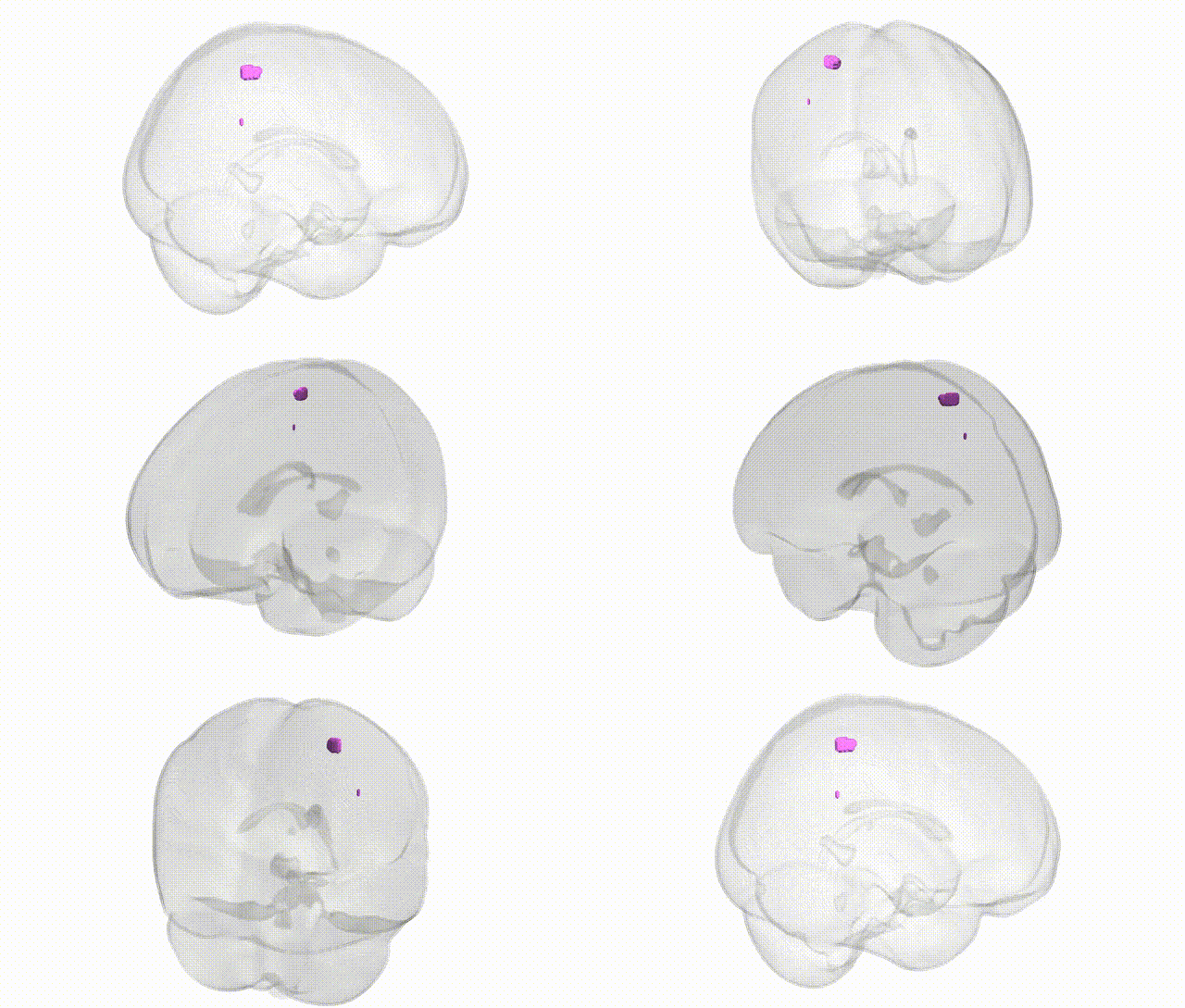
Full Quality Version: Download MP4
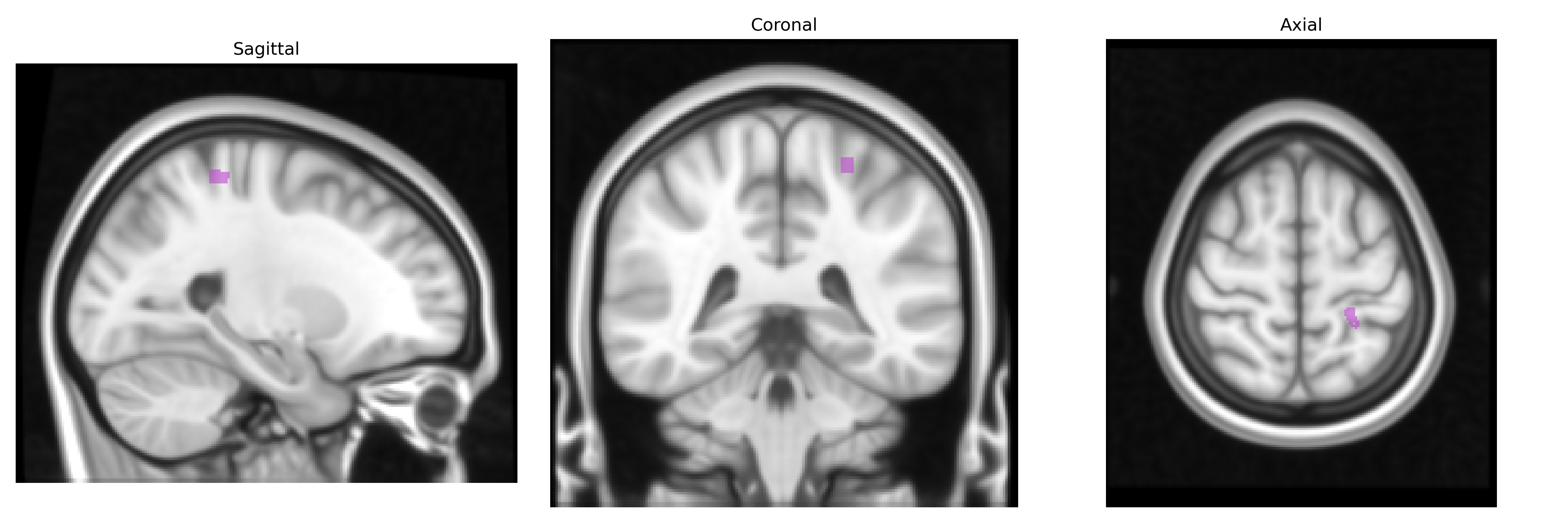
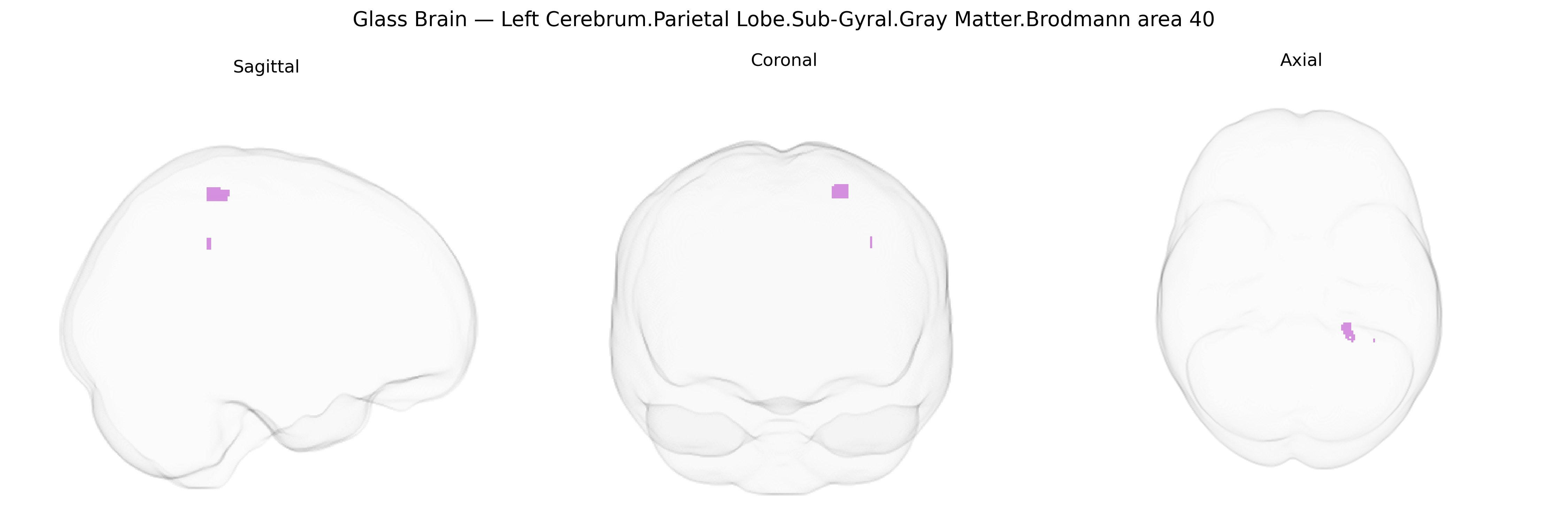
Wali Sidiqyar*, Gaurav Rudravaram*, Elyssa M. McMaster, Trent M. Schwartz, Adam M. Saunders, Kurt G. Schilling, Bennett A. Landman "Introducing SPINS: A Shared Public Visualization Library of Neuroanatomical Structures." Medical Imaging with Deep Learning- short paper
This resource is licensed under CC0 1.0 Universal (Public Domain).