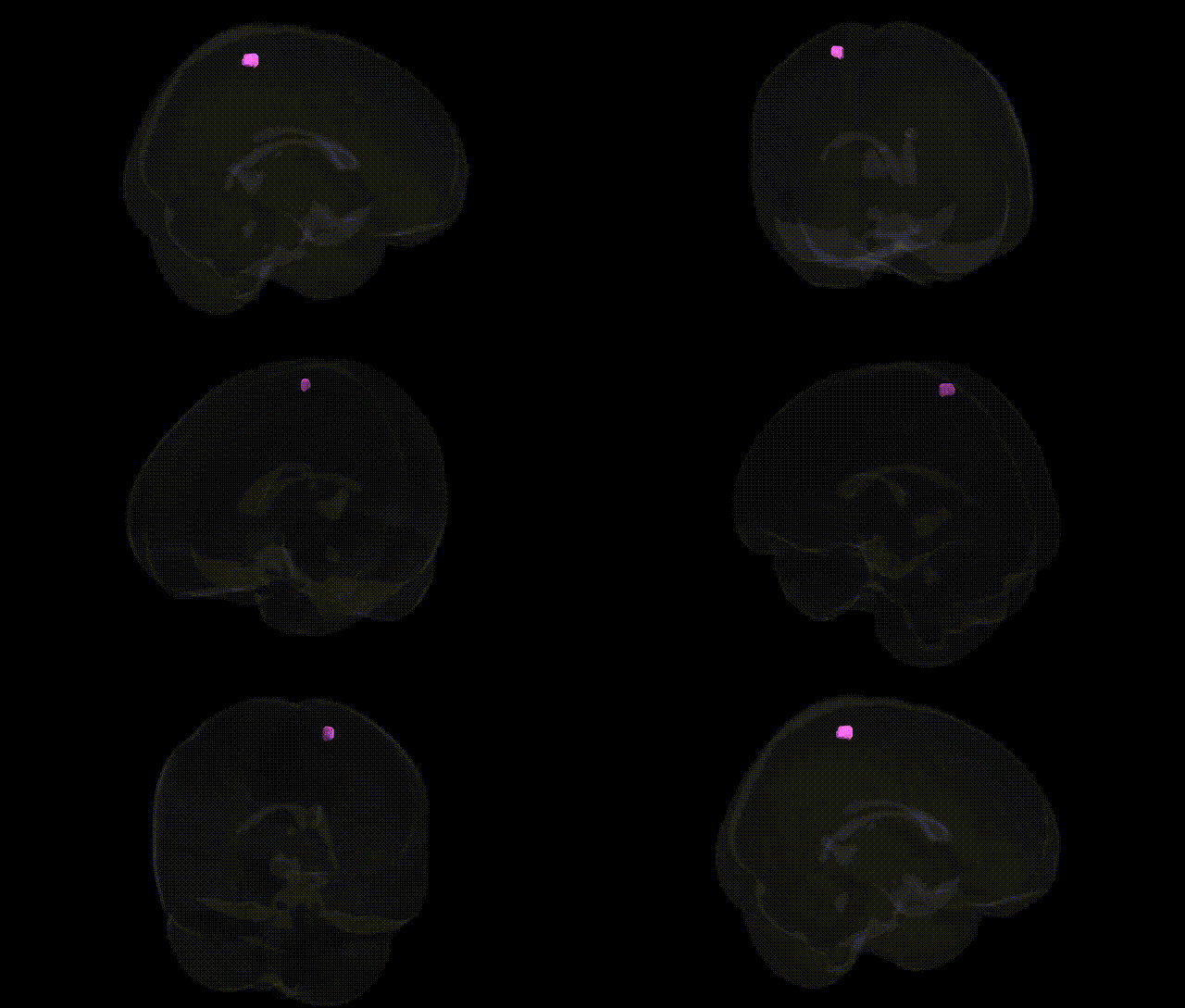
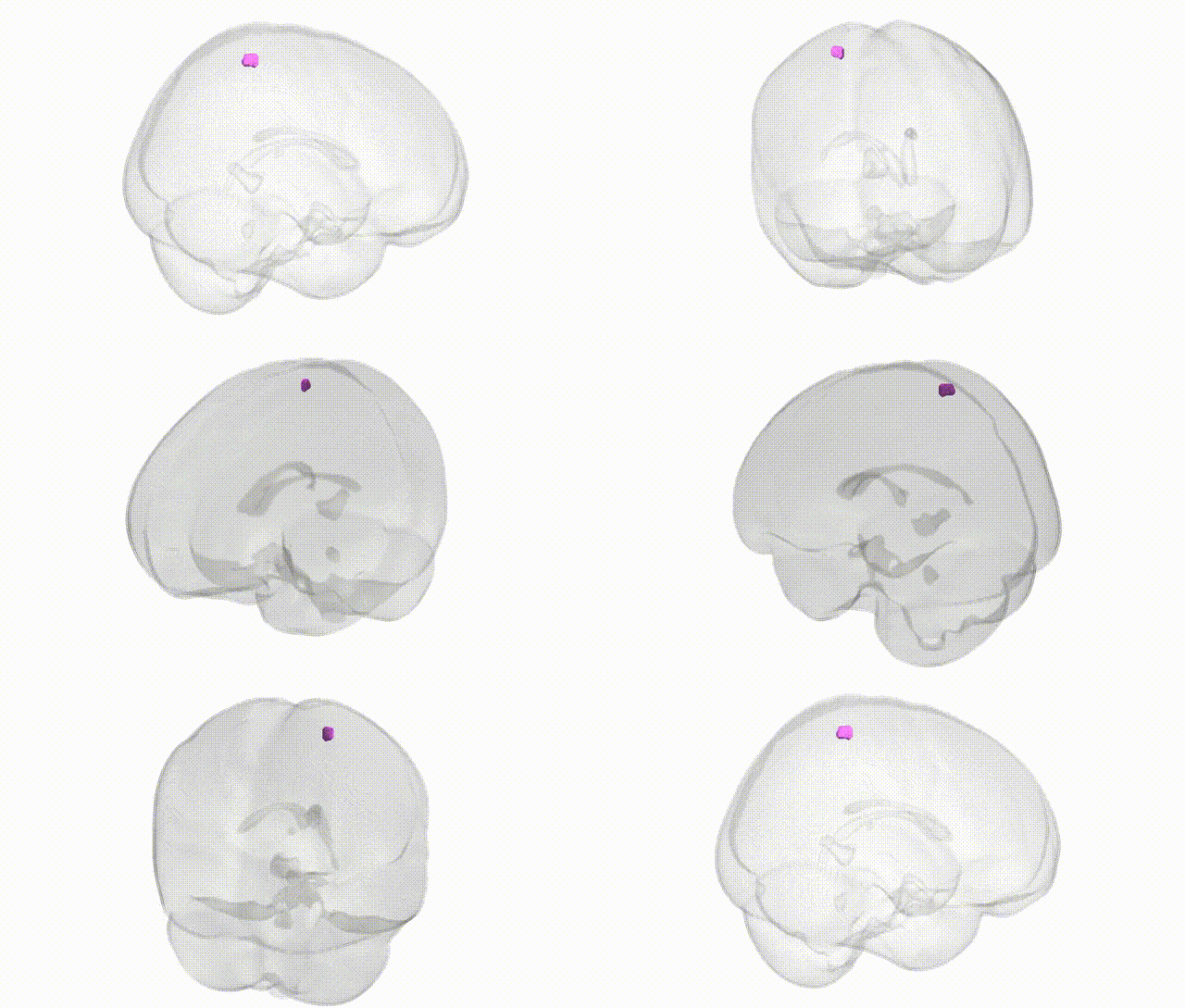
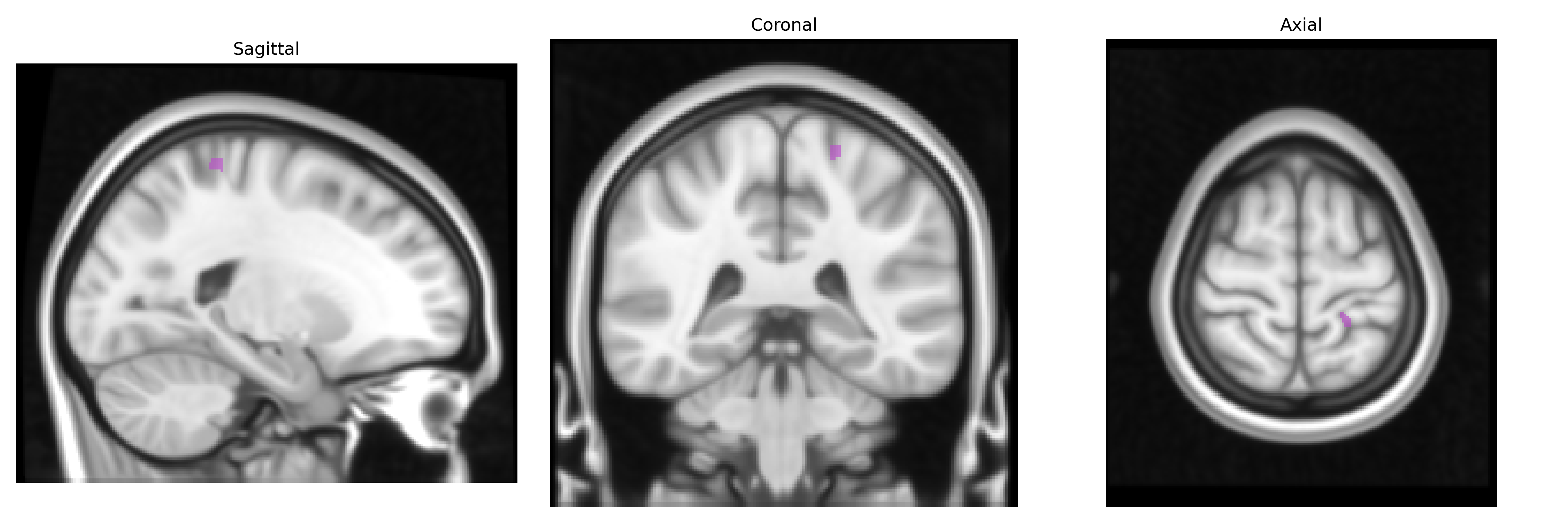
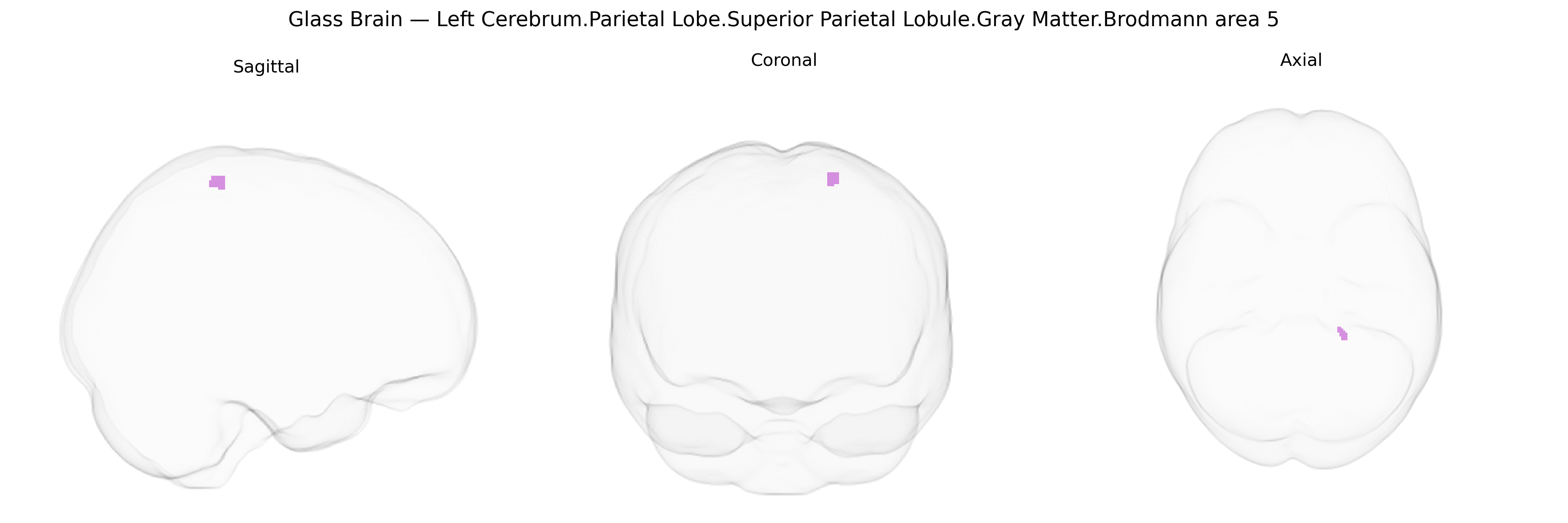
The bilateral Left Cerebrum.Parietal Lobe.Superior Parietal Lobule.Gray Matter.Brodmann area 5 corresponds to a cytoarchitectonic region of the posterior parietal cortex located on the medial and superior aspects of the parietal lobe, just posterior to the primary somatosensory cortex (Brodmann areas 3, 1, and 2). This region is primarily involved in higher-order somatosensory processing, integrating tactile, proprioceptive, and kinesthetic information to construct an internal representation of body position and movement, and contributes to sensorimotor coordination, spatial perception, and the guidance of limb movements in extrapersonal space. It forms part of the dorsal stream of cortical processing, with dense connections to premotor and other parietal areas, and is implicated in functions such as tactile object recognition, visuomotor integration, and body schema maintenance. No direct link exists for this exact Talairach designation; a closely related region is described at Superior parietal lobule.
The bilateral left superior parietal lobule (Brodmann area 5) has been implicated in multiple genetic association and imaging‑genetics studies, though often as part of broader parietal or supramarginal/postcentral regions rather than BA5 in isolation; common variants in genes influencing neurodevelopment, synaptic plasticity, and myelination (for example, BDNF, CNTNAP2, NRG1, DISC1, and COMT) have been associated with structural measures such as cortical thickness or gray‑matter volume in superior parietal areas, as well as with attentional and visuospatial performance that relies on this region. Large‑scale ENIGMA and UK Biobank–based GWAS of regional brain volumes and cortical metrics have identified significant loci affecting parietal cortical morphology (including genes near WNT signaling and axon guidance pathways), and some of these loci overlap with those discovered in GWAS of intelligence, educational attainment, and working memory, consistent with the superior parietal lobule’s role in sensorimotor integration and higher‑order cognition. Furthermore, parietal gray‑matter alterations encompassing BA5 have been reported in schizophrenia, autism spectrum disorder, ADHD, Alzheimer’s disease, and developmental dyslexia, with genetic studies implicating polygenic risk scores and specific variants (e.g., in APOE for Alzheimer‑related parietal atrophy, and in synaptic or neurodevelopmental genes for schizophrenia and autism) that modulate vulnerability of this region; however, the current evidence links these genes to larger parietal networks rather than uniquely and conclusively to the Talairach‑defined BA5 region.
Overview generated by GPT-4o (2026).
Region ID: 1097
Hemisphere: bilateral
Atlas: Talairach labels 1mm
Full Quality Version: Download MP4
Full Quality Version: Download MP4
Wali Sidiqyar*, Gaurav Rudravaram*, Elyssa M. McMaster, Trent M. Schwartz, Adam M. Saunders, Kurt G. Schilling, Bennett A. Landman "Introducing SPINS: A Shared Public Visualization Library of Neuroanatomical Structures." Medical Imaging with Deep Learning- short paper
This resource is licensed under CC0 1.0 Universal (Public Domain).