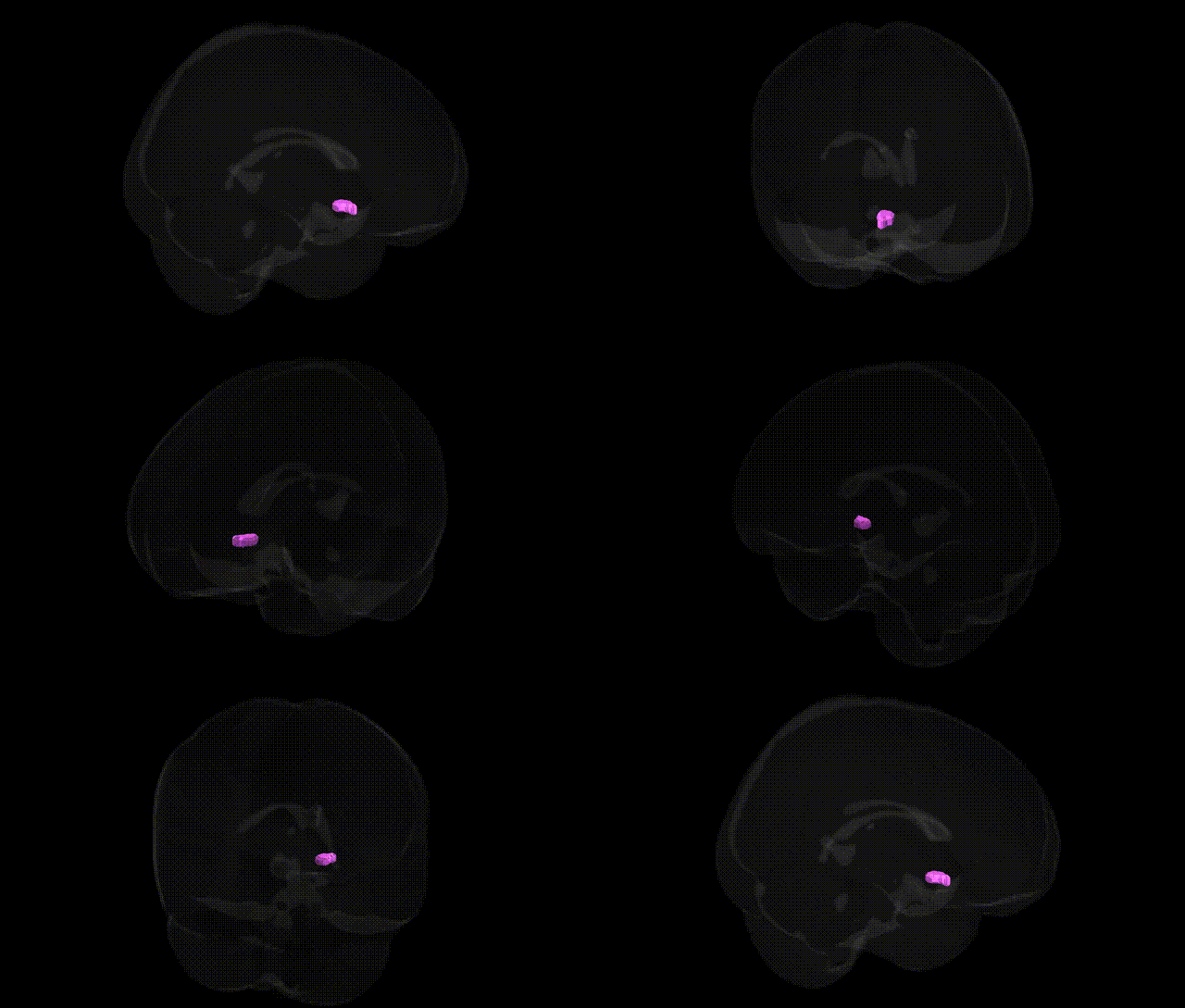
The bilateral Left Cerebrum.Sub-lobar.Gray Matter region in the Talairach labels 1 mm atlas refers to gray matter structures located beneath the cerebral cortex within the left cerebral hemisphere, encompassing deep nuclei and associated subcortical areas such as parts of the basal ganglia, claustrum, and related capsular regions. These sub-lobar gray matter structures participate in essential functions including motor planning and execution, procedural learning, cognitive control, emotion regulation, and integration of cortical inputs with thalamic and brainstem signals. By serving as key relay and processing hubs between cortical and subcortical networks, this region contributes to coordinated movement, habit formation, and higher-order cognitive processes such as decision-making and attention. There is no direct link for “Left Cerebrum.Sub-lobar.Gray Matter”; a related structure is the Basal ganglia.
The bilateral left sub-lobar gray matter (encompassing structures such as the insula, claustrum, and subcortical transition zones) has been implicated in multiple genetic and GWAS findings, though typically under broader cortical or subcortical phenotypes rather than this exact Talairach-defined label; large-scale imaging-genetics consortia (e.g., ENIGMA, UK Biobank studies) have shown that common variants in genes involved in neurodevelopment, synaptic function, and myelination (such as MIR137, CACNA1C, GRIN2A, and loci near genes like TBR1, POU3F2, and others regulating cortical patterning) influence insular and adjacent sub-lobar gray matter volume and cortical thickness, with polygenic scores for schizophrenia, major depression, autism spectrum disorder, and bipolar disorder associated with structural alterations in these territories. GWAS of brain imaging phenotypes have identified significant SNP-based heritability and multiple loci for insular and sub-lobar volume and cortical metrics, often overlapping with risk loci for psychiatric disorders, cognitive performance, and personality traits (e.g., neuroticism and risk-taking), while rare copy number variants affecting neurodevelopmental genes can also produce structural abnormalities in the insula and neighboring sub-lobar gray matter. Additionally, gene–brain–behavior frameworks have linked variants in dopaminergic, glutamatergic, and serotonin-related genes (including DRD2, SLC6A4, and others) to insula/sub-lobar gray matter changes associated with addiction, anxiety, and emotional processing traits, underscoring that this region serves as a convergent anatomical target for diverse genetic influences spanning psychiatric, cognitive, and affective domains.
Overview generated by GPT-4o (2026).
Region ID: 385
Hemisphere: bilateral
Atlas: Talairach labels 1mm
Full Quality Version: Download MP4
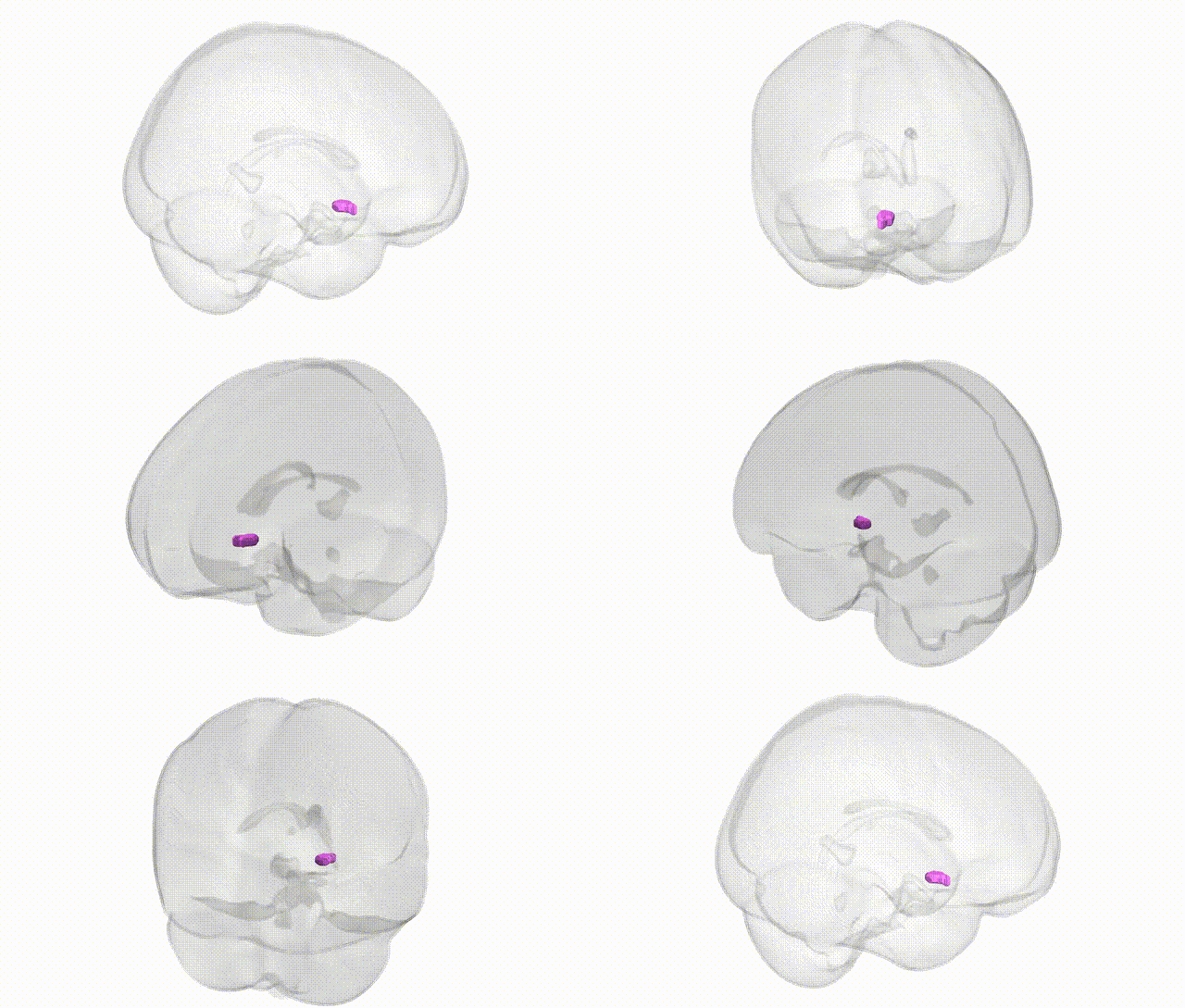
Full Quality Version: Download MP4
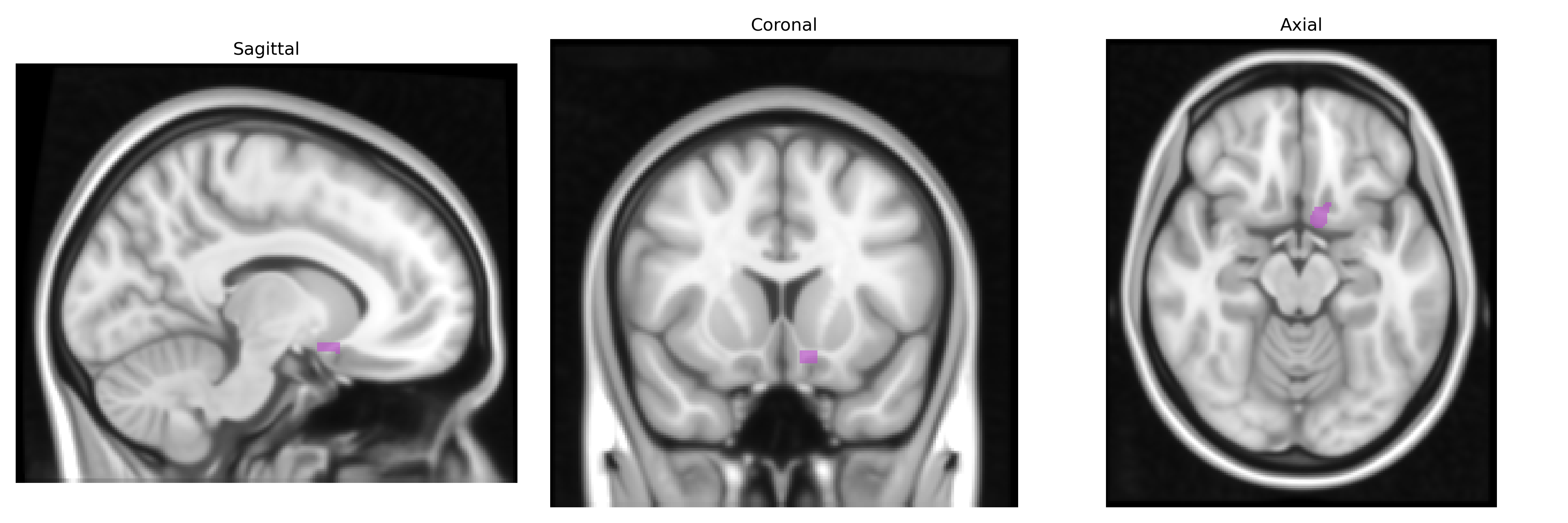
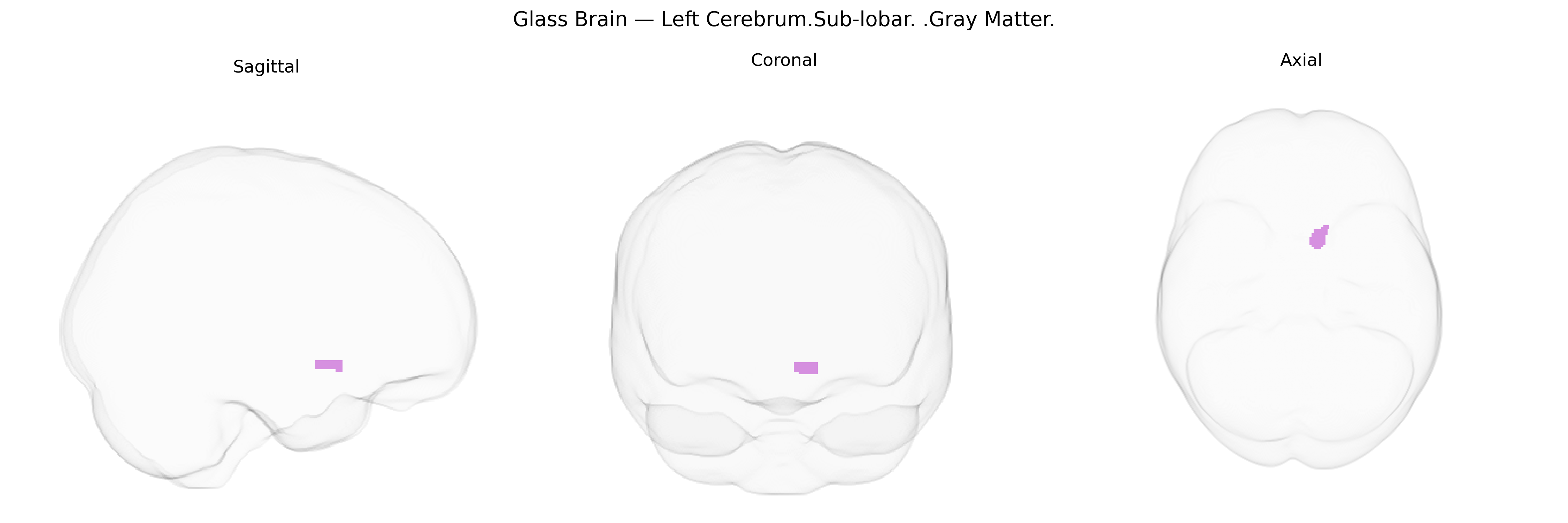
Wali Sidiqyar*, Gaurav Rudravaram*, Elyssa M. McMaster, Trent M. Schwartz, Adam M. Saunders, Kurt G. Schilling, Bennett A. Landman "Introducing SPINS: A Shared Public Visualization Library of Neuroanatomical Structures." Medical Imaging with Deep Learning- short paper
This resource is licensed under CC0 1.0 Universal (Public Domain).