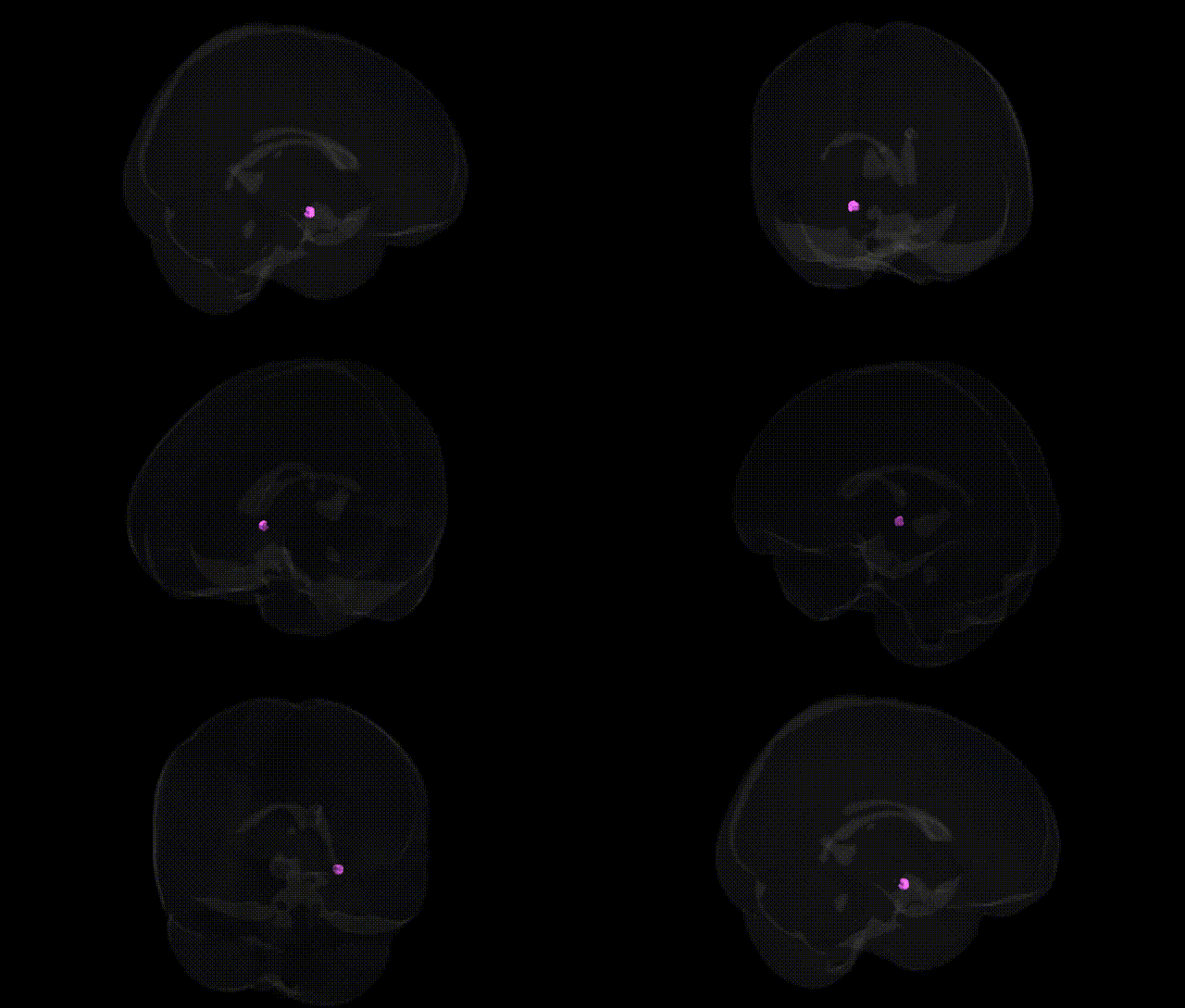
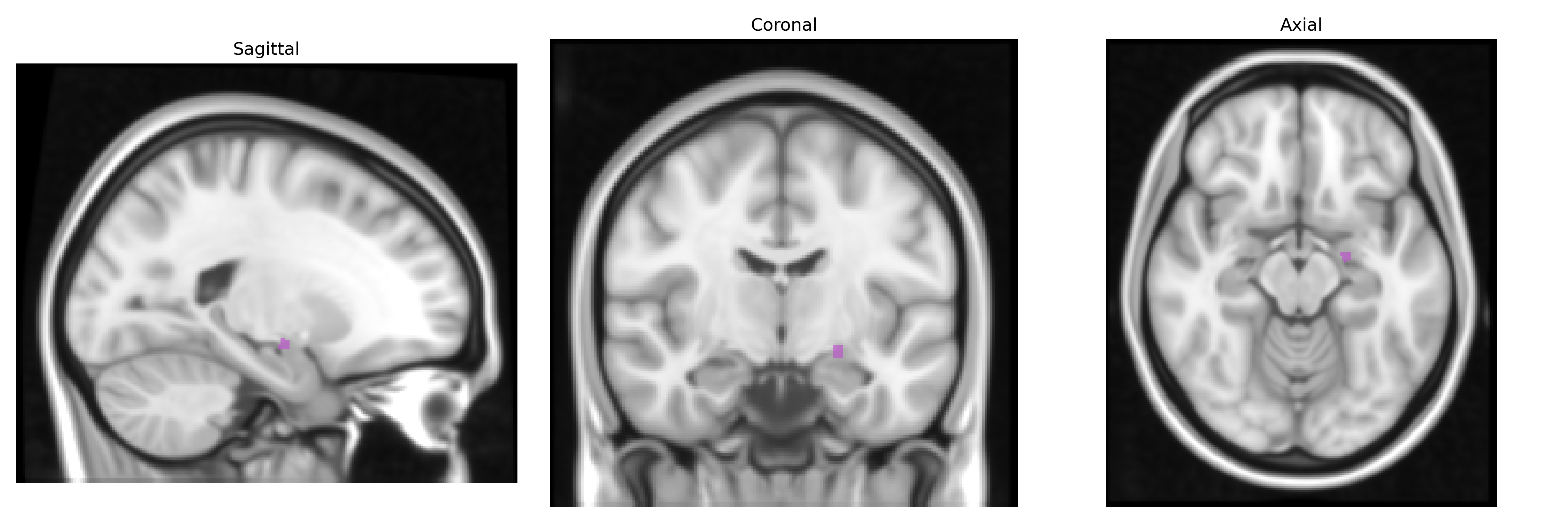
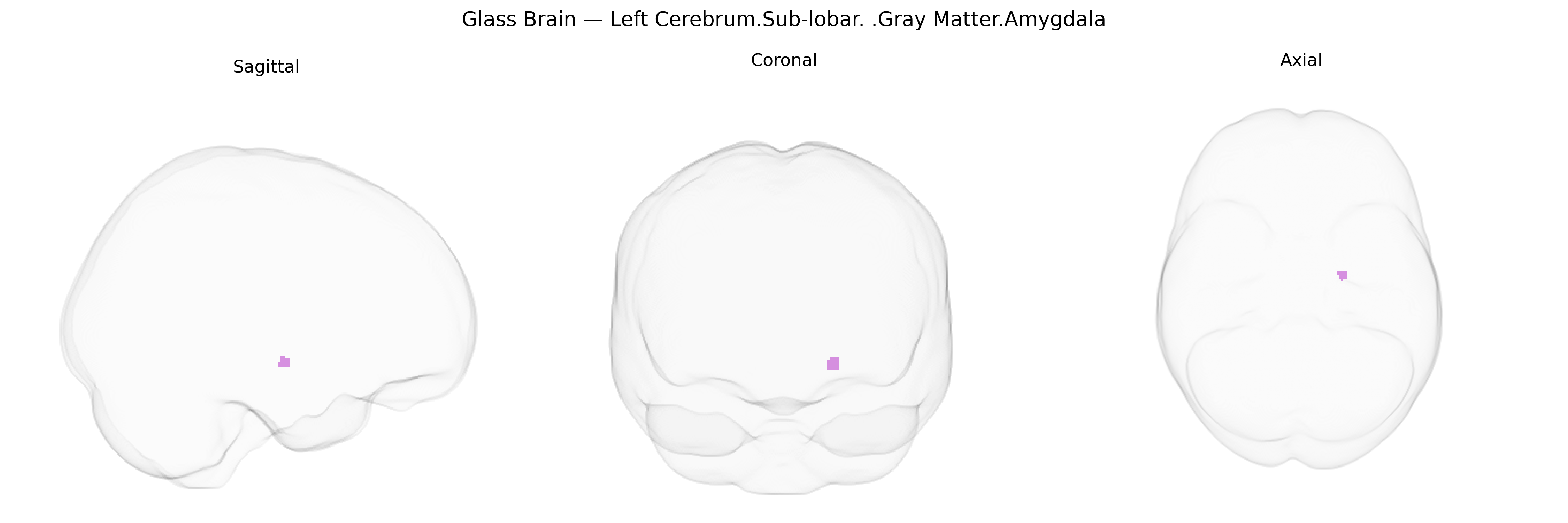
The bilateral Left Cerebrum.Sub-lobar.Gray Matter.Amygdala, as defined in the Talairach 1 mm atlas, corresponds to the left amygdaloid complex located deep within the medial temporal lobe, forming part of the sub-lobar gray matter beneath the cortical surface. This region comprises multiple nuclei (including lateral, basal, and central nuclei) that receive highly processed sensory input from cortical and subcortical areas and project to hypothalamic, brainstem, and prefrontal targets. Functionally, the left amygdala plays key roles in emotional processing, especially fear and threat detection, emotional learning and memory, modulation of autonomic and endocrine responses, and integration of affective valence with sensory information and context. It participates in networks subserving social cognition, reward processing, and regulation of stress responses, and is frequently implicated in neuropsychiatric conditions such as anxiety disorders, depression, and post-traumatic stress disorder. Amygdala
The bilateral Left Cerebrum Sub-lobar gray matter amygdala, as defined in the Talairach 1 mm atlas, has been repeatedly implicated in genetic and genome-wide association studies (GWAS) linking common and rare variants to amygdala volume, connectivity, and reactivity, as well as to a range of neuropsychiatric and behavioral phenotypes. Large-scale imaging–genetics consortia (e.g., ENIGMA, UK Biobank) have identified loci in and near genes such as SLC39A8, APOE, DRD2, DCC, and others that associate with amygdala volume and structure, with APOE ε4 linked to reduced medial temporal volumes including the amygdala in Alzheimer’s disease. Polygenic risk scores for major depression, bipolar disorder, schizophrenia, autism spectrum disorder, and anxiety-related traits show associations with altered amygdala morphology or functional activation, while candidate gene and smaller GWAS analyses have connected variants in serotonergic (e.g., SLC6A4/5-HTTLPR), dopaminergic, and HPA-axis–related genes with differential amygdala reactivity to emotional stimuli. Additionally, amygdala phenotypes show genetic correlations with traits such as neuroticism, extraversion, risk-taking, post-traumatic stress disorder, and fear- and threat-related processing, indicating a substantial heritable component to individual differences in this region’s structure and function, although few associations are specific solely to the left sub-lobar amygdala rather than the amygdala bilaterally or the broader medial temporal lobe.
Overview generated by GPT-4o (2026).
Region ID: 356
Hemisphere: bilateral
Atlas: Talairach labels 1mm
Full Quality Version: Download MP4
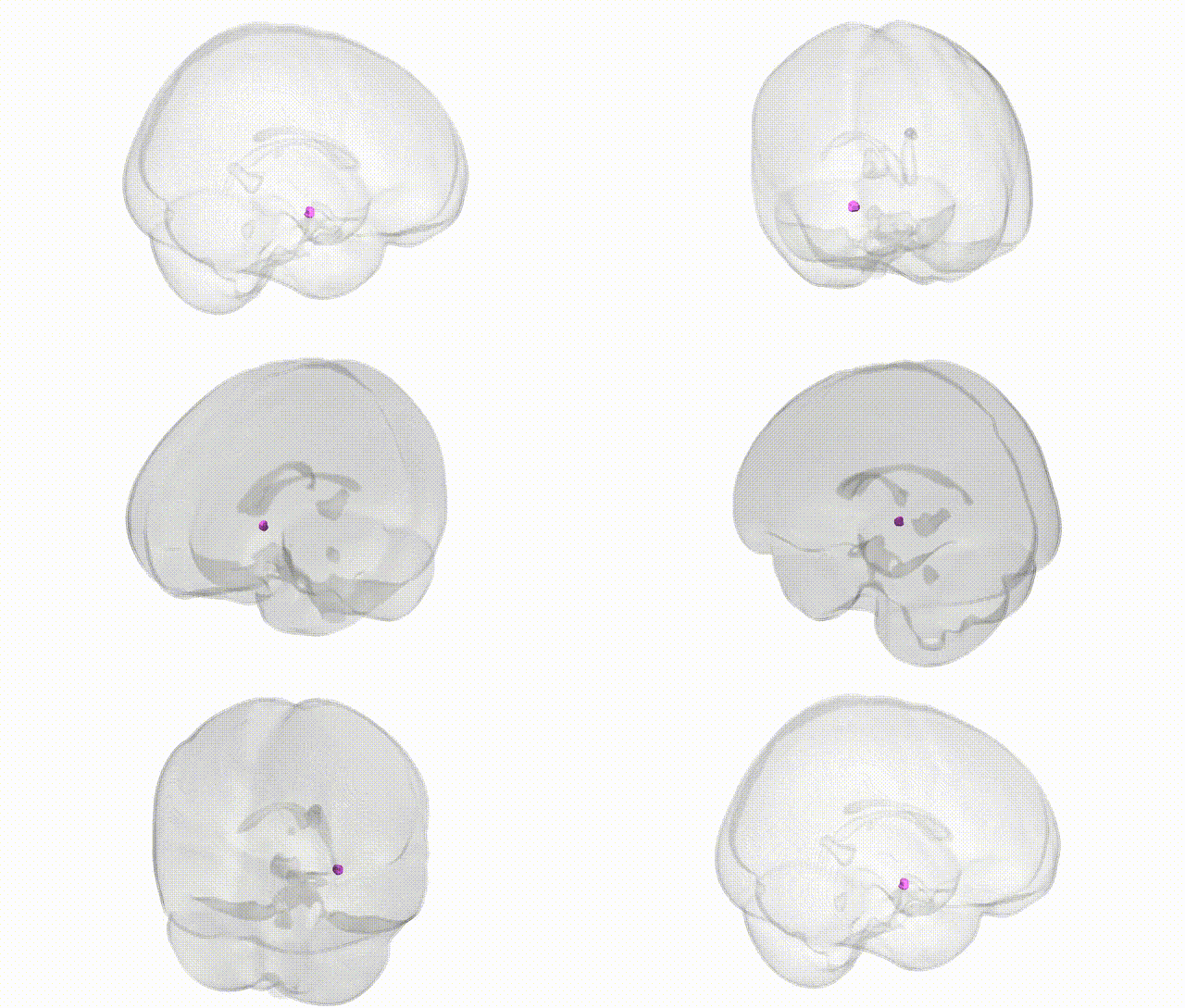
Full Quality Version: Download MP4
Wali Sidiqyar*, Gaurav Rudravaram*, Elyssa M. McMaster, Trent M. Schwartz, Adam M. Saunders, Kurt G. Schilling, Bennett A. Landman "Introducing SPINS: A Shared Public Visualization Library of Neuroanatomical Structures." Medical Imaging with Deep Learning- short paper
This resource is licensed under CC0 1.0 Universal (Public Domain).