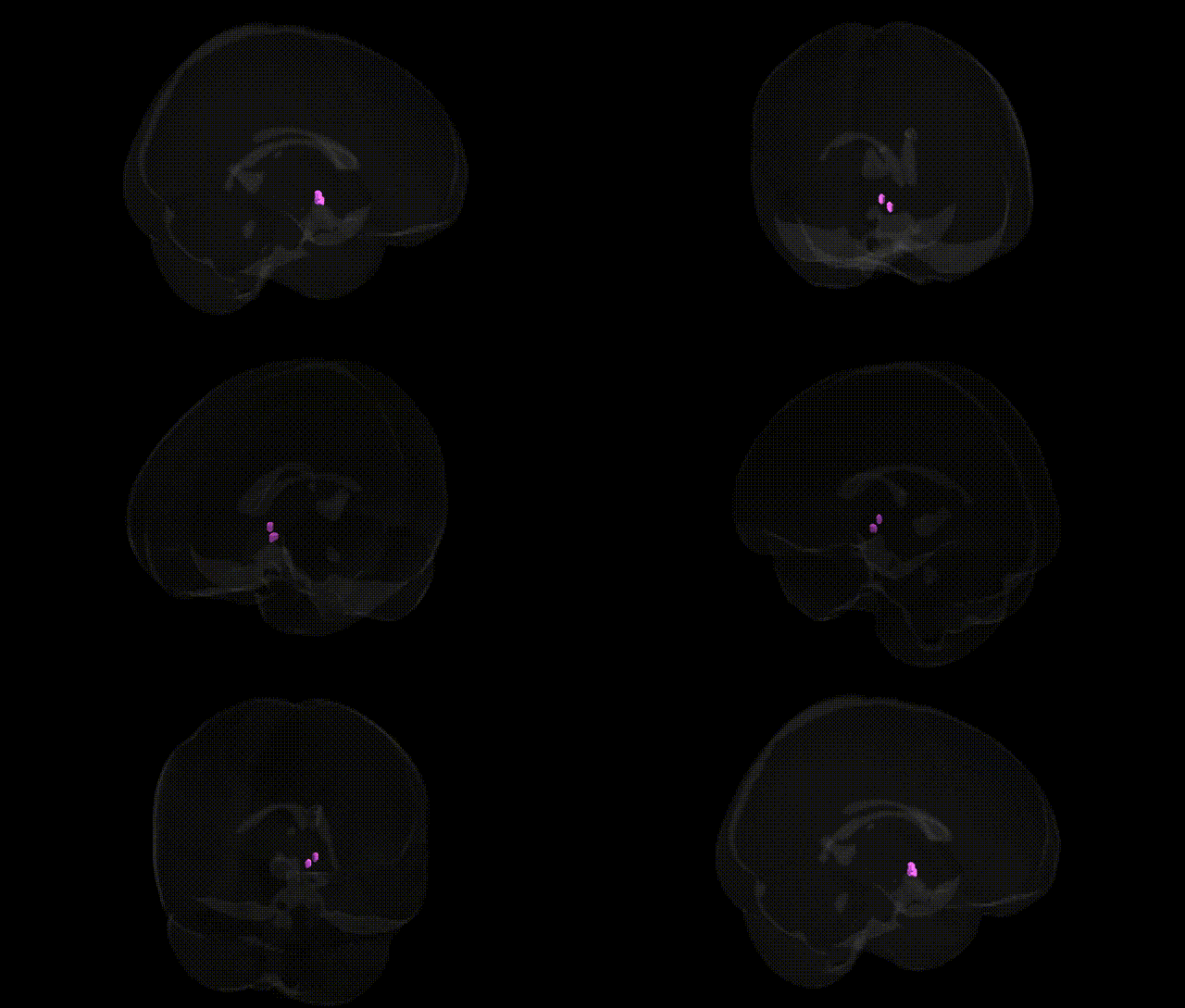
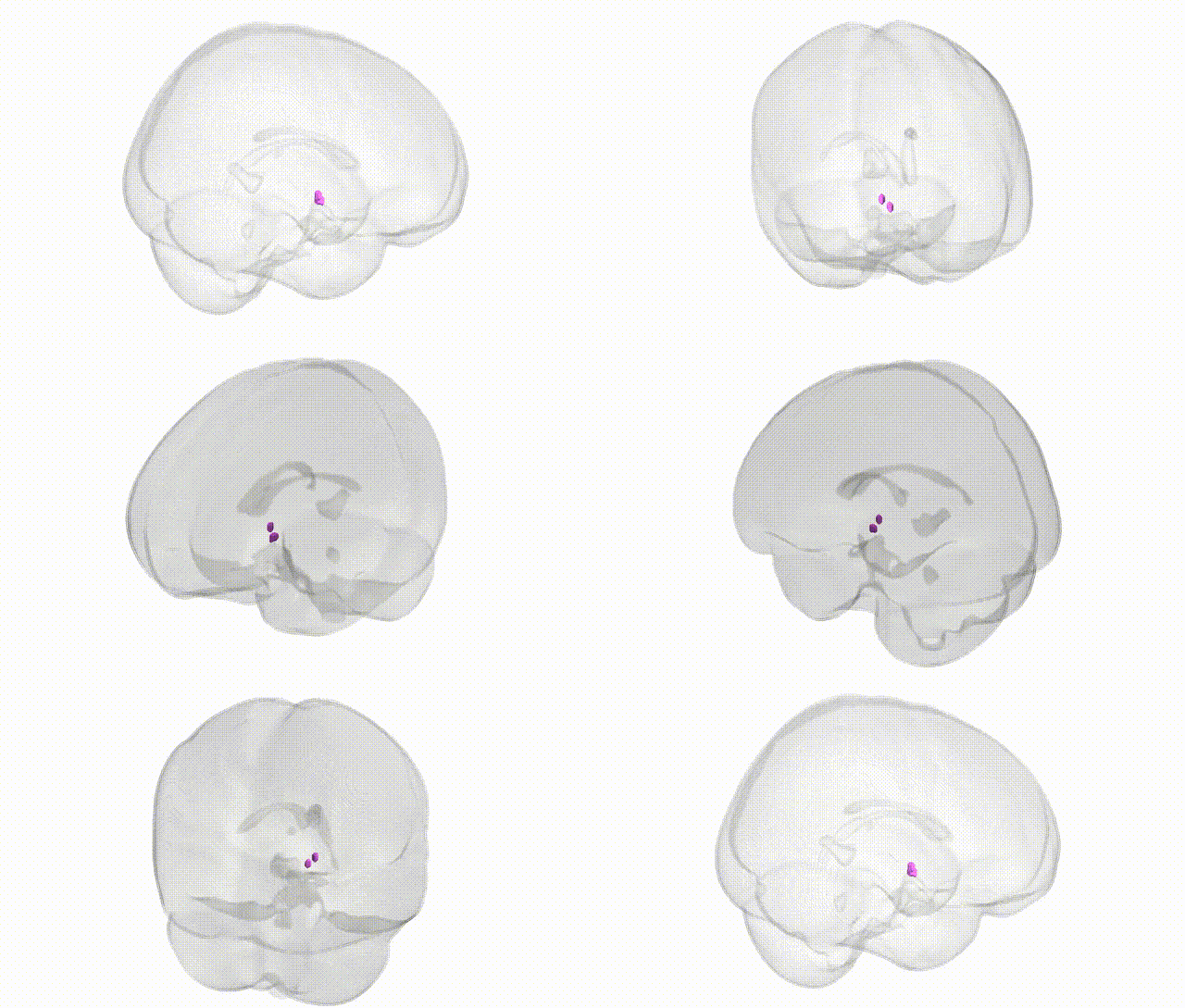
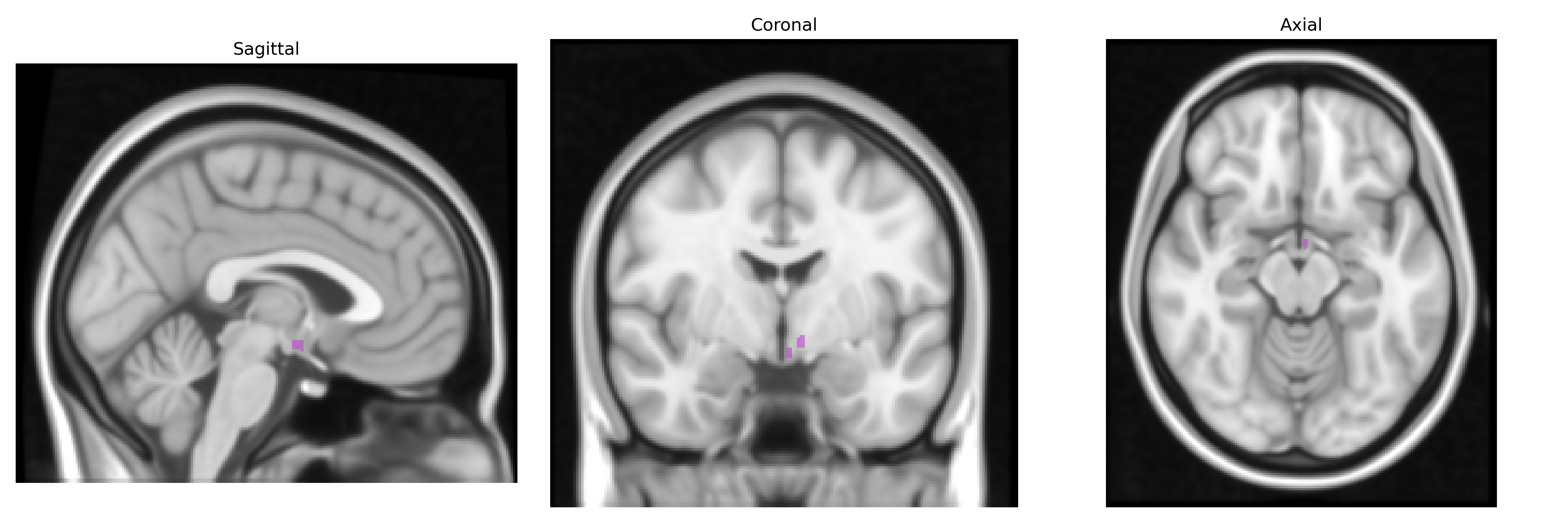
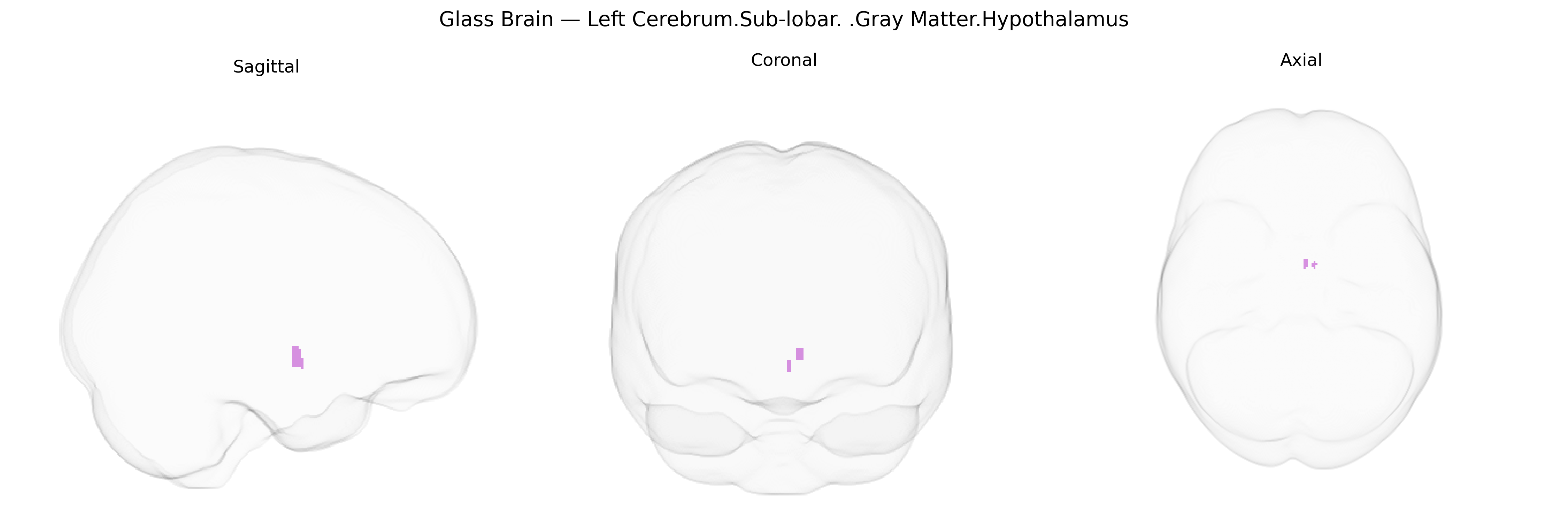
The bilateral Left Cerebrum.Sub-lobar.Gray Matter.Hypothalamus corresponds to a deep diencephalic gray matter region situated below the thalamus along the walls of the third ventricle, forming part of the sub-lobar compartment of the left cerebral hemisphere in the Talairach 1 mm atlas. This structure integrates autonomic, endocrine, and behavioral responses by linking the nervous system with the pituitary gland and coordinating homeostatic functions such as thermoregulation, energy balance, fluid and electrolyte control, circadian rhythms, and reproductive behaviors. It contains multiple nuclei (e.g., suprachiasmatic, paraventricular, supraoptic, lateral, ventromedial, and arcuate nuclei) that receive extensive input from cortical, limbic, and brainstem regions and project to autonomic centers, the pituitary, and other subcortical targets, thereby modulating stress responses, feeding and satiety, sleep–wake cycles, and emotional processing. Hypothalamus
The bilateral left sublobar gray matter of the hypothalamus, as defined in the Talairach 1 mm atlas, has been implicated in multiple genetic and genome-wide association studies (GWAS) that link common and rare variants to hypothalamic volume, structure, and function, as well as to hypothalamus-related endocrine, metabolic, and behavioral traits. Large neuroimaging GWAS from consortia such as ENIGMA and UK Biobank have identified variants near genes involved in neurodevelopment (e.g., WNT signaling, axon guidance, cell adhesion) that associate with hypothalamic volume and related subcortical measures. Polygenic influences on hypothalamic structure overlap with genetic risk for obesity and body mass index (e.g., FTO, MC4R, BDNF loci), metabolic traits (type 2 diabetes, lipid profiles), circadian and sleep traits (clock gene networks), and reproductive/endocrine phenotypes (pubertal timing, gonadotropin regulation), consistent with the hypothalamus’s role in energy balance and neuroendocrine control. Psychiatric and behavioral GWAS—particularly for major depressive disorder, bipolar disorder, schizophrenia, anxiety, and stress-related traits—show partial genetic convergence on hypothalamic circuits, including loci affecting HPA-axis regulation (e.g., CRHR1/CRHBP-related regions, FKBP5) and neuropeptide systems (oxytocin/vasopressin pathways), though these effects are typically pleiotropic and not specific to this subregion alone. Rare-variant and Mendelian studies highlight genes involved in hypothalamic development and function (e.g., KAL1/ANOS1, FGFR1 pathway in Kallmann syndrome; LEP/LEPR, POMC, PCSK1 in monogenic obesity; AVP in familial central diabetes insipidus), many of which influence hypothalamic morphology or connectivity and can indirectly map onto Talairach-defined sublobar gray matter. Overall, genetics of the left hypothalamic sublobar gray matter reflects a distributed polygenic architecture shared with neurodevelopmental, metabolic, neuroendocrine, and psychiatric phenotypes, with current evidence derived mostly from whole-hypothalamus or subcortical-wide analyses rather than region-specific GWAS at 1 mm Talairach resolution.
Overview generated by GPT-4o (2026).
Region ID: 363
Hemisphere: bilateral
Atlas: Talairach labels 1mm
Full Quality Version: Download MP4
Full Quality Version: Download MP4
Wali Sidiqyar*, Gaurav Rudravaram*, Elyssa M. McMaster, Trent M. Schwartz, Adam M. Saunders, Kurt G. Schilling, Bennett A. Landman "Introducing SPINS: A Shared Public Visualization Library of Neuroanatomical Structures." Medical Imaging with Deep Learning- short paper
This resource is licensed under CC0 1.0 Universal (Public Domain).