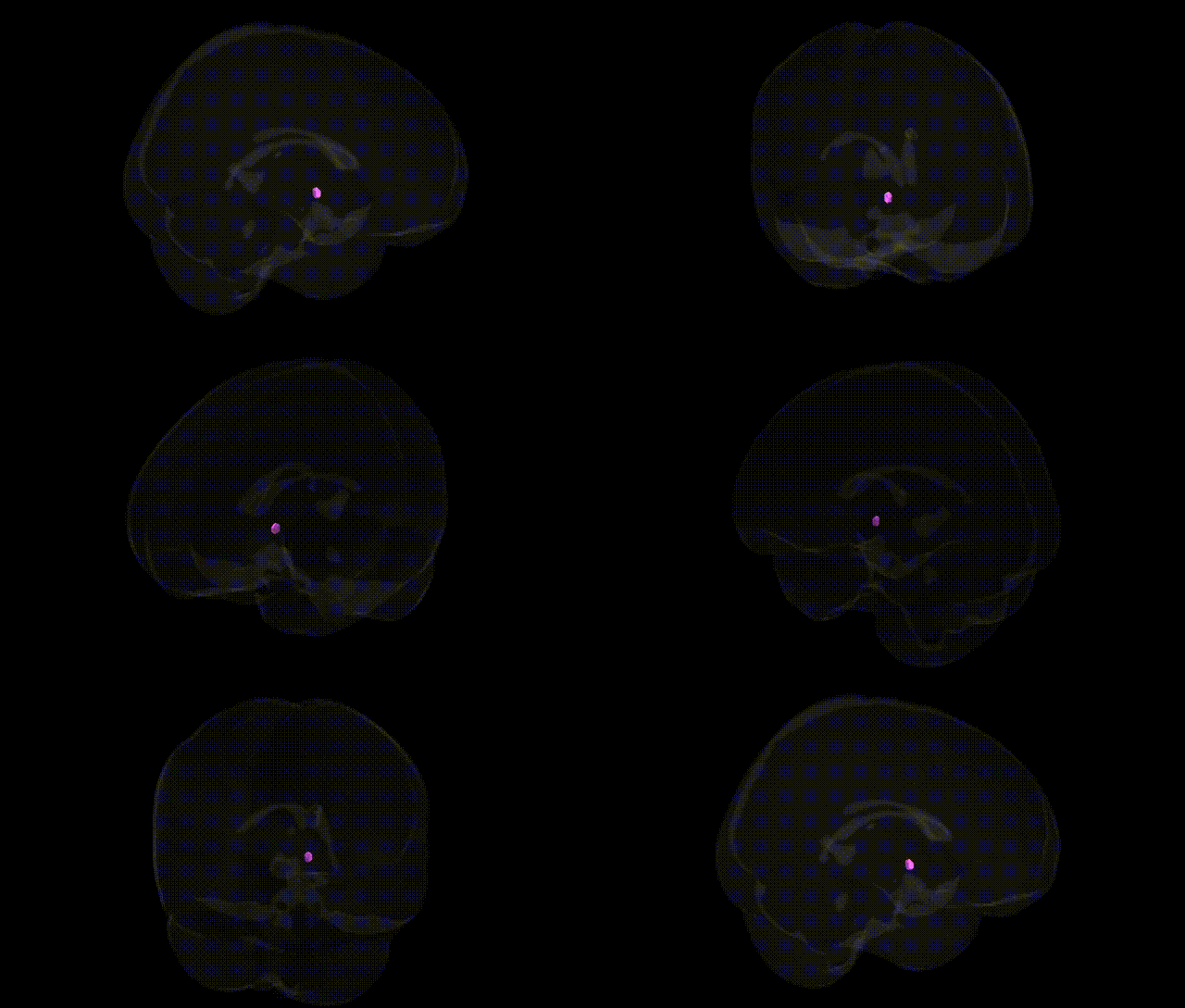
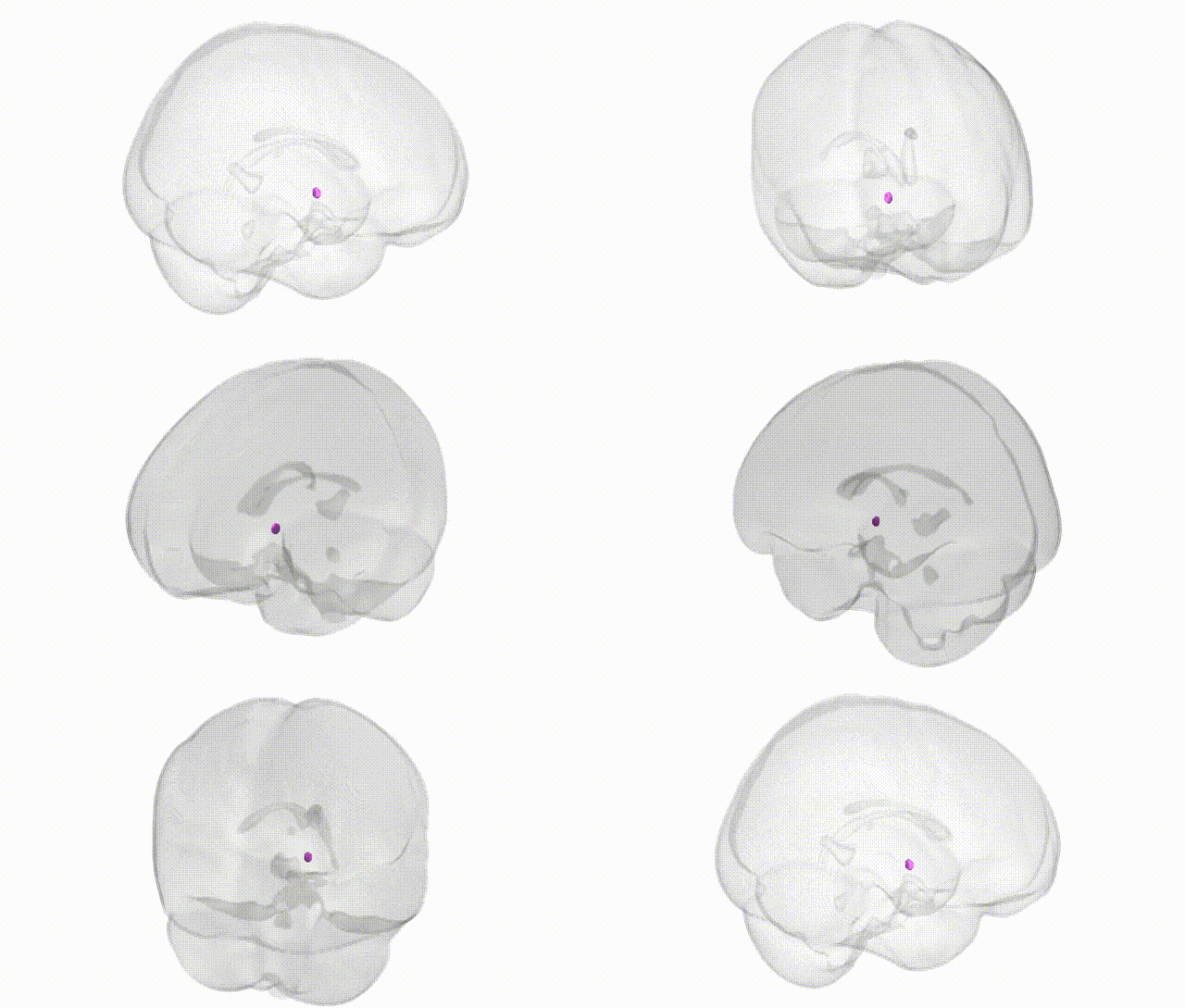
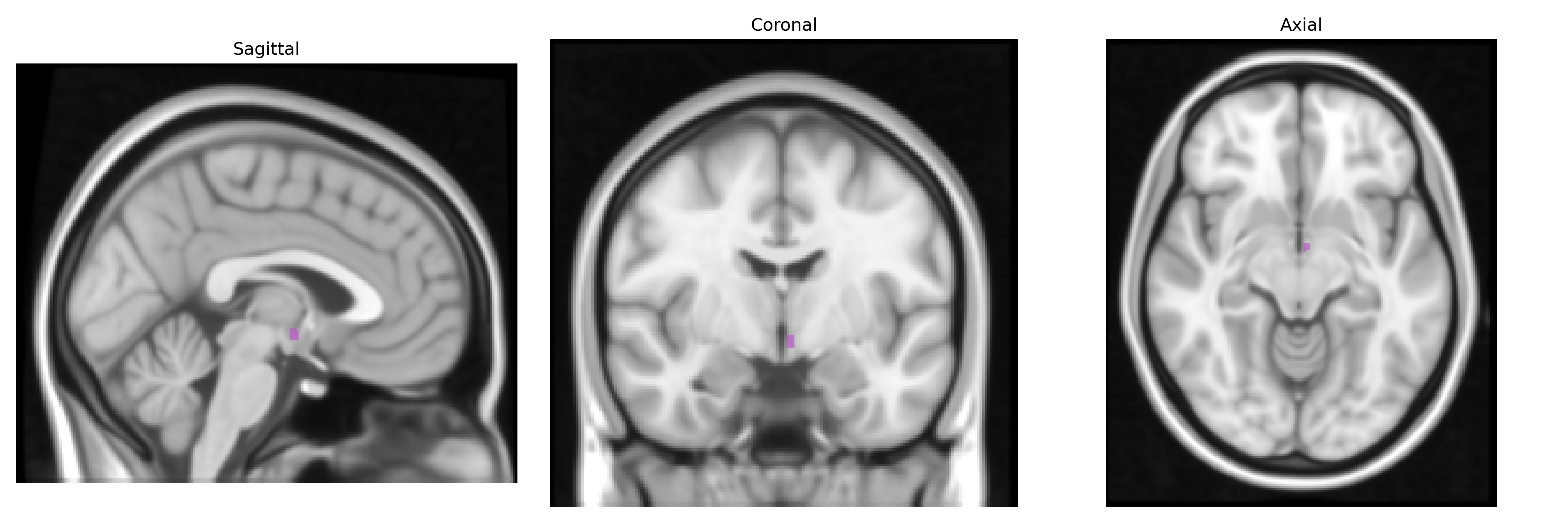
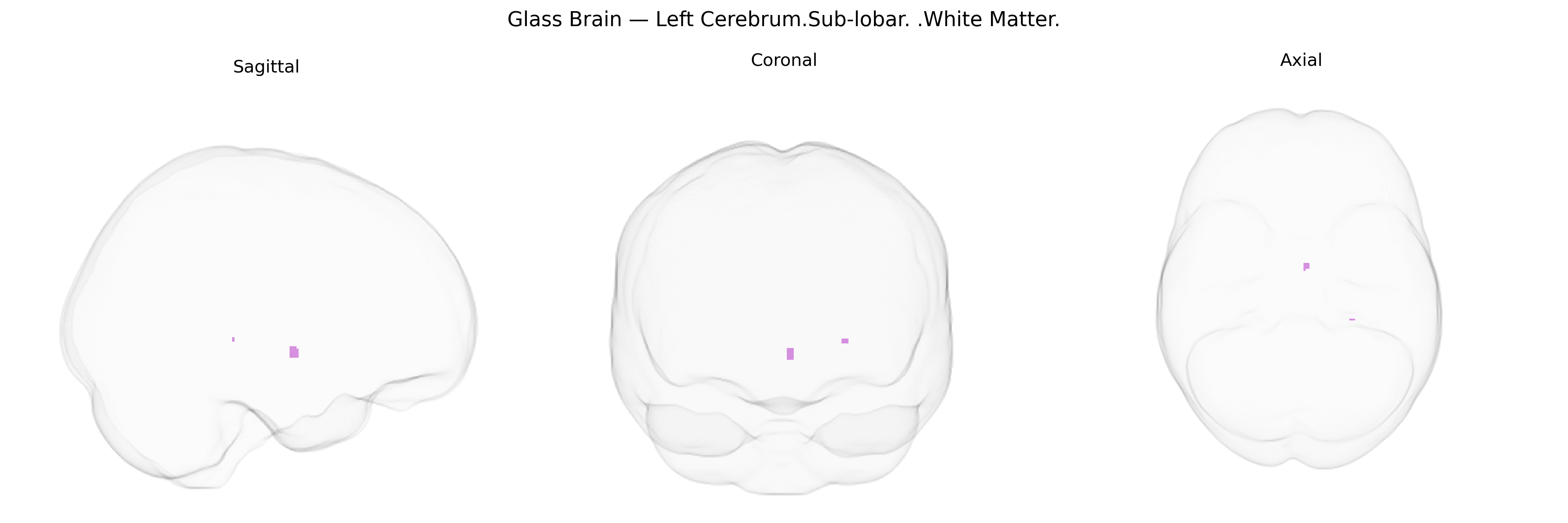
The bilateral Left Cerebrum.Sub-lobar.White Matter in the Talairach 1 mm Atlas refers to deep cerebral white matter located beneath the cortical (lobar) regions of the left hemisphere, encompassing major intrahemispheric and interhemispheric fiber tracts that connect cortical and subcortical structures. This sub-lobar white matter includes portions of association fibers (such as parts of the superior longitudinal fasciculus), commissural fibers (from the corpus callosum), and projection fibers (traveling to and from the thalamus, basal ganglia, and brainstem), and is essential for rapid signal conduction and integration across distributed neural networks supporting motor, sensory, cognitive, and language functions. As a Talairach label, it denotes a non-cortical, deep location rather than a specific named tract, and functionally represents a convergence zone where damage can produce widespread disconnection syndromes due to disruption of multiple pathways. There is no direct Wikipedia article for this specific Talairach region; a closely related structure is the cerebral white matter: Cerebral white matter.
The bilateral Left Cerebrum Sub-lobar White Matter, as defined in the Talairach 1 mm atlas, corresponds largely to deep periventricular and subcortical white-matter pathways (including segments of internal capsule, corona radiata, and association fibers) that are frequently interrogated in imaging-genetics and GWAS of white-matter microstructure. Large-scale diffusion MRI GWAS (e.g., ENIGMA, UK Biobank) have identified robust associations between fractional anisotropy and mean diffusivity in such sub-lobar white matter and common variants in genes involved in myelination, axon guidance, and oligodendrocyte function (for example, variants near or within NCAN, NTRK3, MAG, MBP, CNTN4, and PLP1-related loci), as well as broader polygenic influences related to brain size and intracranial volume (e.g., loci in HMGA2 and IGF1 pathways). White-matter integrity in these regions shows genetic correlations with neurodevelopmental and psychiatric disorders, including schizophrenia, bipolar disorder, major depressive disorder, and autism spectrum disorder, where risk loci (such as those in CACNA1C, ZNF804A, MIR137, and genes in the MHC region) are associated with altered deep frontal and temporal white-matter tracts passing through sub-lobar regions. In addition, GWAS of white-matter hyperintensities and small-vessel disease (e.g., identifying loci at 17q25, COL4A1/2, HTRA1, and other vascular and extracellular-matrix genes) frequently implicate periventricular and sub-lobar white matter, linking these pathways to stroke, cognitive decline, and dementia risk. Collectively, genetic studies indicate that the sub-lobar white matter is a convergence zone for variants influencing myelin biology, cerebrovascular integrity, and neuropsychiatric liability, though most associations operate at the level of distributed tracts rather than Talairach-defined parcels.
Overview generated by GPT-4o (2026).
Region ID: 461
Hemisphere: bilateral
Atlas: Talairach labels 1mm
Full Quality Version: Download MP4
Full Quality Version: Download MP4
Wali Sidiqyar*, Gaurav Rudravaram*, Elyssa M. McMaster, Trent M. Schwartz, Adam M. Saunders, Kurt G. Schilling, Bennett A. Landman "Introducing SPINS: A Shared Public Visualization Library of Neuroanatomical Structures." Medical Imaging with Deep Learning- short paper
This resource is licensed under CC0 1.0 Universal (Public Domain).