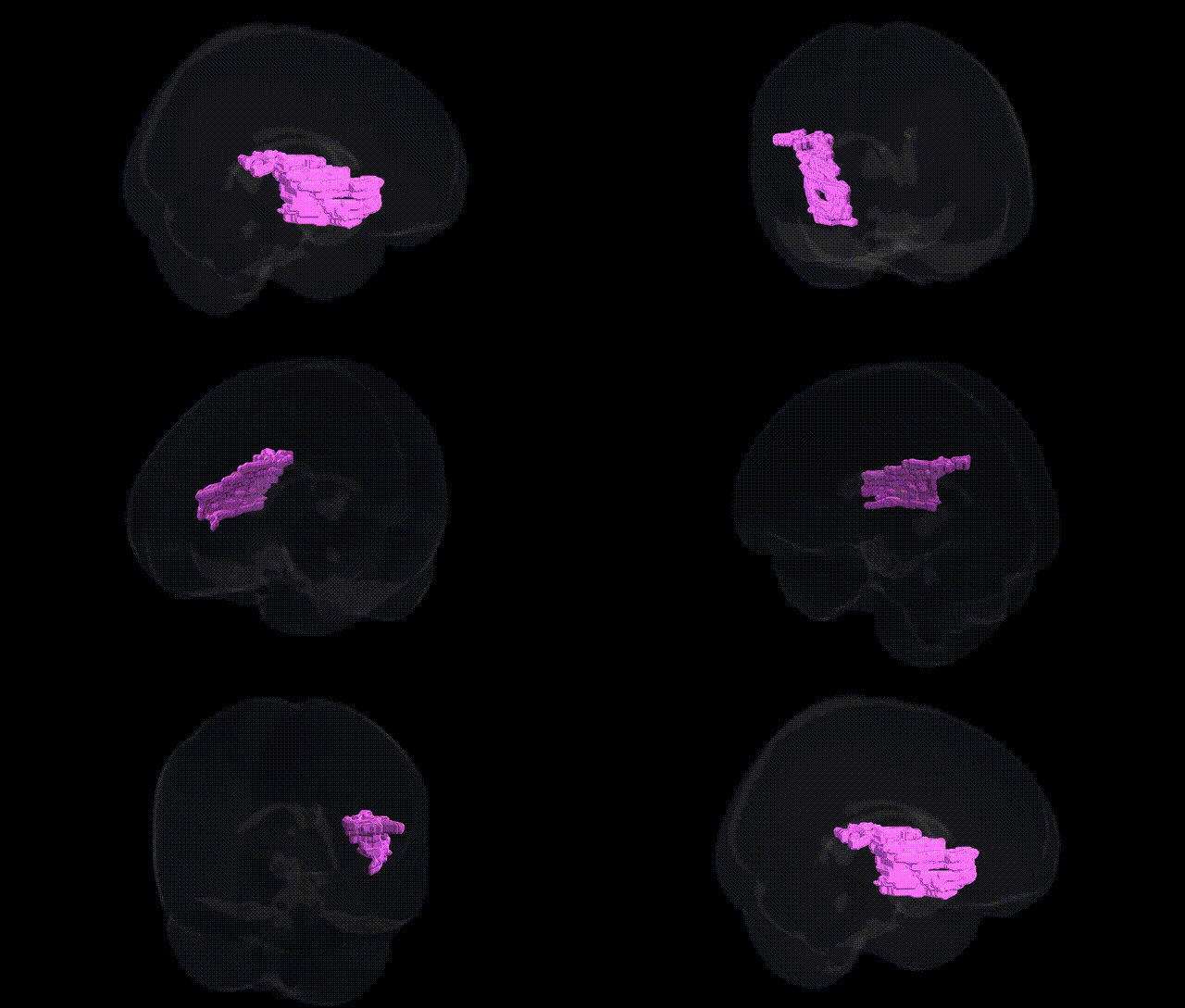
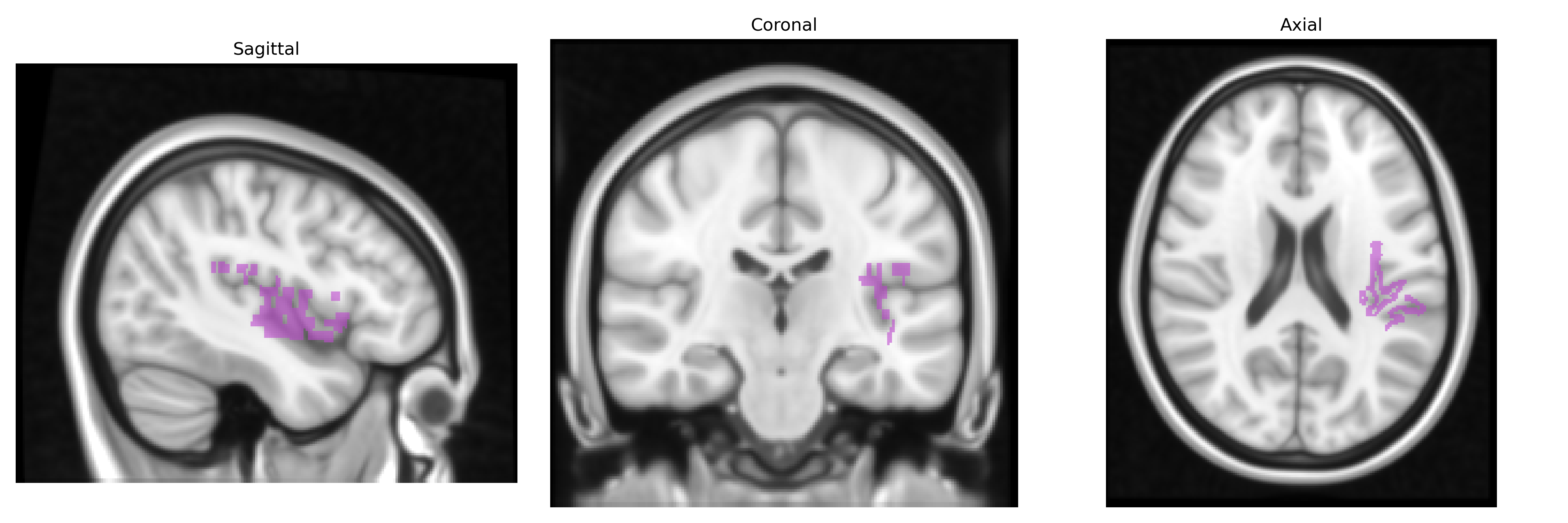
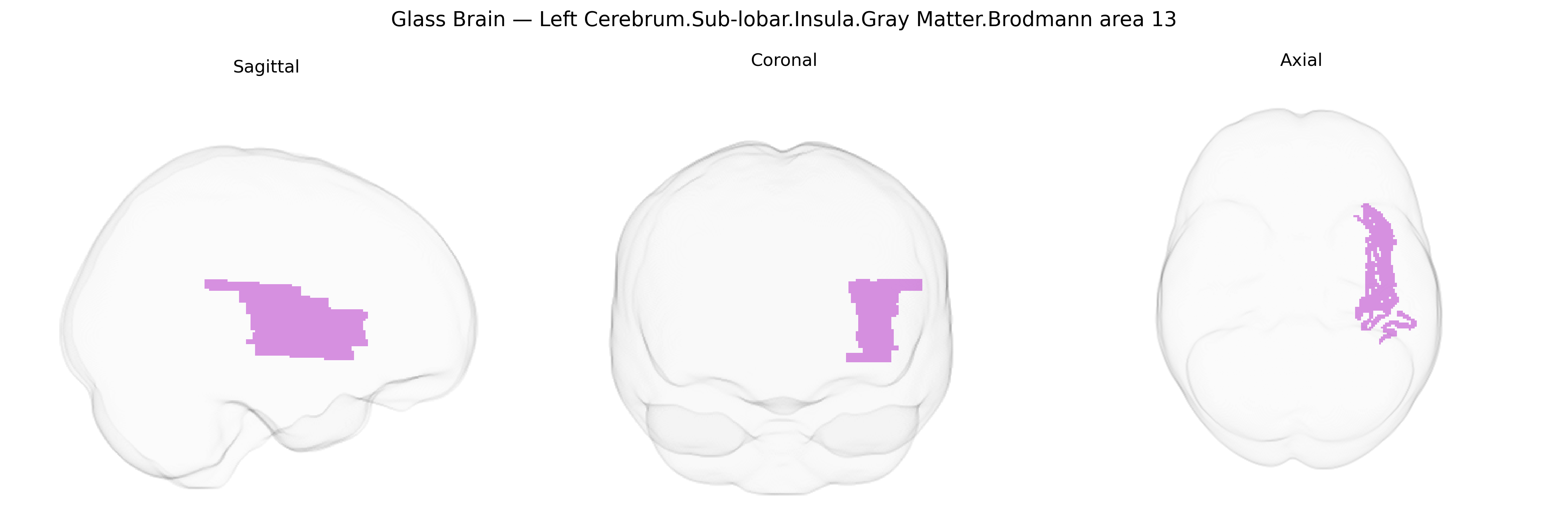
The bilateral Left Cerebrum.Sub-lobar.Insula.Gray Matter.Brodmann area 13 corresponds to a portion of the insular cortex buried within the lateral sulcus, classified as a sub-lobar gray matter region in the Talairach 1 mm atlas. Brodmann area 13 is part of the posterior–mid insula and is implicated in multimodal integration of visceral, somatosensory, affective, and cognitive information, including interoceptive awareness, aspects of taste and pain processing, and components of emotional and autonomic regulation. It participates in salience detection and contributes to networks that integrate bodily states with higher-order decision making and social-emotional functions. Although there is no Wikipedia page specific to “Brodmann area 13 of the insula,” this region is encompassed within the broader Insular cortex.
The bilateral left insular cortex, particularly Brodmann area 13 in the sub-lobar gray matter, has been implicated in multiple genetic and GWAS findings through its roles in interoception, emotion, and salience processing. Imaging genetics studies have linked common variants in serotonin-related genes (e.g., SLC6A4/5-HTTLPR, HTR1A), dopaminergic genes (e.g., DRD2, COMT), and neurotrophin-related genes (e.g., BDNF Val66Met) to structural or functional alterations in the insula, often in the context of anxiety, depression, and stress reactivity. Large-scale psychiatric GWAS (e.g., for major depressive disorder, schizophrenia, bipolar disorder, and anxiety) and polygenic risk score analyses have associated higher genetic liability with reduced insular gray matter volume or altered connectivity, suggesting that many risk loci converge on insular structure and function rather than mapping to a single gene. Insular abnormalities with genetic underpinnings have also been reported in addiction (e.g., nicotine and alcohol dependence, supported by variants in CHRNA5–CHRNA3–CHRNB4 and other reward-related genes), eating disorders and obesity (with FTO and other metabolic loci influencing insular responses to food cues), and pain sensitivity and somatization (where candidate genes for pain modulation and inflammation show insula-related effects). Although no single variant is uniquely tied to Brodmann area 13 in the Talairach 1 mm atlas, convergent GWAS and imaging-genetic data indicate that polygenic architectures for mood, psychosis, substance use, and metabolic traits reliably involve this insular subregion.
Overview generated by GPT-4o (2026).
Region ID: 447
Hemisphere: bilateral
Atlas: Talairach labels 1mm
Full Quality Version: Download MP4
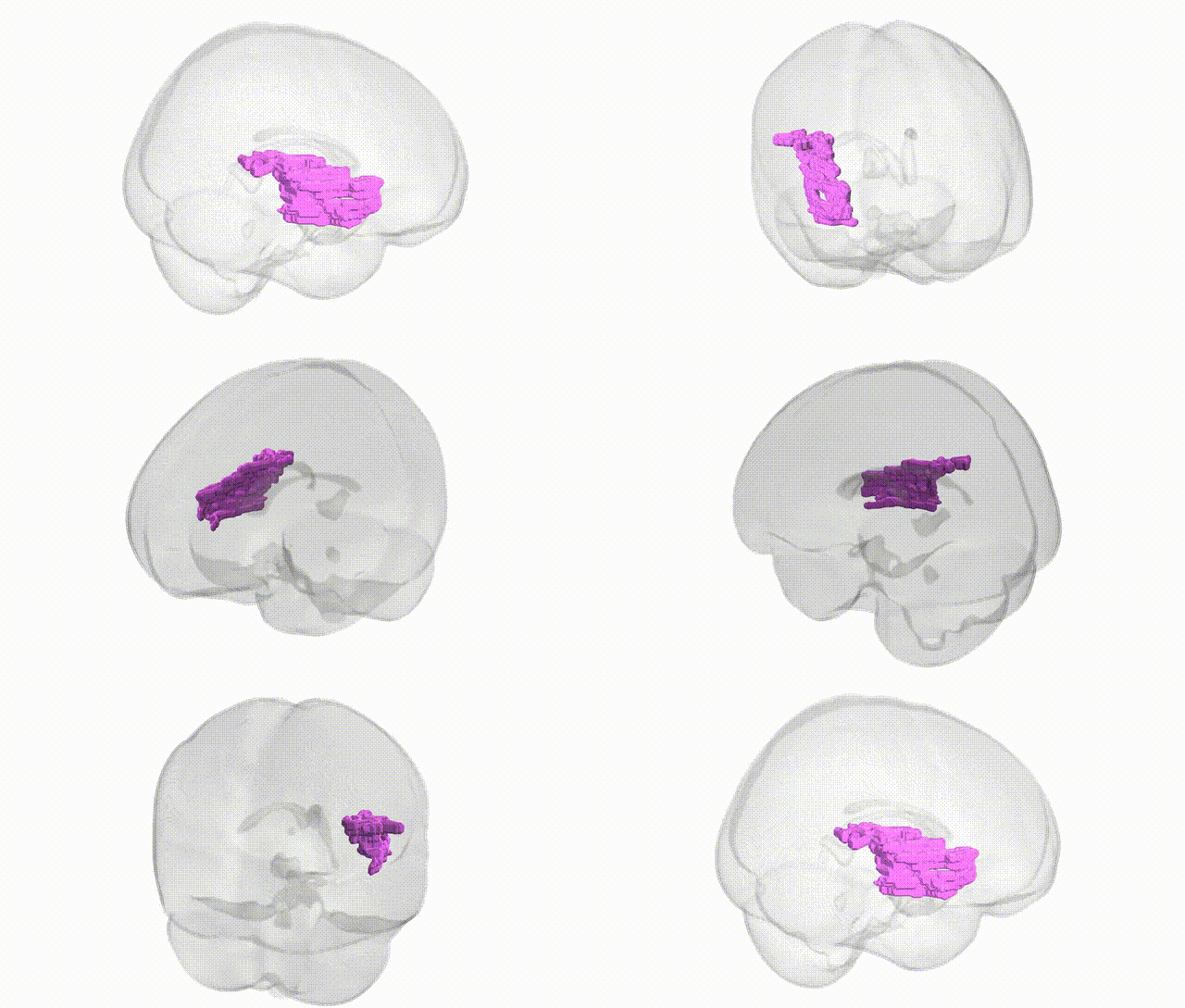
Full Quality Version: Download MP4
Wali Sidiqyar*, Gaurav Rudravaram*, Elyssa M. McMaster, Trent M. Schwartz, Adam M. Saunders, Kurt G. Schilling, Bennett A. Landman "Introducing SPINS: A Shared Public Visualization Library of Neuroanatomical Structures." Medical Imaging with Deep Learning- short paper
This resource is licensed under CC0 1.0 Universal (Public Domain).