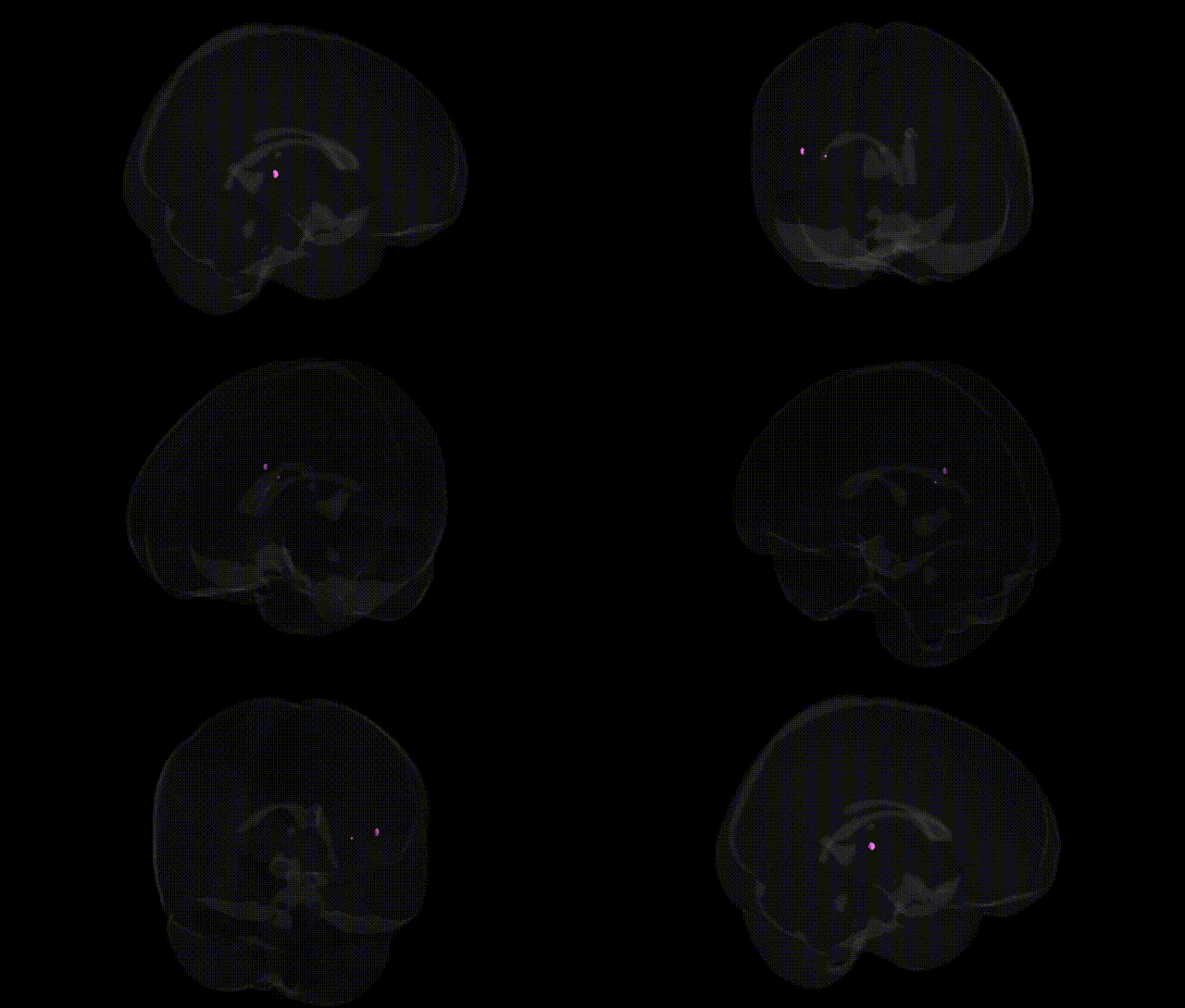
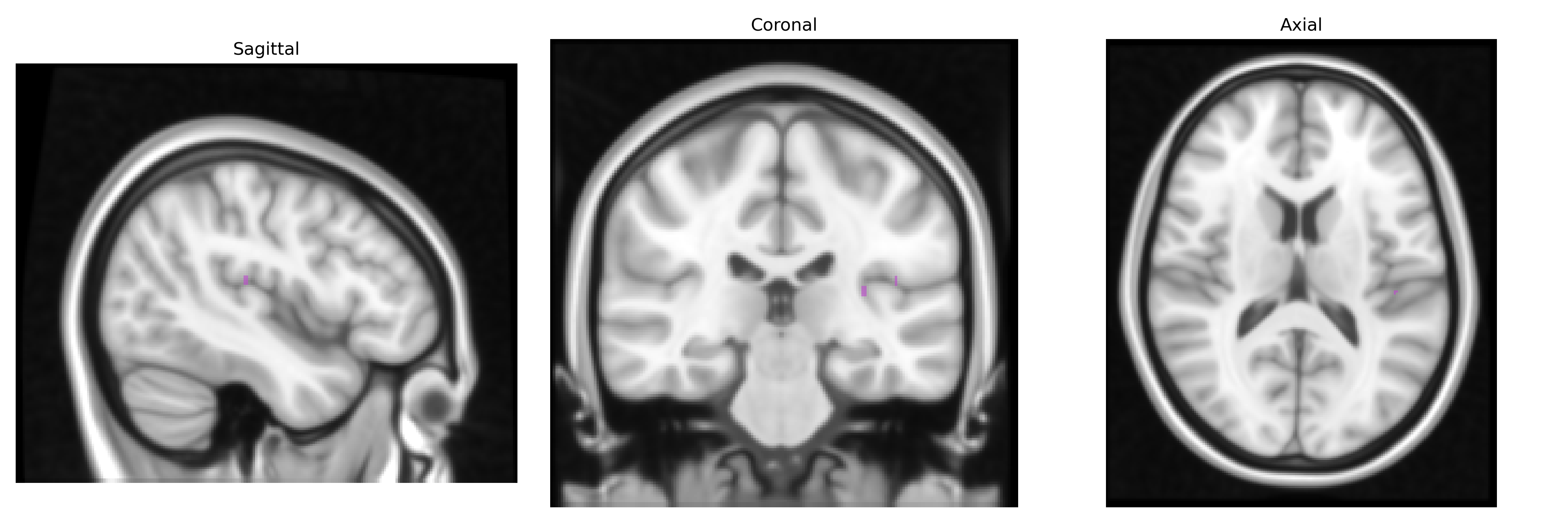
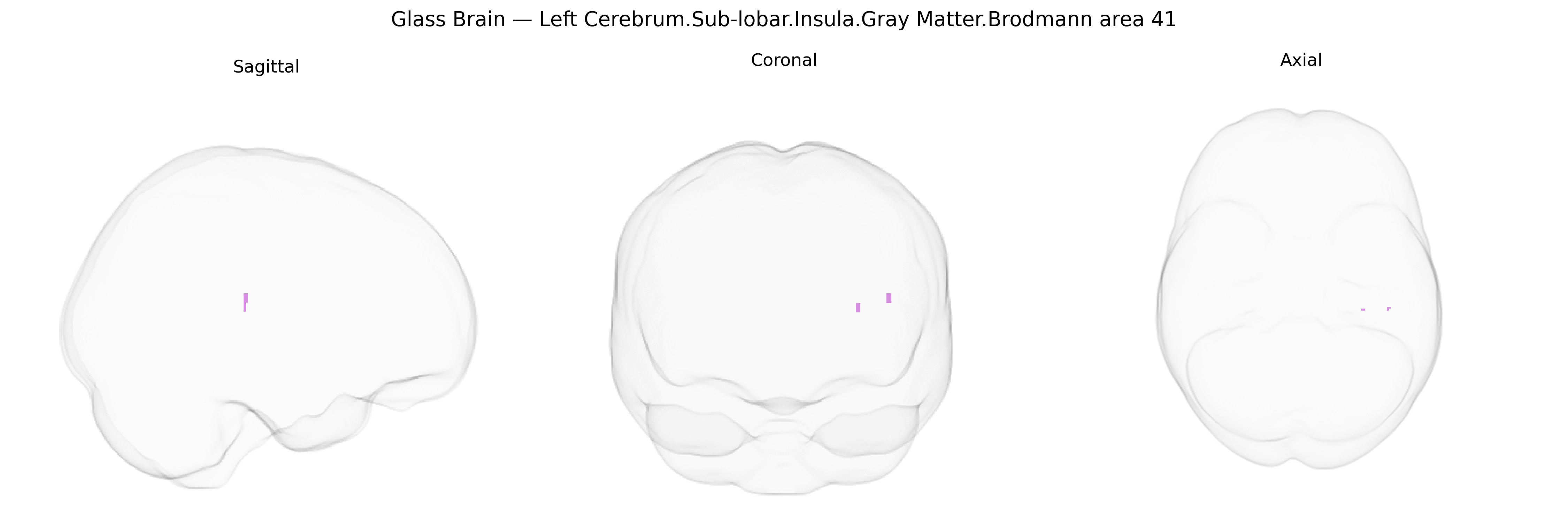
The bilateral Left Cerebrum.Sub-lobar.Insula.Gray Matter.Brodmann area 41 corresponds to primary auditory cortex located deep within the lateral sulcus on the superior surface of the temporal lobe but assigned here to the insular/sub-lobar region in the Talairach 1 mm atlas. Brodmann area 41 (also known as the anterior transverse temporal gyrus or Heschl’s gyrus) is characterized cytoarchitectonically by a granular koniocortical pattern and is specialized for the initial cortical processing of acoustic information, including sound frequency, intensity, and simple temporal features. It receives dense thalamocortical input from the medial geniculate nucleus and projects to surrounding auditory association areas, contributing to the early stages of auditory perception that support more complex functions such as speech and music processing. There is no direct Wikipedia article for this exact Talairach label; a closely related structure is Brodmann area 41.
The bilateral left insular gray matter in Brodmann area 41, a region at the interface of insula and primary auditory cortex, has been implicated in multiple genetic and GWAS findings through its roles in auditory processing, interoception, and salience/emotion networks. Large-scale imaging–genetics consortia (e.g., ENIGMA, UK Biobank) report heritable variation in insular thickness and volume, with common variants in genes related to neurodevelopment, synaptic function, and cortical patterning (such as MIR137, DISC1, and various glutamatergic and calcium-channel loci) showing associations with insular and adjacent temporal lobe morphology. Polygenic risk scores for schizophrenia, bipolar disorder, and major depressive disorder are consistently linked to reduced insular and superior temporal/BA41 gray matter, aligning with case–control MRI findings of insular atrophy in psychosis and mood disorders. GWAS of psychotic symptoms, auditory hallucinations, and schizophrenia endophenotypes highlight loci influencing auditory and language cortex, including BA41/42–insula junction, while autism spectrum disorder and language-related genetic variants (e.g., FOXP2-regulated networks) have been associated with altered structure and connectivity in this region. Additional associations include risk alleles for substance-use traits and impulsivity mapping onto insular volume and function, as well as genetic variants influencing pain sensitivity and interoceptive awareness that show convergent effects on insula-based networks, although precise single-gene links specific to Brodmann area 41 within the left insula remain incompletely resolved and typically emerge as part of broader temporal–insular cortical GWAS signals.
Overview generated by GPT-4o (2026).
Region ID: 721
Hemisphere: bilateral
Atlas: Talairach labels 1mm
Full Quality Version: Download MP4
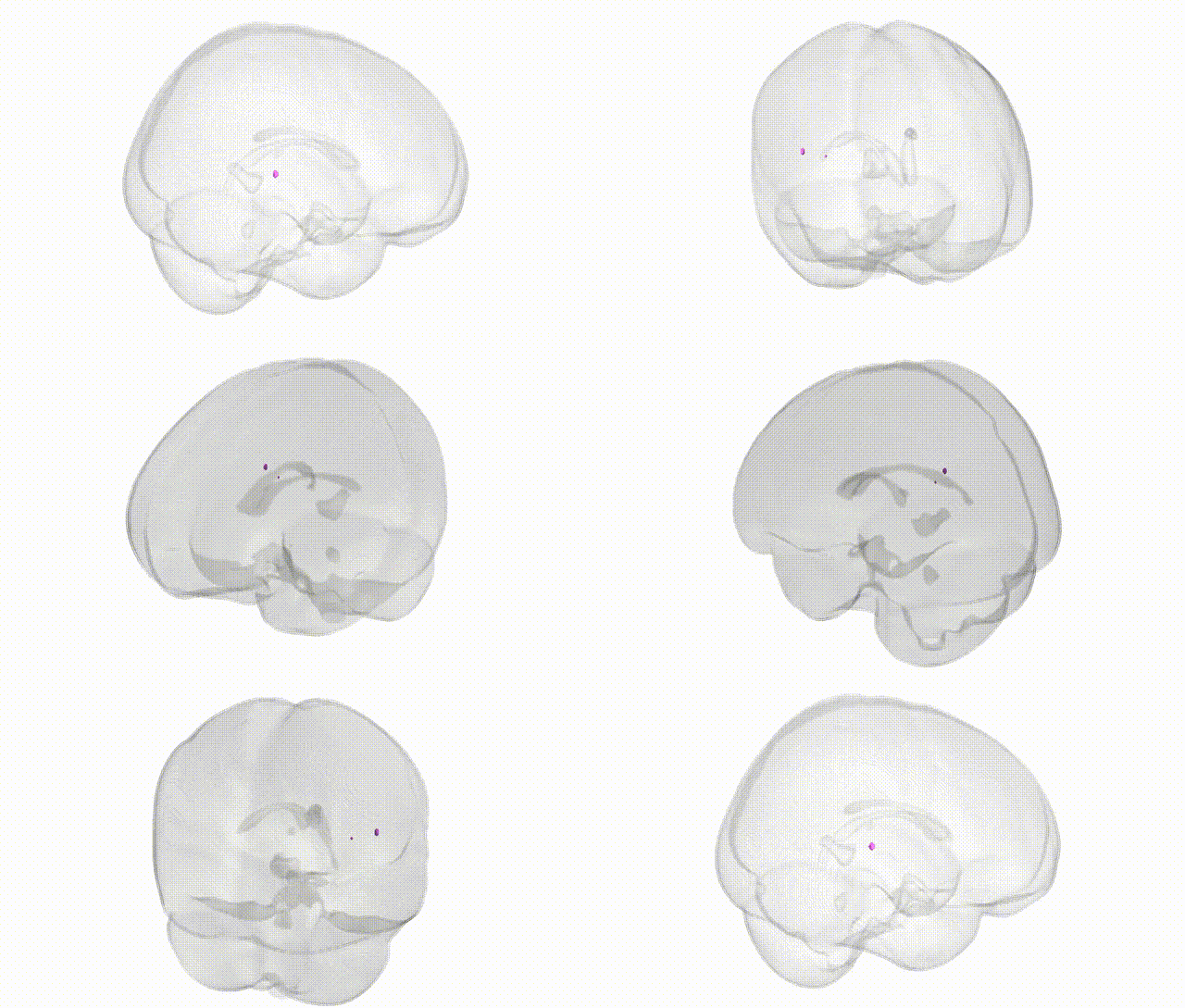
Full Quality Version: Download MP4
Wali Sidiqyar*, Gaurav Rudravaram*, Elyssa M. McMaster, Trent M. Schwartz, Adam M. Saunders, Kurt G. Schilling, Bennett A. Landman "Introducing SPINS: A Shared Public Visualization Library of Neuroanatomical Structures." Medical Imaging with Deep Learning- short paper
This resource is licensed under CC0 1.0 Universal (Public Domain).