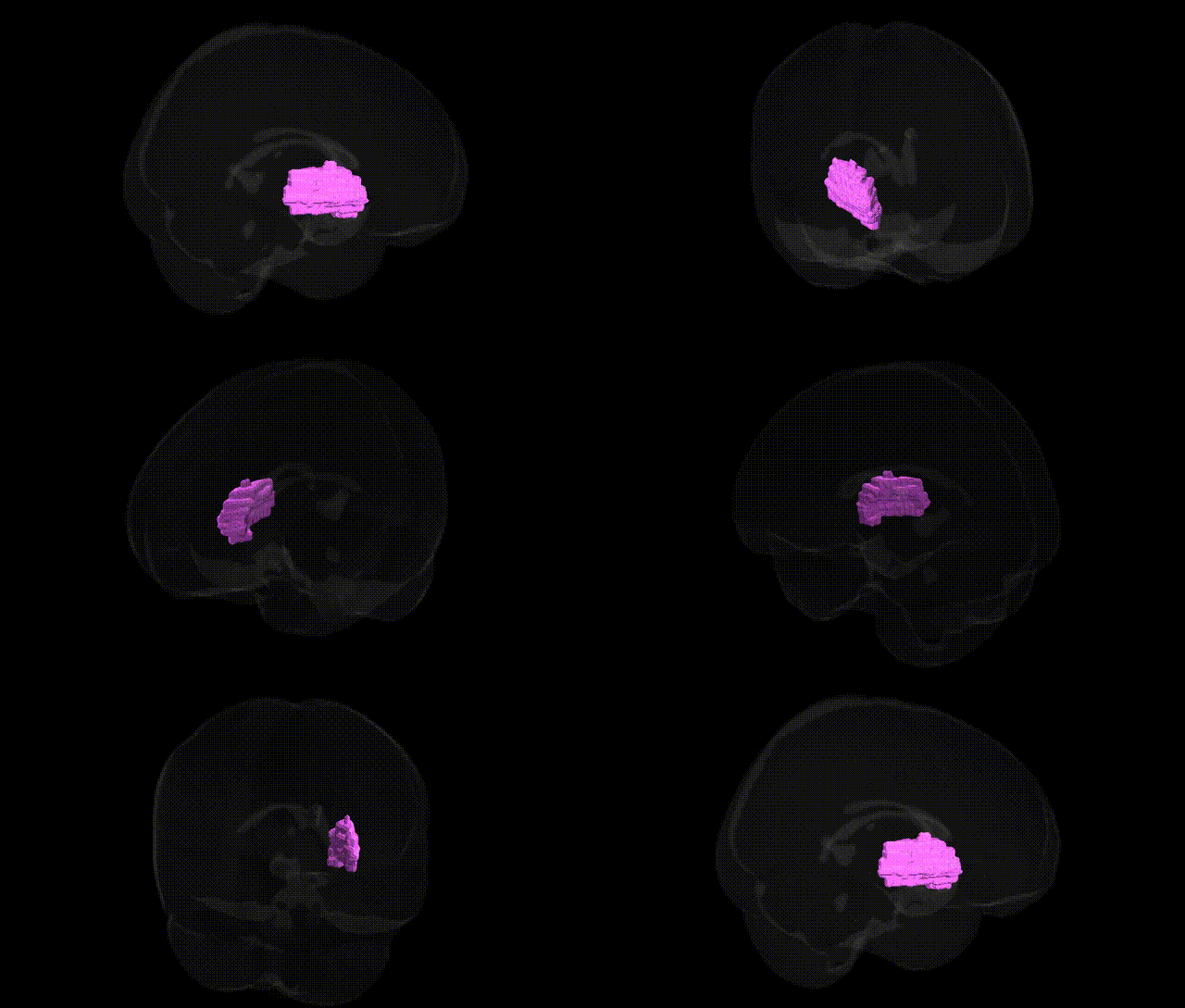
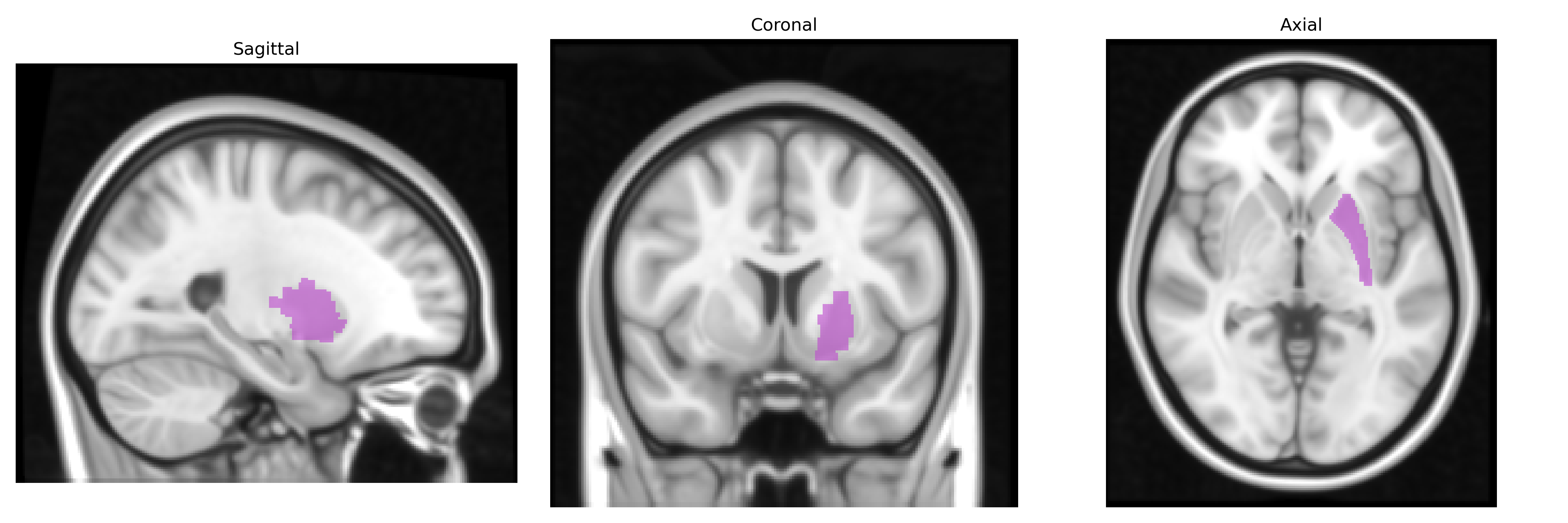
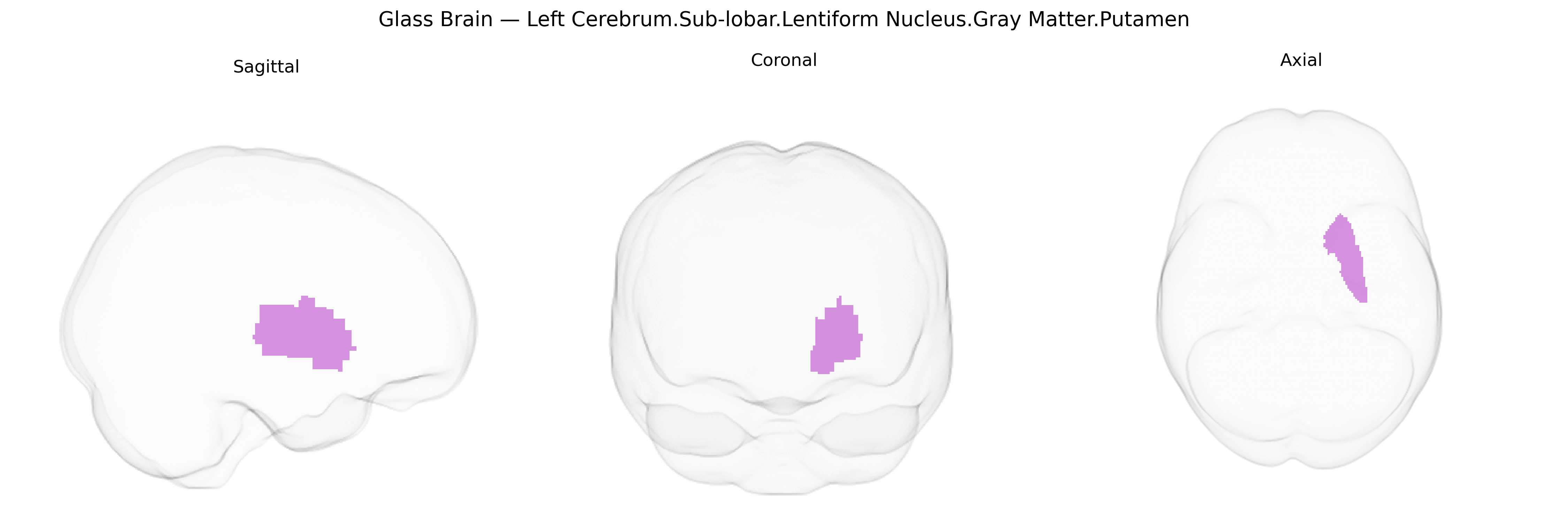
The bilateral Left Cerebrum.Sub-lobar.Lentiform Nucleus.Gray Matter.Putamen corresponds to the putaminal portion of the lentiform nucleus within the subcortical gray matter of the left cerebral hemisphere, forming a major component of the dorsal striatum. It is composed predominantly of medium spiny GABAergic neurons that receive dense glutamatergic inputs from the cortex and thalamus and dopaminergic projections from the substantia nigra pars compacta, integrating motor, cognitive, and limbic information. Functionally, this region is crucial for the modulation of voluntary movement, procedural learning, habit formation, and aspects of reward processing, operating within cortico-basal ganglia-thalamo-cortical loops to influence motor planning and execution. Pathologically, degeneration or dysfunction of the putamen is implicated in movement disorders such as Parkinson’s disease, Huntington’s disease, and dystonia.
The putamen, part of the lentiform nucleus within the sub-lobar gray matter of the left cerebrum, shows robust genetic associations across movement, psychiatric, and cognitive domains. GWAS of subcortical brain volumes (e.g., ENIGMA, UK Biobank) have identified common variants near and within genes such as MTMR10, PTCH1, DCC, LINGO1, and HMGA2 that influence putamen volume, with substantial SNP-based heritability for this structure. In movement disorders, variants in SNCA, LRRK2, GBA, and MAPT that confer Parkinson’s disease risk are strongly implicated in neurodegeneration of the putamen and related basal ganglia circuitry, while HTT CAG expansions in Huntington’s disease produce early and pronounced atrophy of the caudate-putamen complex. ADHD, schizophrenia, and major depressive disorder GWAS have implicated polygenic risk that correlates with altered putamen volume and function, and specific risk loci (e.g., in DRD2, CACNA1C, and genes involved in synaptic plasticity and dopaminergic signaling) have been linked to basal ganglia–mediated reward and habit circuitry. Additionally, putamen volume and activity show genetic correlations with traits such as educational attainment, general cognitive ability, and smoking and alcohol use, suggesting shared polygenic architecture between this region and both cognitive and reward-related behaviors.
Overview generated by GPT-4o (2026).
Region ID: 379
Hemisphere: bilateral
Atlas: Talairach labels 1mm
Full Quality Version: Download MP4
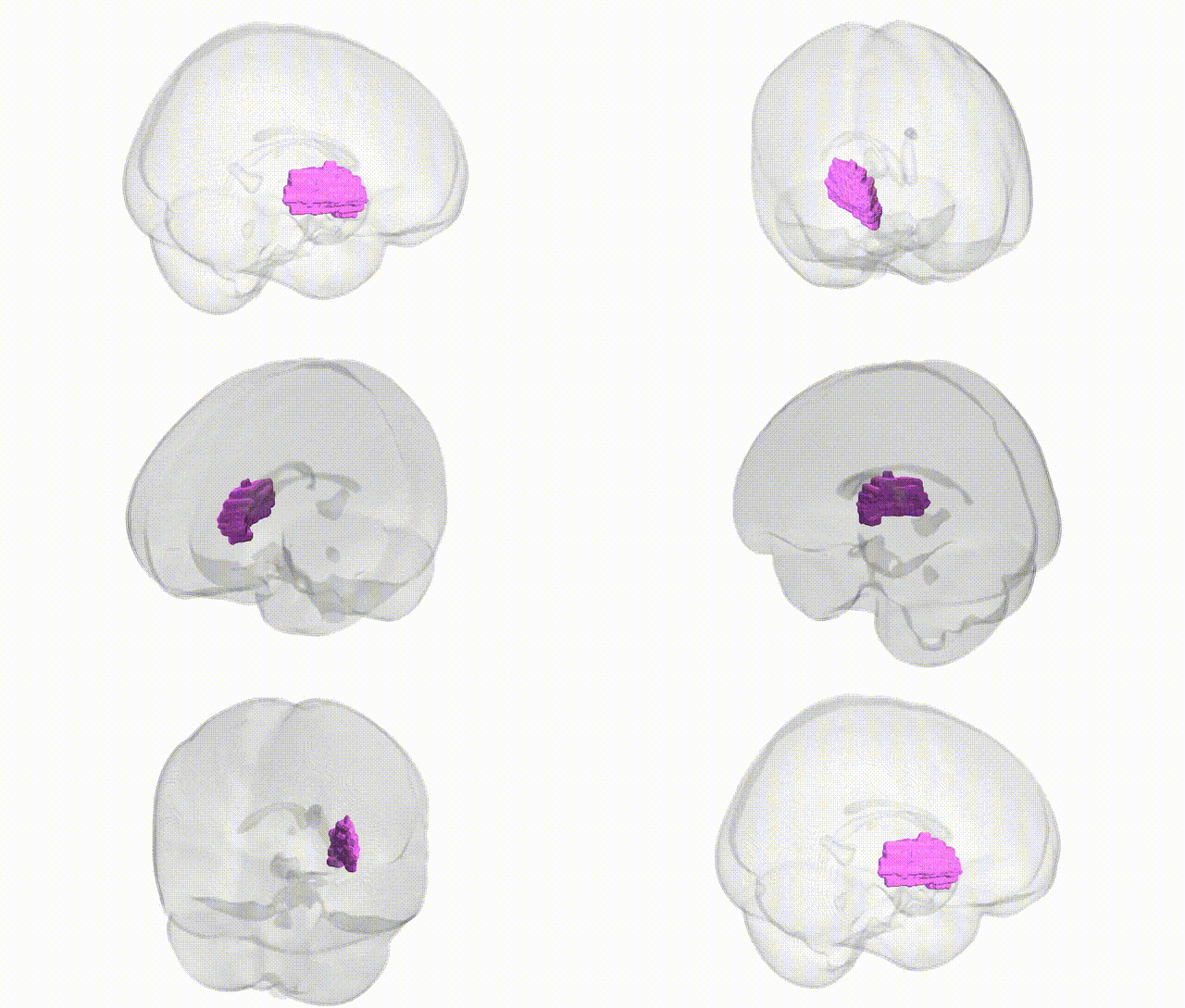
Full Quality Version: Download MP4
Wali Sidiqyar*, Gaurav Rudravaram*, Elyssa M. McMaster, Trent M. Schwartz, Adam M. Saunders, Kurt G. Schilling, Bennett A. Landman "Introducing SPINS: A Shared Public Visualization Library of Neuroanatomical Structures." Medical Imaging with Deep Learning- short paper
This resource is licensed under CC0 1.0 Universal (Public Domain).