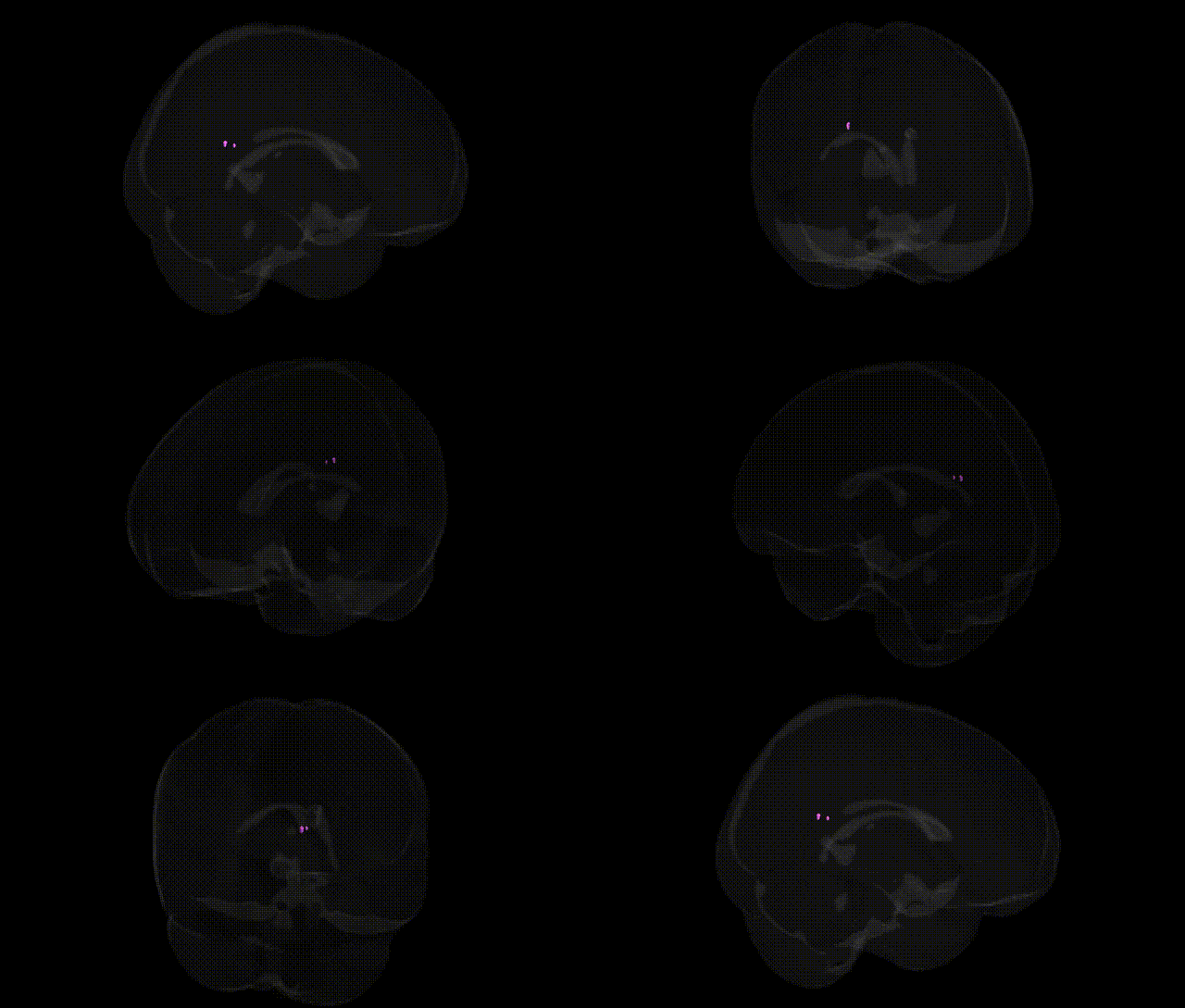
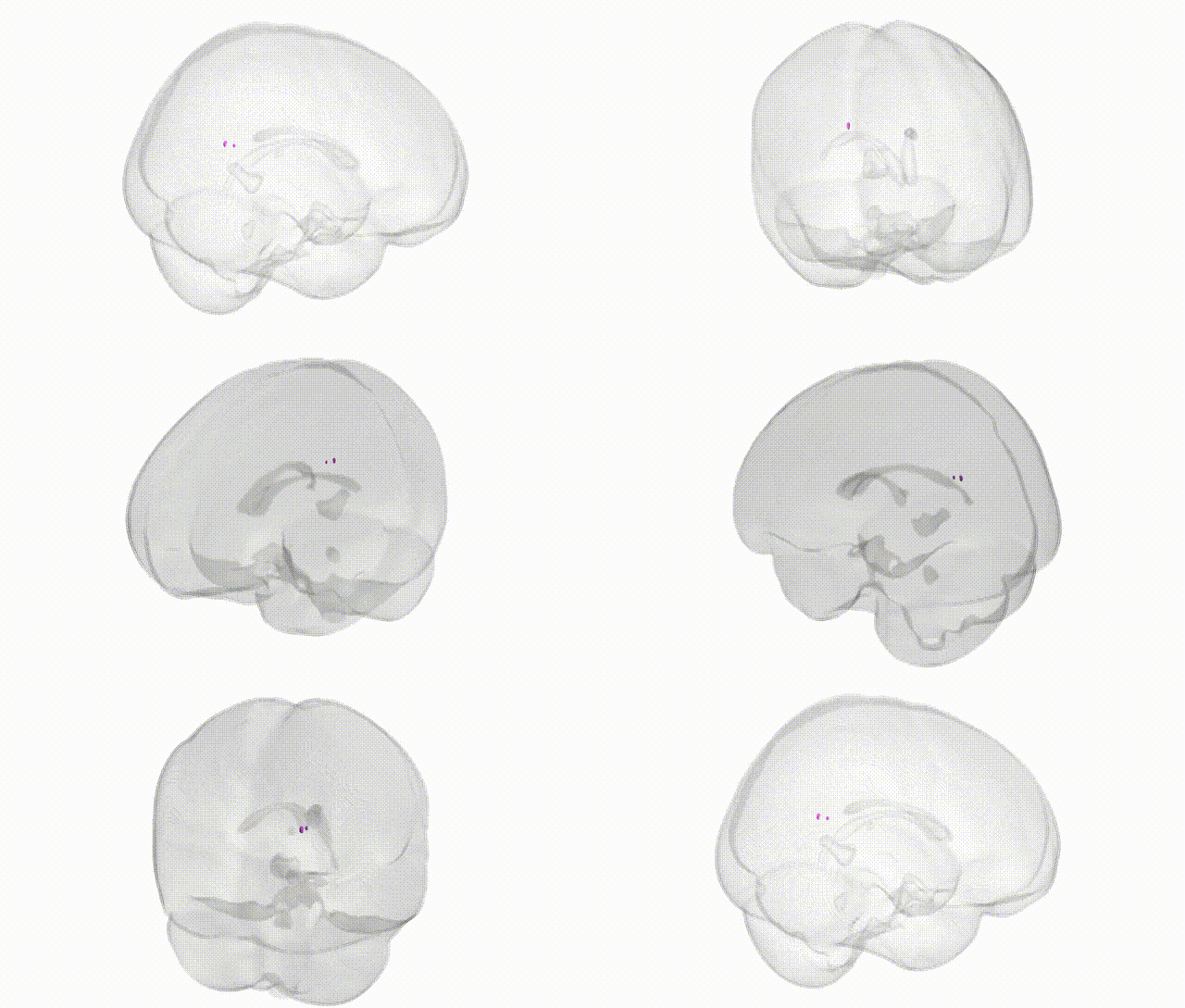
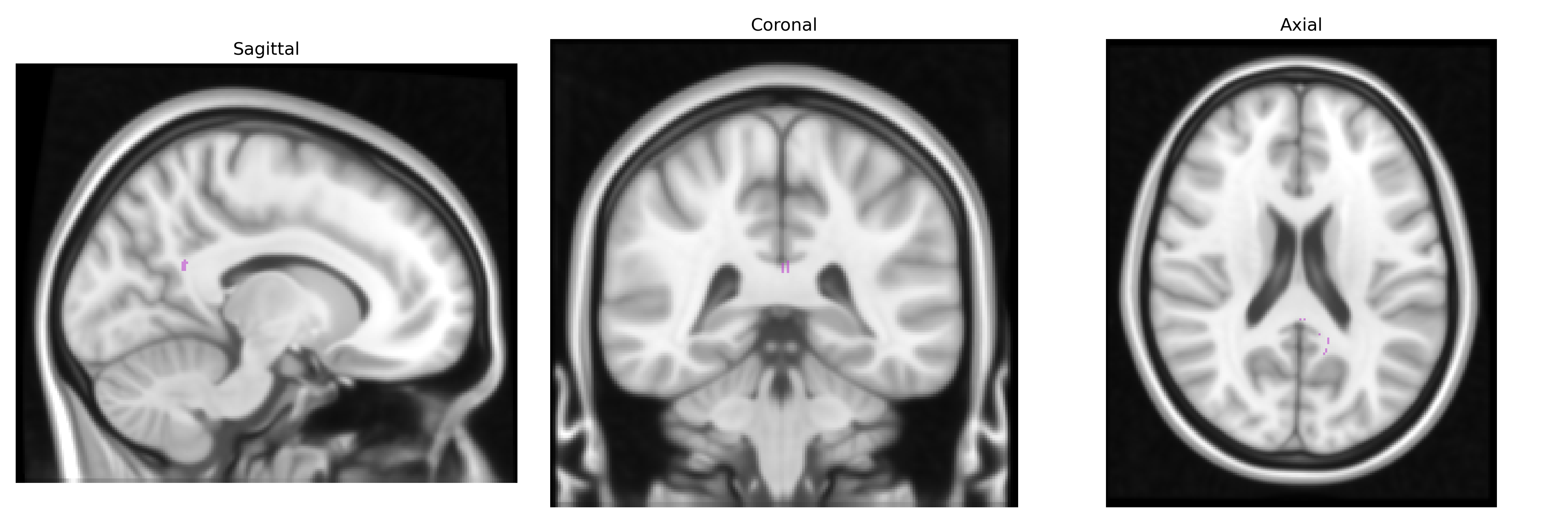
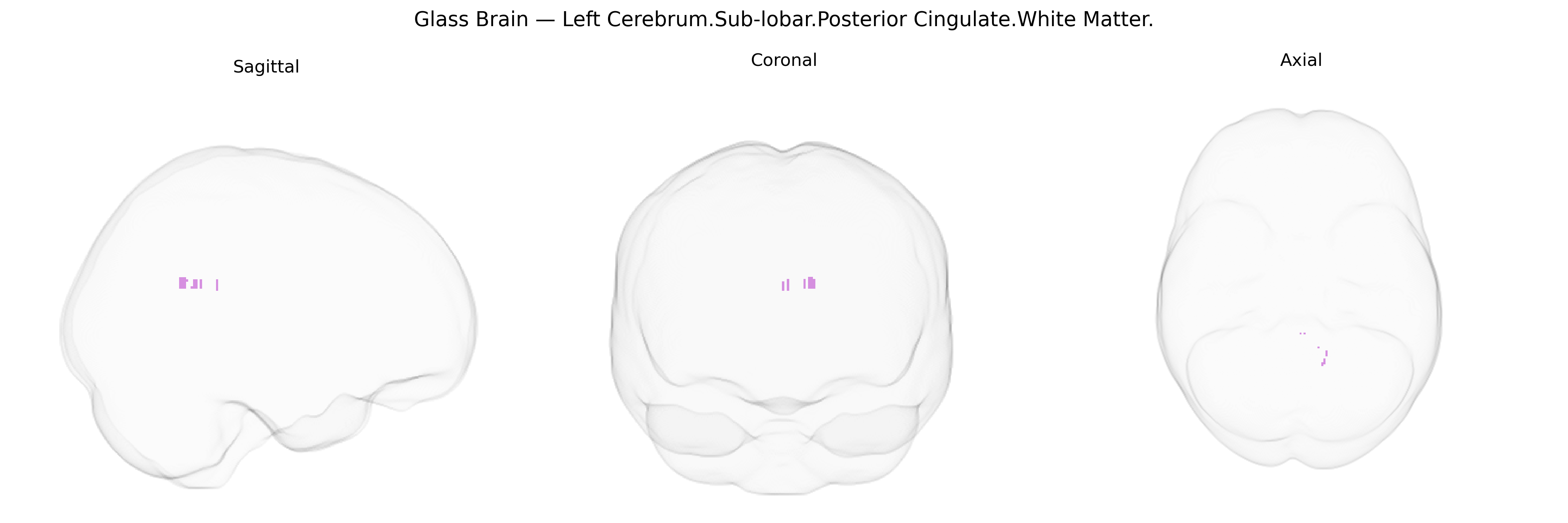
The bilateral Left Cerebrum.Sub-lobar.Posterior Cingulate.White Matter corresponds to the deep myelinated fiber tracts underlying the posterior cingulate cortex, a key hub of the limbic and default mode networks situated in the medial parietal lobe. These white matter pathways interconnect the posterior cingulate gray matter with adjacent cingulate regions, precuneus, medial prefrontal cortex, and medial temporal structures, supporting integration of internally directed cognition, autobiographical memory, visuospatial imagery, and aspects of consciousness and self-referential processing. As part of the cingulum bundle and associated tracts, this region plays a crucial role in large-scale network communication, and is often implicated in neurodegenerative and psychiatric conditions through changes in structural connectivity and metabolism. No direct link exists for the specific white matter label; a related overview is provided here: Posterior cingulate cortex.
The bilateral Left Cerebrum.Sub-lobar.Posterior Cingulate.White Matter, corresponding broadly to posterior cingulate and adjacent cingulum bundle territories in the Talairach 1 mm atlas, has been implicated in several genetic and genome-wide association frameworks, though typically at coarser regional parcellations (e.g., posterior cingulate cortex, cingulate white matter, or default mode network nodes). Structural and diffusion MRI GWAS from large cohorts (e.g., ENIGMA, UK Biobank) have identified common variants in genes related to myelination, axon guidance, and synaptic function (such as NTRK2, CNTNAP2, and MBP-region loci) that associate with microstructural properties (FA, MD) and volume of cingulate white matter, including posterior segments. Polygenic risk for schizophrenia, bipolar disorder, and major depressive disorder has been repeatedly linked to altered posterior cingulate structure and connectivity, with specific loci in immune-related (e.g., MHC region) and synaptic genes showing mediation effects on white-matter metrics in this region. Alzheimer’s disease GWAS loci—most prominently APOE as well as CLU, PICALM, and BIN1—have been associated with posterior cingulate atrophy and white-matter disruption, consistent with this region’s vulnerability to early AD pathology; imaging–genetics studies show APOE ε4 status correlating with reduced integrity and metabolic changes in posterior cingulate white matter. Autism spectrum disorder, ADHD, and cognitive traits (intelligence, memory, and default mode network connectivity) also show polygenic influences converging on posterior cingulate circuits, with multivariate GWAS and SNP-based heritability analyses indicating that individual differences in posterior cingulate connectivity and white-matter organization are modestly but significantly heritable, driven by distributed variants rather than a single locus, and overlapping with genetic architectures of neurodevelopmental and neurodegenerative disorders.
Overview generated by GPT-4o (2026).
Region ID: 831
Hemisphere: bilateral
Atlas: Talairach labels 1mm
Full Quality Version: Download MP4
Full Quality Version: Download MP4
Wali Sidiqyar*, Gaurav Rudravaram*, Elyssa M. McMaster, Trent M. Schwartz, Adam M. Saunders, Kurt G. Schilling, Bennett A. Landman "Introducing SPINS: A Shared Public Visualization Library of Neuroanatomical Structures." Medical Imaging with Deep Learning- short paper
This resource is licensed under CC0 1.0 Universal (Public Domain).