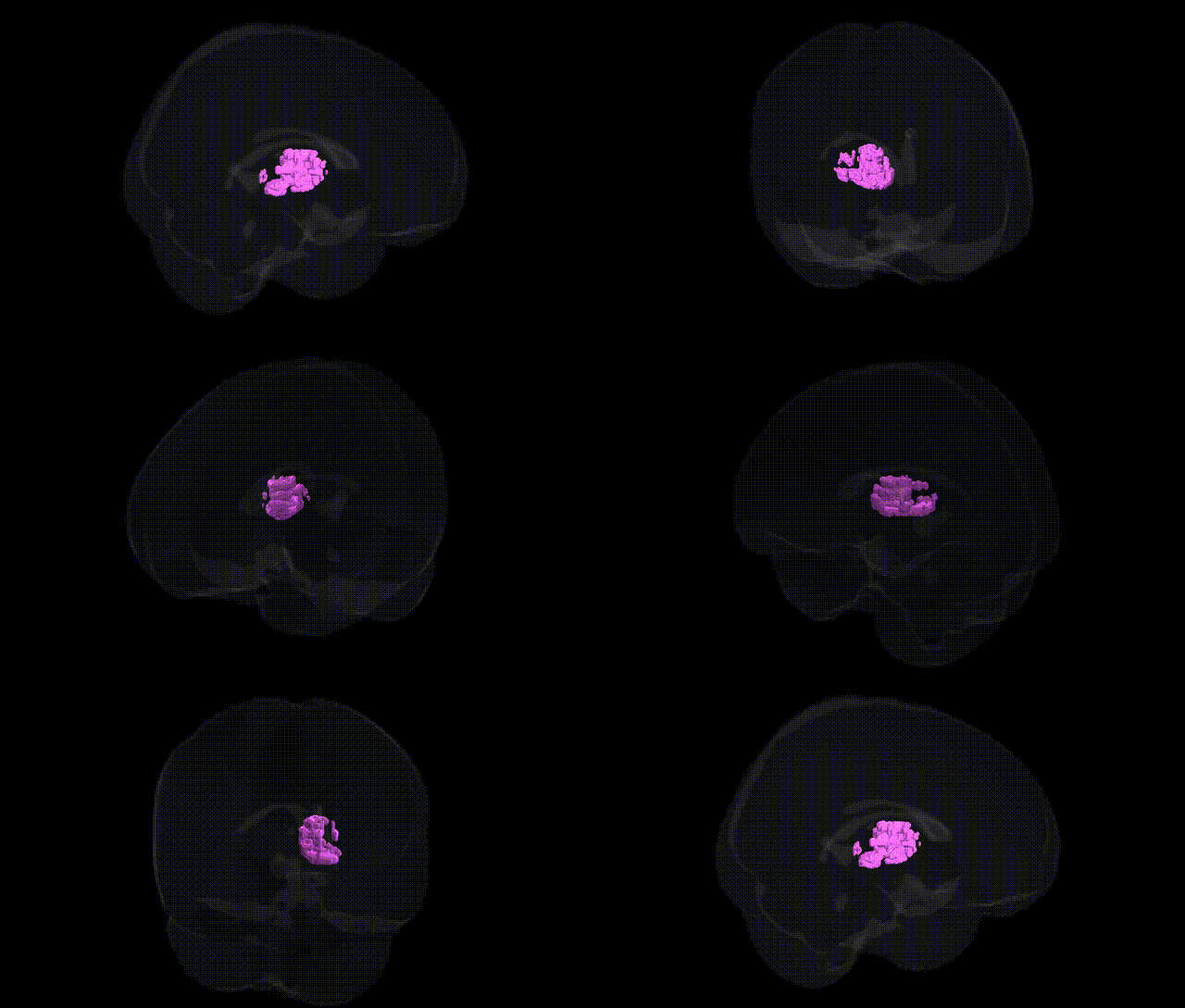
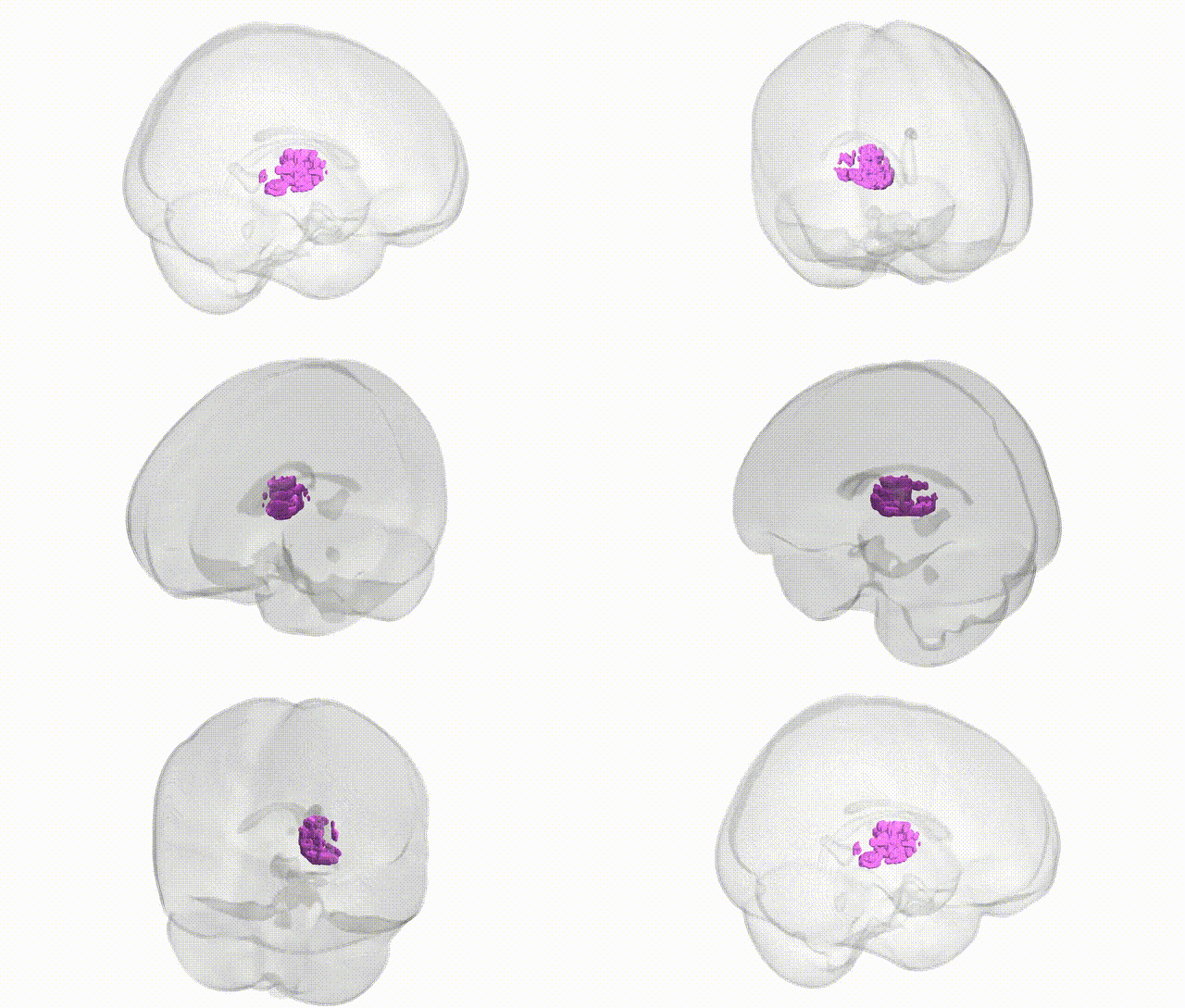
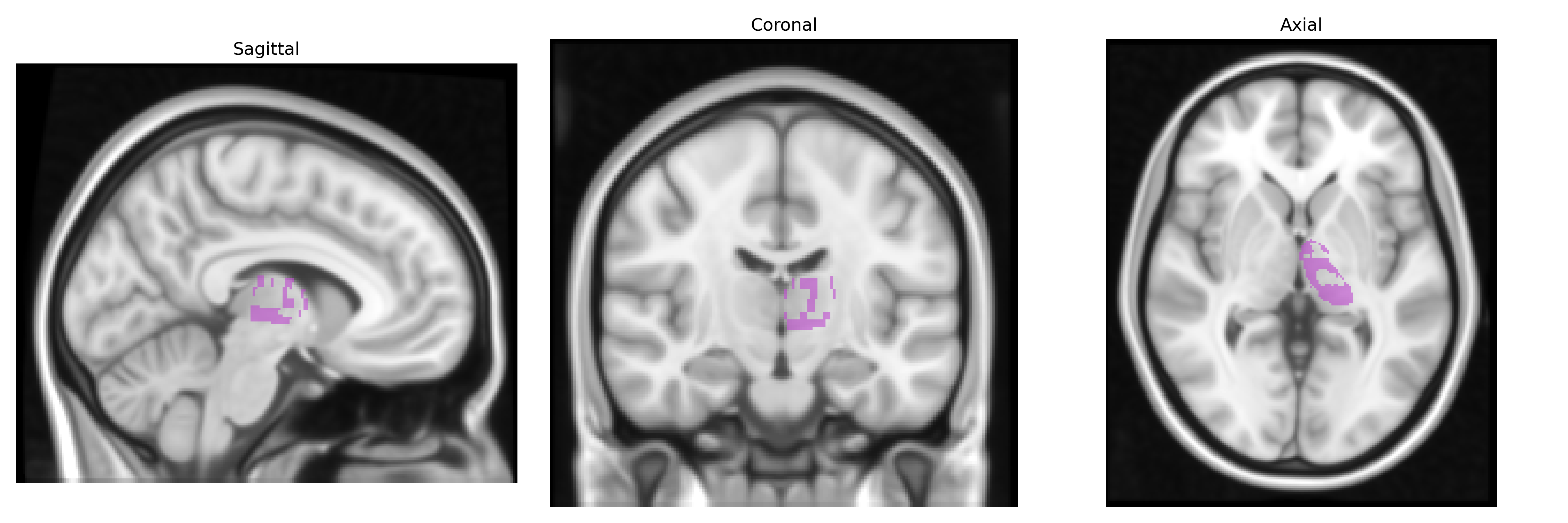
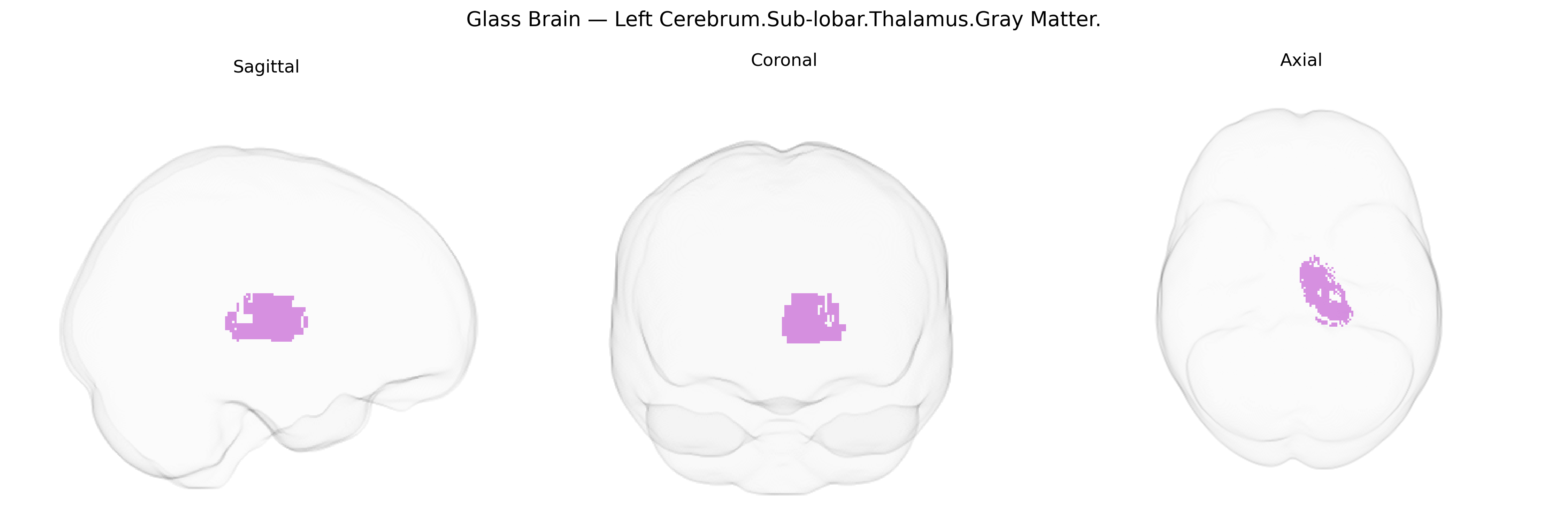
The bilateral Left Cerebrum.Sub-lobar.Thalamus.Gray Matter corresponds to the thalamic gray matter within the left cerebral hemisphere, encompassing multiple subnuclei that serve as a major relay and integration hub for sensory, motor, and limbic information. As part of the sub-lobar (deep) structures, this region receives ascending inputs from sensory pathways (excluding olfaction) and projects extensively to the cerebral cortex, thereby modulating perception, attention, arousal, and consciousness, as well as participating in motor control circuits with the basal ganglia and cerebellum. Thalamic gray matter is highly organized into distinct nuclei, each with specific afferent and efferent connections, supporting functions such as somatosensory processing, visual and auditory relay, and higher-order cognitive and affective regulation. Thalamus
The bilateral left thalamus (Talairach “Left Cerebrum.Sub-lobar.Thalamus.Gray Matter”) has been implicated in multiple genetic and genome‑wide association studies linking thalamic volume, microstructure, and function to specific loci and polygenic architectures across psychiatric, neurological, and cognitive traits. Large ENIGMA‑type MRI‑GWAS consortia have identified common variants in genes such as FTO, DLG2, CUBN, LRP1B, SLC39A8, and others associated with thalamic volume or shape, suggesting shared genetic determinants of subcortical development and maintenance. Thalamic structural or functional alterations show heritable overlap with schizophrenia, bipolar disorder, major depressive disorder, ADHD, and autism spectrum disorder, with risk loci (for example in CACNA1C, GRIN2A, and complement pathway genes) often mapping onto thalamo‑cortical circuitry and synaptic signaling pathways. GWAS of Parkinson’s disease, essential tremor, and other movement disorders also implicate variants affecting thalamic nuclei involved in motor and cerebellothalamic loops, while neurodegenerative risk loci (e.g., APOE for Alzheimer’s disease) show genetic correlations with thalamic atrophy patterns. In addition, polygenic scores for intelligence, educational attainment, and general cognitive ability correlate with thalamic volume and connectivity, supporting a genetically influenced role of the thalamus in higher‑order cognition and information integration.
Overview generated by GPT-4o (2026).
Region ID: 529
Hemisphere: bilateral
Atlas: Talairach labels 1mm
Full Quality Version: Download MP4
Full Quality Version: Download MP4
Wali Sidiqyar*, Gaurav Rudravaram*, Elyssa M. McMaster, Trent M. Schwartz, Adam M. Saunders, Kurt G. Schilling, Bennett A. Landman "Introducing SPINS: A Shared Public Visualization Library of Neuroanatomical Structures." Medical Imaging with Deep Learning- short paper
This resource is licensed under CC0 1.0 Universal (Public Domain).