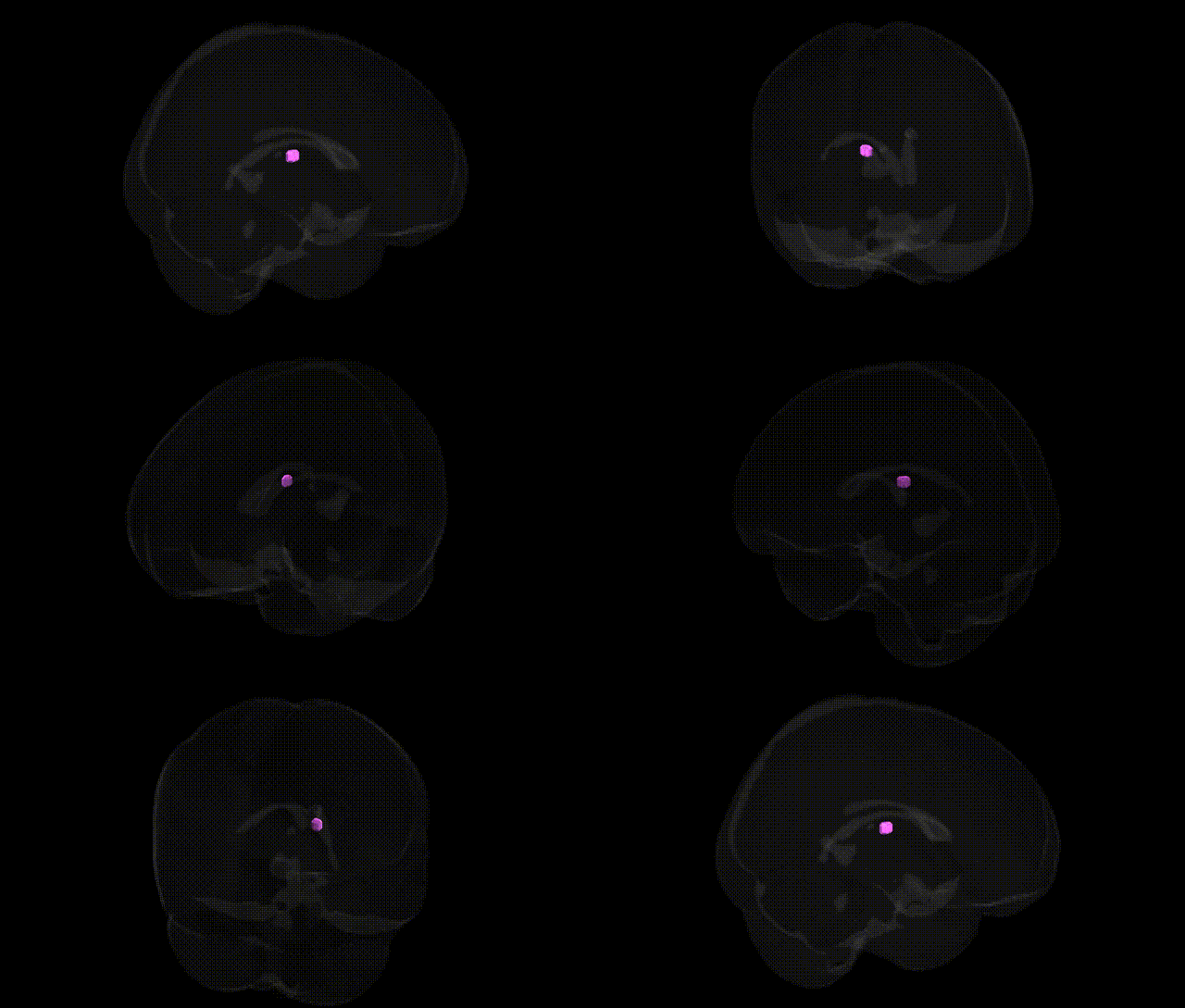
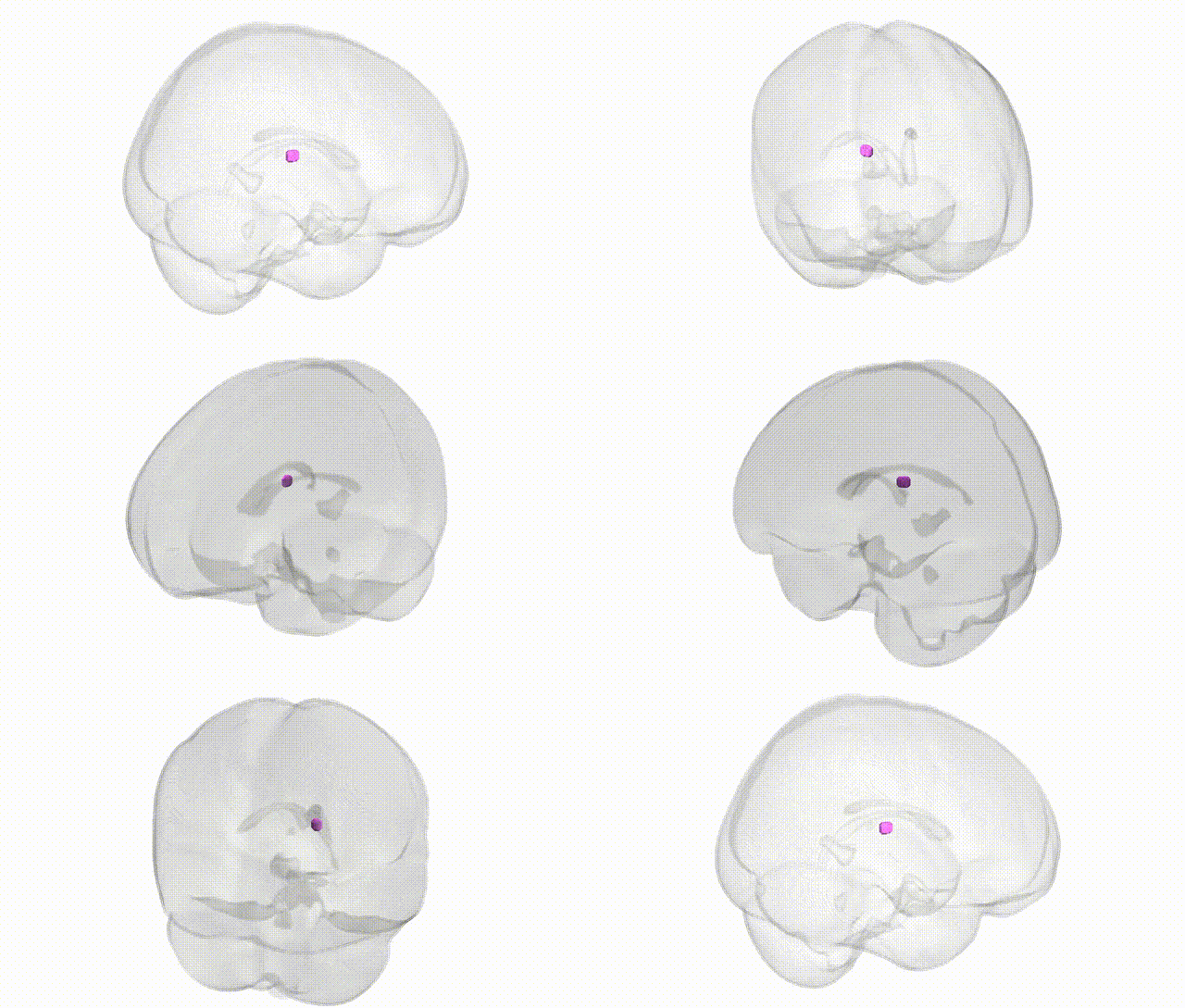
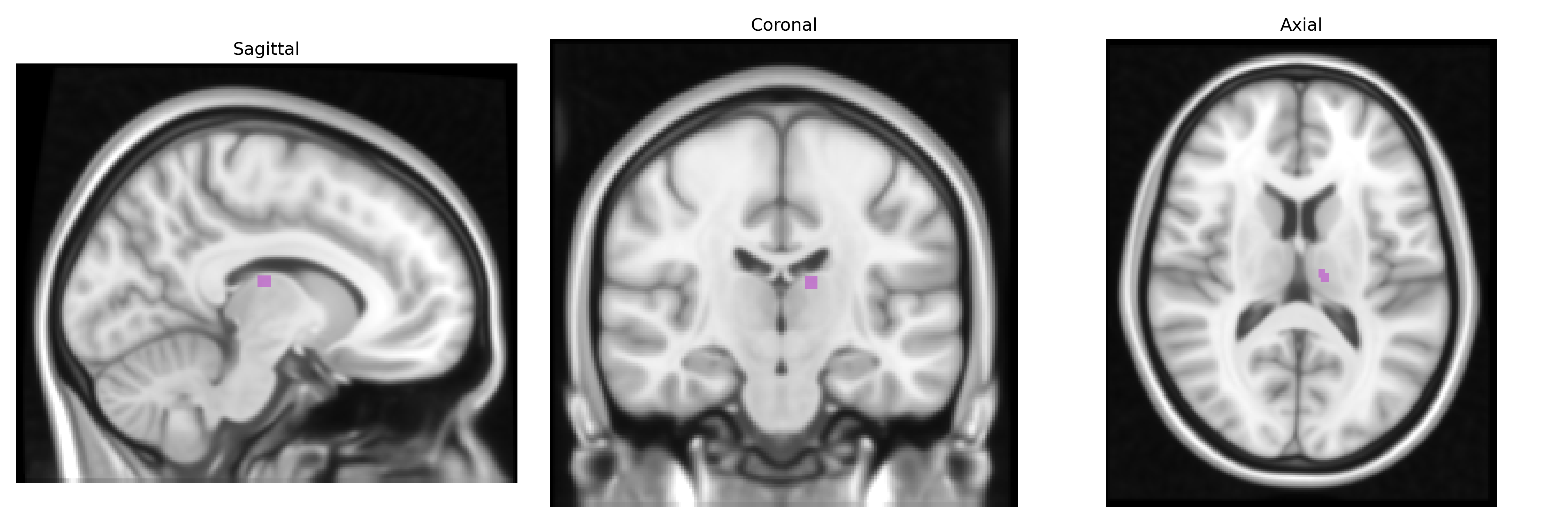
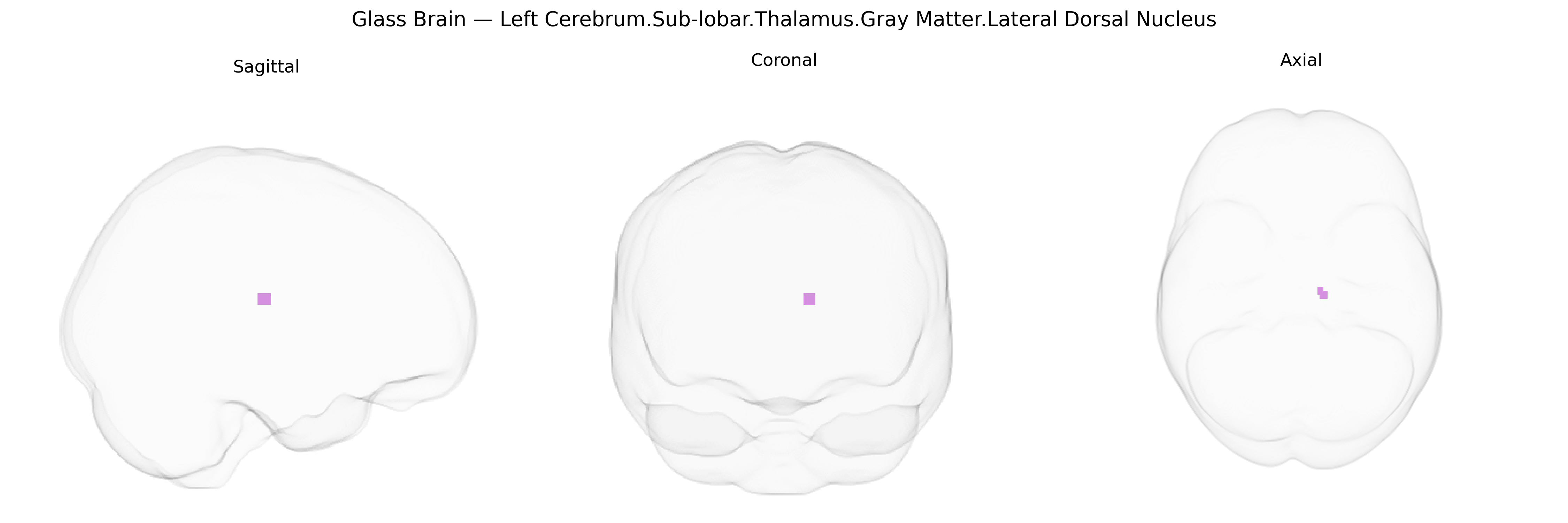
The bilateral Left Cerebrum.Sub-lobar.Thalamus.Gray Matter.Lateral Dorsal Nucleus corresponds to the lateral dorsal nucleus (LD) of the thalamus, a higher-order association relay nucleus located in the dorsolateral thalamus adjacent to the lateral posterior and pulvinar nuclei. It receives inputs from subcortical and cortical regions, including limbic and parietal association areas, and projects primarily to the posterior cingulate and parietal cortex. Functionally, the LD nucleus is implicated in visuospatial processing, integration of multimodal sensory information, and modulation of limbic-cognitive interactions related to attention and memory, particularly in spatial and contextual learning. In the Talairach 1 mm atlas, the label “bilateral” reflects its symmetric representation in both hemispheres rather than a single midline structure. There is no direct Wikipedia article for the lateral dorsal nucleus itself; a closely related and encompassing structure is the Thalamus.
The lateral dorsal nucleus of the thalamus, a sub-lobar gray matter structure within the left cerebrum, has been implicated in genetic studies primarily through broader thalamic or thalamocortical circuitry rather than nucleus-specific GWAS signals, as current large-scale atlases and GWAS typically lack resolution at the level of individual thalamic nuclei. Genome-wide association studies of thalamic volume and microstructure have identified common variants in genes related to neurodevelopment, synaptic signaling, and neuroplasticity (for example, in loci near genes such as DLG2, NPTN, and others involved in neuronal connectivity) that show associations with global or regional thalamic measures, which likely include the lateral dorsal nucleus as part of composite thalamic ROIs. Thalamic genetic architecture has been linked to several neuropsychiatric and neurodevelopmental disorders—particularly schizophrenia, bipolar disorder, major depression, ADHD, and autism—where risk loci affecting thalamic structure and connectivity may contribute to disrupted cortico-thalamic networks involved in cognition and emotion. Additionally, GWAS of cognitive performance, intelligence, and educational attainment have highlighted variants that correlate with thalamic morphology and functional connectivity, suggesting that genetic influences on thalamic nuclei, including the lateral dorsal nucleus, contribute to individual differences in higher-order cognitive traits. However, direct, nucleus-specific genetic associations for the bilateral lateral dorsal thalamic nucleus, as defined in the Talairach 1 mm atlas, remain sparse, and most evidence is inferred from studies of global thalamus, thalamic subregional parcellations, and thalamocortical network genetics rather than from targeted GWAS of this discrete region.
Overview generated by GPT-4o (2026).
Region ID: 787
Hemisphere: bilateral
Atlas: Talairach labels 1mm
Full Quality Version: Download MP4
Full Quality Version: Download MP4
Wali Sidiqyar*, Gaurav Rudravaram*, Elyssa M. McMaster, Trent M. Schwartz, Adam M. Saunders, Kurt G. Schilling, Bennett A. Landman "Introducing SPINS: A Shared Public Visualization Library of Neuroanatomical Structures." Medical Imaging with Deep Learning- short paper
This resource is licensed under CC0 1.0 Universal (Public Domain).