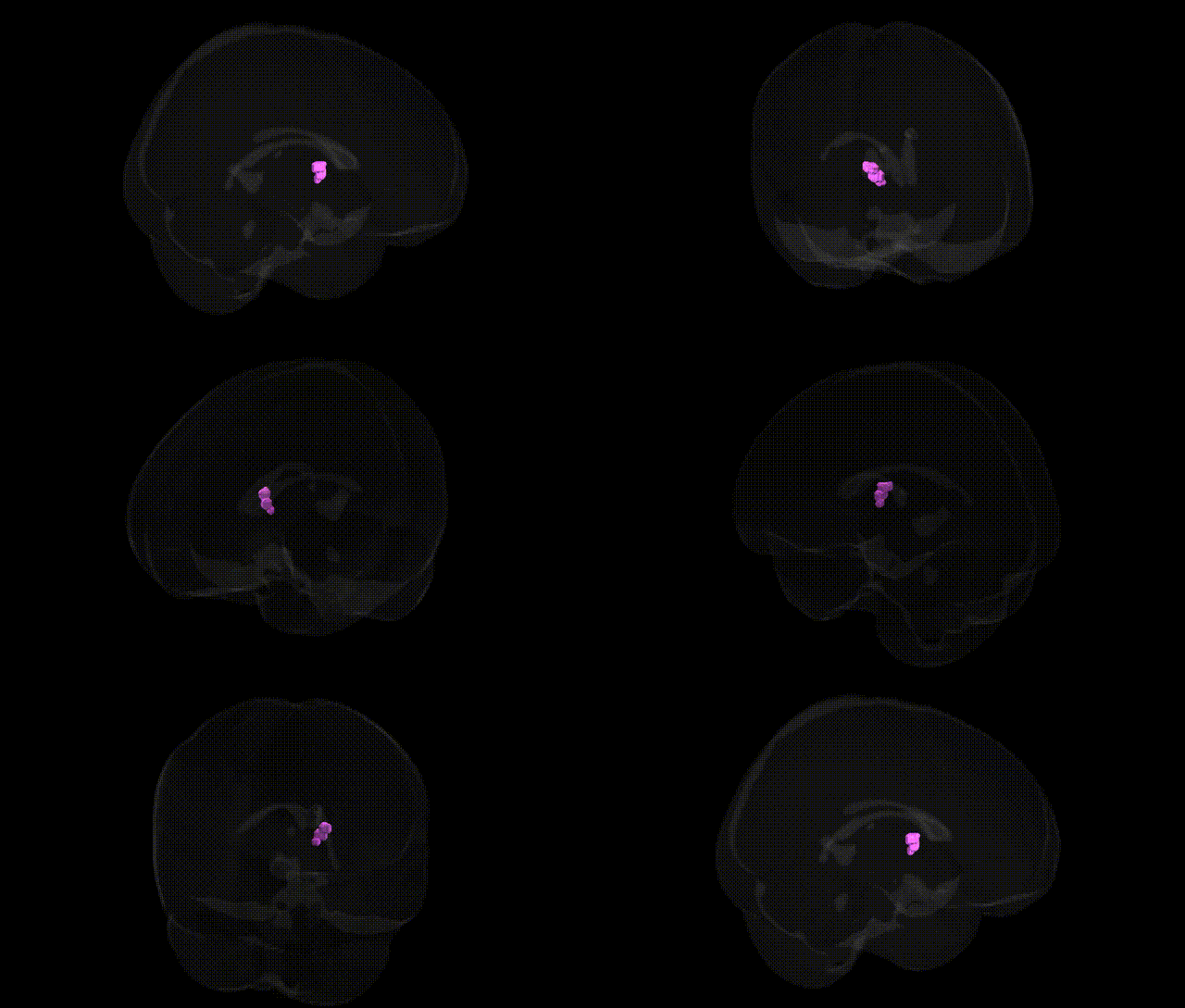
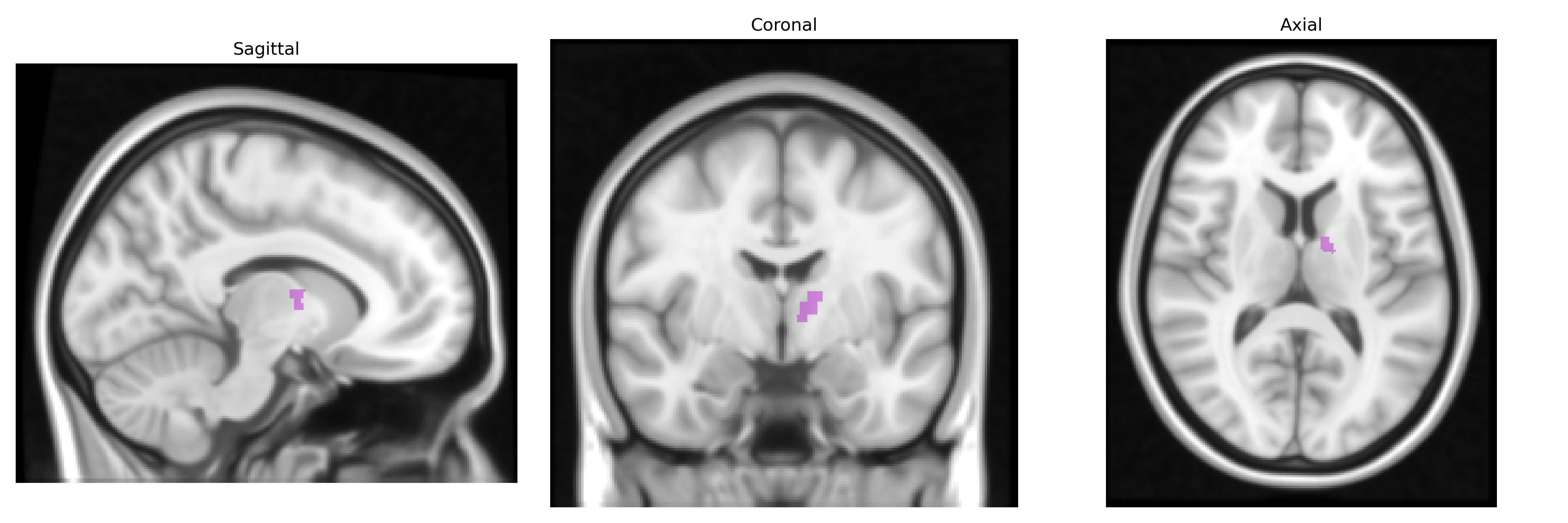
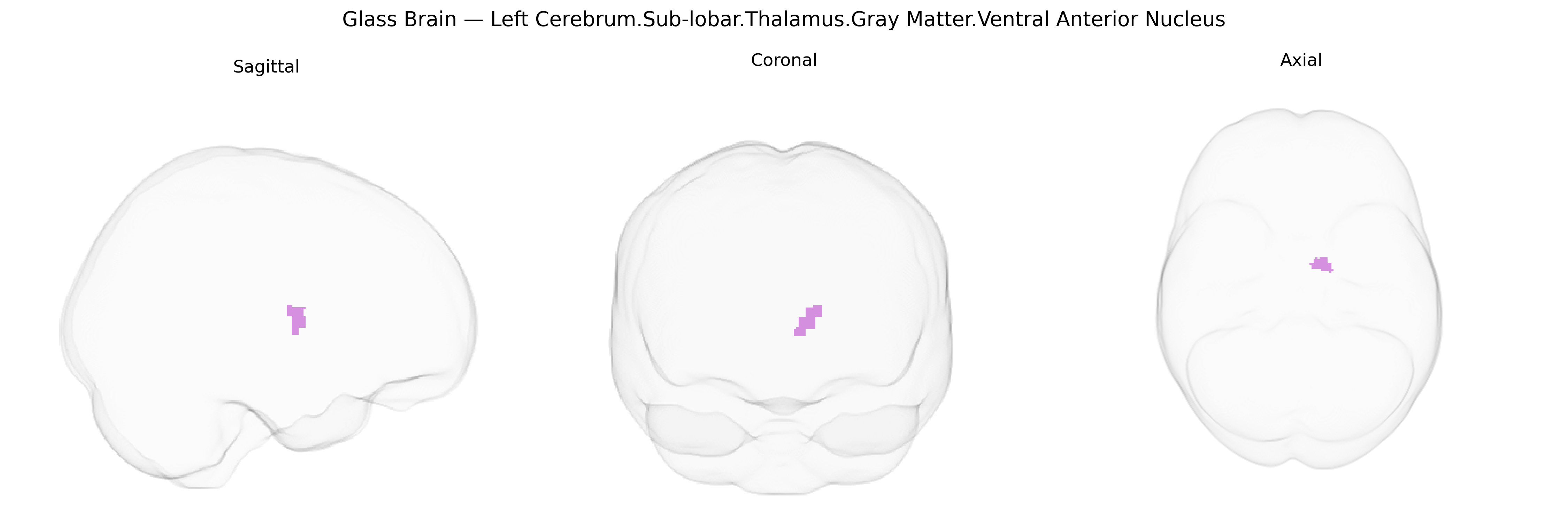
The bilateral Left Cerebrum.Sub-lobar.Thalamus.Gray Matter.Ventral Anterior Nucleus corresponds to the ventral anterior nucleus of the thalamus, a relay and modulatory nucleus situated in the anterior portion of the ventral tier of the thalamus. It receives major input from the basal ganglia (particularly the globus pallidus) and cerebellum and projects predominantly to premotor and supplementary motor cortical areas, thereby contributing to the planning, initiation, and coordination of voluntary movements. This nucleus participates in motor circuits that influence movement selection and the regulation of motor programs, and it is often implicated in movement disorders when basal ganglia–thalamo–cortical loops are disrupted. There is no direct link for this specific nucleus; a related structure and context is the Thalamus.
The ventral anterior (VA) thalamic nucleus, a key subcortical relay within motor and fronto-striato-thalamic circuits, has been implicated in several genetically influenced neuropsychiatric and neurodevelopmental conditions, although most GWAS and imaging-genetics studies target thalamic subregions more broadly rather than the VA nucleus specifically. Polygenic risk for schizophrenia, bipolar disorder, and major depressive disorder has been repeatedly associated with altered thalamic volume and connectivity, particularly in fronto-thalamic networks that include the VA nucleus, with common variants near genes such as CACNA1C, GRM3, and MIR137 influencing thalamic structure or function in cohort-based imaging genetics. Thalamic nuclei encompassing the VA region show structural or functional alterations linked to genetic risk in obsessive-compulsive disorder, Tourette syndrome, and ADHD, often in relation to cortico-striato-thalamo-cortical loop genes (e.g., SLITRK1, DRD2, and other dopaminergic and glutamatergic pathway loci). Large GWAS of subcortical volumes (e.g., ENIGMA and UK Biobank studies) indicate that thalamic volume is heritable and associated with variants in genes involved in neurodevelopment, synaptic transmission, and cell adhesion (such as BDNF, PLEKHM1, and several intergenic loci), and these genetic effects typically extend across anterior motor and associative nuclei including VA. Additionally, rare variant and CNV studies in autism spectrum disorder and intellectual disability highlight thalamic involvement, with risk loci affecting neurodevelopmental pathways (e.g., CHD8, NRXN1) that modulate thalamo-cortical connectivity patterns overlapping VA circuitry. Overall, genetic findings implicate the VA thalamus indirectly, as part of broader thalamic and fronto-striatal networks, in the etiology of mood and psychotic disorders, movement and compulsive disorders, and neurodevelopmental traits, though fine-grained GWAS targeting the bilateral Left Cerebrum Sub-lobar Thalamus Gray Matter Ventral Anterior nucleus per Talairach 1 mm labeling remain limited.
Overview generated by GPT-4o (2026).
Region ID: 646
Hemisphere: bilateral
Atlas: Talairach labels 1mm
Full Quality Version: Download MP4
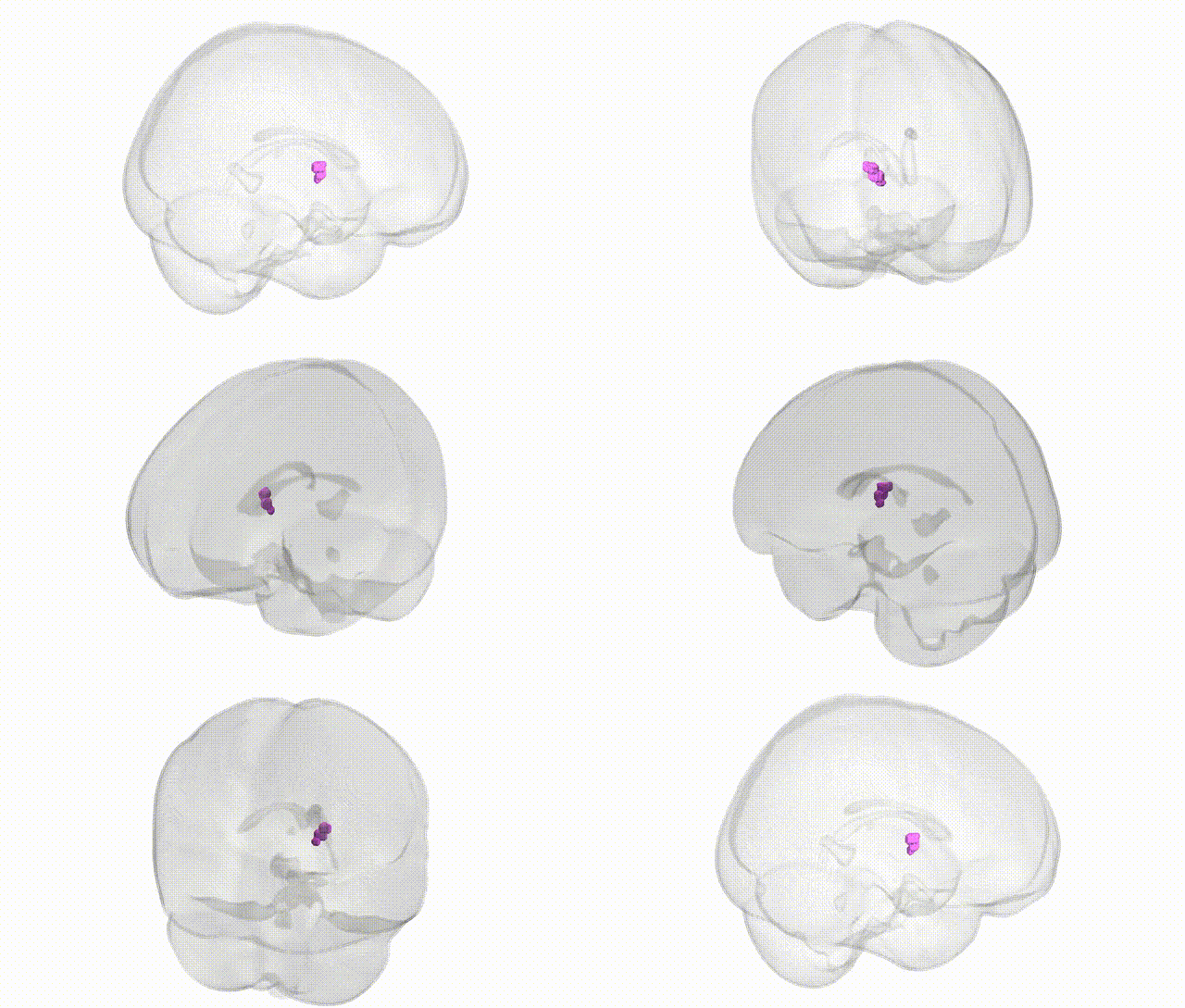
Full Quality Version: Download MP4
Wali Sidiqyar*, Gaurav Rudravaram*, Elyssa M. McMaster, Trent M. Schwartz, Adam M. Saunders, Kurt G. Schilling, Bennett A. Landman "Introducing SPINS: A Shared Public Visualization Library of Neuroanatomical Structures." Medical Imaging with Deep Learning- short paper
This resource is licensed under CC0 1.0 Universal (Public Domain).