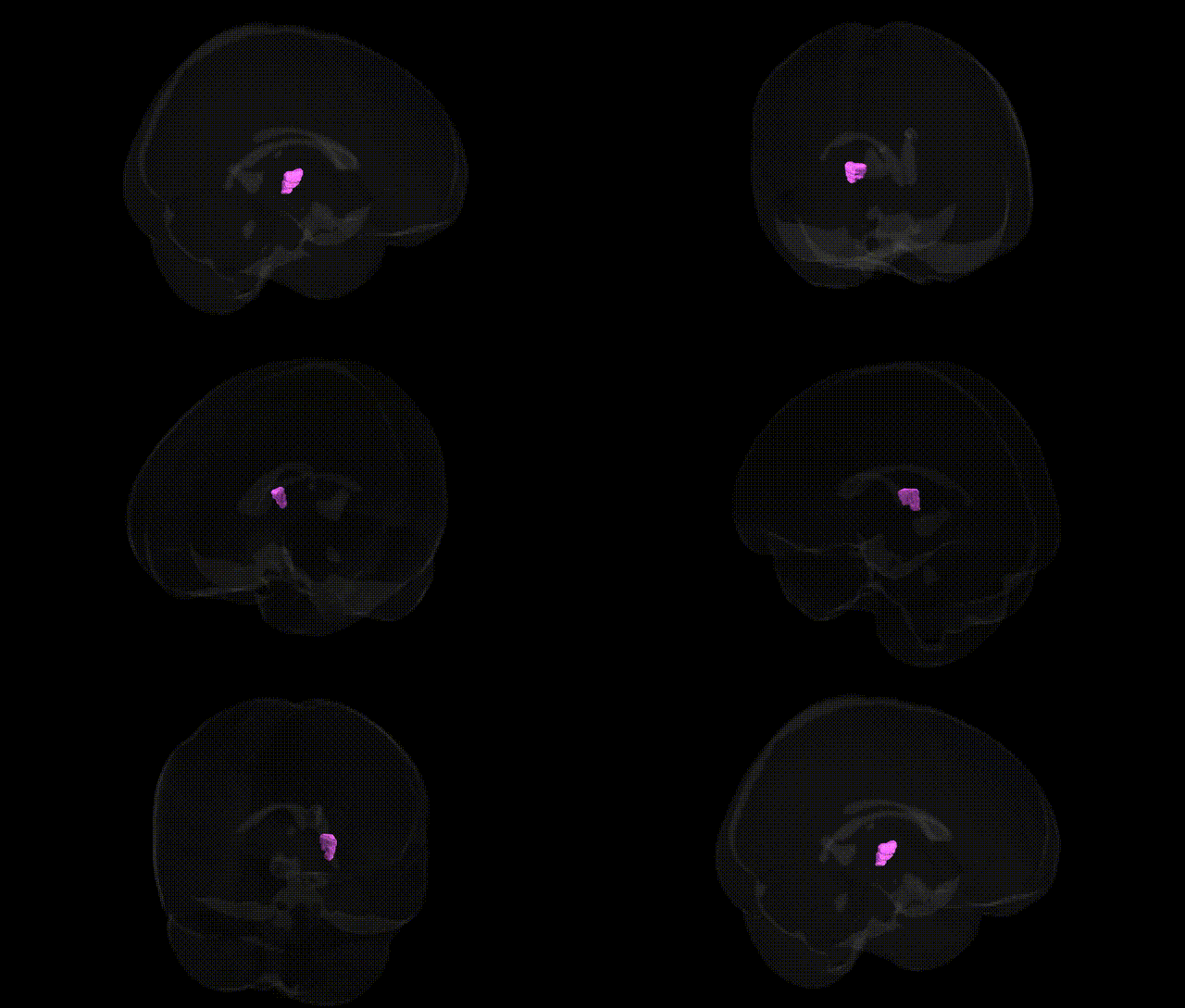
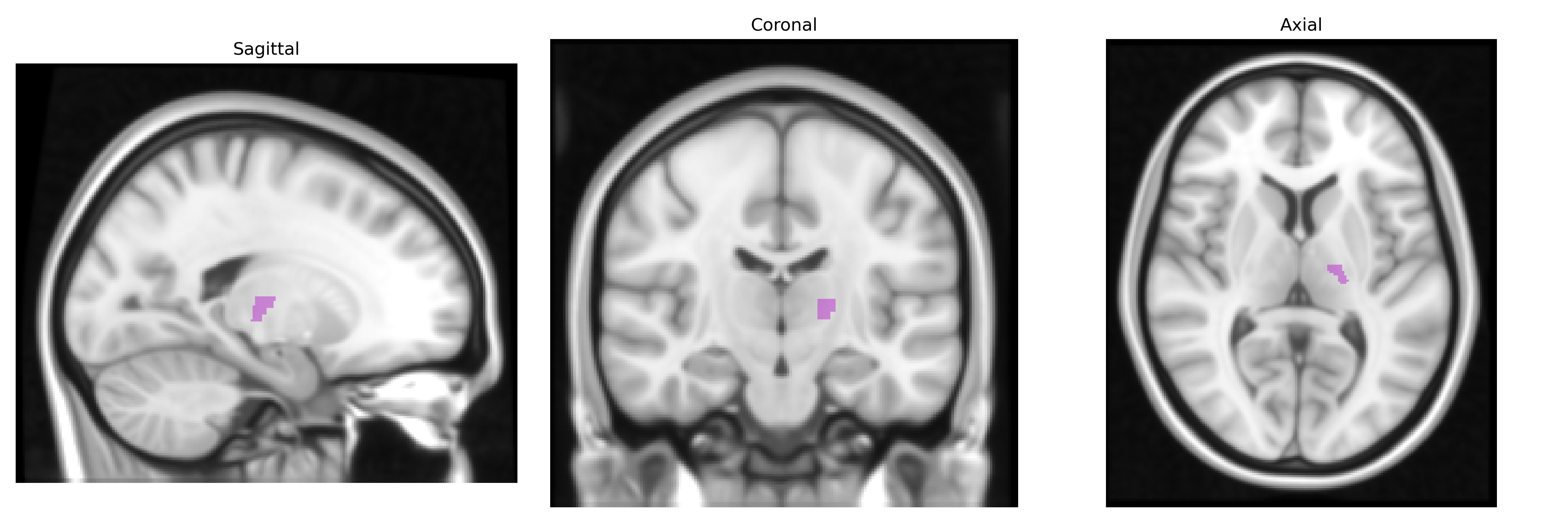
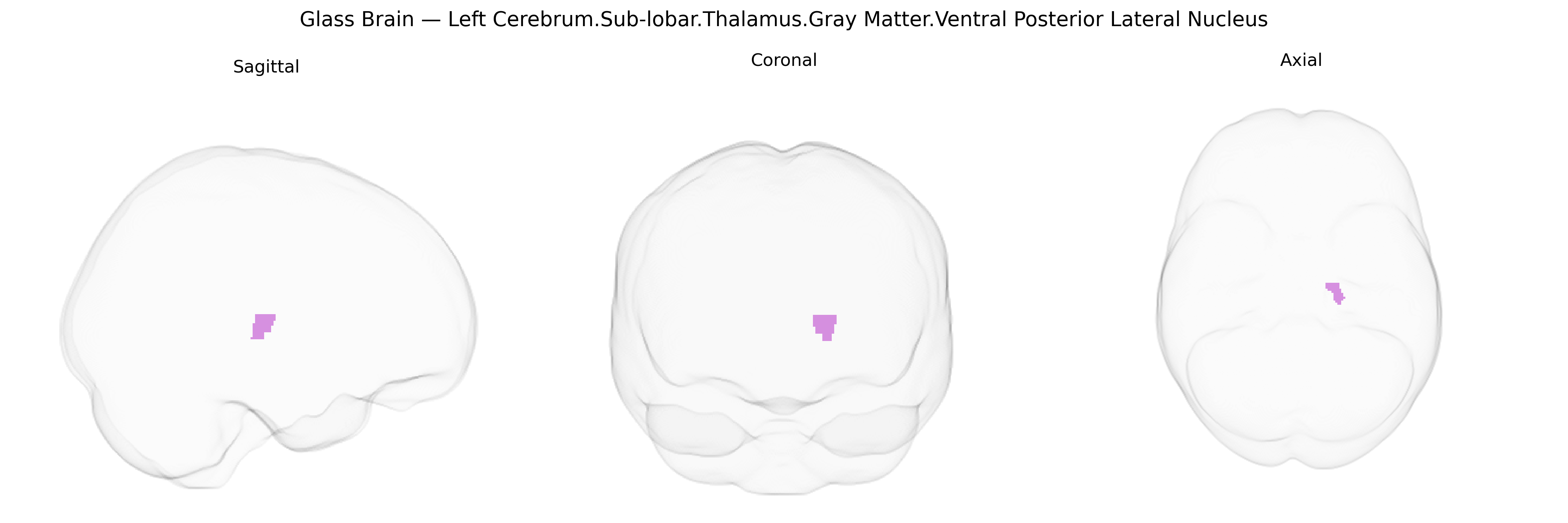
The bilateral Left Cerebrum.Sub-lobar.Thalamus.Gray Matter.Ventral Posterior Lateral Nucleus corresponds to the ventral posterolateral nucleus (VPL) of the thalamus, a key somatosensory relay center. The VPL receives ascending input primarily from the medial lemniscus and spinothalamic tracts conveying tactile, proprioceptive, and nociceptive information from the body (excluding the face), and projects mainly to the primary somatosensory cortex (postcentral gyrus). Functionally, this nucleus is essential for conscious perception of body sensation, integration of different somatosensory modalities, and maintenance of somatotopic organization in thalamocortical pathways. Pathological involvement of the VPL can lead to sensory deficits, dysesthesia, or central pain syndromes, highlighting its role in normal and abnormal sensory processing. There is no direct Wikipedia article for the ventral posterolateral nucleus; a related and encompassing structure is the Thalamus.
The ventral posterior lateral (VPL) nucleus of the thalamus, a key relay for somatosensory information, has been implicated indirectly in genetic studies through both structural and functional neuroimaging genetics rather than via region-specific GWAS hits labeled explicitly as “VPL” in the Talairach 1 mm atlas. Large-scale imaging-genetics consortia such as ENIGMA and UK Biobank have identified polygenic influences on thalamic volume and microstructure, with common variants in genes involved in neurodevelopment, axon guidance, synaptic signaling, and calcium channel function (for example, loci near genes such as NRG1, CACNA1C, and those related to neurodevelopmental pathways) showing associations with thalamic size or connectivity that encompass somatosensory thalamic nuclei including the VPL. GWAS of chronic pain and somatosensory phenotypes, as well as migraine and neuropathic pain, have highlighted genes involved in nociceptive processing and thalamocortical transmission that are consistent with altered function of ventrobasal thalamic regions, though not always anatomically resolved to the VPL alone. Psychiatric and neurodevelopmental disorder GWAS (e.g., for schizophrenia, bipolar disorder, major depression, and autism) have identified polygenic risk profiles that correlate with thalamic volume, thalamocortical connectivity, or sensory gating abnormalities, again implicating distributed thalamic circuitry that includes the ventral posterior nuclei. In sum, genetic associations with the VPL nucleus are largely inferred via global or subregional thalamic imaging measures and sensory/pain-related traits, rather than being defined by VPL-specific variants, and reflect complex polygenic architectures affecting thalamic development, synaptic and ion-channel function, and sensory signal integration.
Overview generated by GPT-4o (2026).
Region ID: 579
Hemisphere: bilateral
Atlas: Talairach labels 1mm
Full Quality Version: Download MP4
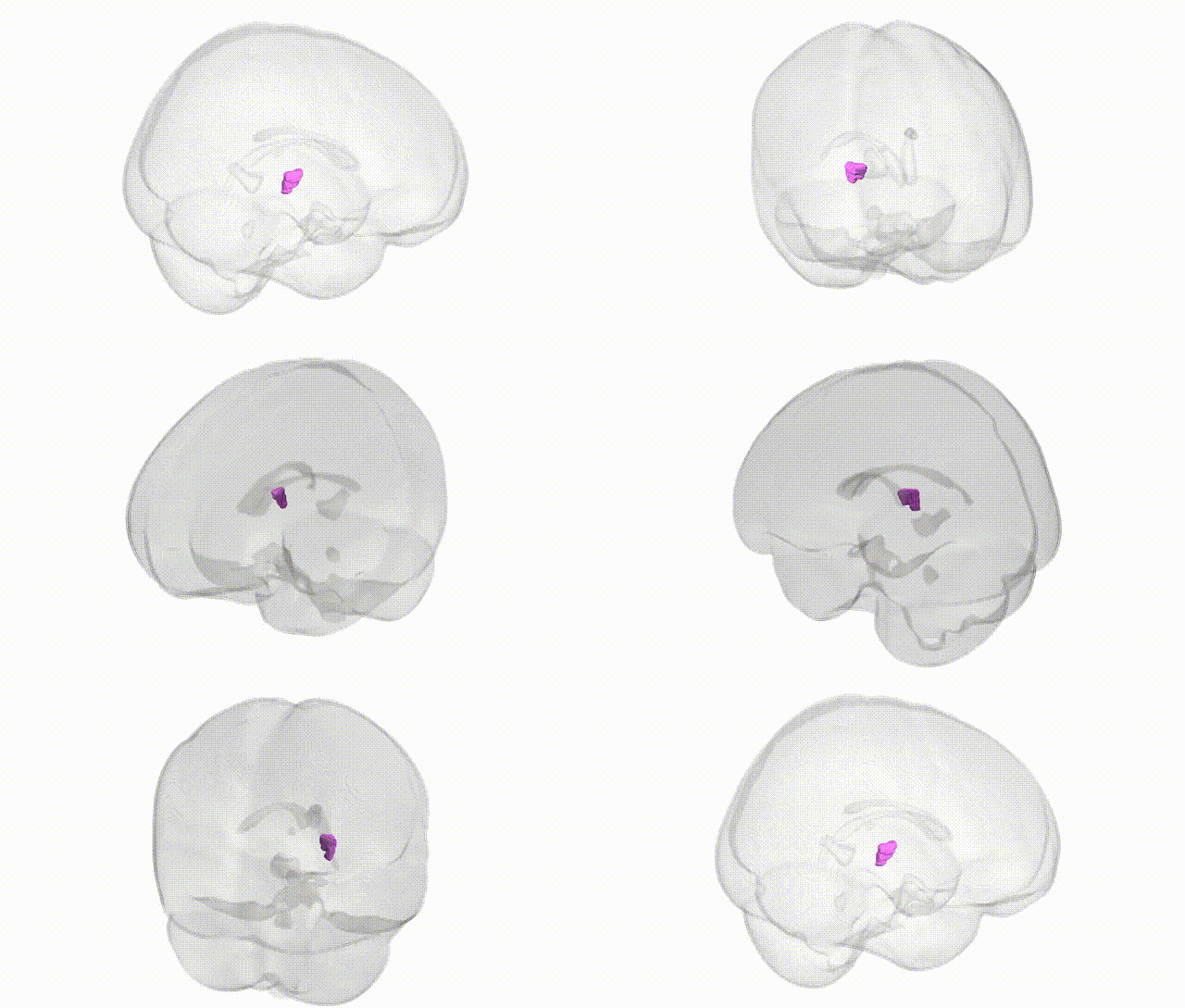
Full Quality Version: Download MP4
Wali Sidiqyar*, Gaurav Rudravaram*, Elyssa M. McMaster, Trent M. Schwartz, Adam M. Saunders, Kurt G. Schilling, Bennett A. Landman "Introducing SPINS: A Shared Public Visualization Library of Neuroanatomical Structures." Medical Imaging with Deep Learning- short paper
This resource is licensed under CC0 1.0 Universal (Public Domain).