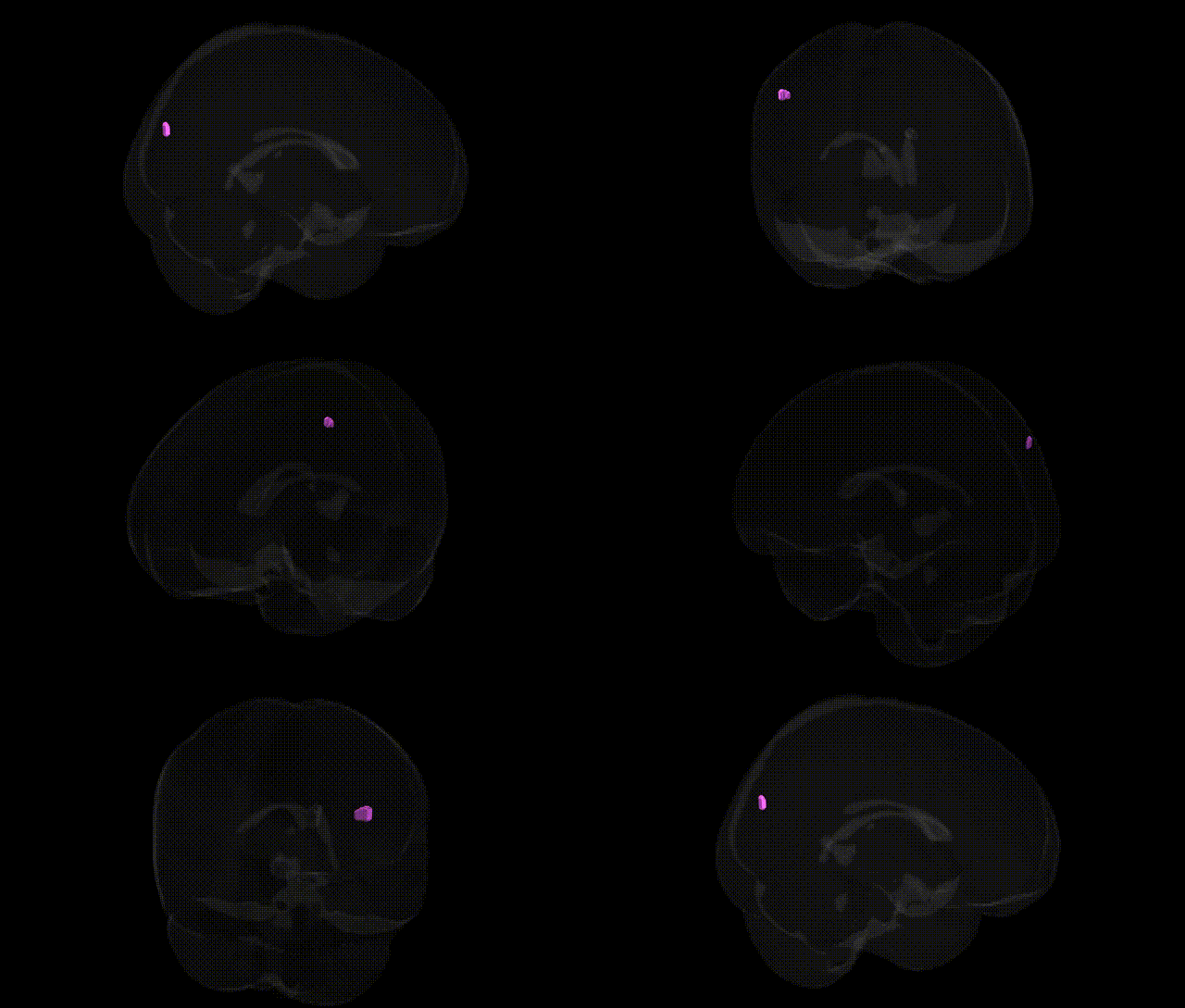
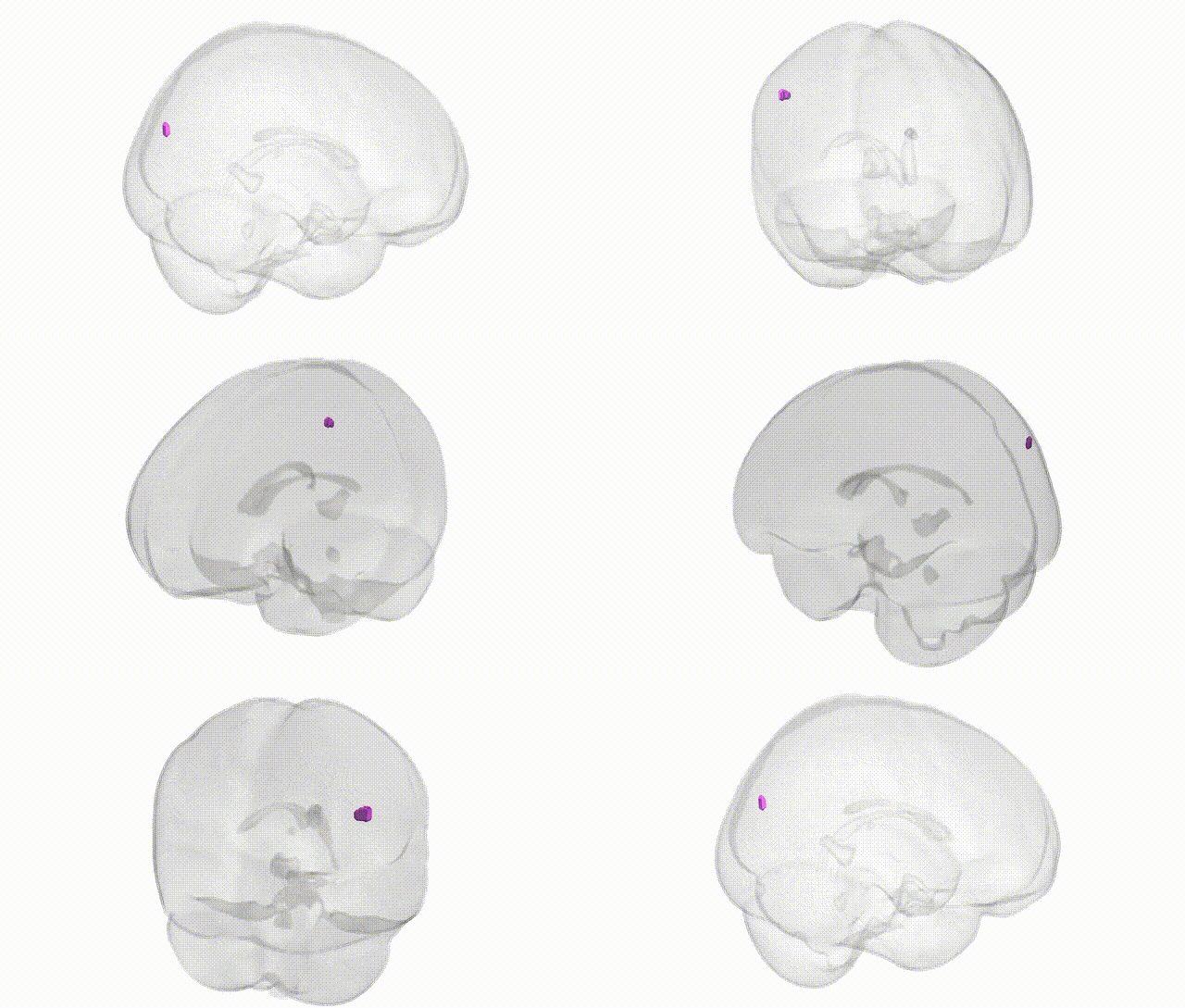
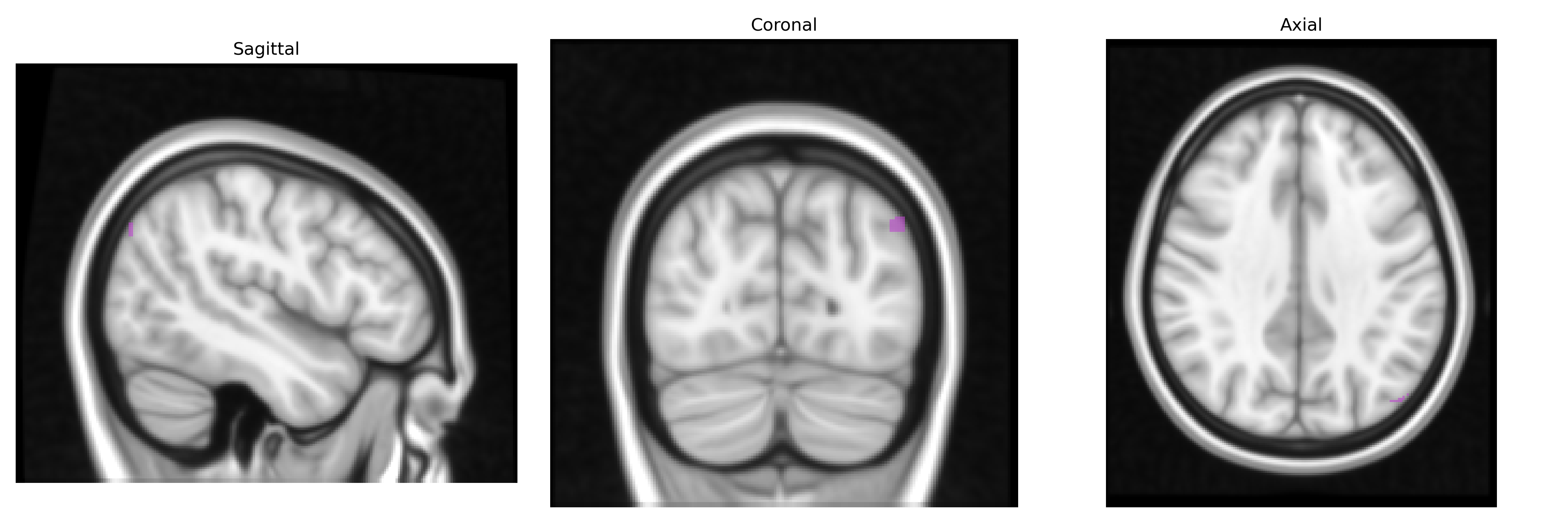
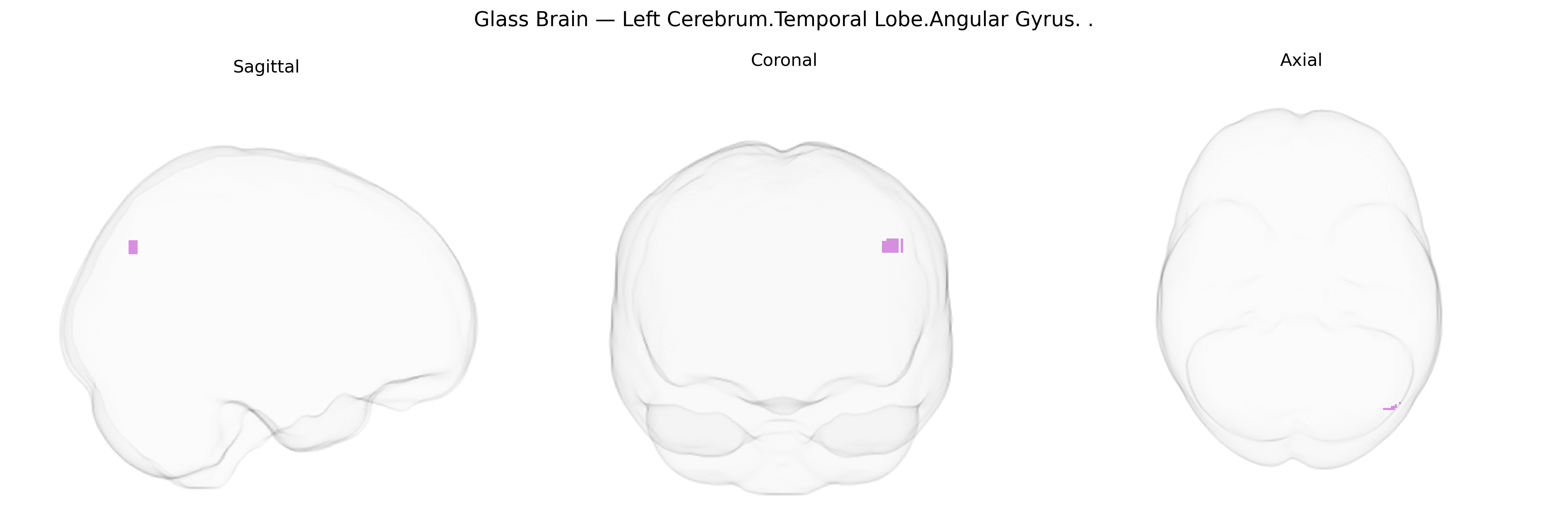
The bilateral Left Cerebrum.Temporal Lobe.Angular Gyrus corresponds to the angular gyrus of the left cerebral hemisphere, a multimodal association area typically located in the posterior portion of the inferior parietal lobule at the junction of the parietal, temporal, and occipital lobes. In the Talairach 1 mm atlas, this label captures tissue involved in integrating visual, auditory, and somatosensory information, supporting functions such as language comprehension, reading and writing, number processing, and aspects of semantic memory and theory of mind. The left angular gyrus is frequently implicated in language-dominant hemispheric networks and is associated with clinical phenomena such as alexia, agraphia, and certain forms of aphasia when damaged. Angular gyrus
The angular gyrus (left temporal/temporoparietal region in the Talairach 1 mm atlas) has been repeatedly implicated in genetically influenced traits involving language, reading, and higher cognition, though most findings are indirect via imaging genetics and GWAS of behavior rather than direct GWAS of the region’s morphology. Variants in genes associated with dyslexia and language impairment—including KIAA0319, DCDC2, ROBO1, CNTNAP2, and FOXP2—have been linked to altered activation, connectivity, or structural differences in left temporoparietal cortex encompassing the angular gyrus during phonological and reading tasks. Large GWAS of educational attainment, intelligence, and cognitive performance (e.g., involving loci near genes such as MAPT, POU3F2, and others) have shown that polygenic scores for these traits correlate with cortical thickness or surface area in temporoparietal association cortex, including the angular gyrus, supporting a shared genetic architecture for higher-order cognition and this hub of the default mode network. Imaging-genetics studies using UK Biobank and ENIGMA datasets report that common variants influencing cortical morphology and functional connectivity in parietal and temporal association areas overlap with risk loci for neurodevelopmental and psychiatric disorders such as autism spectrum disorder, schizophrenia, and ADHD, conditions in which atypical activation of the left angular gyrus during language, theory of mind, and number processing tasks has been observed. Additionally, GWAS of handedness and language lateralization have identified loci (e.g., near PCSK6, LRRTM1, and others) whose polygenic effects relate to asymmetries in temporal-parietal language regions, including the left angular gyrus. Overall, genetic influences on this region appear to be shared and pleiotropic, contributing to a spectrum of traits spanning literacy, verbal intelligence, social cognition, and susceptibility to neurodevelopmental and psychiatric conditions.
Overview generated by GPT-4o (2026).
Region ID: 957
Hemisphere: bilateral
Atlas: Talairach labels 1mm
Full Quality Version: Download MP4
Full Quality Version: Download MP4
Wali Sidiqyar*, Gaurav Rudravaram*, Elyssa M. McMaster, Trent M. Schwartz, Adam M. Saunders, Kurt G. Schilling, Bennett A. Landman "Introducing SPINS: A Shared Public Visualization Library of Neuroanatomical Structures." Medical Imaging with Deep Learning- short paper
This resource is licensed under CC0 1.0 Universal (Public Domain).