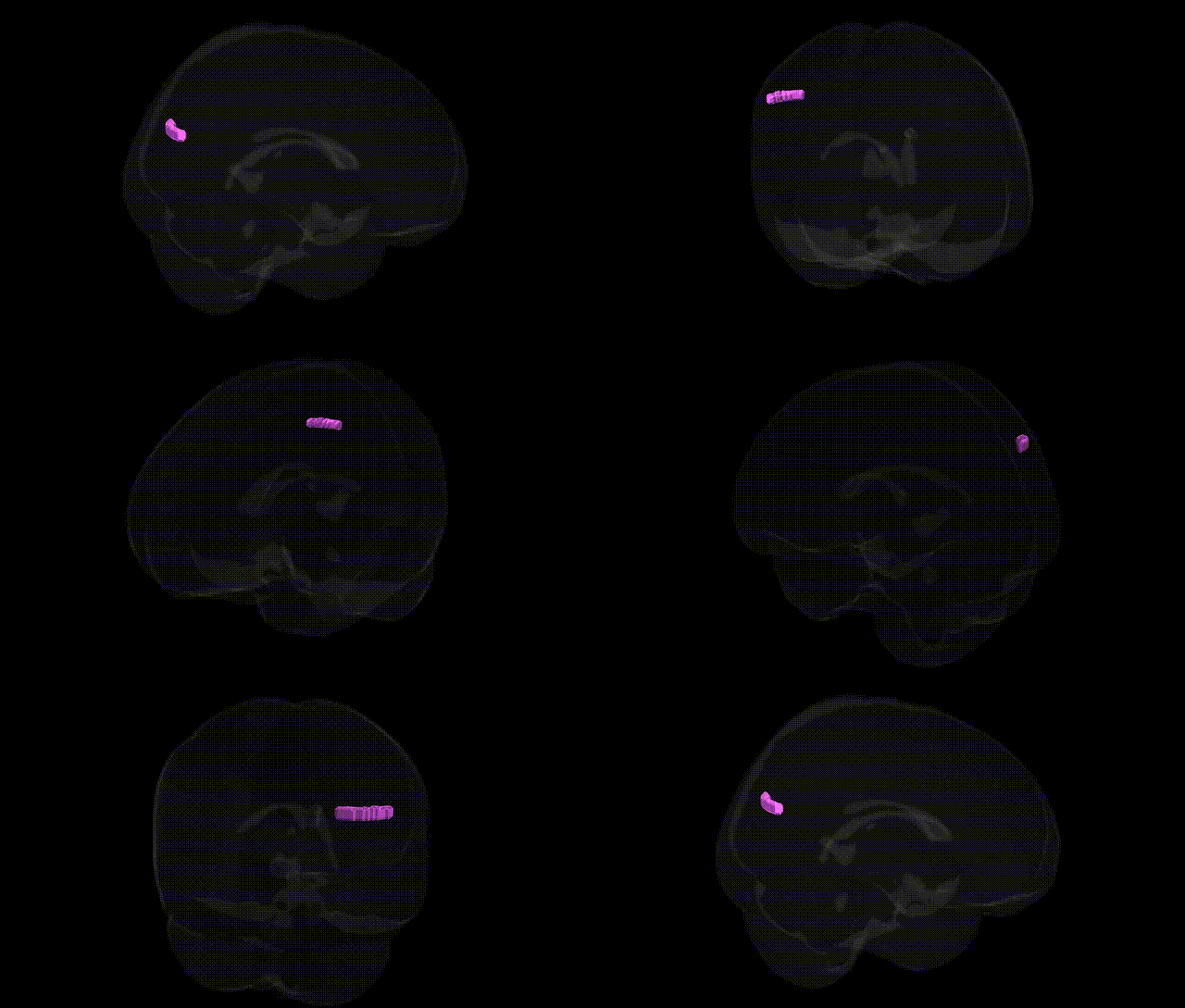
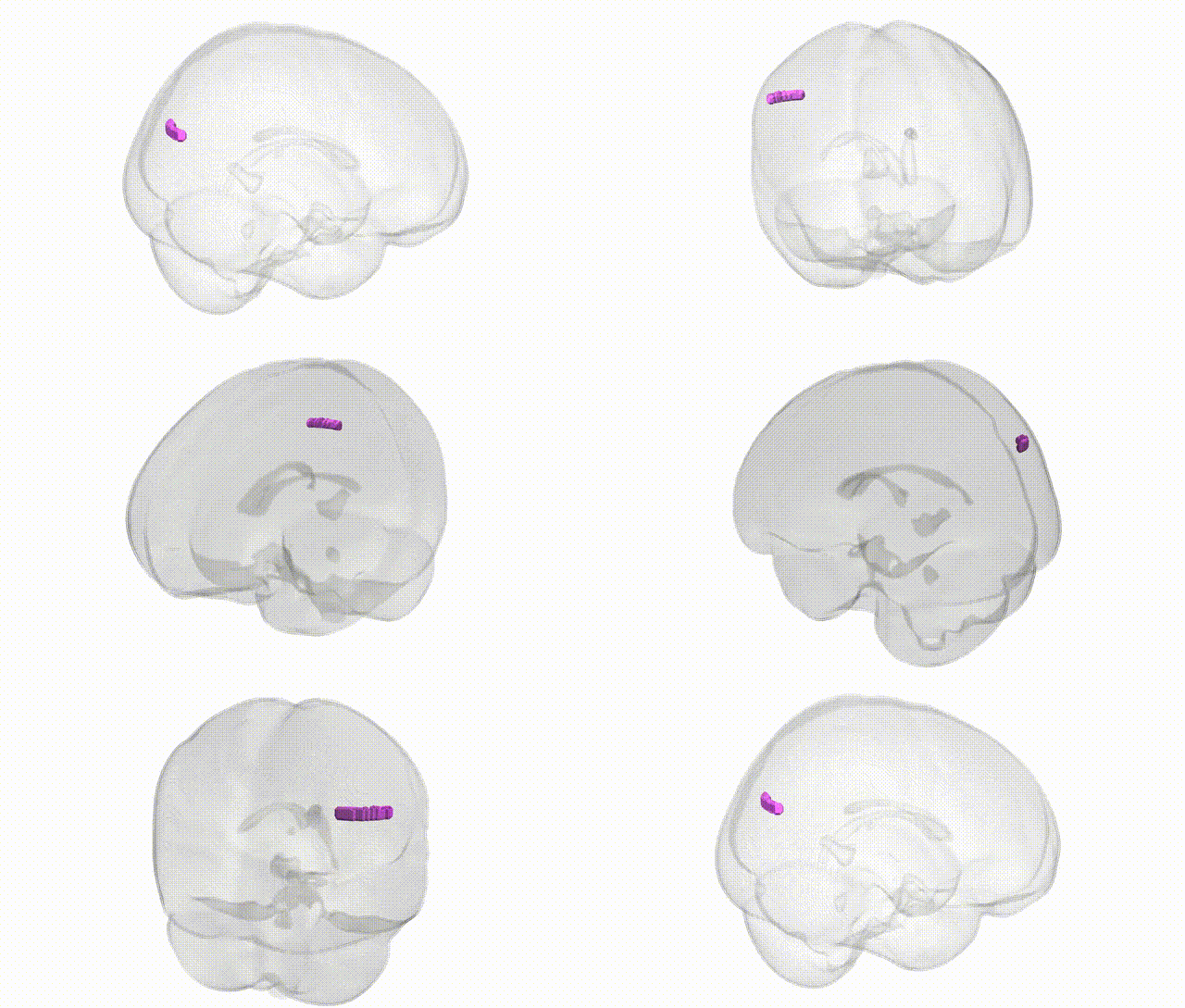
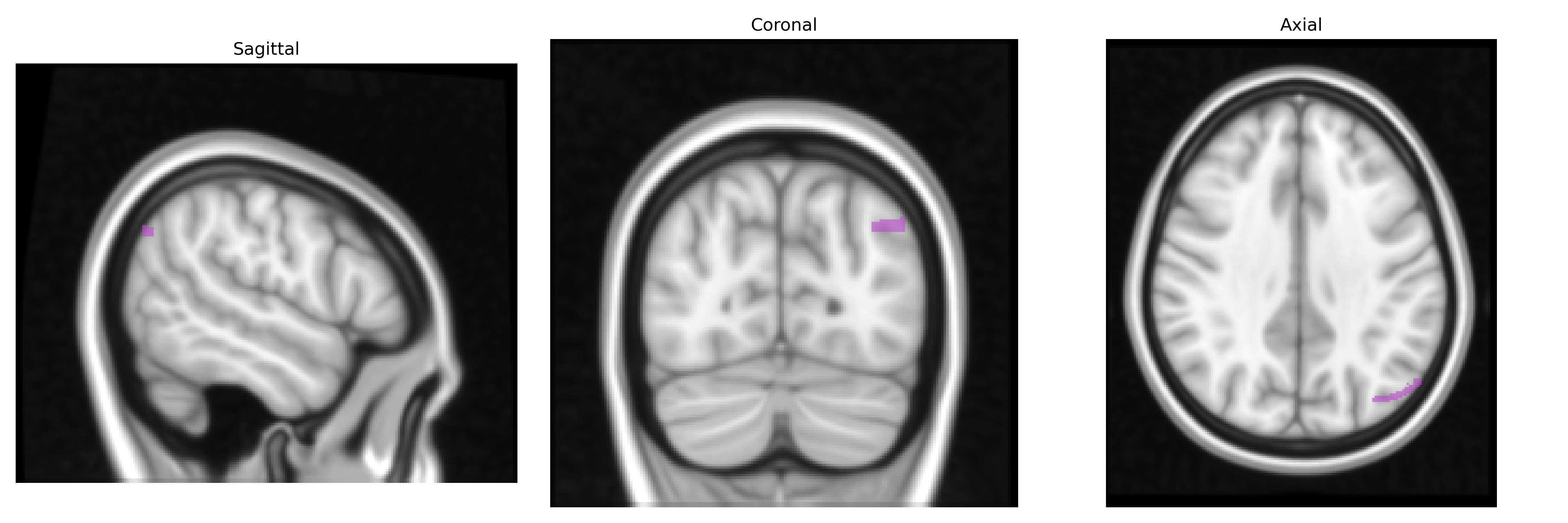
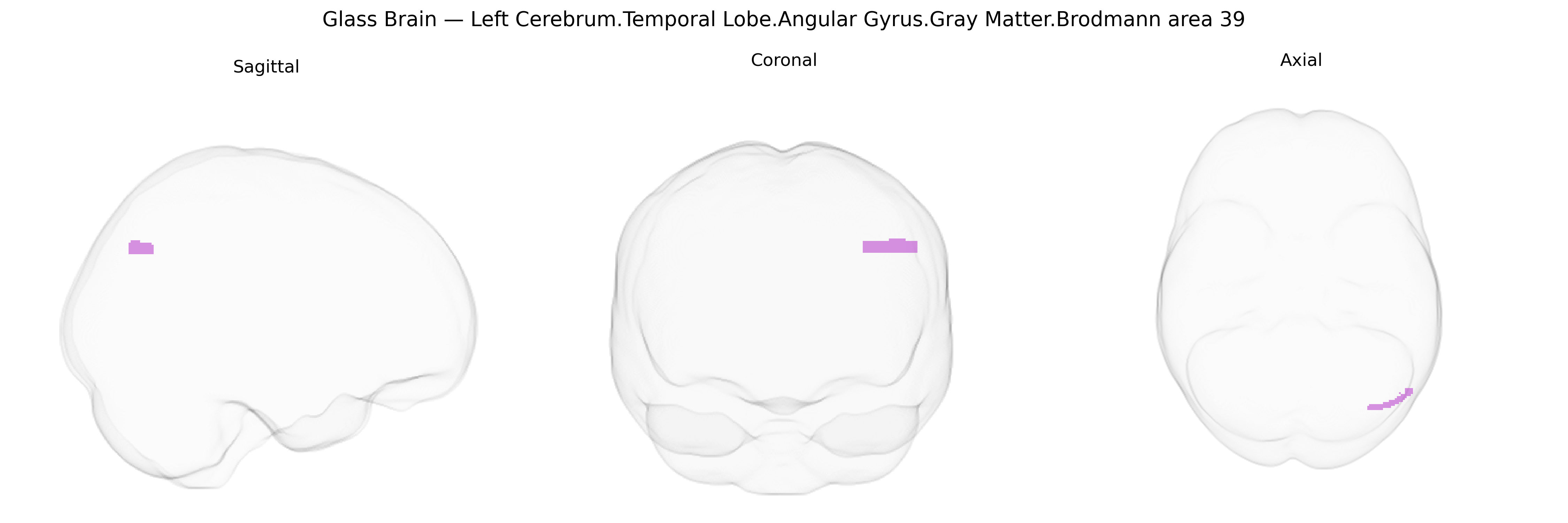
The bilateral Left Cerebrum.Temporal Lobe.Angular Gyrus.Gray Matter.Brodmann area 39 corresponds to a heteromodal association cortex located at the junction of the temporal, parietal, and occipital lobes, typically encompassing the angular gyrus in the inferior parietal lobule. This region is cytoarchitectonically defined as Brodmann area 39 and is implicated in higher-order cognitive functions, including language comprehension (particularly semantic processing), reading and writing, number processing, and aspects of spatial cognition and theory of mind. It participates in multimodal integration of visual, auditory, and somatosensory information and is a key node in large-scale networks such as the default mode and language networks. Lesions in this area can contribute to syndromes such as Gerstmann’s syndrome, alexia, agraphia, and other aphasic disturbances. No direct Wikipedia article exists solely for this exact Talairach label; a closely related structure is the Angular gyrus.
The left angular gyrus (Brodmann area 39) has been implicated in genetic studies of language, reading, and higher cognitive functions, with several GWAS and imaging-genetics analyses linking common variants to structural and functional measures in this region. Variants near CNTNAP2, FOXP2, KIAA0319, DCDC2, and ROBO1, originally associated with developmental language disorder and dyslexia, have been related to altered gray matter volume or activation in temporo-parietal language areas that include the angular gyrus. Polygenic scores for educational attainment and general cognitive ability show associations with cortical thickness and surface area in left temporo-parietal regions, suggesting that distributed genetic influences on cognition partly act through BA39 anatomy and connectivity. Schizophrenia and bipolar disorder GWAS highlight multiple risk loci (e.g., in CACNA1C, GRIN2A, and complement pathway genes such as C4) whose imaging follow-ups have reported abnormalities in temporo-parietal junction and angular gyrus structure and default-mode network function, linking these variants to impairments in social cognition and language processing. Autism spectrum disorder risk genes including NRXN1, SHANK3, and other synaptic genes have been associated with altered functional connectivity in networks spanning the angular gyrus, particularly those supporting theory of mind and narrative comprehension. Additionally, GWAS of resting-state networks and multimodal brain imaging (e.g., UK Biobank studies) have identified loci in neurodevelopmental and synaptic pathways that modulate activity and morphology within parietal components of the default-mode and language networks, further supporting a genetically influenced role for the left angular gyrus in semantic processing, reading, number cognition, and complex social-cognitive tasks.
Overview generated by GPT-4o (2026).
Region ID: 958
Hemisphere: bilateral
Atlas: Talairach labels 1mm
Full Quality Version: Download MP4
Full Quality Version: Download MP4
Wali Sidiqyar*, Gaurav Rudravaram*, Elyssa M. McMaster, Trent M. Schwartz, Adam M. Saunders, Kurt G. Schilling, Bennett A. Landman "Introducing SPINS: A Shared Public Visualization Library of Neuroanatomical Structures." Medical Imaging with Deep Learning- short paper
This resource is licensed under CC0 1.0 Universal (Public Domain).