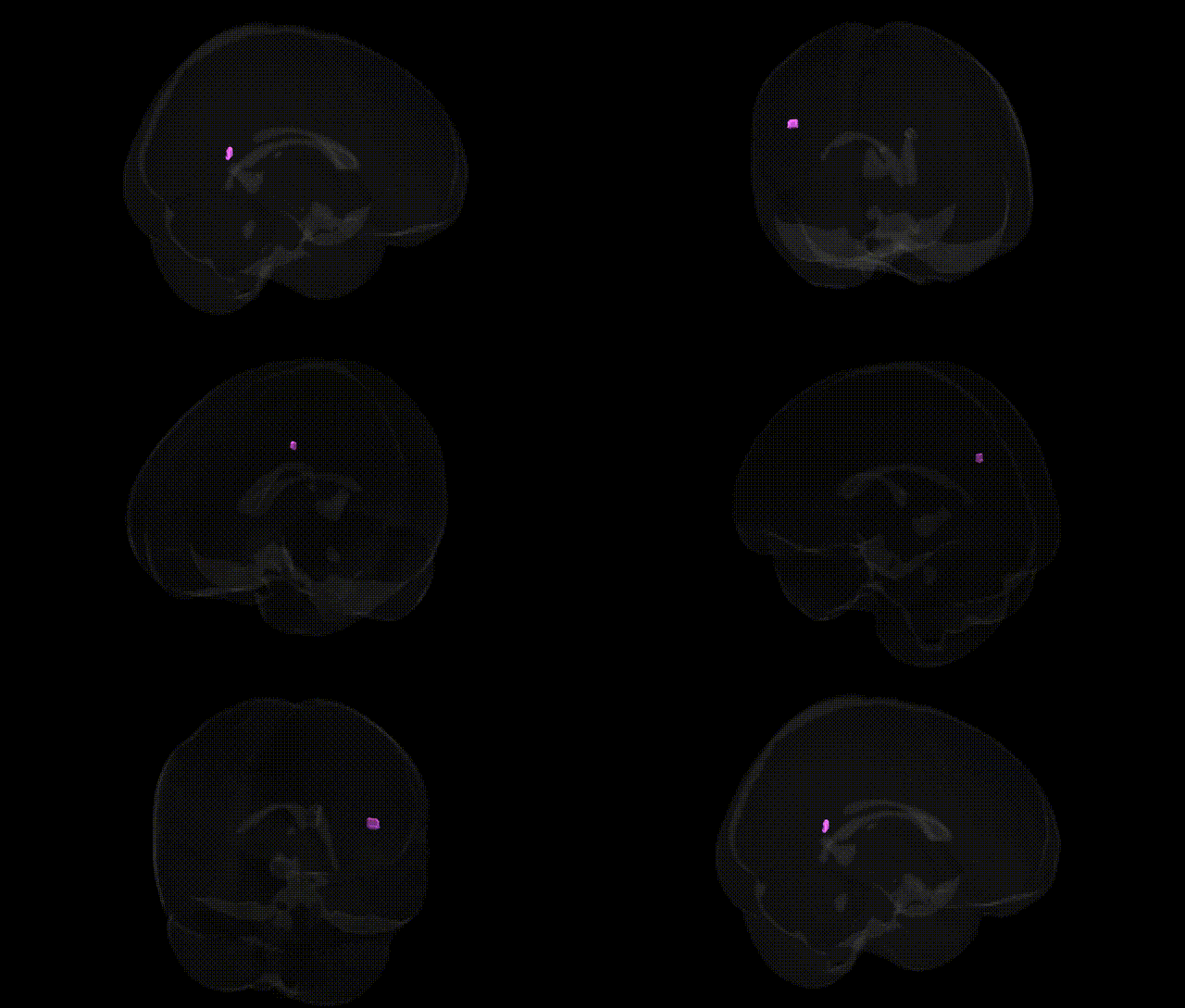
The bilateral Left Cerebrum.Temporal Lobe.Inferior Parietal Lobule.White Matter region, as defined in the Talairach 1 mm Atlas, refers to deep subcortical fiber pathways underlying the inferior parietal lobule at the temporo-parietal junction of the left hemisphere. This white matter zone carries association fibers interconnecting inferior parietal regions (including the supramarginal and angular gyri) with lateral temporal, frontal, and other parietal areas, supporting higher-order functions such as language processing, multimodal sensory integration, attention, and aspects of spatial and conceptual cognition. It includes segments of major association tracts such as portions of the superior longitudinal fasciculus and arcuate fasciculus, which are critical for fronto-temporal-parietal communication. While there is no specific Wikipedia article for this exact Talairach label, it lies beneath and is closely related to the Inferior parietal lobule.
The bilateral left cerebrum temporal lobe inferior parietal lobule white matter, as defined by Talairach 1 mm atlas labels, lies at the intersection of temporo‑parietal association pathways (notably involving arcuate/superior longitudinal fasciculi and adjacent inferior fronto‑occipital fibers), and genetic associations affecting this region typically emerge via GWAS of white‑matter microstructure (e.g., diffusion metrics) and regional volumes rather than through this specific label per se. Large imaging‑genetics studies such as ENIGMA and UK Biobank have identified polygenic influences across numerous loci (often enriched for axon guidance, myelination, and synaptic genes) on temporal–parietal association tracts, with recurrent signals near or within genes such as CNTNAP2, NRG1, CAMK1D, and various myelin‑related genes, though effects are diffuse and highly polygenic. Variants influencing inferior parietal and temporo‑parietal white‑matter integrity have been associated with neurodevelopmental disorders (including autism spectrum disorder, dyslexia/reading disability, and ADHD), schizophrenia and bipolar disorder (in line with altered temporo‑parietal connectivity in psychosis), as well as Alzheimer’s disease and other dementias where temporo‑parietal disconnection is a hallmark; additional links have been reported with general cognitive ability, educational attainment, language‑related traits, and risk for major depressive disorder. Overall, genetic architecture of this region appears highly polygenic and shared across multiple psychiatric, neurodevelopmental, and cognitive phenotypes, with no single locus uniquely or specifically defined for the “inferior parietal lobule white matter” label, but a broad overlap of GWAS signals affecting association white matter in the temporo‑parietal network.
Overview generated by GPT-4o (2026).
Region ID: 874
Hemisphere: bilateral
Atlas: Talairach labels 1mm
Full Quality Version: Download MP4
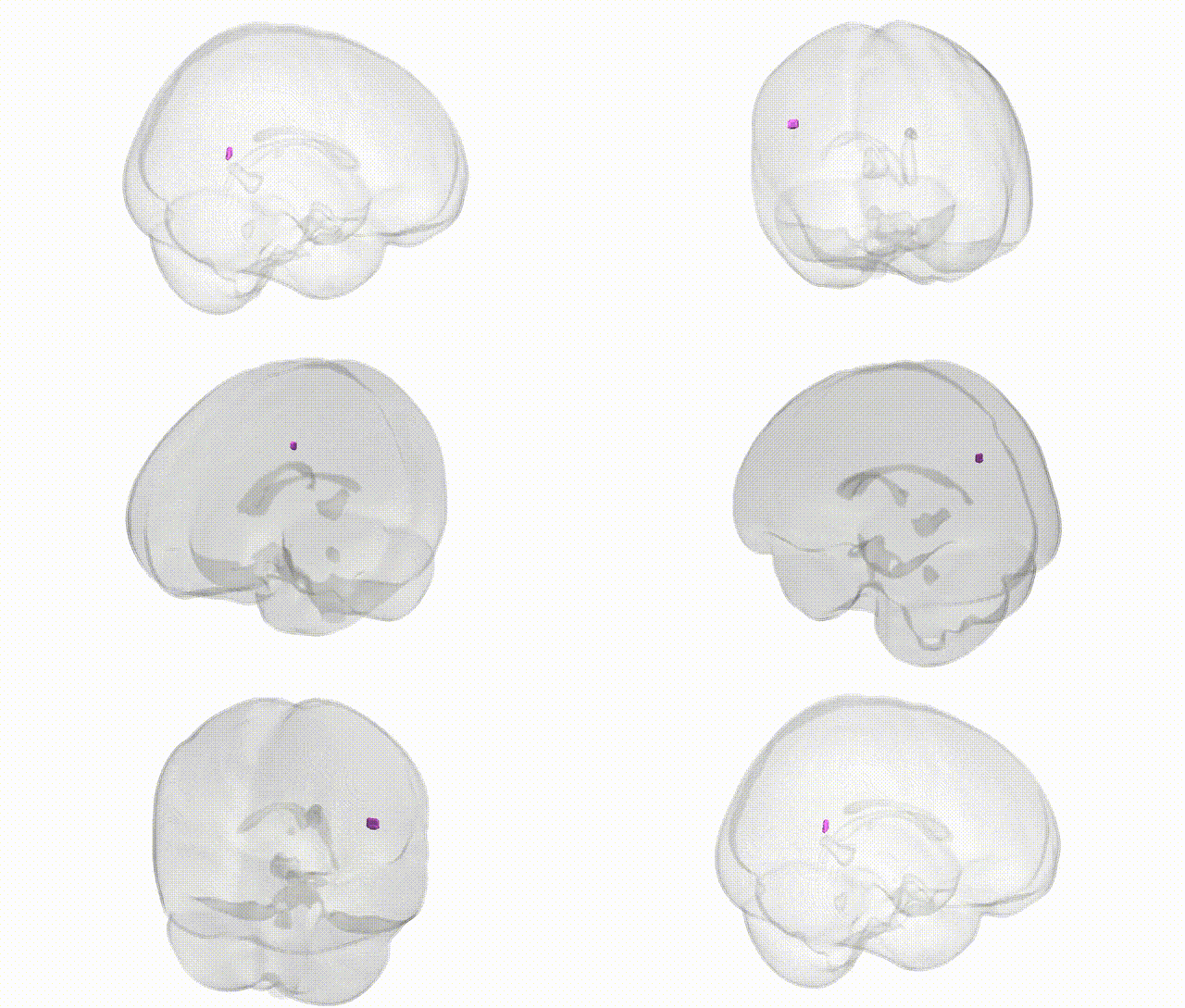
Full Quality Version: Download MP4
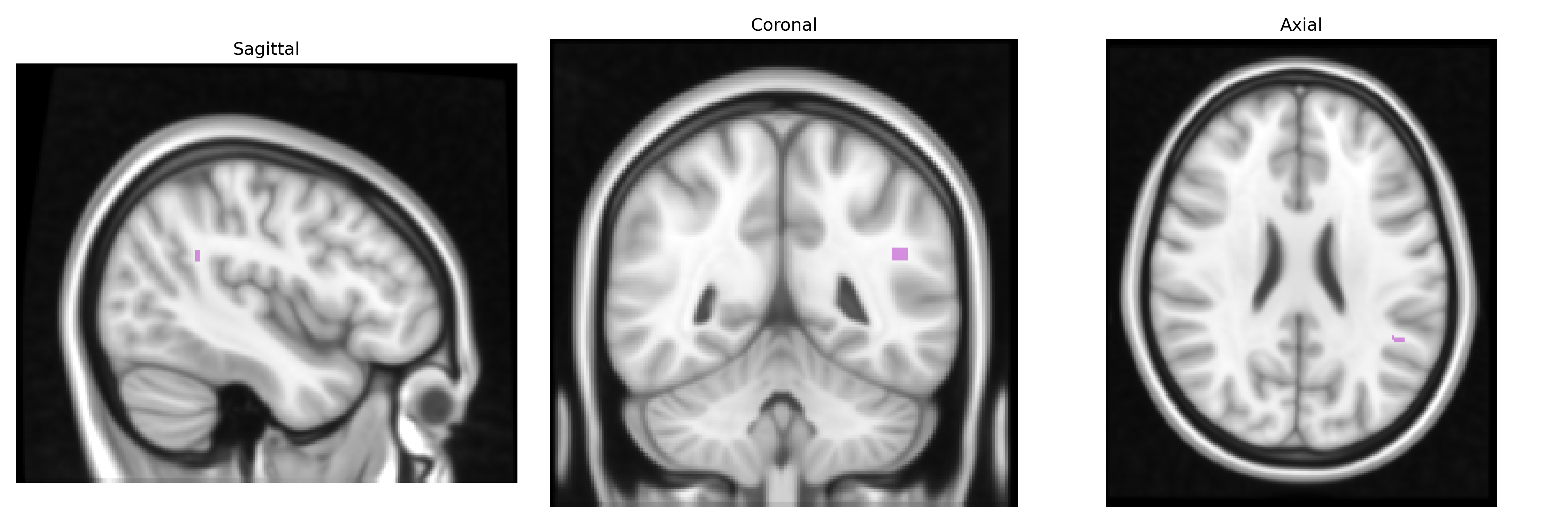
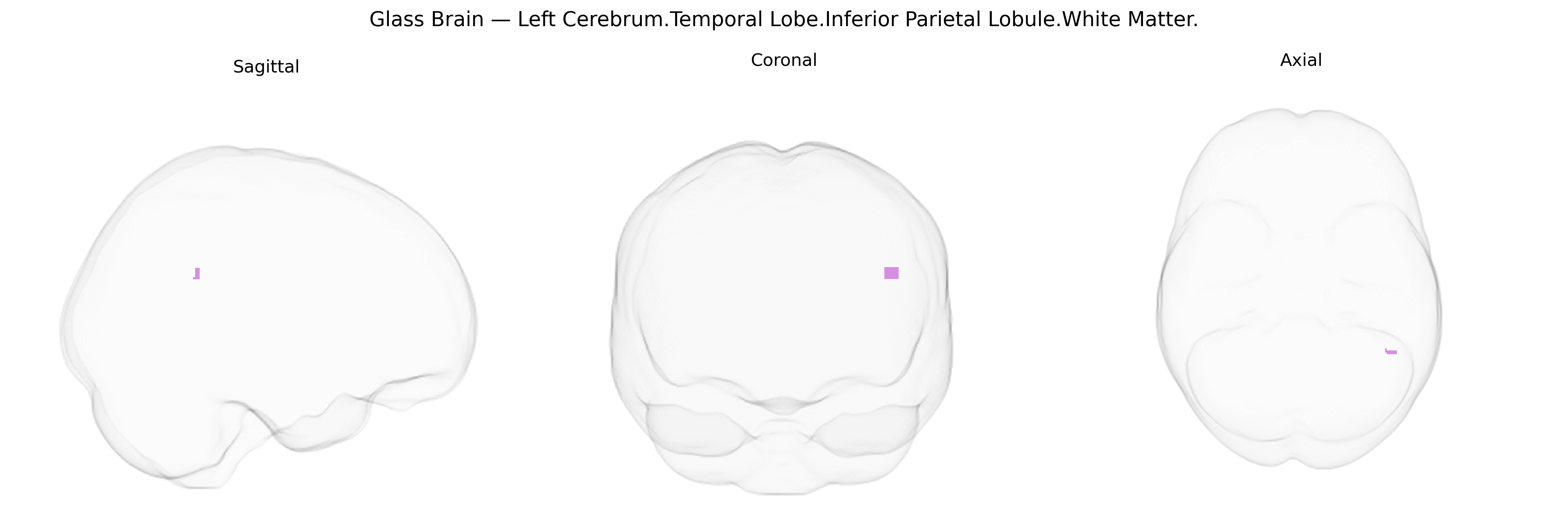
Wali Sidiqyar*, Gaurav Rudravaram*, Elyssa M. McMaster, Trent M. Schwartz, Adam M. Saunders, Kurt G. Schilling, Bennett A. Landman "Introducing SPINS: A Shared Public Visualization Library of Neuroanatomical Structures." Medical Imaging with Deep Learning- short paper
This resource is licensed under CC0 1.0 Universal (Public Domain).