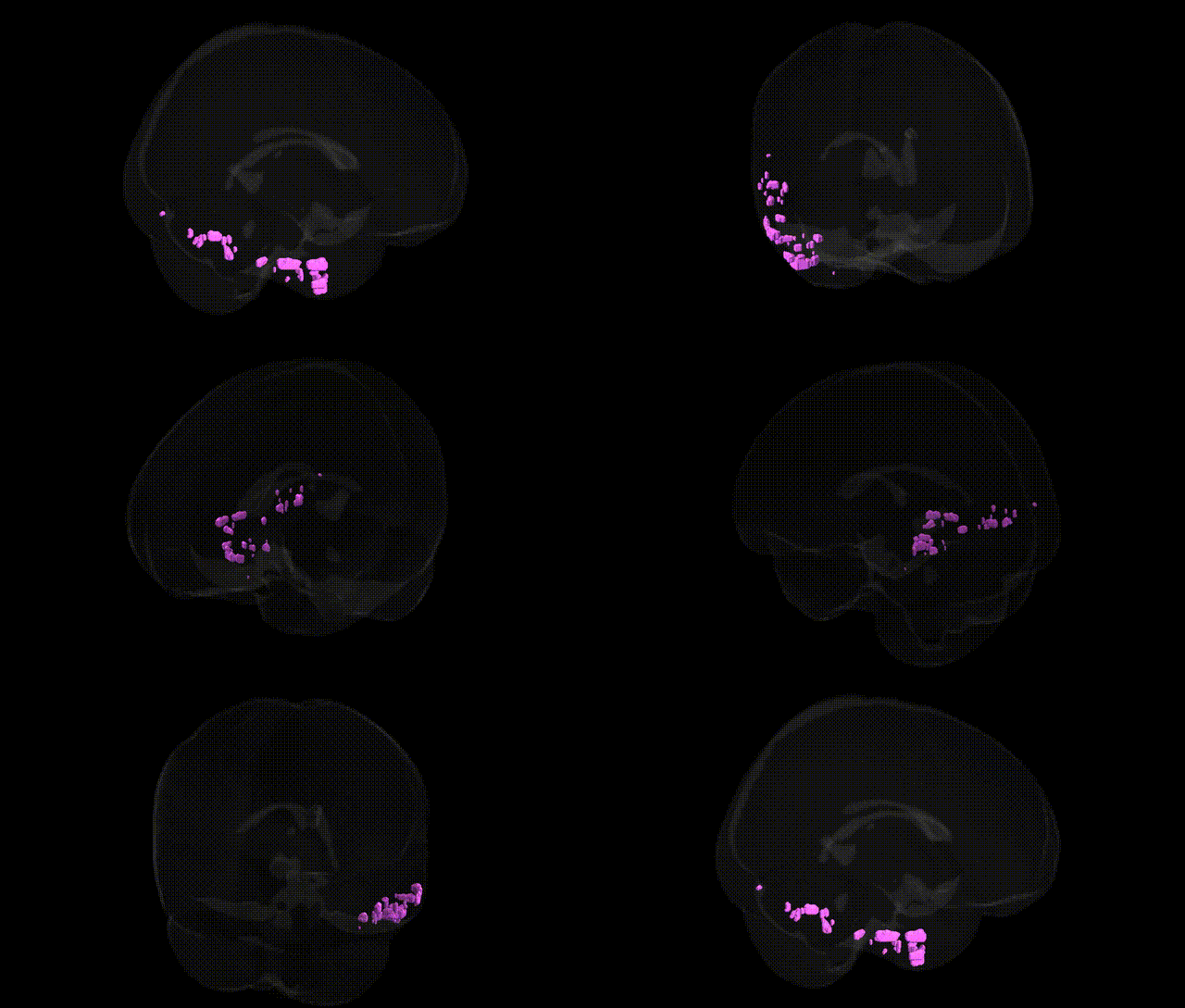
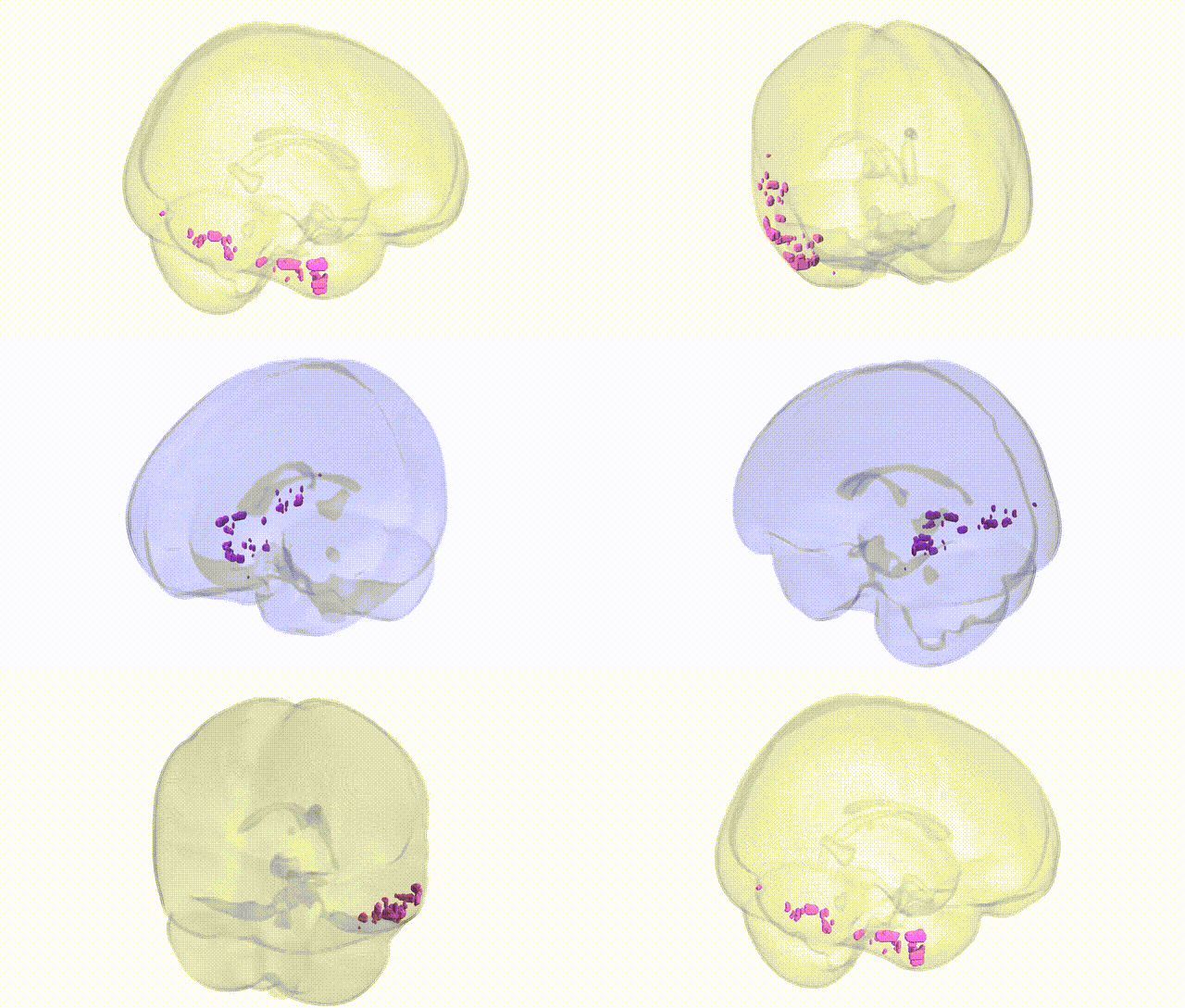
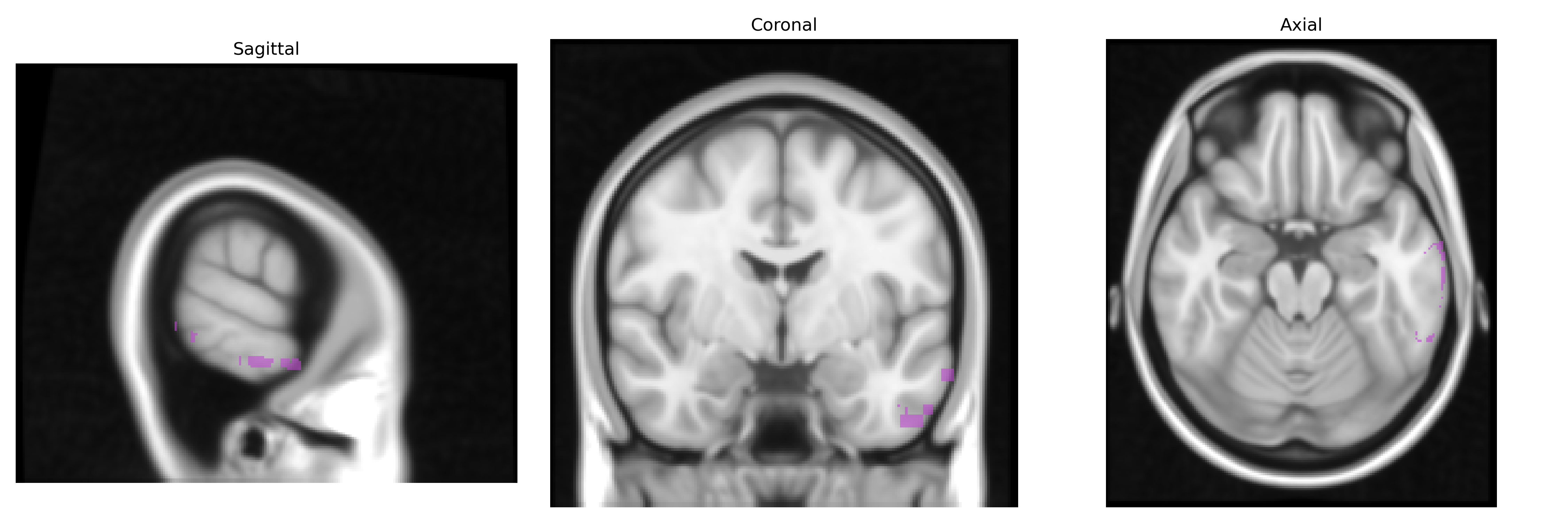
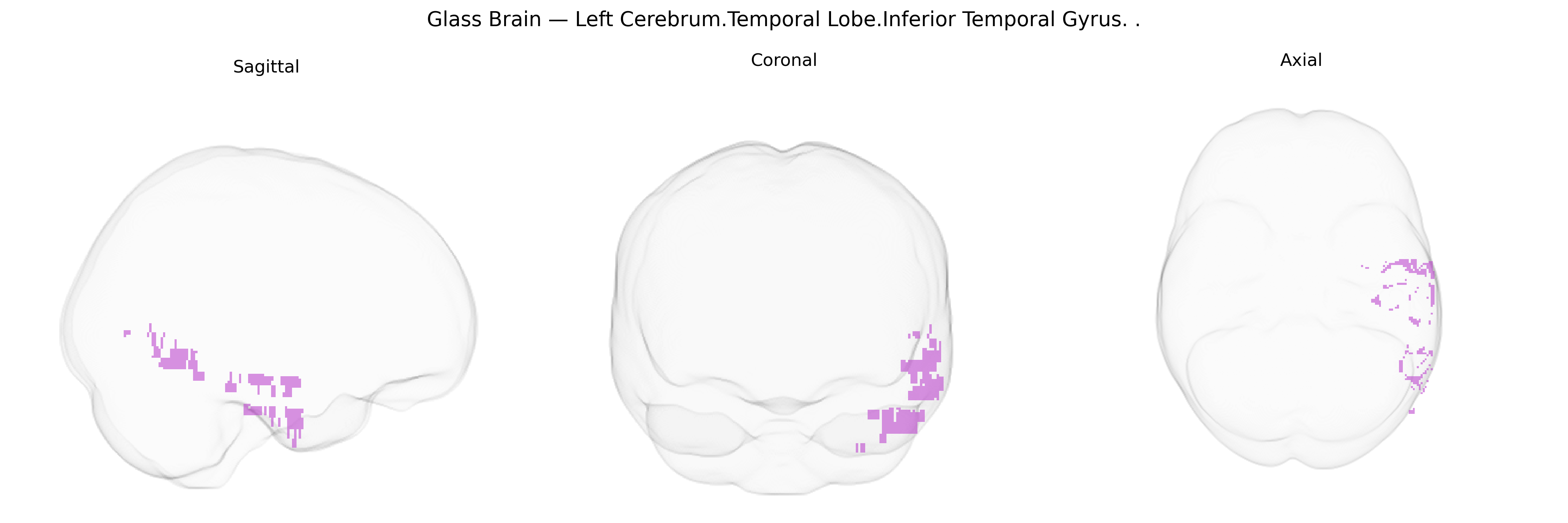
The bilateral Left Cerebrum.Temporal Lobe.Inferior Temporal Gyrus corresponds to cortex along the ventrolateral aspect of the temporal lobe, positioned inferior to the middle temporal gyrus and above the fusiform gyrus, extending from the temporal pole posteriorly toward the occipitotemporal junction. This gyrus participates in high-level visual processing, particularly object and complex form recognition, and contributes to semantic processing and visual memory. It receives substantial input from early visual areas via the ventral (“what”) visual stream and maintains extensive connections with adjacent temporal, occipital, and limbic structures, supporting integration of visual features with stored knowledge about objects, faces, and scenes. There is no direct link for the Inferior Temporal Gyrus; see the related area Temporal lobe.
The inferior temporal gyrus (ITG) of the left temporal lobe has been implicated in several genetically influenced neuropsychiatric and neurodevelopmental traits, primarily through imaging-genetics and GWAS of brain structure and function rather than direct region-specific association scans. Large-scale cortical morphology GWAS (e.g., ENIGMA, UK Biobank) have linked common variants in genes involved in neurodevelopment, synaptic function, and axon guidance—such as those near HMGA2, MAPT, WNT signaling components, and neurodevelopmental loci on chromosomes 3, 6, and 17—to variation in temporal lobe cortical thickness and surface area, with associations often extending into the inferior temporal cortex. ITG structural and functional metrics show heritability and have been associated with polygenic risk scores for Alzheimer’s disease, schizophrenia, and autism spectrum disorder, reflecting this region’s role in high-level visual processing and semantic memory; risk variants in genes such as APOE (Alzheimer’s), complement and MHC-region genes (schizophrenia), and synaptic/neurodevelopmental genes including those in 16p11.2 CNV regions (ASD) contribute to altered temporal lobe morphology and activation patterns that encompass the inferior temporal cortex. Additionally, GWAS and candidate-gene studies linking temporal lobe structure to reading and language-related traits (implicating, for example, DCDC2, KIAA0319, and CNTNAP2) suggest that genetic variation influencing left temporal cortical development can affect inferior temporal gyrus organization, given its involvement in object and word-form processing, although effects are typically distributed and not exclusive to this specific Talairach-defined parcel.
Overview generated by GPT-4o (2026).
Region ID: 9
Hemisphere: bilateral
Atlas: Talairach labels 1mm
Full Quality Version: Download MP4
Full Quality Version: Download MP4
Wali Sidiqyar*, Gaurav Rudravaram*, Elyssa M. McMaster, Trent M. Schwartz, Adam M. Saunders, Kurt G. Schilling, Bennett A. Landman "Introducing SPINS: A Shared Public Visualization Library of Neuroanatomical Structures." Medical Imaging with Deep Learning- short paper
This resource is licensed under CC0 1.0 Universal (Public Domain).