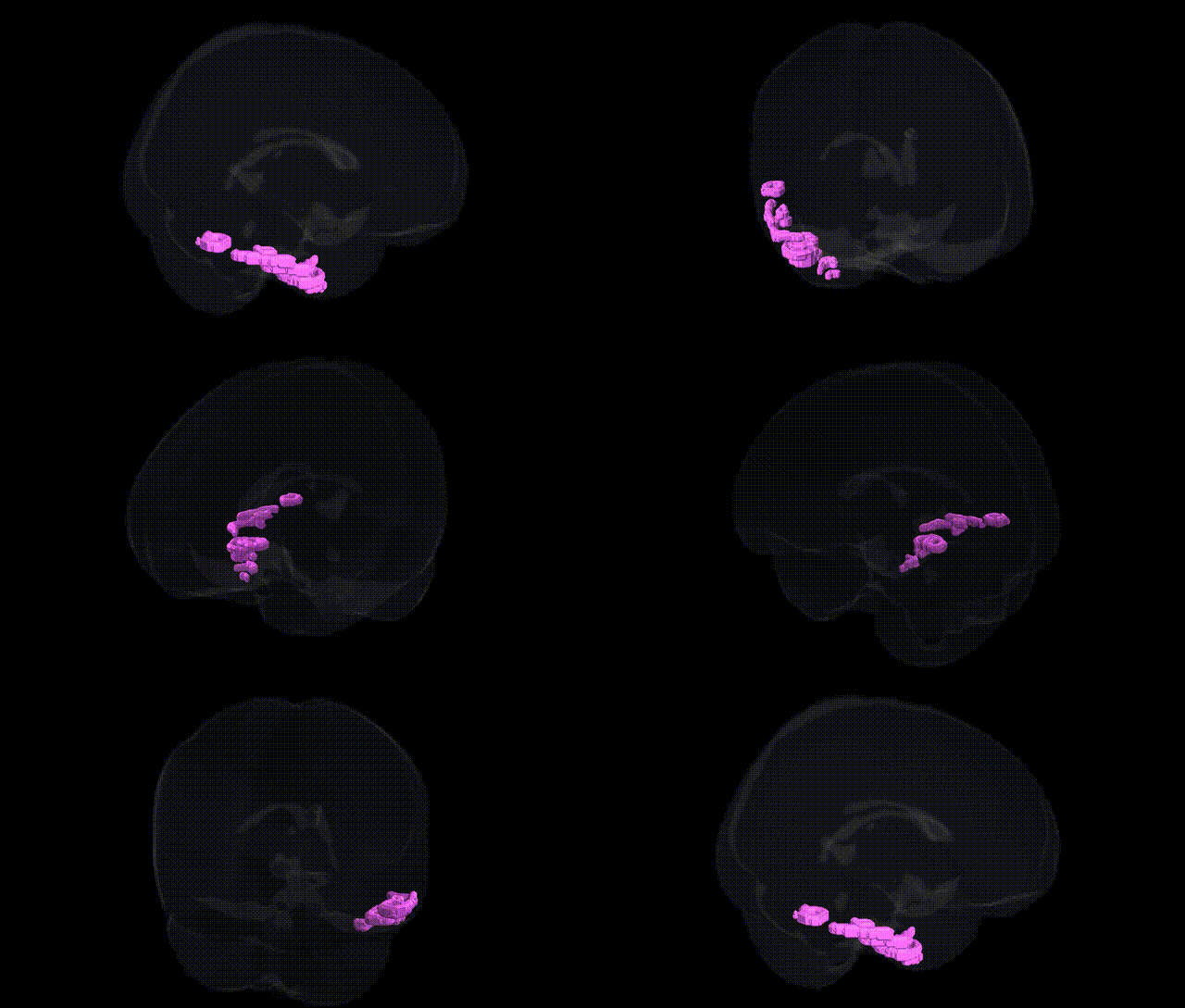
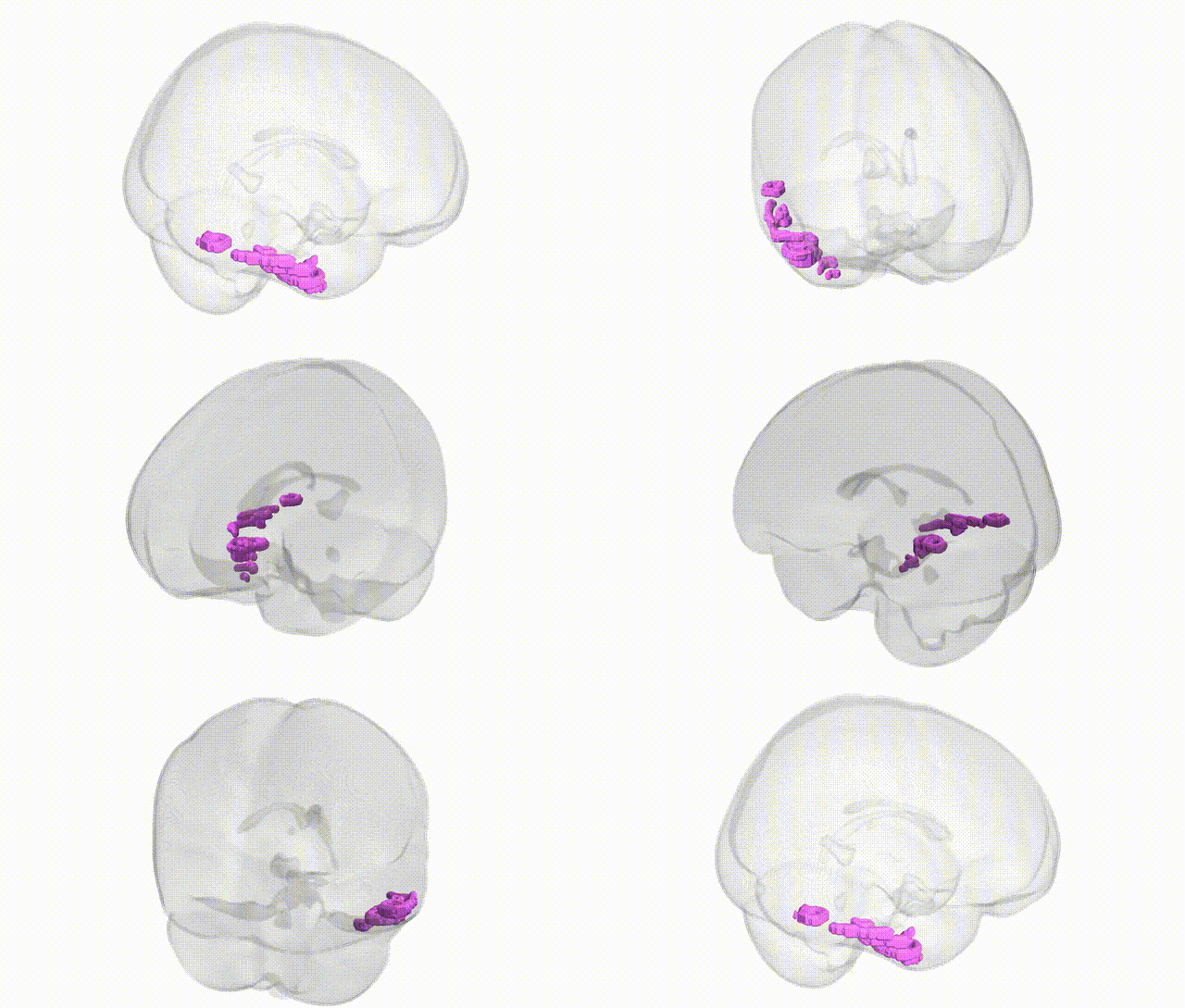
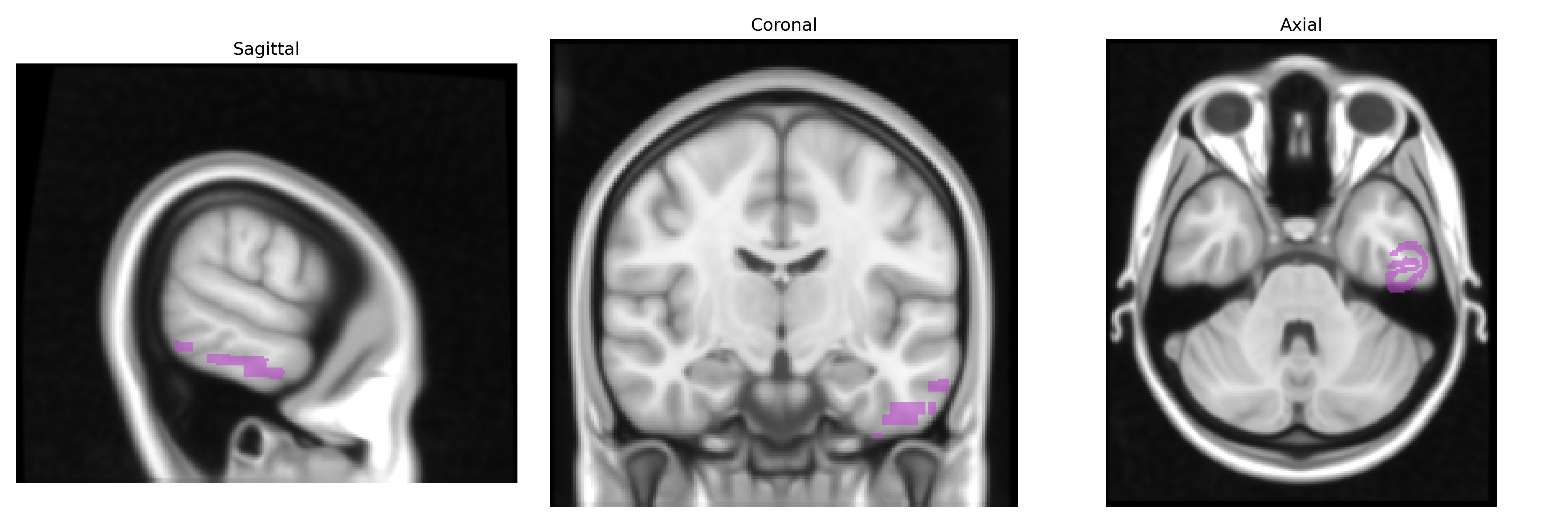
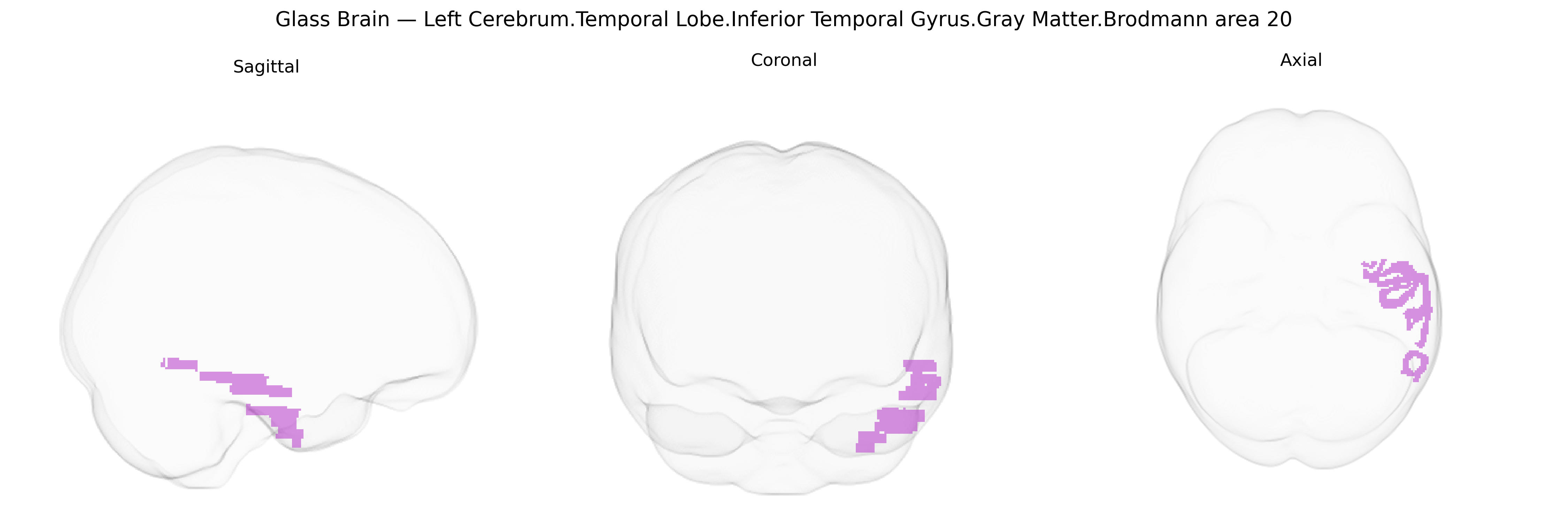
The bilateral Left Cerebrum.Temporal Lobe.Inferior Temporal Gyrus.Gray Matter.Brodmann area 20 corresponds to a cortical region in the ventral temporal lobe involved primarily in high-level visual processing and object recognition, including complex form and category-related information. Brodmann area 20 lies on the inferior temporal gyrus, extending along its anterior–posterior axis, and is interconnected with adjacent visual association areas (such as BA37 and BA21), limbic structures, and prefrontal regions, supporting roles in visual memory, semantic processing, and integration of visual input with stored representations. Neuronal populations in this area show selectivity for complex visual features and contribute to perception of objects, faces, and scenes, as well as to the formation of long-term visual associations. There is no single dedicated Wikipedia page for this exact Talairach label; a related structure with detailed coverage is Inferior temporal gyrus.
The bilateral inferior temporal gyrus (ITG, Brodmann area 20) has been implicated in multiple genetic and GWAS findings, largely through imaging-genetics and disorder-focused studies rather than region-specific GWAS alone. Polygenic risk for Alzheimer’s disease (notably APOE ε4, CLU, PICALM, CR1) and other dementia-related loci has been associated with cortical thinning, gray matter atrophy, and altered functional connectivity in the ITG, consistent with its role in early temporal lobe degeneration. Variants affecting synaptic plasticity and neurodevelopment (e.g., in BDNF, DISC1, NRG1, and glutamatergic genes) have been linked to ITG volume or activation differences in schizophrenia, bipolar disorder, and major depression, often in the context of face, object, and semantic processing tasks. Large-scale imaging GWAS (such as ENIGMA and UK Biobank) have identified common variants in genes related to neuronal development, axon guidance, and intracranial volume (e.g., loci near HMGA2, MIR-2113, and other neurodevelopmental genes) associated with temporal lobe and inferior temporal cortical thickness or surface area. Autism spectrum disorder and language-related traits show genetic influences on temporal lobe structure and function, with rare and common variants in genes such as CNTNAP2, SHANK3, and FOXP2-linked pathways contributing to ITG alterations in some cohorts. Overall, genetic associations with inferior temporal gyrus gray matter emphasize neurodevelopmental, synaptic, and neurodegenerative pathways, often detected via intermediate phenotypes like regional volume, thickness, and activation rather than direct association with the Talairach-defined Brodmann area 20 label itself.
Overview generated by GPT-4o (2026).
Region ID: 8
Hemisphere: bilateral
Atlas: Talairach labels 1mm
Full Quality Version: Download MP4
Full Quality Version: Download MP4
Wali Sidiqyar*, Gaurav Rudravaram*, Elyssa M. McMaster, Trent M. Schwartz, Adam M. Saunders, Kurt G. Schilling, Bennett A. Landman "Introducing SPINS: A Shared Public Visualization Library of Neuroanatomical Structures." Medical Imaging with Deep Learning- short paper
This resource is licensed under CC0 1.0 Universal (Public Domain).