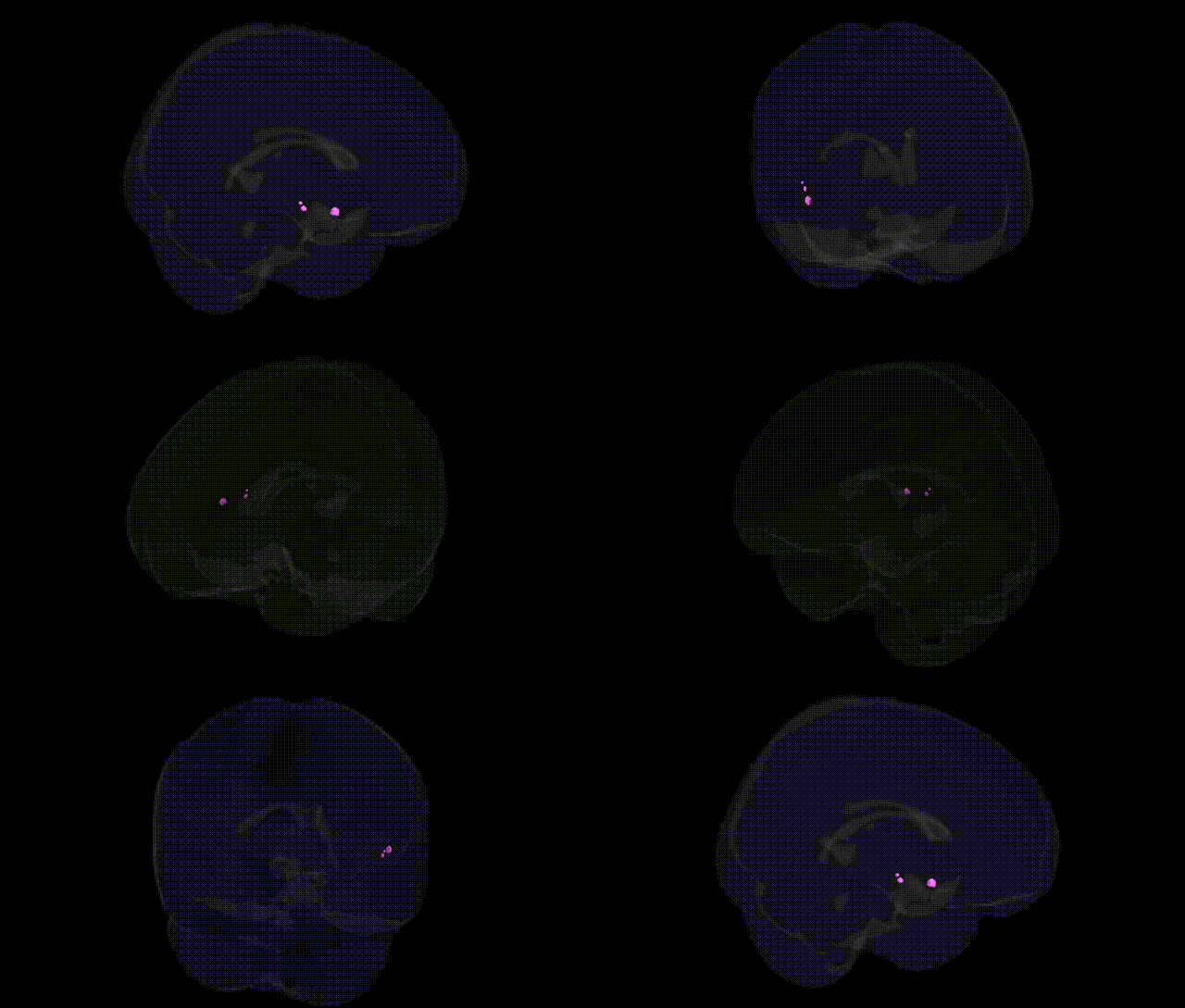
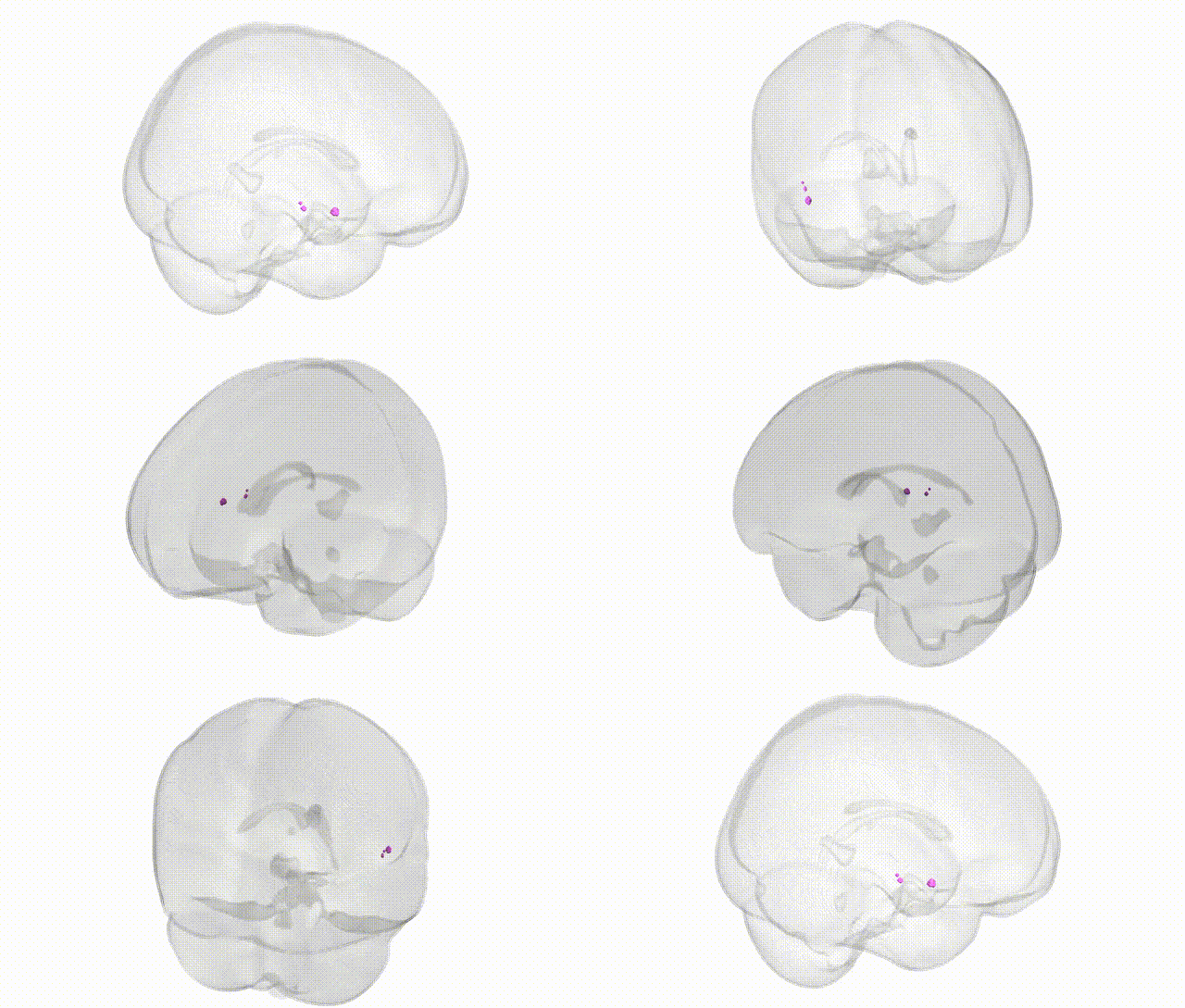
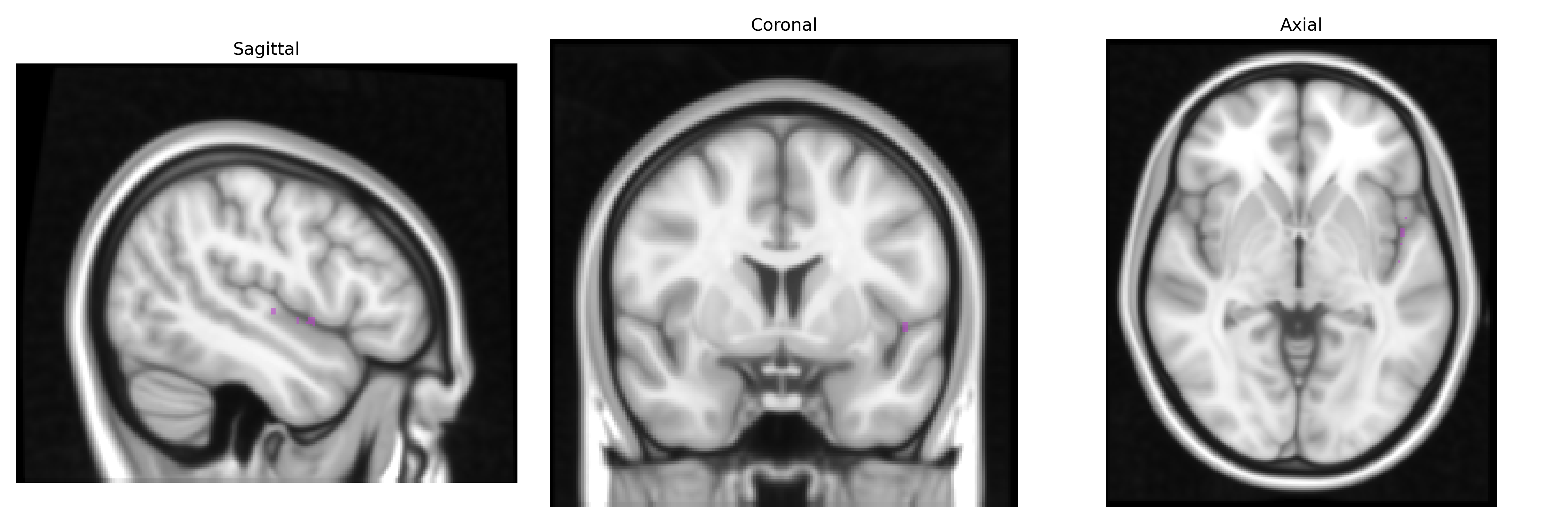
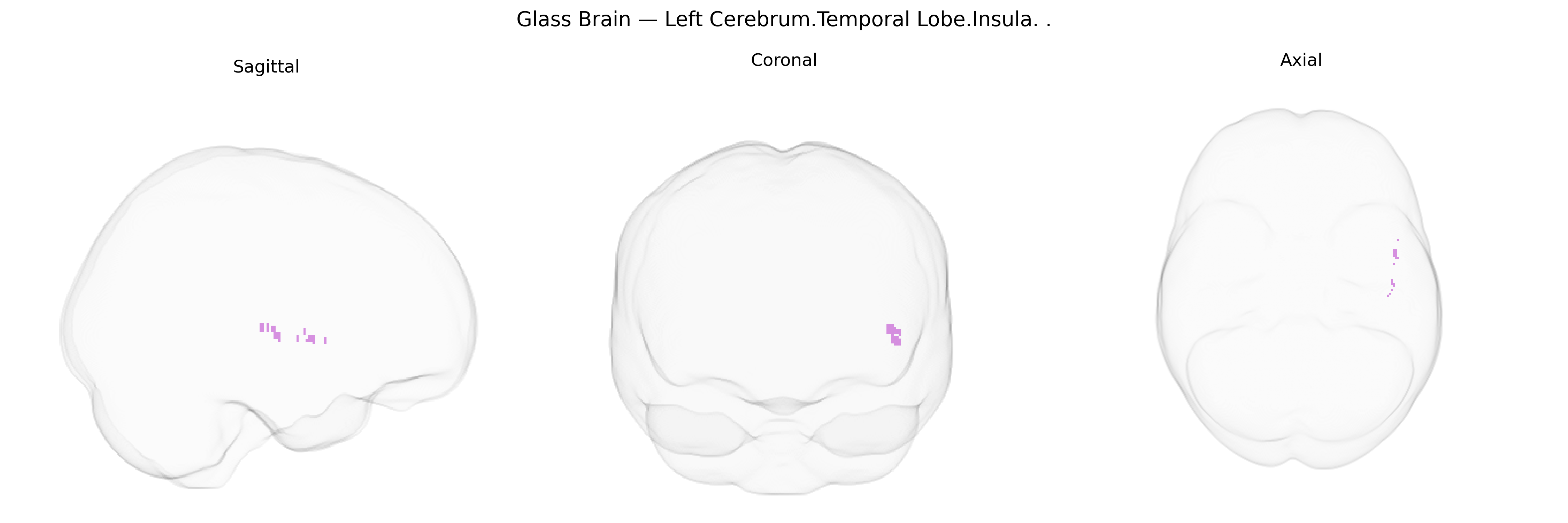
The bilateral Left Cerebrum.Temporal Lobe.Insula corresponds to the insular cortex located deep within the lateral sulcus of the temporal lobe, forming part of the cerebral cortex that is buried beneath the frontal, parietal, and temporal opercula. This region is involved in multimodal integration, with roles in interoceptive awareness (including visceral sensation and autonomic regulation), gustation, pain processing, emotional and social cognition, and aspects of language and speech, especially in the dominant (typically left) hemisphere. Functionally, the insula contributes to salience detection and is a key hub in large-scale networks that link sensory, limbic, and cognitive processes, supporting the coordination of internal bodily states with external environmental demands. Insular cortex
The bilateral left cerebrum temporal lobe insula (Talairach 1 mm atlas) has been repeatedly implicated in genetic studies of psychiatric, neurological, and behavioral traits, with many findings emerging from imaging-genetics and GWAS of brain structure and function. Common variants in genes related to synaptic plasticity, neurotransmission, and neurodevelopment—such as CACNA1C, NRG1, GRIN2A, and BDNF—have been associated with insular cortical thickness, surface area, or activation patterns, particularly in the context of schizophrenia, bipolar disorder, and major depressive disorder. Large-scale GWAS of brain morphology (e.g., ENIGMA and UK Biobank–based studies) have identified multiple loci influencing insular volume and cortical thickness, often overlapping with risk loci for psychiatric conditions, cognitive performance, and pain sensitivity. The insula’s role in interoception, salience processing, and affect regulation aligns with genetic associations seen in anxiety disorders, substance use disorders (including alcohol and nicotine dependence), and autism spectrum disorder, where risk variants in genes such as DRD2, OPRM1, and glutamatergic and GABAergic pathway genes show correlations with altered insular structure or connectivity. In neurodegenerative disease genetics, risk variants for frontotemporal dementia and Alzheimer’s disease (e.g., in MAPT, GRN, and APOE) have been linked to patterns of atrophy and functional disruption that prominently involve the insula, underscoring its vulnerability to genetically mediated neurodegenerative processes.
Overview generated by GPT-4o (2026).
Region ID: 591
Hemisphere: bilateral
Atlas: Talairach labels 1mm
Full Quality Version: Download MP4
Full Quality Version: Download MP4
Wali Sidiqyar*, Gaurav Rudravaram*, Elyssa M. McMaster, Trent M. Schwartz, Adam M. Saunders, Kurt G. Schilling, Bennett A. Landman "Introducing SPINS: A Shared Public Visualization Library of Neuroanatomical Structures." Medical Imaging with Deep Learning- short paper
This resource is licensed under CC0 1.0 Universal (Public Domain).