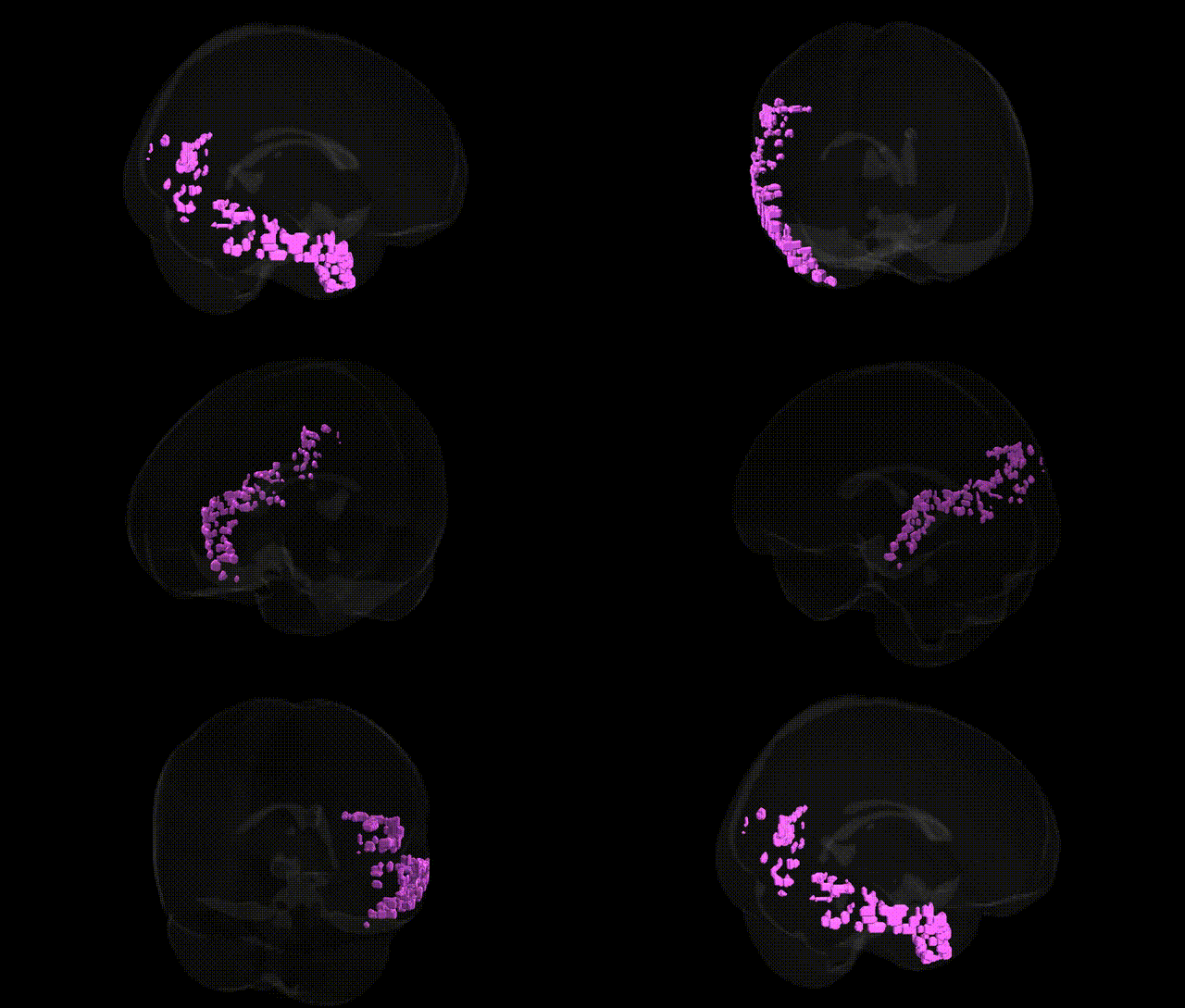
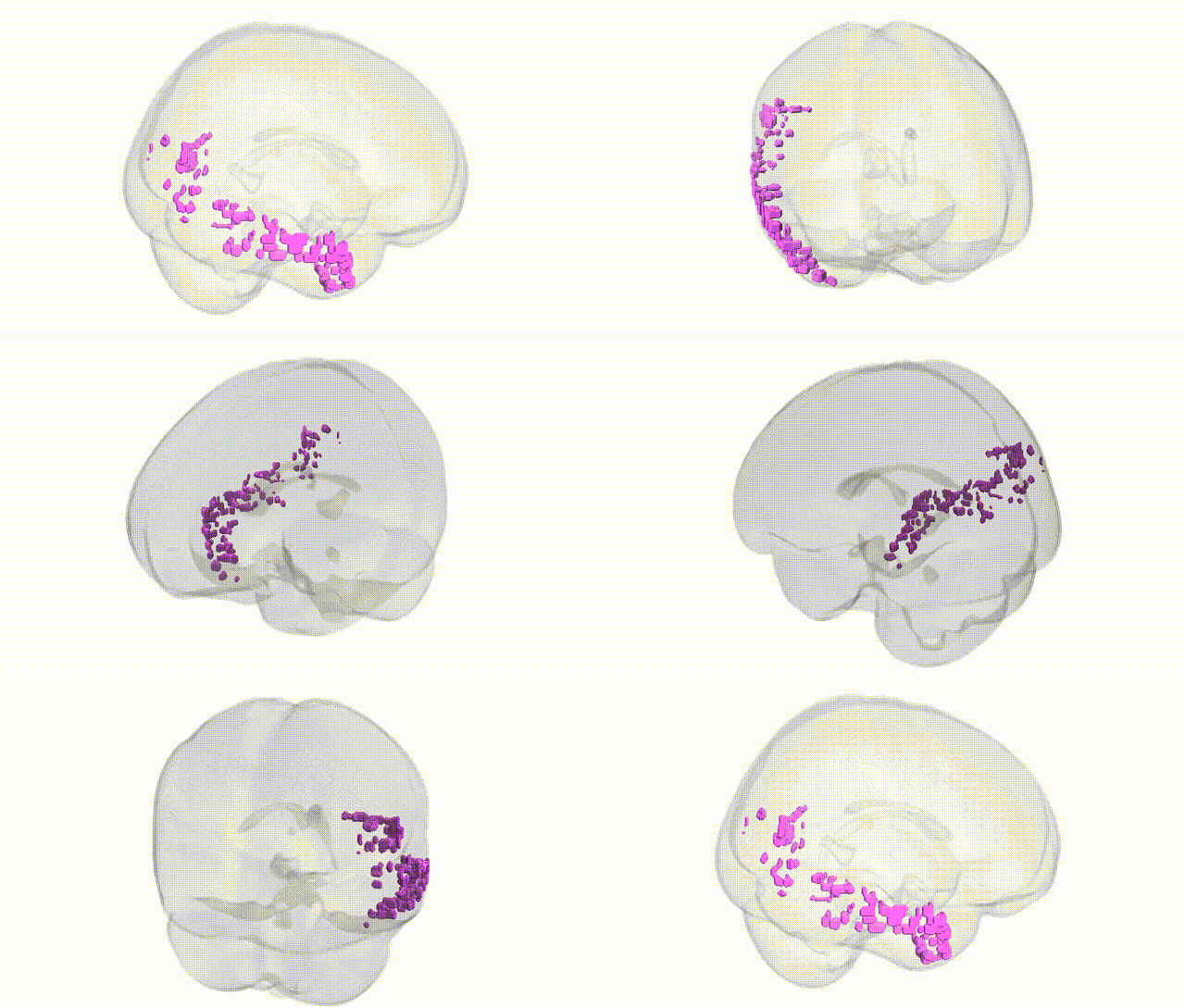
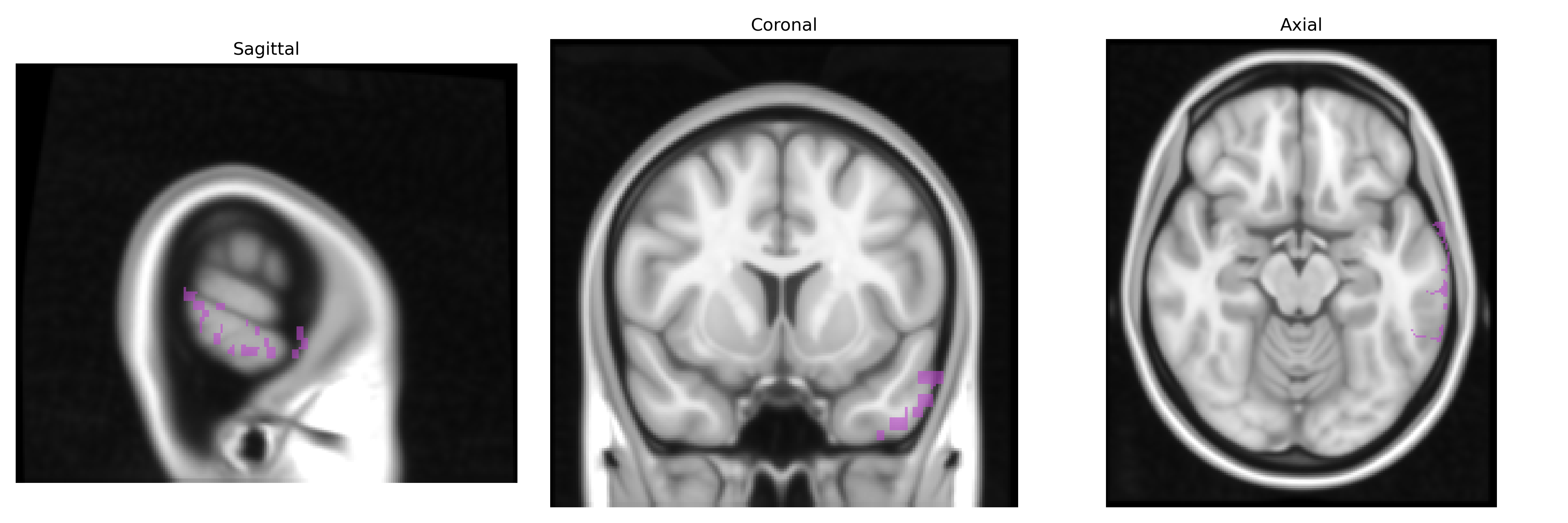
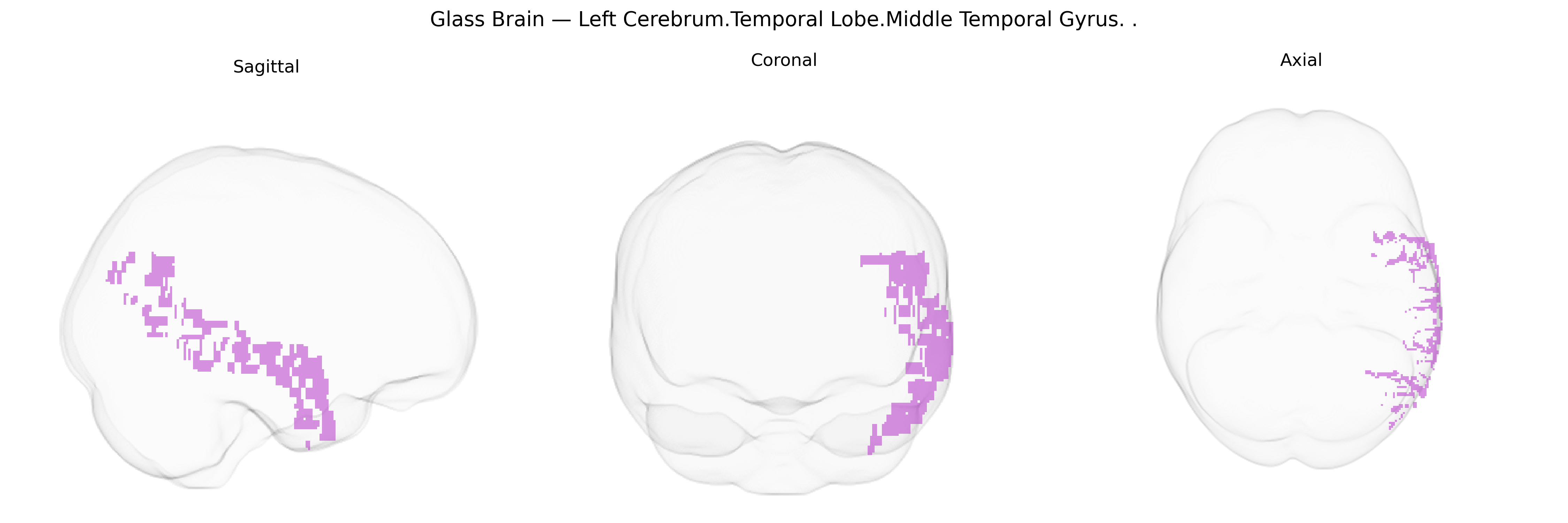
The bilateral left cerebrum temporal lobe middle temporal gyrus is a cortical region located on the lateral aspect of the temporal lobe, situated between the superior and inferior temporal gyri and extending along the middle portion of the temporal cortex. It is implicated in semantic memory, language processing, and the integration of auditory and visual information, contributing to the comprehension of spoken and written language, as well as higher-order social and conceptual cognition. Functionally, the middle temporal gyrus participates in networks involved in lexical-semantic retrieval, narrative comprehension, and processing of biological motion and social cues. In the Talairach 1 mm atlas, this label refers to the cytoarchitectonically heterogeneous middle temporal gyrus, which interfaces with adjacent temporal and parietal regions as part of large-scale association cortices. There is no direct link for this specific bilateral left atlas label; a related area is the middle temporal gyrus: Middle temporal gyrus.
The left middle temporal gyrus (MTG) of the temporal lobe has been implicated in multiple genetically influenced traits and disorders, particularly those involving language, semantic processing, and social cognition. Imaging–genetics and GWAS-based neuroimaging studies (e.g., ENIGMA, UK Biobank) have linked common variants in genes affecting cortical development and synaptic function—such as FOXP2, CNTNAP2, and other neurodevelopmental loci—to structural and functional variation in the left MTG, often in the context of language networks and temporal–parietal circuitry. Polygenic risk scores for schizophrenia, autism spectrum disorder, and major depressive disorder have been associated with altered cortical thickness, surface area, or activation in left temporal regions overlapping the middle temporal gyrus, consistent with broader genetic influences on frontotemporal networks. GWAS of educational attainment, general cognitive ability, and reading-related traits have also reported associations between polygenic load and left temporal cortical measures, suggesting a genetically mediated contribution of the MTG to verbal intelligence and literacy. Additionally, risk alleles for Alzheimer’s disease (e.g., APOE ε4 and other AD GWAS loci) and other neurodegenerative conditions have been related to atrophy or altered connectivity in temporal association cortex that includes the middle temporal gyrus, indicating that genetic susceptibility to neurodegeneration partially manifests through structural and functional changes in this region.
Overview generated by GPT-4o (2026).
Region ID: 32
Hemisphere: bilateral
Atlas: Talairach labels 1mm
Full Quality Version: Download MP4
Full Quality Version: Download MP4
Wali Sidiqyar*, Gaurav Rudravaram*, Elyssa M. McMaster, Trent M. Schwartz, Adam M. Saunders, Kurt G. Schilling, Bennett A. Landman "Introducing SPINS: A Shared Public Visualization Library of Neuroanatomical Structures." Medical Imaging with Deep Learning- short paper
This resource is licensed under CC0 1.0 Universal (Public Domain).