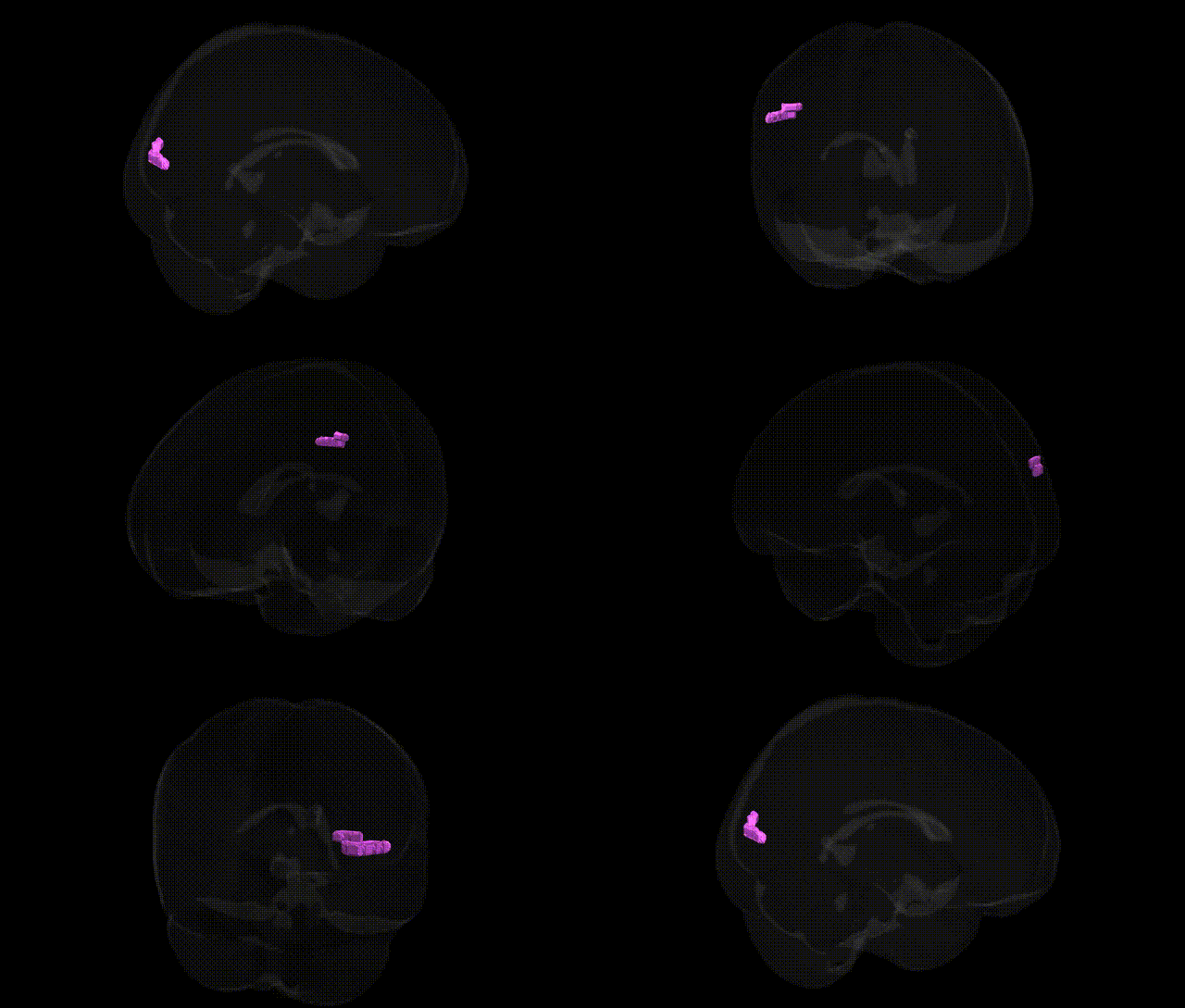
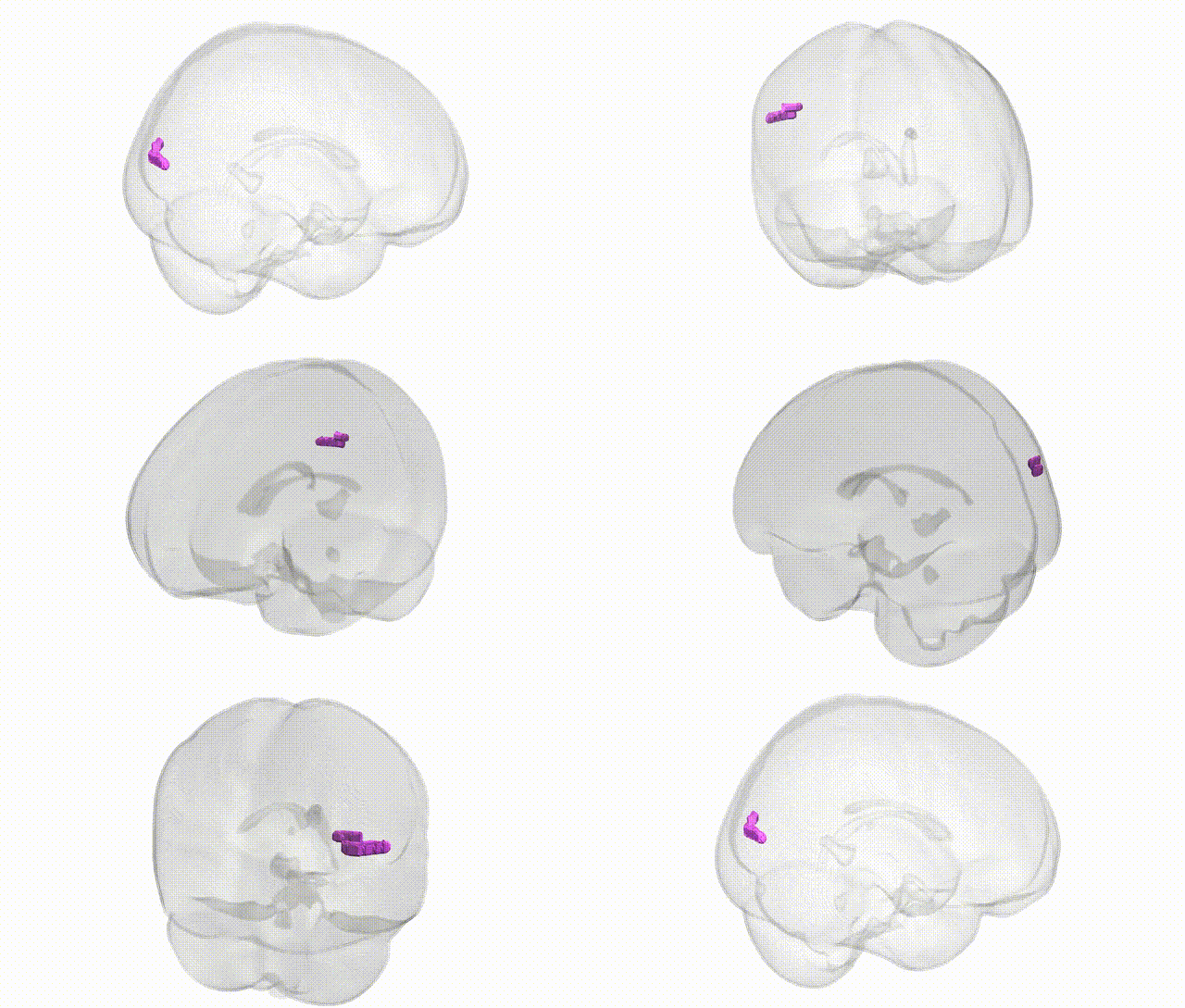
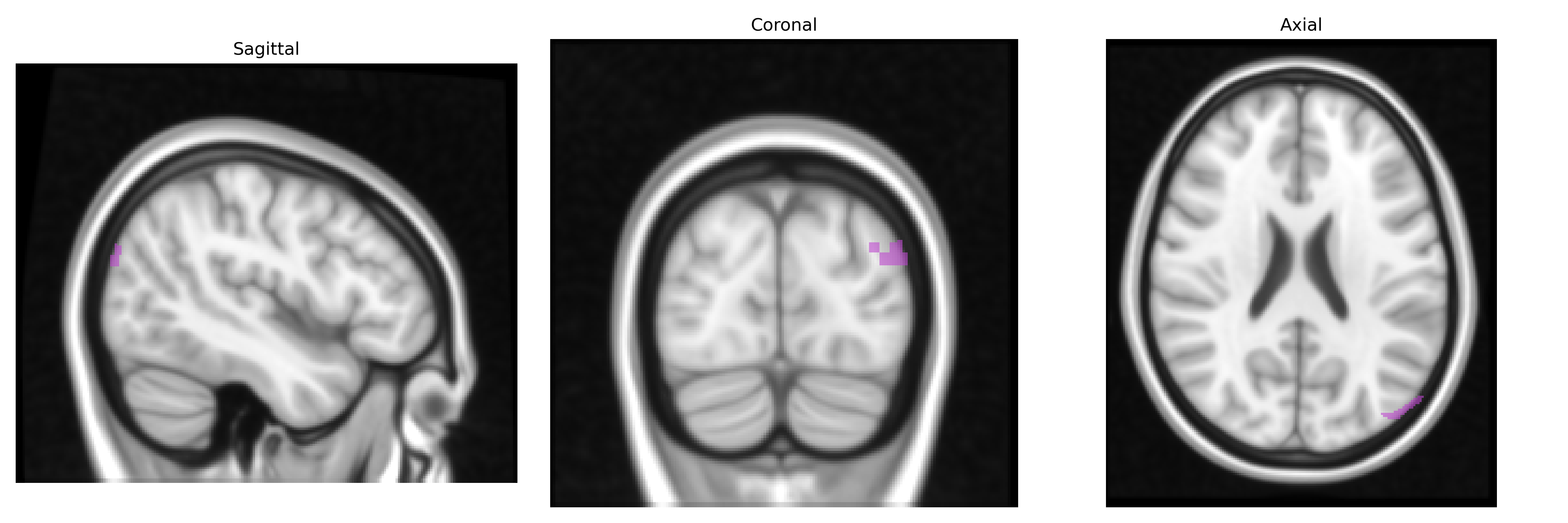
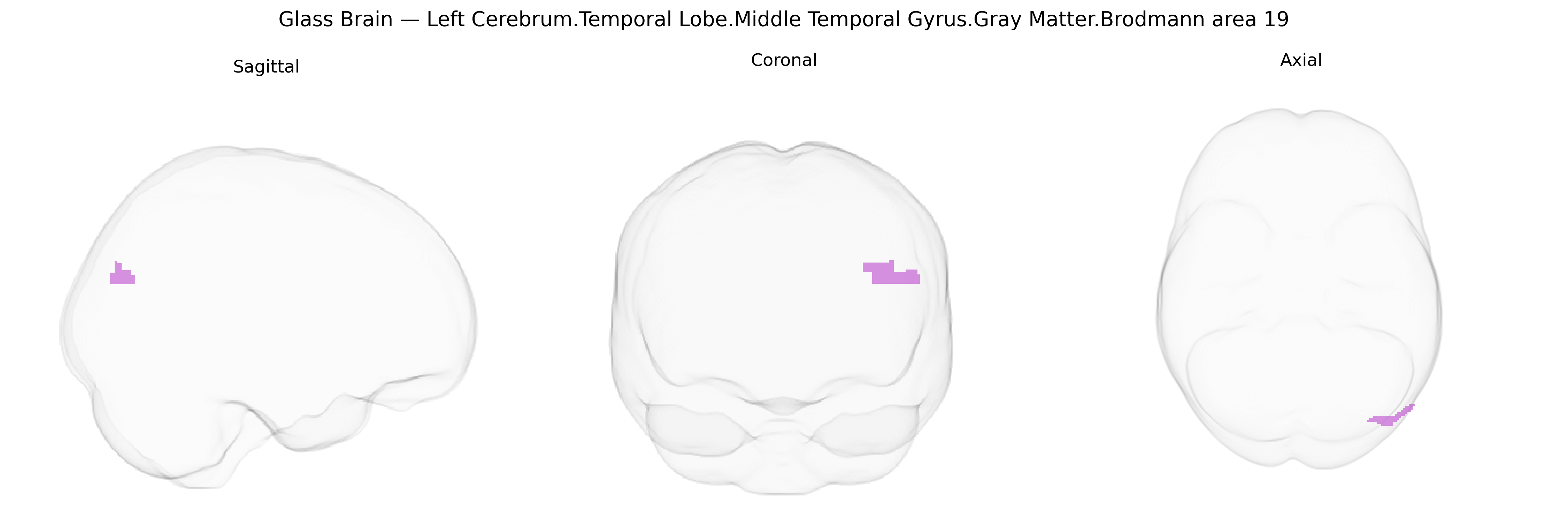
The bilateral Left Cerebrum.Temporal Lobe.Middle Temporal Gyrus.Gray Matter.Brodmann area 19 corresponds to association cortex within the middle temporal gyrus that is traditionally assigned to the visual association region of the occipitotemporal junction, overlapping with or adjacent to extrastriate visual areas. Brodmann area 19 is involved in higher-order visual processing, including integration of complex visual features, motion perception, and aspects of object and scene recognition, and it participates in large-scale networks that link occipital visual cortices with temporal and parietal association areas. In the left hemisphere, this region can support visually mediated language functions such as reading and semantic access, while bilateral engagement is common in tasks requiring integration of visual information with memory and spatial context. There is no direct link for this exact composite label; a closely related structure is Brodmann area 19.
The bilateral left middle temporal gyrus gray matter in Brodmann area 19 (a higher-order visual and multimodal association region) has been implicated in several genetic and GWAS-based associations, mainly via imaging–genetics and neuropsychiatric studies rather than region-specific Mendelian variants; common polymorphisms influencing cortical thickness, surface area, and gray-matter volume in this region have been reported in large consortia such as ENIGMA and UK Biobank, with variants in genes related to neurodevelopment (e.g., MAPT region, microtubule and synaptic genes, and general cortical development loci) contributing modest effects. This area shows structural and functional alterations linked to schizophrenia, bipolar disorder, and major depressive disorder, with polygenic risk scores for these conditions correlating with gray-matter changes in the middle temporal gyrus and nearby temporal association cortex; Alzheimer’s disease and other dementias also demonstrate atrophy in this region, with APOE and other AD-risk loci indirectly associated through their impact on temporal and occipital association cortices. GWAS of cognitive traits (general intelligence, language and semantic processing, and educational attainment) and of neuroimaging endophenotypes have associated this region’s morphology and activation patterns with polygenic scores involving genes regulating synaptic plasticity, axon guidance, and cortical patterning, though individual gene–region links remain largely of small effect and are typically reported as part of broader temporal or occipital association networks rather than uniquely specific to left BA19 middle temporal gyrus.
Overview generated by GPT-4o (2026).
Region ID: 818
Hemisphere: bilateral
Atlas: Talairach labels 1mm
Full Quality Version: Download MP4
Full Quality Version: Download MP4
Wali Sidiqyar*, Gaurav Rudravaram*, Elyssa M. McMaster, Trent M. Schwartz, Adam M. Saunders, Kurt G. Schilling, Bennett A. Landman "Introducing SPINS: A Shared Public Visualization Library of Neuroanatomical Structures." Medical Imaging with Deep Learning- short paper
This resource is licensed under CC0 1.0 Universal (Public Domain).