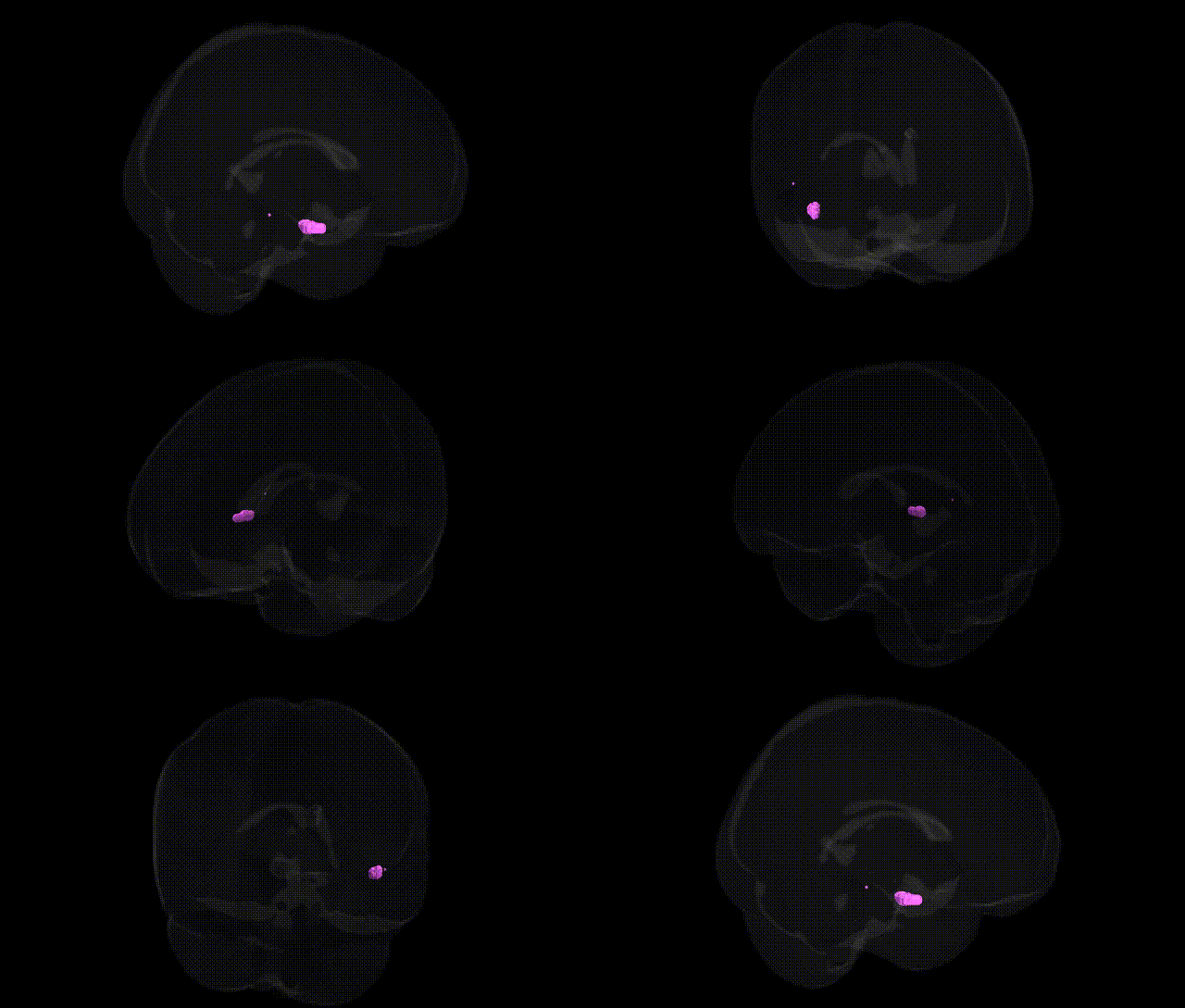
The bilateral Left Cerebrum.Temporal Lobe.Sub-Gyral.Gray Matter.Brodmann area 21 corresponds primarily to the middle temporal gyrus cortex on the lateral aspect of the temporal lobe, located just inferior to the superior temporal gyrus and superior to the inferior temporal gyrus. Cytoarchitectonically defined as Brodmann area 21, this region is involved in higher-order auditory and language processing, including lexical-semantic comprehension, as well as aspects of visual object recognition and multimodal integration. It participates in distributed networks for semantic memory, social cognition, and processing of complex stimuli such as sentences and narratives, and shows strong connectivity with adjacent temporal association areas, inferior parietal cortex, and prefrontal regions. There is no direct Wikipedia article for this exact Talairach label; a closely related structure is the Brodmann area 21.
Bilateral gray matter in Brodmann area 21 of the temporal sub-gyral cortex (left cerebrum, temporal lobe) has been implicated in multiple genetic and GWAS findings, particularly those related to language, social cognition, and psychiatric risk. Structural and functional variation in this region has been associated with common variants in genes involved in synaptic development and plasticity (e.g., NRGN, GRIN2B, CNTNAP2) and in neurodevelopmental regulatory pathways (e.g., FOXP2-related networks), with effects on temporal cortical thickness and surface area observed in large-scale MRI–GWAS consortia such as ENIGMA and UK Biobank. GWAS of schizophrenia, bipolar disorder, and major depression have repeatedly implicated loci whose polygenic risk scores correlate with reduced temporal lobe gray matter volume and altered activation in BA21, while autism spectrum disorder genetic studies link this region to language and social communication deficits via risk loci enriched for synaptic and transcriptional regulation genes expressed in superior and middle temporal cortex. Additional GWAS of cognitive traits (general intelligence, reading ability, verbal fluency) and educational attainment show that polygenic scores for these traits predict interindividual differences in temporal neocortical structure, including BA21, suggesting that common genetic variation contributes to the development and maintenance of this association cortex.
Overview generated by GPT-4o (2026).
Region ID: 352
Hemisphere: bilateral
Atlas: Talairach labels 1mm
Full Quality Version: Download MP4
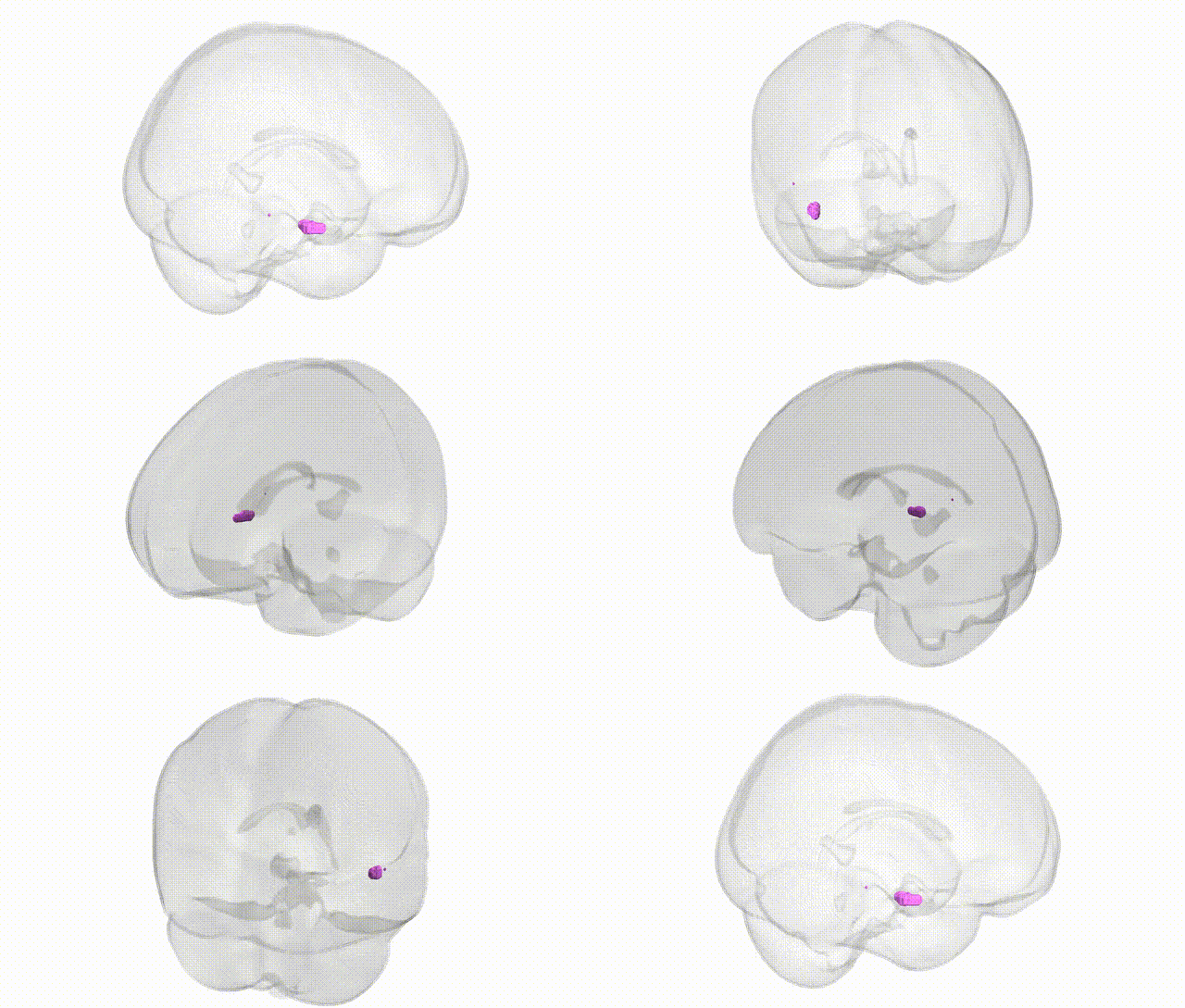
Full Quality Version: Download MP4
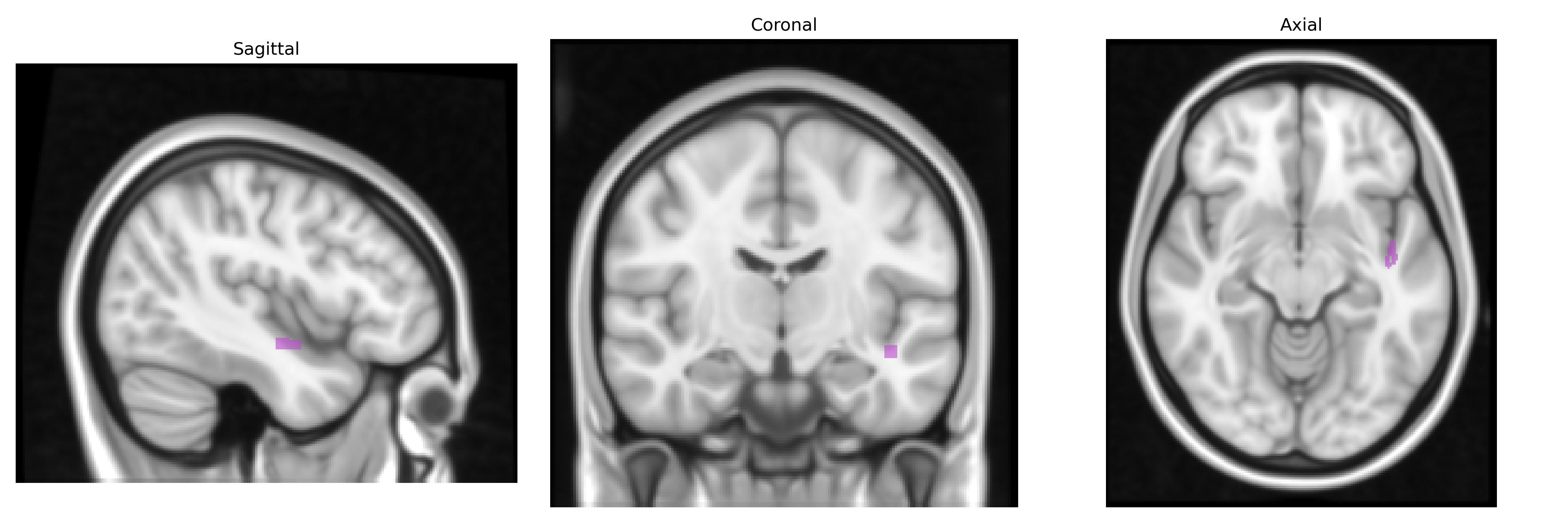
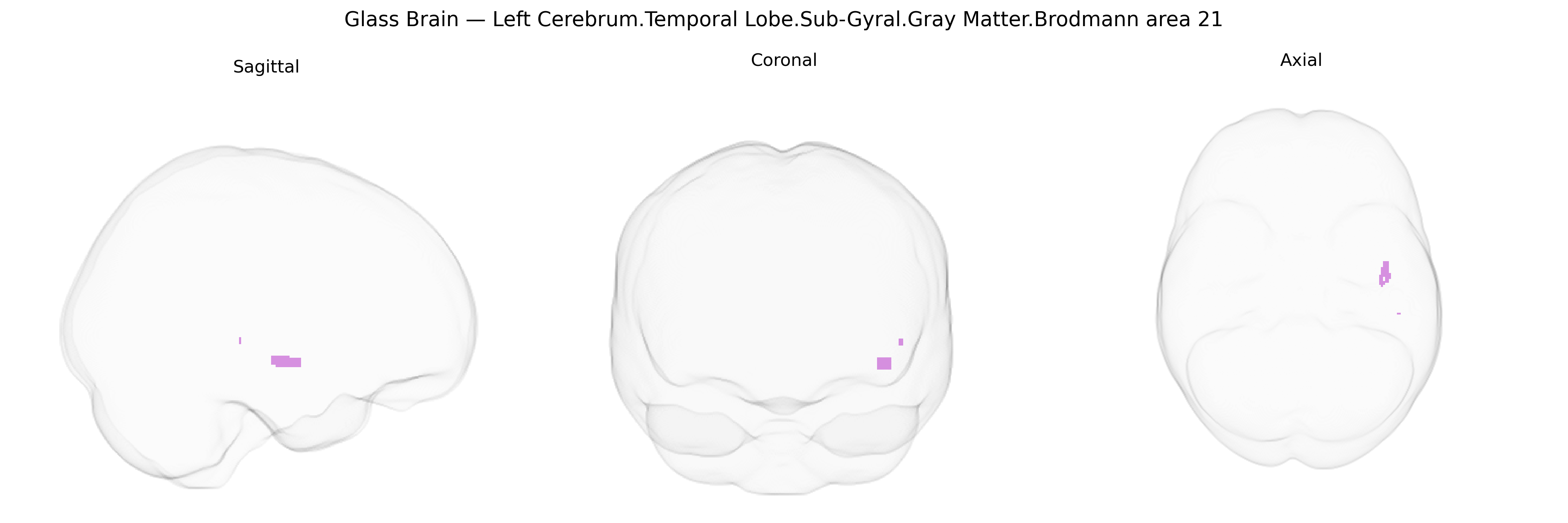
Wali Sidiqyar*, Gaurav Rudravaram*, Elyssa M. McMaster, Trent M. Schwartz, Adam M. Saunders, Kurt G. Schilling, Bennett A. Landman "Introducing SPINS: A Shared Public Visualization Library of Neuroanatomical Structures." Medical Imaging with Deep Learning- short paper
This resource is licensed under CC0 1.0 Universal (Public Domain).