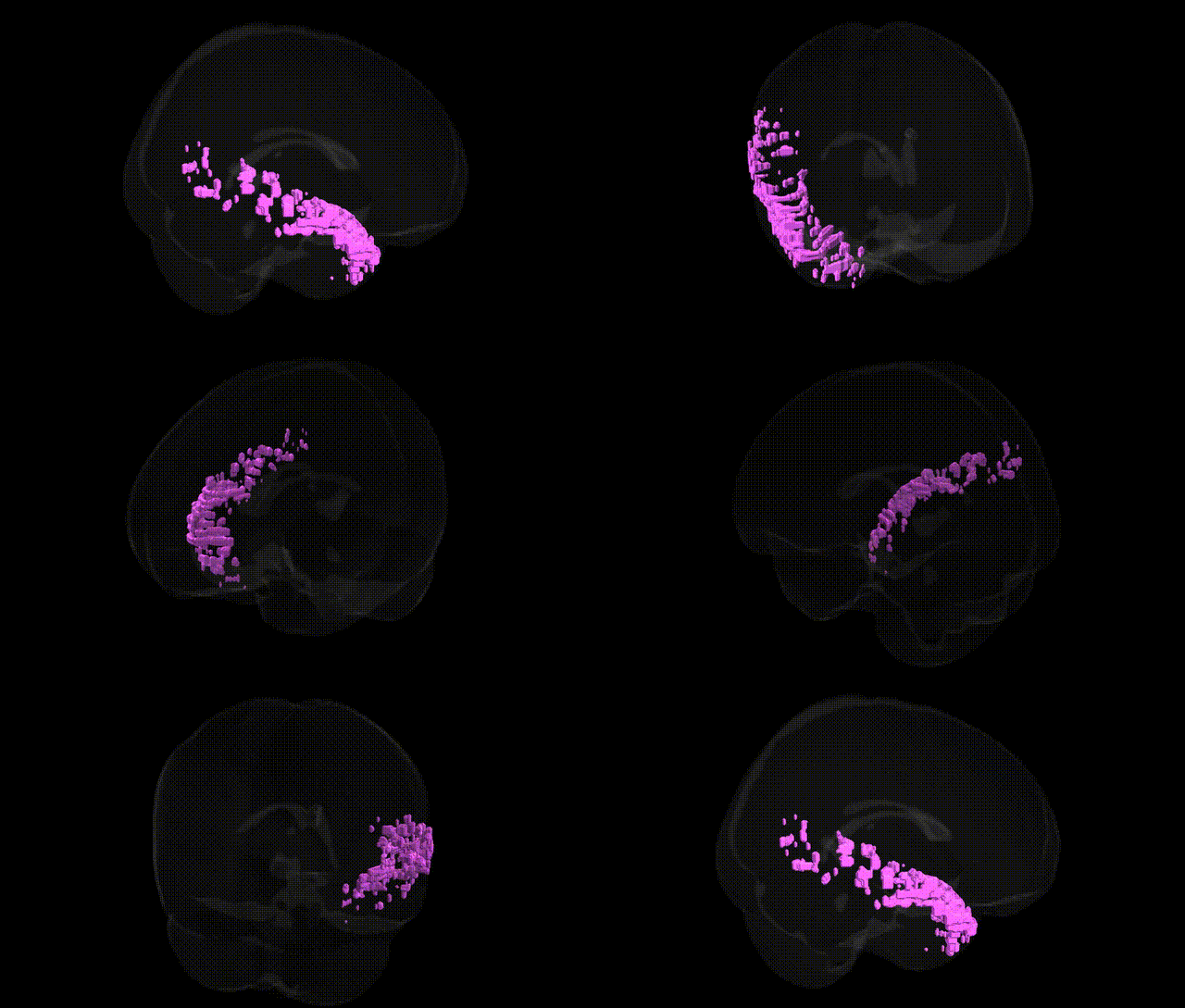
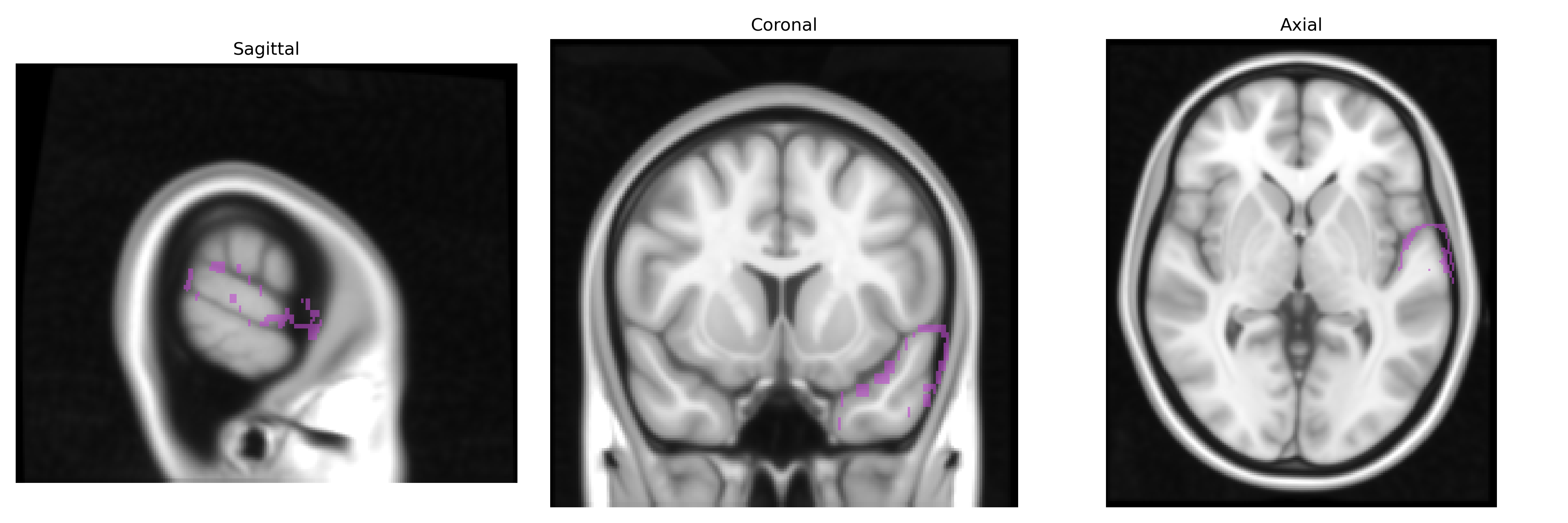
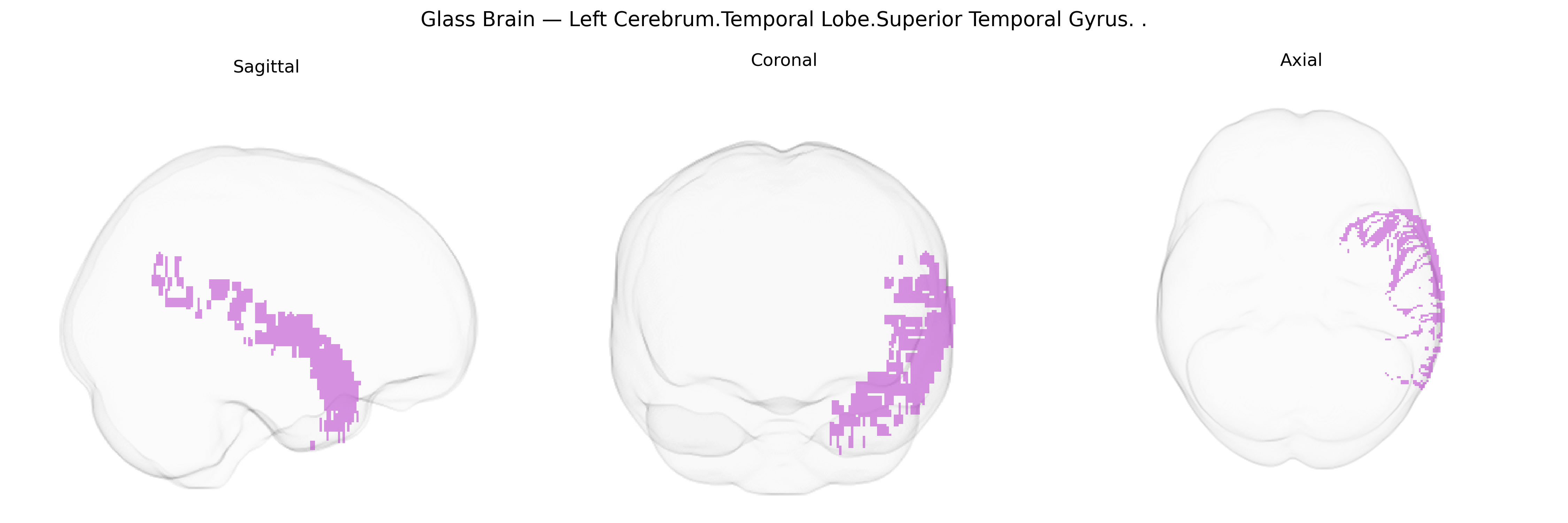
The bilateral left superior temporal gyrus of the temporal lobe is a cortical region situated on the dorsal aspect of the temporal lobe, bordering the lateral sulcus and extending from the temporal pole posteriorly toward the parietal lobe. It contains key auditory and language-related areas, including the primary auditory cortex (Heschl’s gyrus lies medially/deep but functionally linked) and, posteriorly in the dominant hemisphere (typically the left), Wernicke’s area, which is critical for the comprehension of spoken language. Neurons in this region process complex acoustic features, speech sounds, and aspects of prosody, contributing to phonological processing, lexical access, and integration of auditory input with higher-order linguistic and semantic networks. It also participates in multisensory integration and social cognition by contributing to the perception of voices and communicative signals. Superior temporal gyrus
The bilateral left superior temporal gyrus (STG) in the temporal lobe—corresponding to auditory and language association cortex—shows strong genetic contributions from common and rare variants that influence cortical thickness, surface area, and connectivity in large imaging-genetics GWAS (e.g., ENIGMA, UK Biobank), with heritability estimates often in the moderate range (h² ≈ 0.3–0.6). Polygenic influences linked to general cognitive ability, educational attainment, and language-related traits (such as reading and verbal ability) are associated with STG morphology and activation, and several schizophrenia, bipolar disorder, and major depression risk loci show downstream effects on STG structure or function, including altered gray matter volume and auditory processing anomalies consistent with hallucinations and thought disorder. Rare copy number variants and genes involved in synaptic development and glutamatergic signaling (e.g., CNTNAP2, NRG1, GRIN2A and other language-related or neurodevelopmental genes) have been tied to STG abnormalities in autism spectrum disorder, specific language impairment, and epilepsy with speech and language deficits. GWAS of musical aptitude, pitch perception, and auditory cortex structure also implicate the STG and overlapping polygenic architecture for auditory and language networks, while Alzheimer’s disease and frontotemporal dementia risk genes (such as APOE ε4 and MAPT-related variation) contribute to patterns of atrophy that include the superior temporal cortex, particularly in variants with prominent language and semantic deficits.
Overview generated by GPT-4o (2026).
Region ID: 40
Hemisphere: bilateral
Atlas: Talairach labels 1mm
Full Quality Version: Download MP4
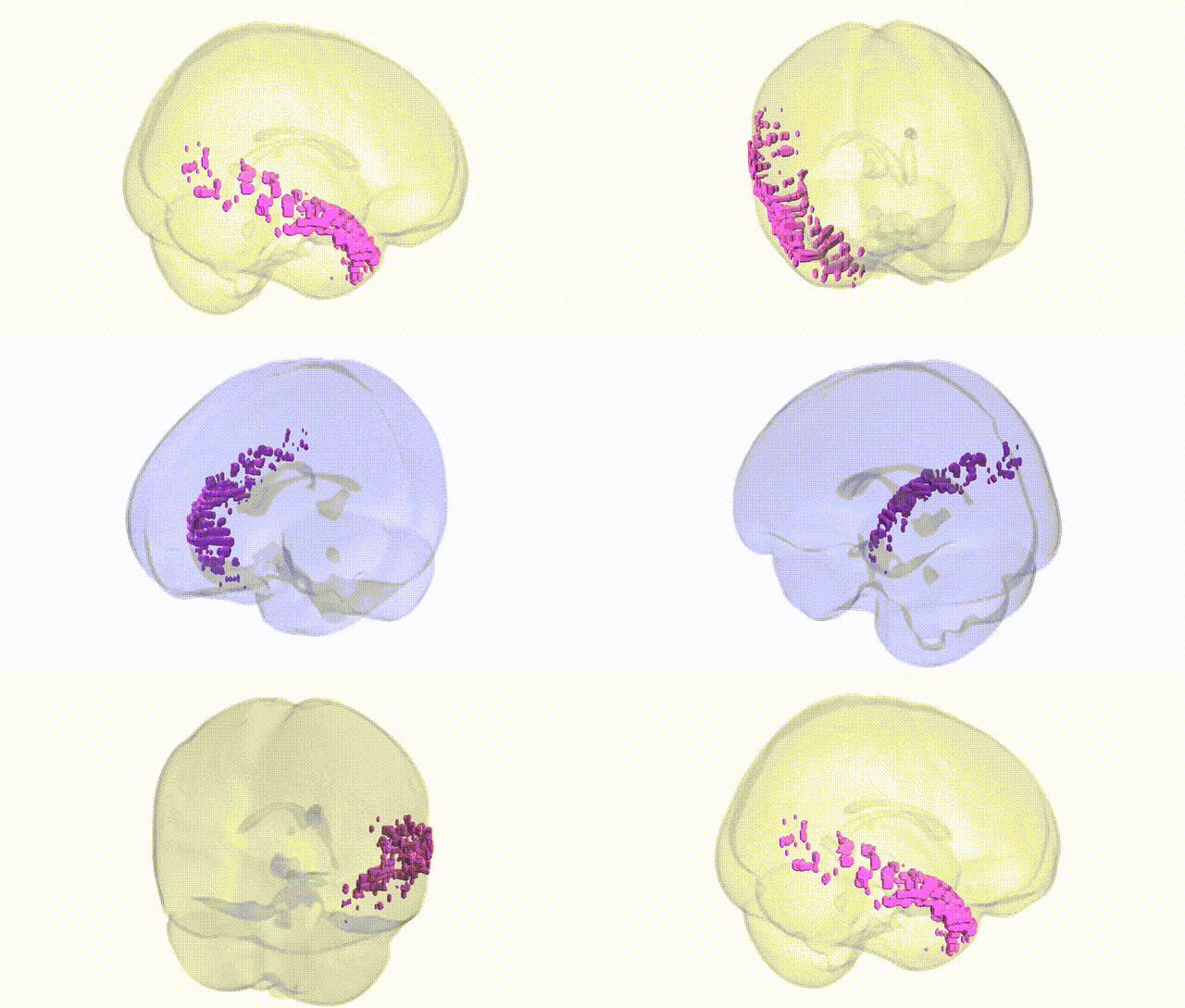
Full Quality Version: Download MP4
Wali Sidiqyar*, Gaurav Rudravaram*, Elyssa M. McMaster, Trent M. Schwartz, Adam M. Saunders, Kurt G. Schilling, Bennett A. Landman "Introducing SPINS: A Shared Public Visualization Library of Neuroanatomical Structures." Medical Imaging with Deep Learning- short paper
This resource is licensed under CC0 1.0 Universal (Public Domain).