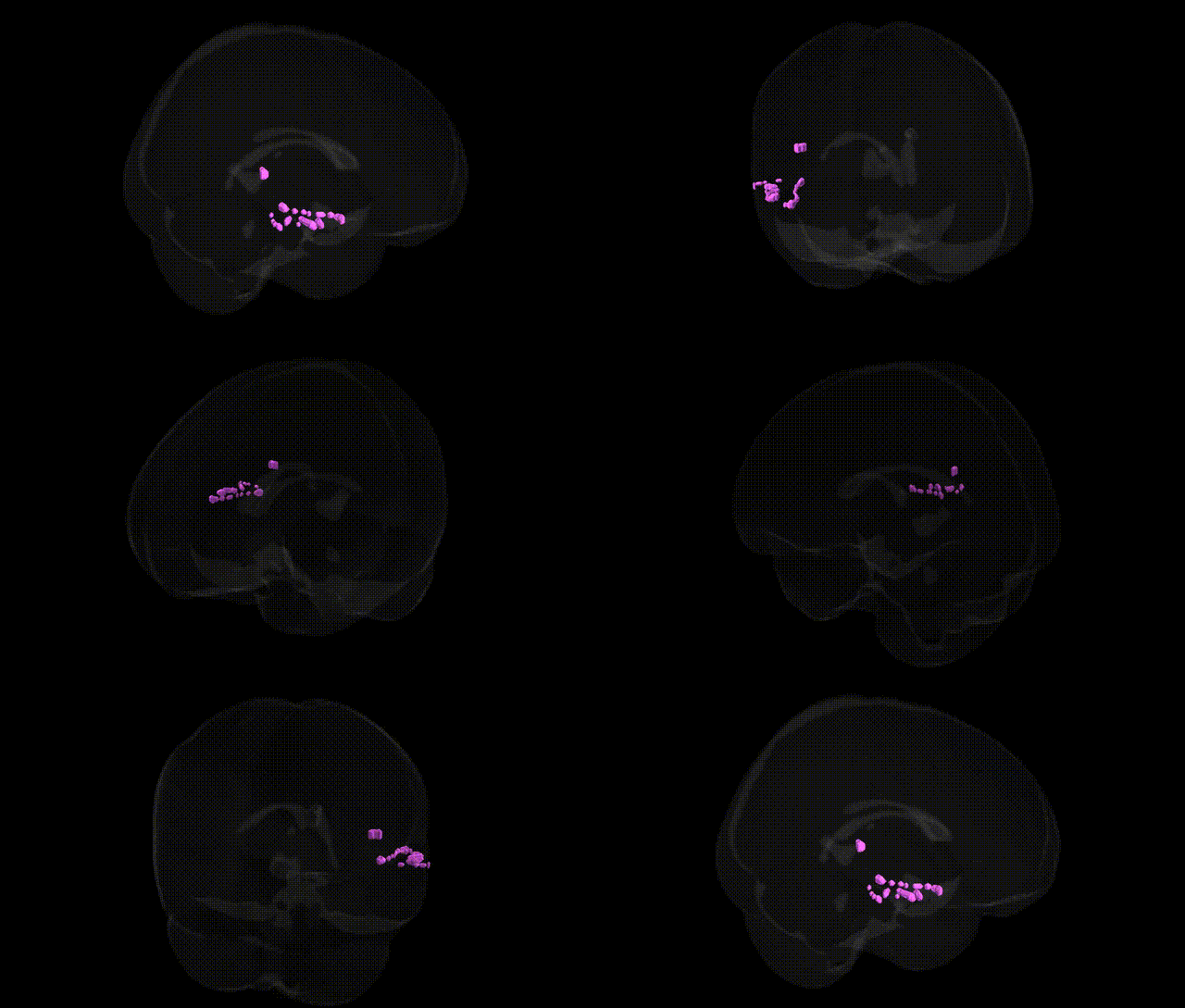
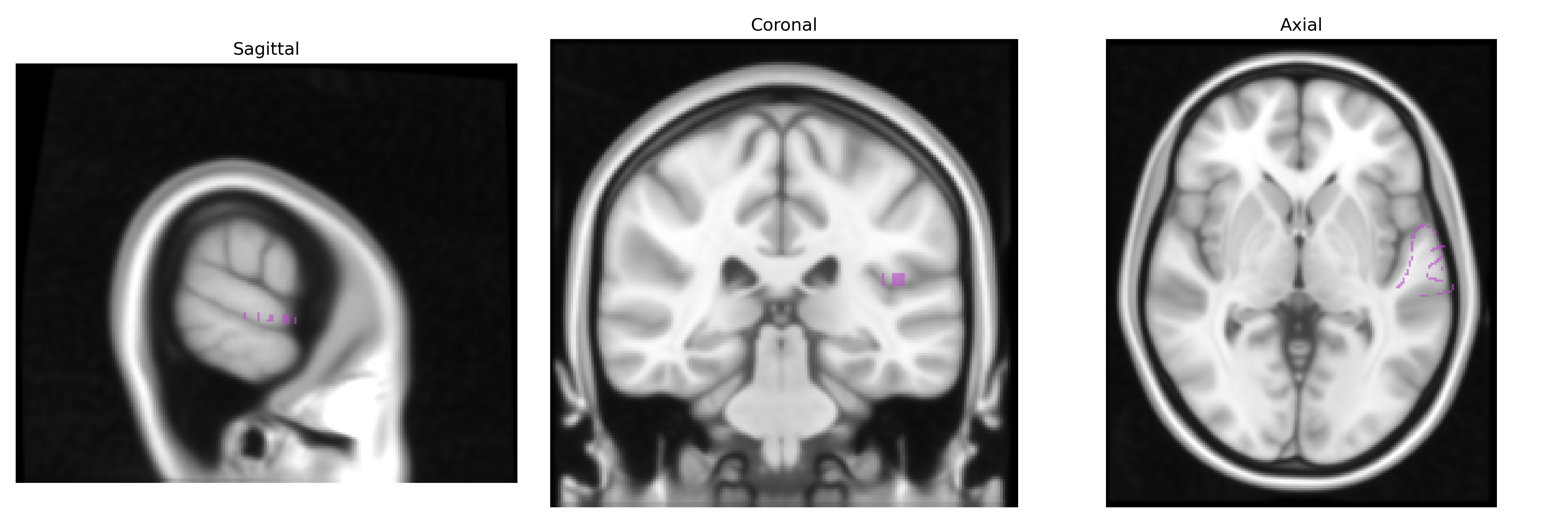
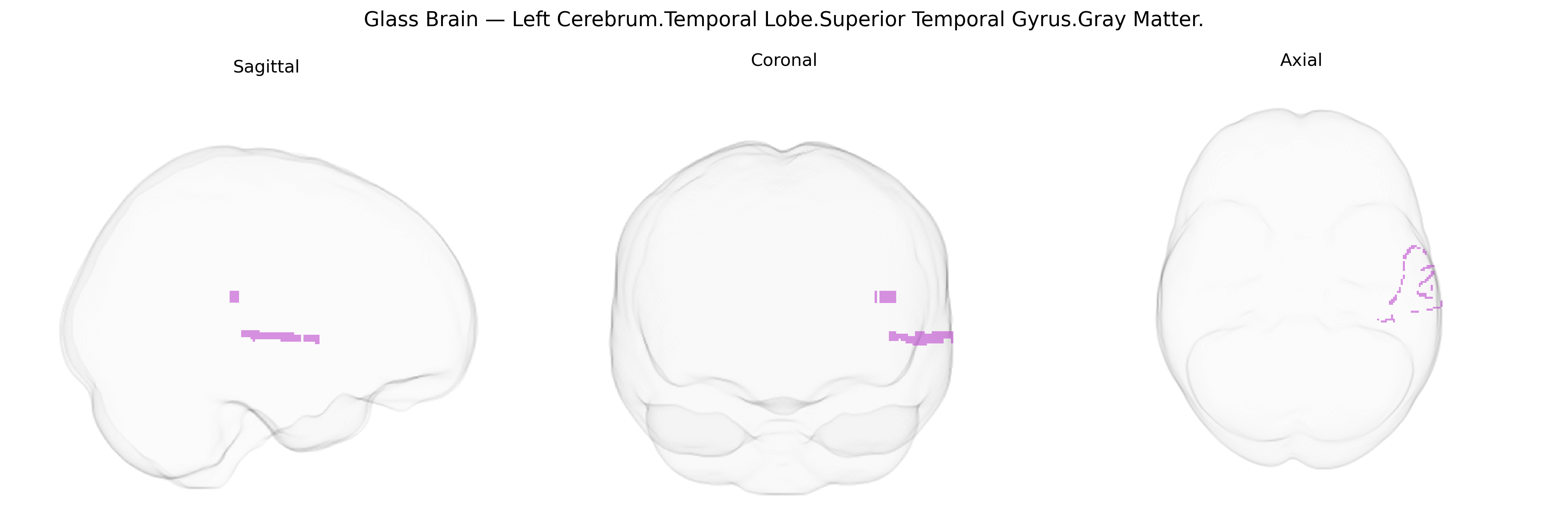
The bilateral Left Cerebrum.Temporal Lobe.Superior Temporal Gyrus.Gray Matter corresponds to cortical tissue along the dorsal portion of the temporal lobe, primarily encompassing auditory association areas and portions of primary auditory cortex on the left hemisphere. This region is critically involved in the processing and integration of complex acoustic information, including speech perception, phonological analysis, and aspects of language comprehension, with strong connectivity to middle temporal and frontal language areas. Functionally, it contributes to mapping sound to linguistic representations and supports higher-order auditory cognition, while its gray matter integrity and organization are important for normal language and auditory processing.
Superior Temporal Gyrus
The bilateral superior temporal gyrus (STG) gray matter has been repeatedly implicated in genetic studies of brain structure, language, social cognition, and psychiatric risk, with heritability estimates for its volume and cortical thickness commonly in the moderate-to-high range. Large-scale imaging–genetics consortia (e.g., ENIGMA, UK Biobank) have identified common variants near or within genes involved in neurodevelopment, synaptic function, and axon guidance—such as MAPT, GRIN2B, NRGN, and genes in Wnt and glutamatergic pathways—associated with STG volume or surface measures, although specific loci often show small effects and vary across studies. Polygenic risk scores for schizophrenia, bipolar disorder, and major depression have been associated with reduced or altered STG gray matter, mirroring case–control findings that link STG thinning or volume loss with psychosis, auditory hallucinations, and language disturbances. Genetic variation affecting STG structure and function has also been related to risk for autism spectrum disorder and social communication traits, consistent with STG involvement in auditory processing and higher-order social perception. In addition, GWAS of language, reading ability, and educational attainment often report overlap between associated loci and genes influencing temporal lobe morphometry, suggesting shared genetic architecture between STG anatomy, language-related abilities, and cognitive traits. Overall, evidence from GWAS and imaging–genetics work supports a polygenic architecture in which many variants of small effect collectively shape superior temporal gyrus gray matter and confer vulnerability to neurodevelopmental and psychiatric disorders.
Overview generated by GPT-4o (2026).
Region ID: 532
Hemisphere: bilateral
Atlas: Talairach labels 1mm
Full Quality Version: Download MP4
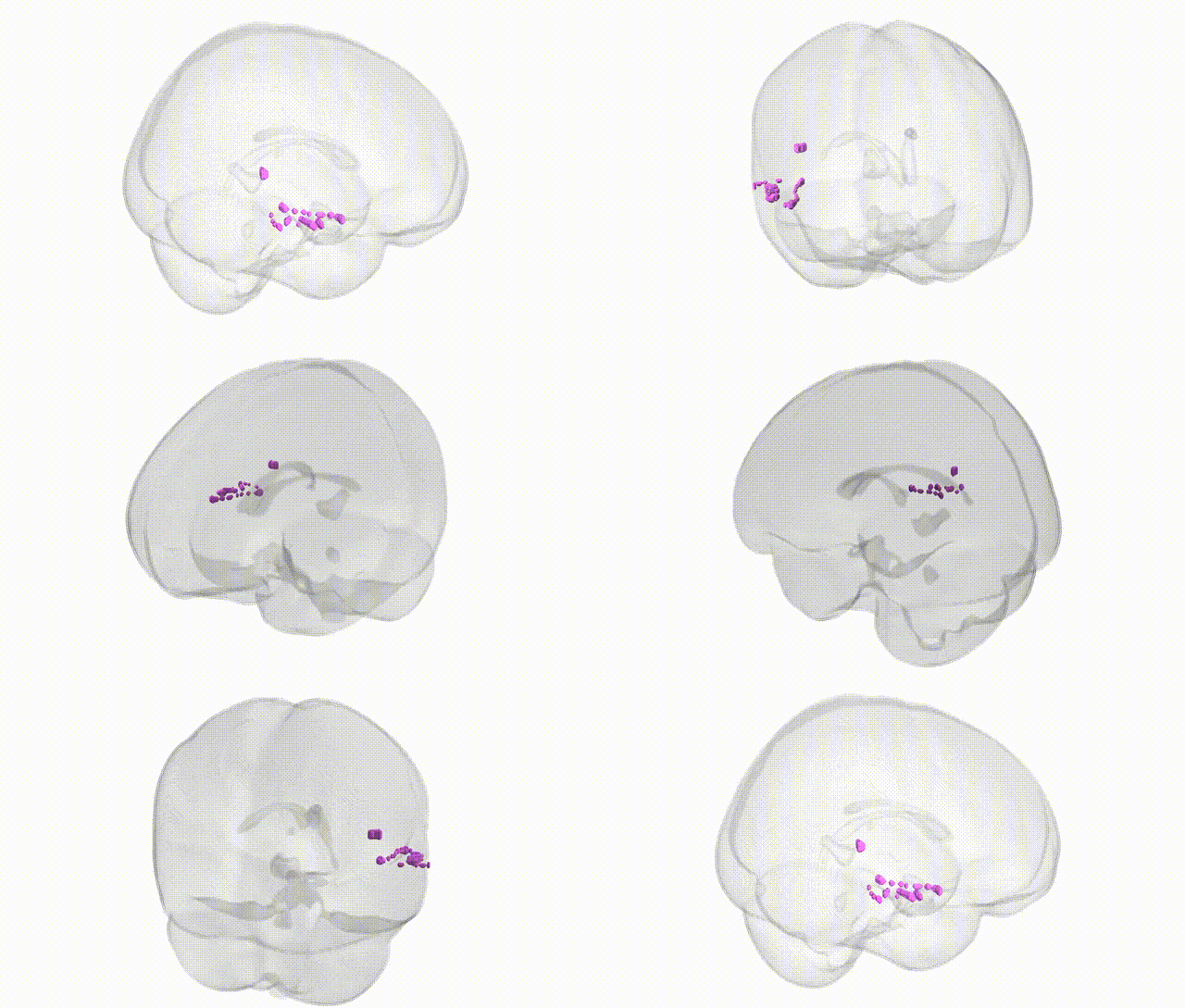
Full Quality Version: Download MP4
Wali Sidiqyar*, Gaurav Rudravaram*, Elyssa M. McMaster, Trent M. Schwartz, Adam M. Saunders, Kurt G. Schilling, Bennett A. Landman "Introducing SPINS: A Shared Public Visualization Library of Neuroanatomical Structures." Medical Imaging with Deep Learning- short paper
This resource is licensed under CC0 1.0 Universal (Public Domain).