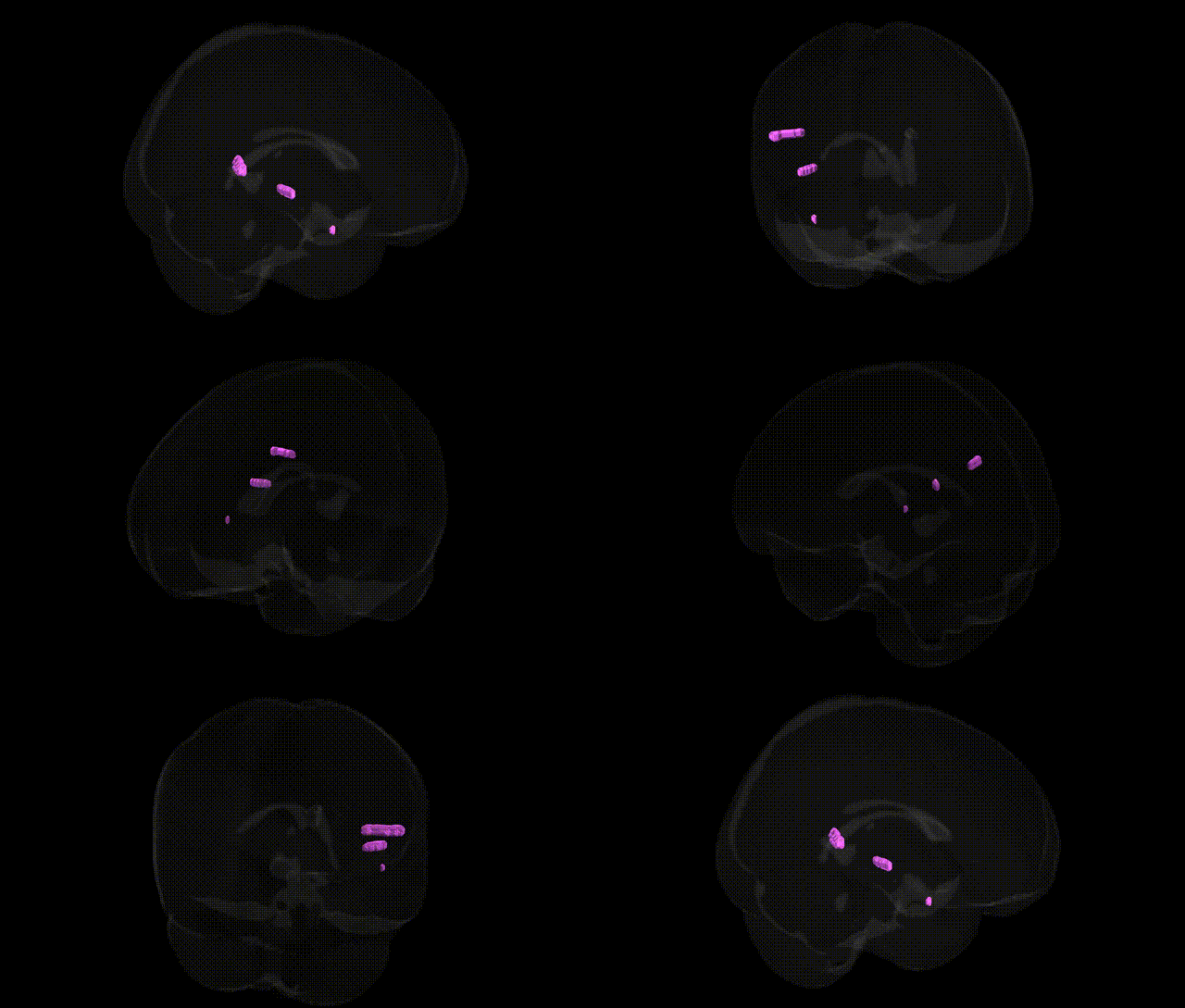
The bilateral Left Cerebrum.Temporal Lobe.Superior Temporal Gyrus.Gray Matter.Brodmann area 13 corresponds to agranular cortex located on the depth of the superior temporal gyrus within the insular region, forming part of the paralimbic cortex that bridges neocortical temporal areas and limbic structures. Brodmann area 13 is implicated in multimodal sensory integration, interoceptive awareness, emotional processing, and autonomic regulation, receiving convergent input from auditory, somatosensory, and visceral pathways and projecting to limbic and prefrontal regions. Functionally, this area contributes to evaluation of complex stimuli, affective components of perception, and higher-order aspects of taste and visceral sensation, and is considered part of the broader insular–orbitofrontal network involved in decision-making and homeostatic control. There is no direct link for Brodmann area 13; a closely related structure is the Insular cortex.
The bilateral left superior temporal gyrus gray matter in Brodmann area 13, a paralimbic/insular-adjacent sector functionally overlapping anterior superior temporal and temporal pole regions, is implicated by genetic studies in language, social cognition, psychosis, affective regulation, and neurodevelopmental traits. Twin and SNP-heritability work in large imaging cohorts (e.g., ENIGMA, UK Biobank) consistently shows moderate heritability for cortical thickness and surface area in superior temporal and adjacent insular/paralimbic cortex, with polygenic influences distributed across thousands of common variants rather than single large-effect loci. GWAS of superior temporal gyrus morphology highlight enrichment in neurodevelopmental genes involved in cortical patterning, neuronal migration, and synaptic function (e.g., variants near genes such as FOXP2-related networks, MIR137, GRIN2A, and other glutamatergic and synaptic scaffolding loci) and identify overlap with genetic risk for schizophrenia, autism spectrum disorder, and bipolar disorder, consistent with the frequent observation of reduced gray matter volume and altered gyrification in these conditions in this region and its neighbors. Polygenic risk scores for schizophrenia, autism, and major depression correlate with structural variation in superior temporal and anterior insular/paralimbic cortices, while specific language- and reading-related loci (e.g., in DCDC2, KIAA0319, CNTNAP2 and allied networks) have been associated with structural and functional variation across superior temporal language areas that likely encompass BA13-adjacent cortex. GWAS of traits such as hallucinations, social communication difficulties, empathy, and alexithymia, as well as large-scale studies of resting-state networks, also show genetic correlations linking this region’s structure and connectivity to psychiatric liability, reinforcing a view of BA13-region superior temporal gray matter as a heritable, polygenically influenced substrate mediating risk for psychotic, affective, and neurodevelopmental disorders rather than a locus defined by single-gene effects.
Overview generated by GPT-4o (2026).
Region ID: 365
Hemisphere: bilateral
Atlas: Talairach labels 1mm
Full Quality Version: Download MP4
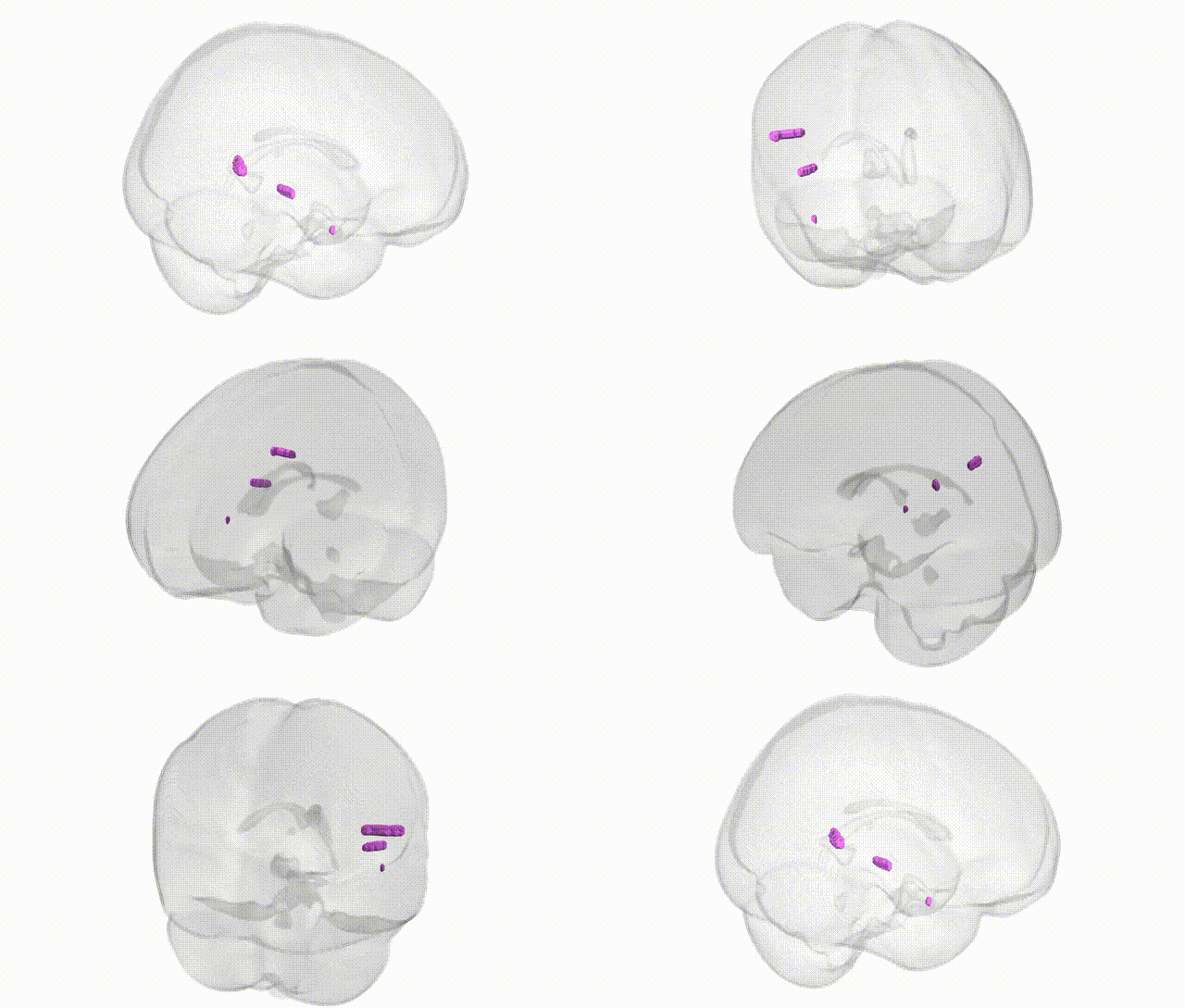
Full Quality Version: Download MP4
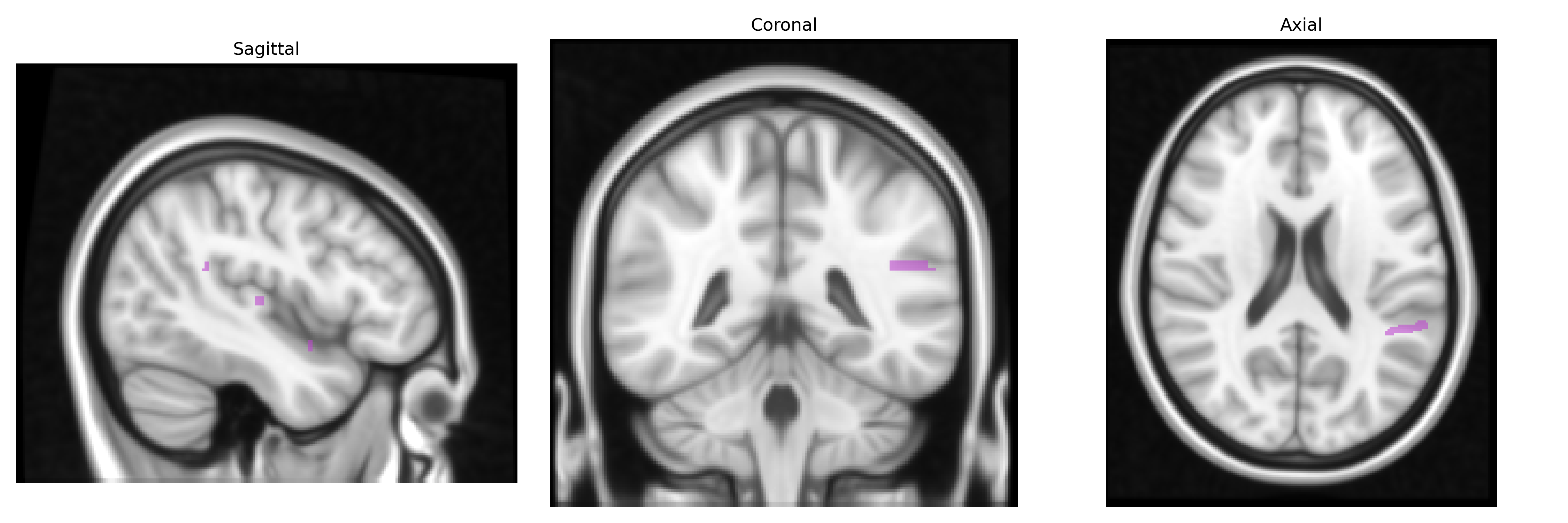
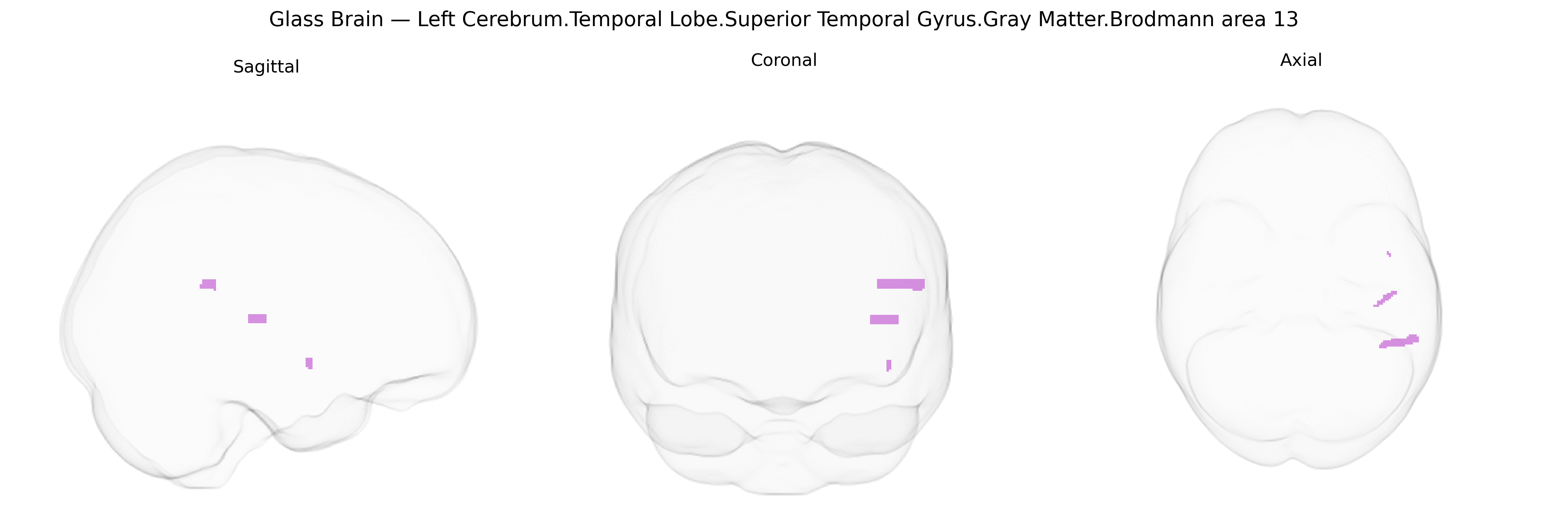
Wali Sidiqyar*, Gaurav Rudravaram*, Elyssa M. McMaster, Trent M. Schwartz, Adam M. Saunders, Kurt G. Schilling, Bennett A. Landman "Introducing SPINS: A Shared Public Visualization Library of Neuroanatomical Structures." Medical Imaging with Deep Learning- short paper
This resource is licensed under CC0 1.0 Universal (Public Domain).