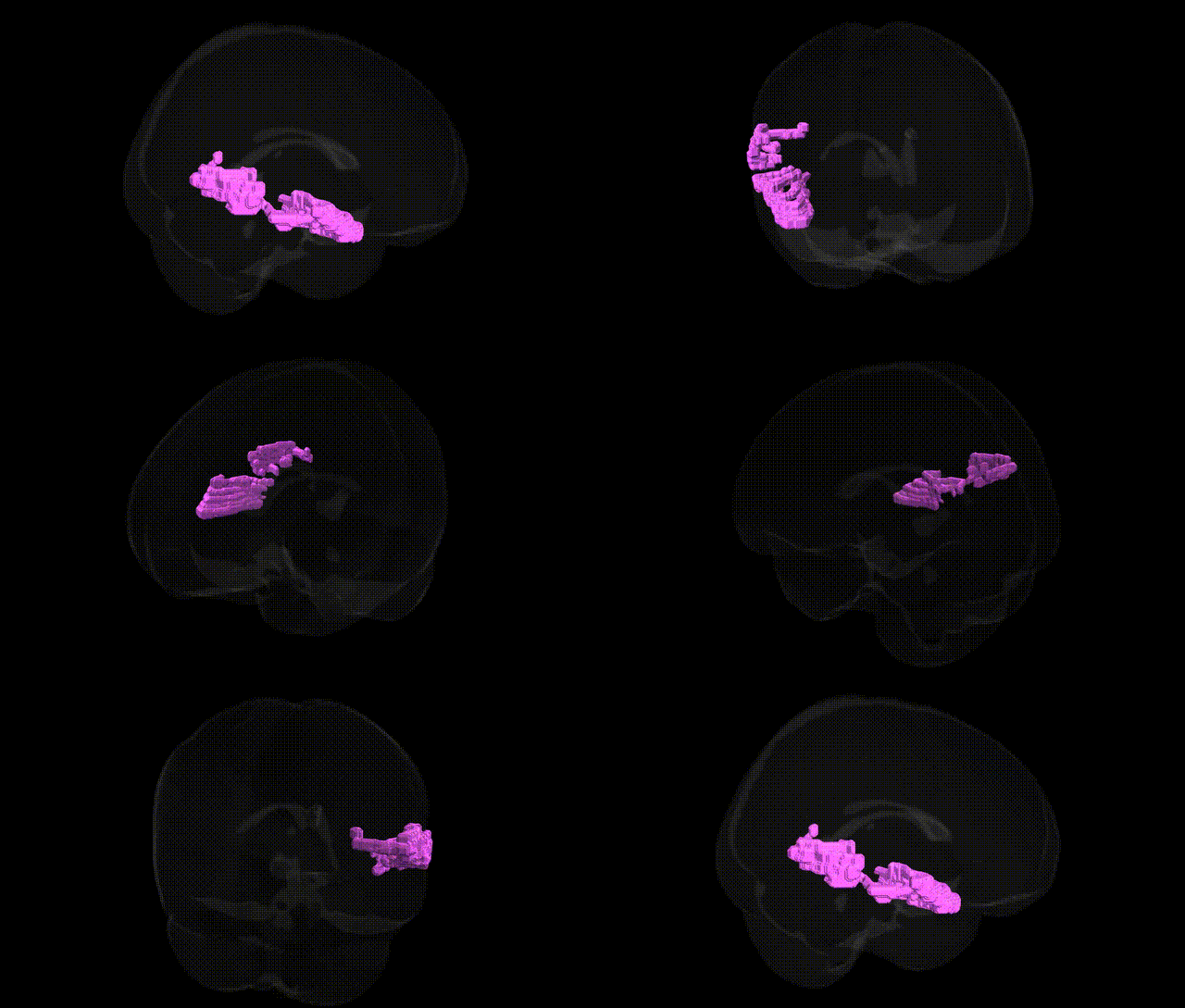
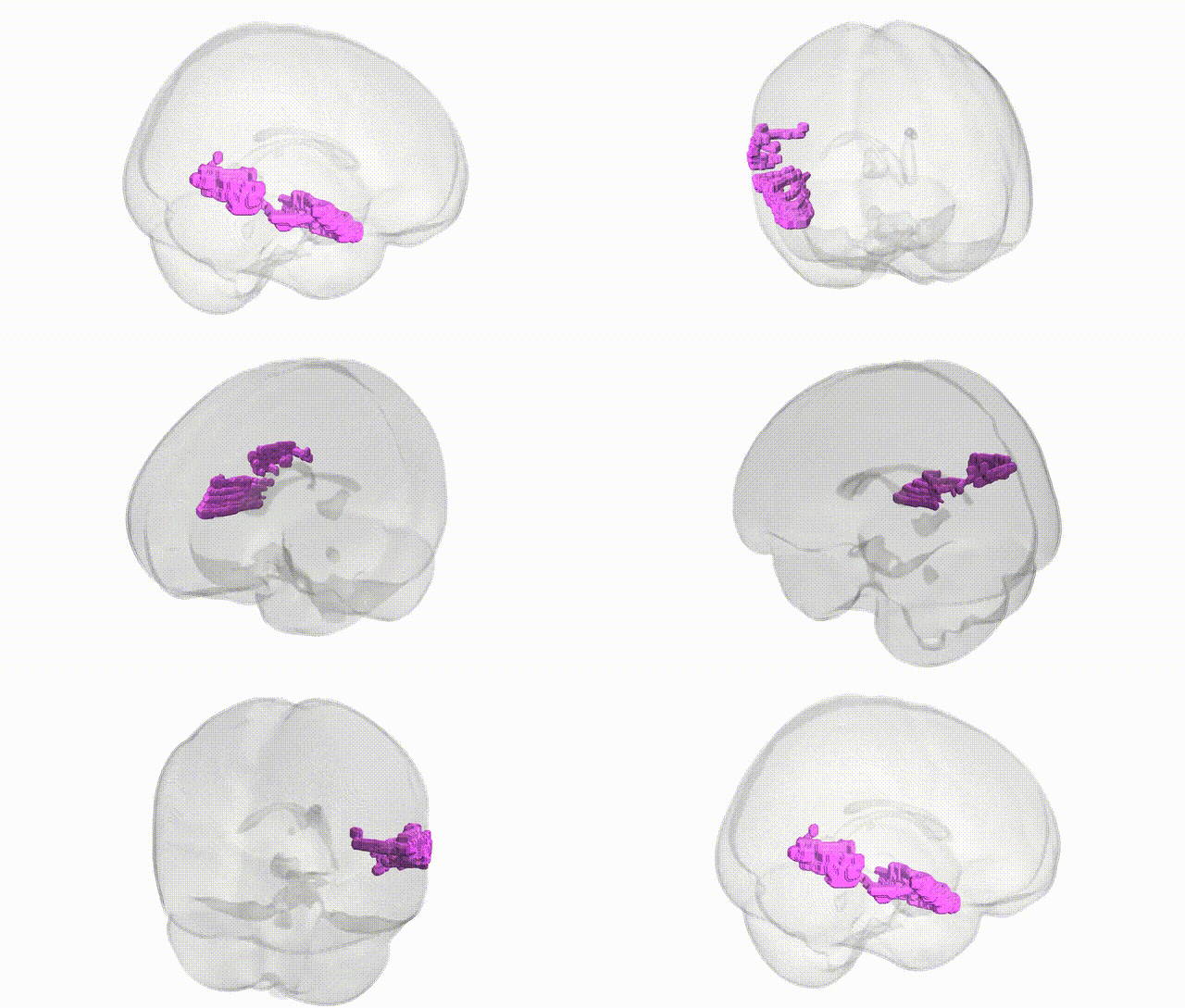
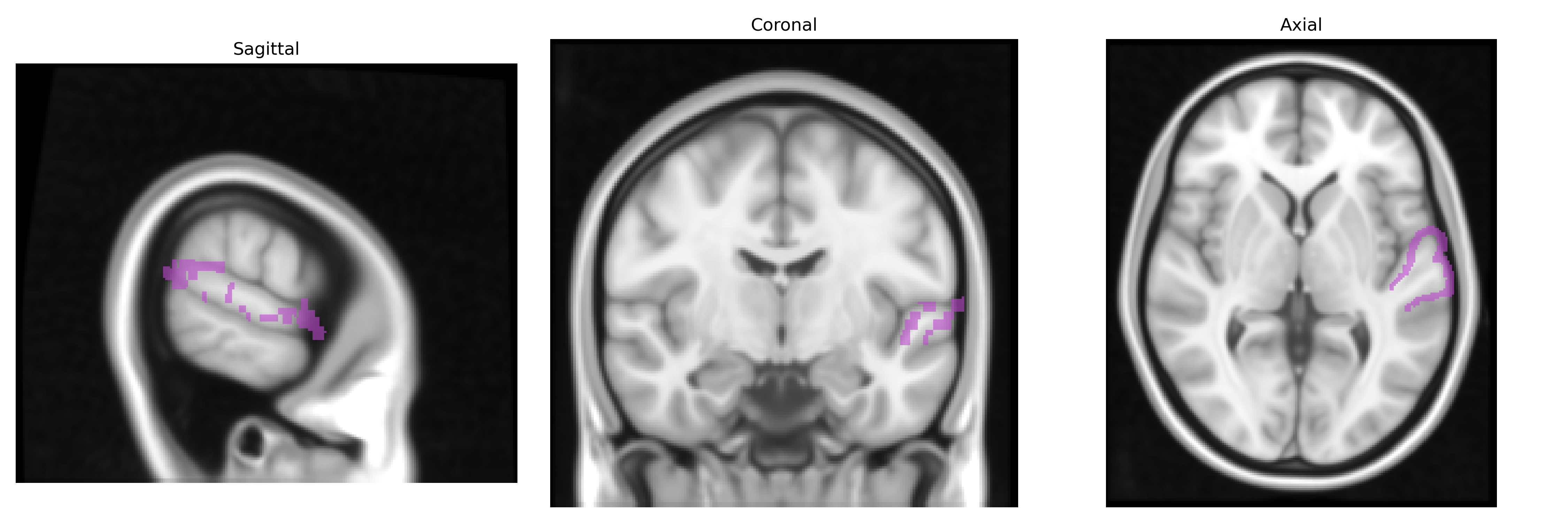
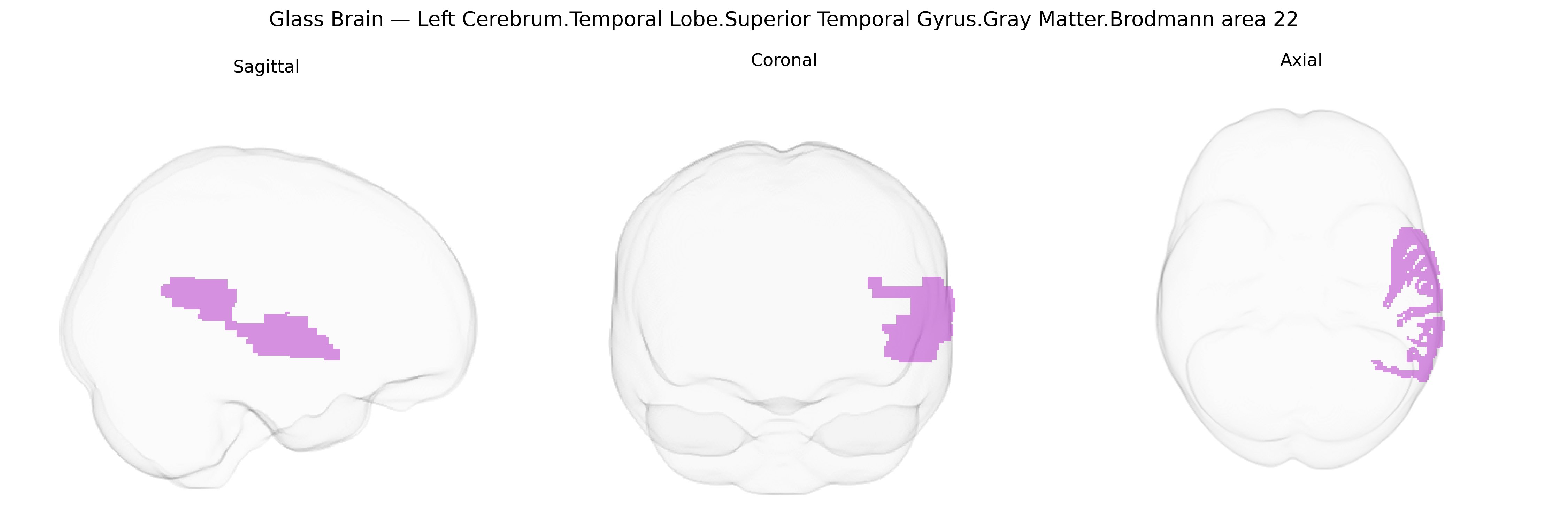
Bilateral Left Cerebrum.Temporal Lobe.Superior Temporal Gyrus.Gray Matter.Brodmann area 22 corresponds primarily to the auditory association cortex, encompassing much of the superior temporal gyrus in the dominant (usually left) hemisphere, where it is closely associated with Wernicke’s area and language comprehension. This region integrates complex auditory information, contributing to the recognition and interpretation of speech, environmental sounds, and aspects of music, and participates in higher-order processing such as semantic integration and phonological decoding. Cytoarchitectonically, Brodmann area 22 is characterized by a six-layered neocortical organization specialized for processing auditory inputs received from primary auditory cortex (BA41/42) and relayed to multimodal association areas. Lesions in the left BA22 often result in receptive aphasia, underscoring its critical role in linguistic processing and meaningful auditory perception. Brodmann area 22
The bilateral left superior temporal gyrus (STG) gray matter in Brodmann area 22—encompassing primary language and auditory association cortex—has been repeatedly implicated in genetic studies of language, psychosis, and neurodevelopmental traits. GWAS and imaging-genetics work show that common variants influencing cortical thickness and surface area in temporal regions, including left STG/BA22, are enriched in genes involved in neurodevelopment, synaptic function, and axon guidance (for example, pathways including CNTNAP2, FOXP2-related networks, and genes expressed in fetal temporal cortex). Structural and functional abnormalities in this region are among the most robust neuroimaging findings in schizophrenia and other psychotic disorders, and polygenic risk scores for schizophrenia, bipolar disorder, and major depression have been associated with reduced gray matter volume or altered activation in left STG/BA22. Copy number variants such as 22q11.2 deletions, as well as rare disruptive mutations in genes affecting cortical development, contribute to temporal lobe structural alterations that often involve this area and confer risk for psychosis and language impairment. Genetic associations also extend to autism spectrum disorder, specific language impairment, and dyslexia, where variants affecting temporal lobe development and connectivity modulate STG structure and language-related activation, and to cognitive traits such as verbal IQ and auditory processing, which show heritable variation partly mapped to temporal cortical regions including BA22.
Overview generated by GPT-4o (2026).
Region ID: 442
Hemisphere: bilateral
Atlas: Talairach labels 1mm
Full Quality Version: Download MP4
Full Quality Version: Download MP4
Wali Sidiqyar*, Gaurav Rudravaram*, Elyssa M. McMaster, Trent M. Schwartz, Adam M. Saunders, Kurt G. Schilling, Bennett A. Landman "Introducing SPINS: A Shared Public Visualization Library of Neuroanatomical Structures." Medical Imaging with Deep Learning- short paper
This resource is licensed under CC0 1.0 Universal (Public Domain).