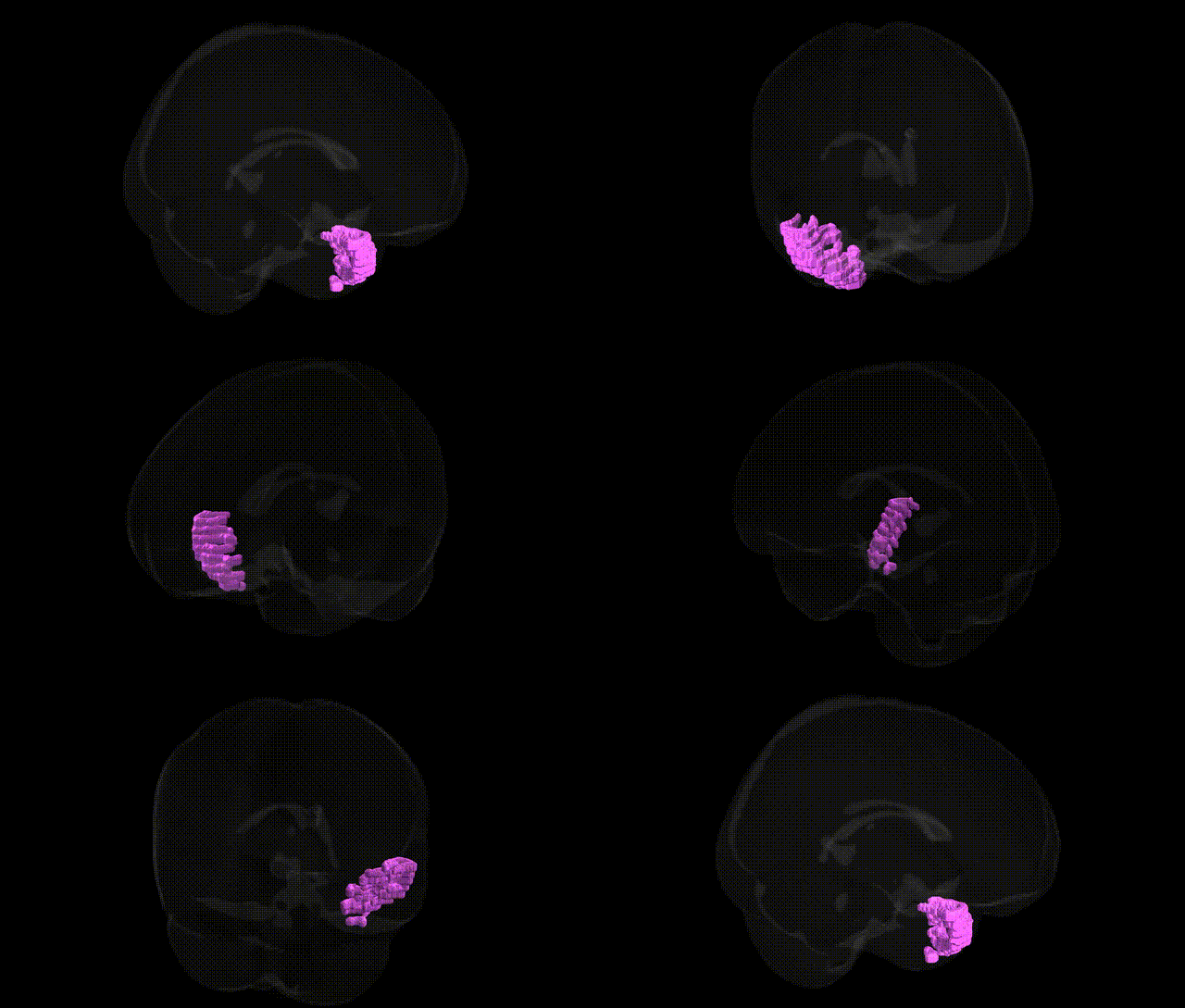
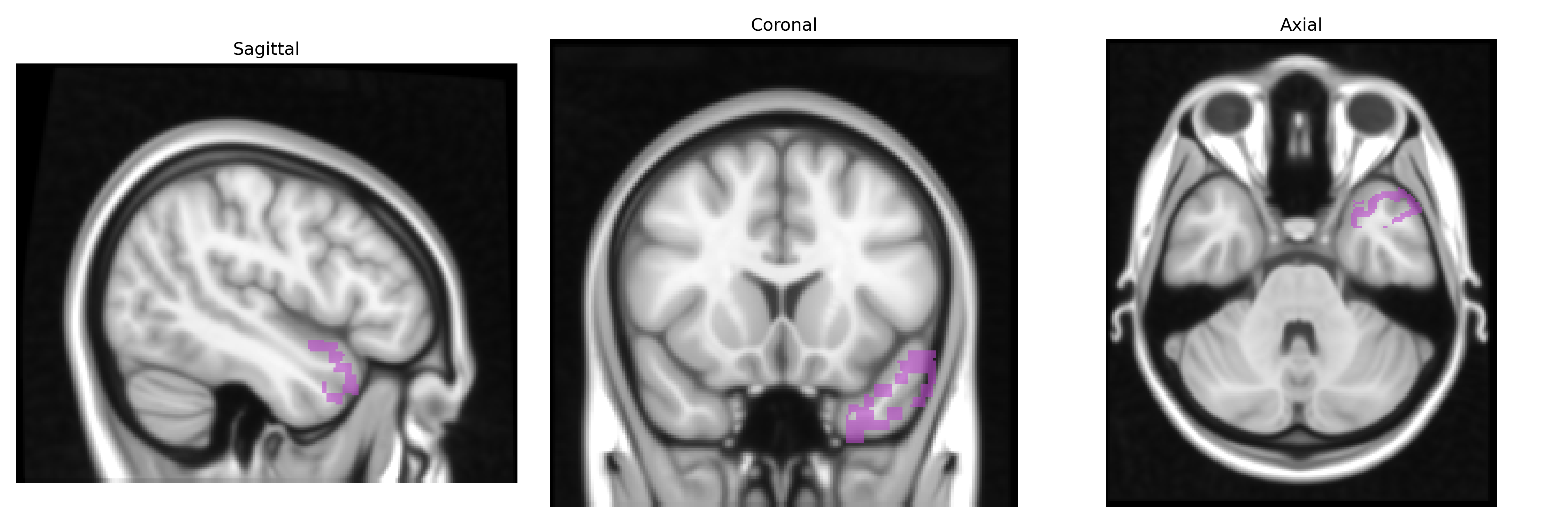
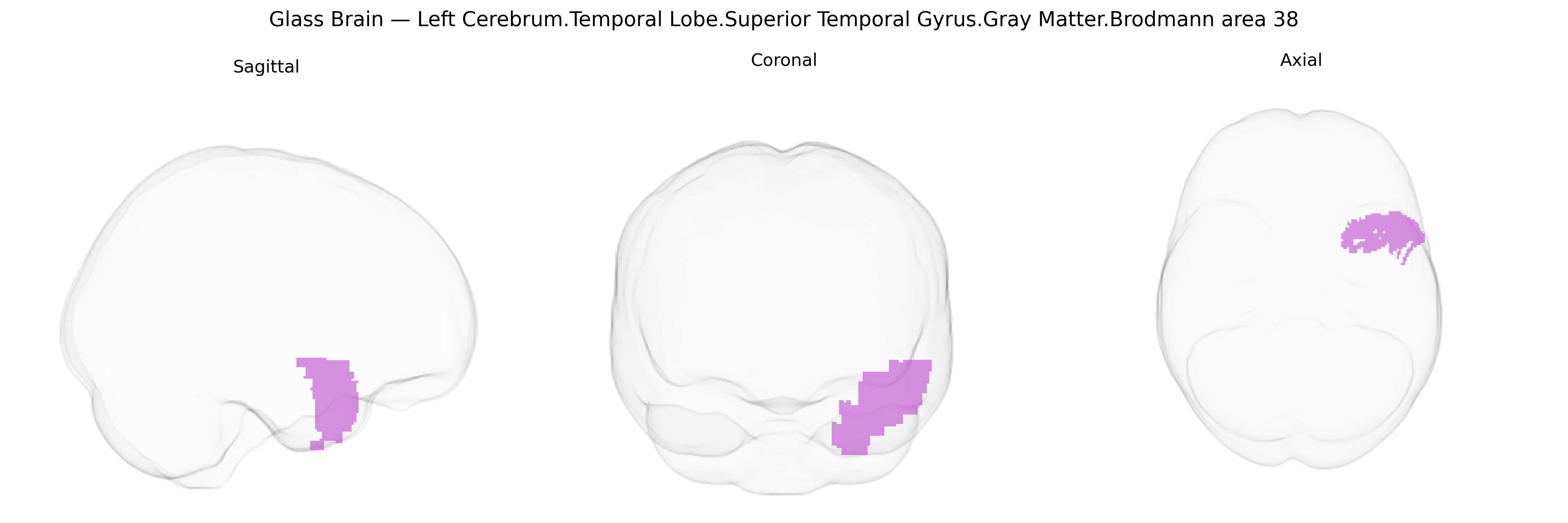
The bilateral Left Cerebrum.Temporal Lobe.Superior Temporal Gyrus.Gray Matter.Brodmann area 38 corresponds to the anterior portion of the superior temporal gyrus, often termed the temporopolar cortex, located at the rostral pole of the temporal lobe. This association cortex is involved in high-level integration of multimodal sensory information, including auditory, visual, and limbic inputs, and plays roles in semantic memory, social and emotional processing, and aspects of language and narrative comprehension. It maintains strong reciprocal connections with limbic and paralimbic structures (such as the amygdala and orbitofrontal cortex), positioning it as a hub for linking emotional and contextual information with complex perceptual representations. In clinical and lesion studies, dysfunction in this area has been associated with semantic dementia, alterations in social behavior, and specific deficits in person and object knowledge. There is no direct link for Brodmann area 38; a related structure is the Temporal pole.
The bilateral left superior temporal gyrus gray matter in Brodmann area 38 (anterior temporal cortex/temporal pole) has been implicated in multiple genetic and GWAS-based associations, primarily through imaging genetics and disorder-risk studies. Variants in genes affecting synaptic development and glutamatergic signaling (such as GRIN2B, CNTNAP2, and NRXN1) have been linked to altered volume, cortical thickness, or functional activation in anterior temporal regions, including BA38, particularly in relation to language, semantic memory, and social-cognitive processing. Large-scale brain MRI GWAS consortia (e.g., ENIGMA, UK Biobank) have identified polygenic influences on temporal pole morphology, with loci near genes involved in neurodevelopment (such as HMGA2, microtubule and axon-guidance genes) contributing to individual differences in temporal lobe structure. Clinically, risk variants for temporal lobe epilepsy, frontotemporal dementia, autism spectrum disorder, and schizophrenia show convergent effects on anterior temporal gray matter, including BA38, with notable involvement of MAPT and GRN (frontotemporal degeneration), as well as shared polygenic risk scores influencing superior temporal gyrus structure and function in psychosis and autism. GWAS of language-related traits and social communication difficulties further implicate this region through associations with genes that regulate cortical patterning and synaptic plasticity, supporting a genetically influenced vulnerability of BA38 to disorders of semantic and socio-emotional processing.
Overview generated by GPT-4o (2026).
Region ID: 38
Hemisphere: bilateral
Atlas: Talairach labels 1mm
Full Quality Version: Download MP4
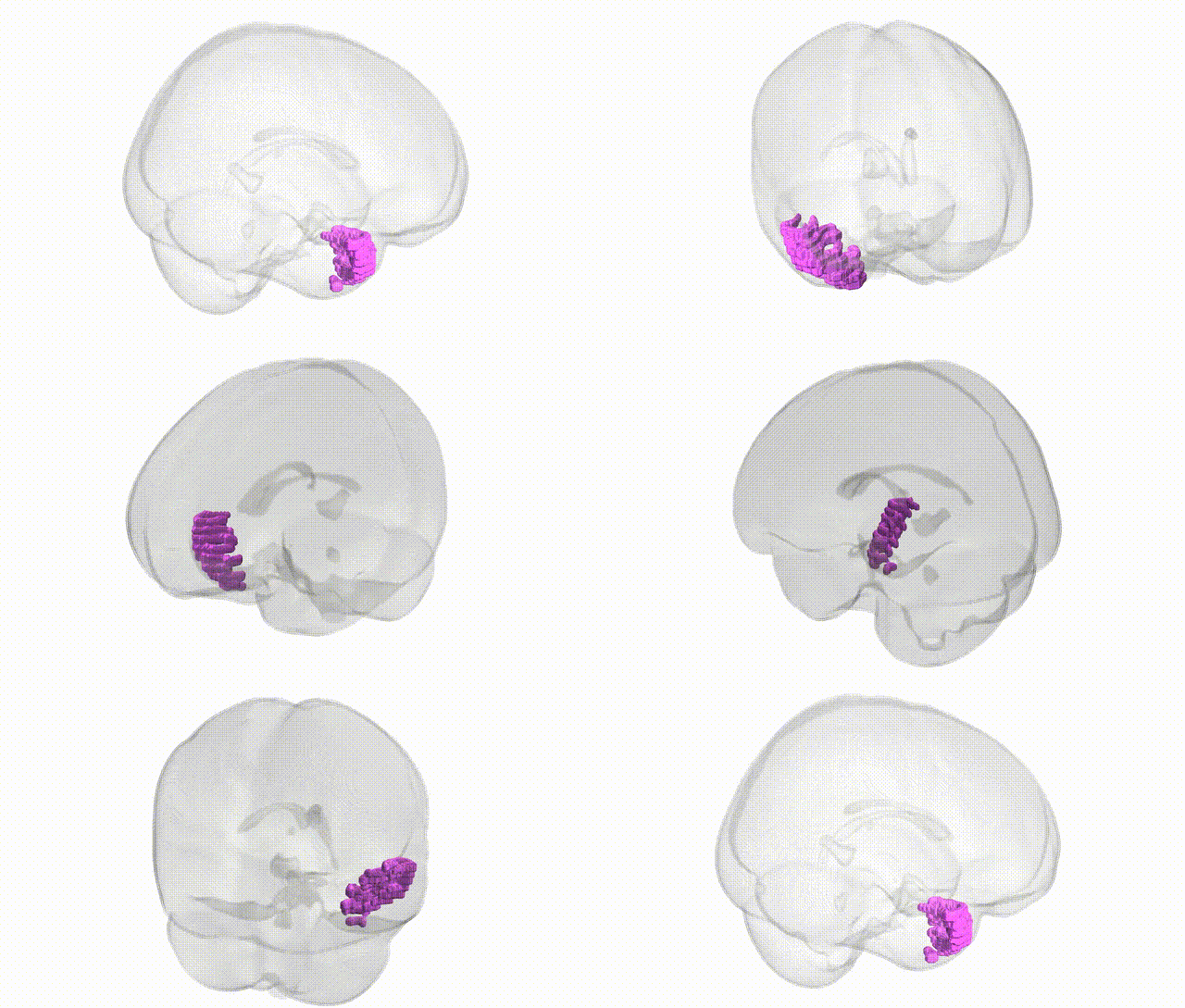
Full Quality Version: Download MP4
Wali Sidiqyar*, Gaurav Rudravaram*, Elyssa M. McMaster, Trent M. Schwartz, Adam M. Saunders, Kurt G. Schilling, Bennett A. Landman "Introducing SPINS: A Shared Public Visualization Library of Neuroanatomical Structures." Medical Imaging with Deep Learning- short paper
This resource is licensed under CC0 1.0 Universal (Public Domain).