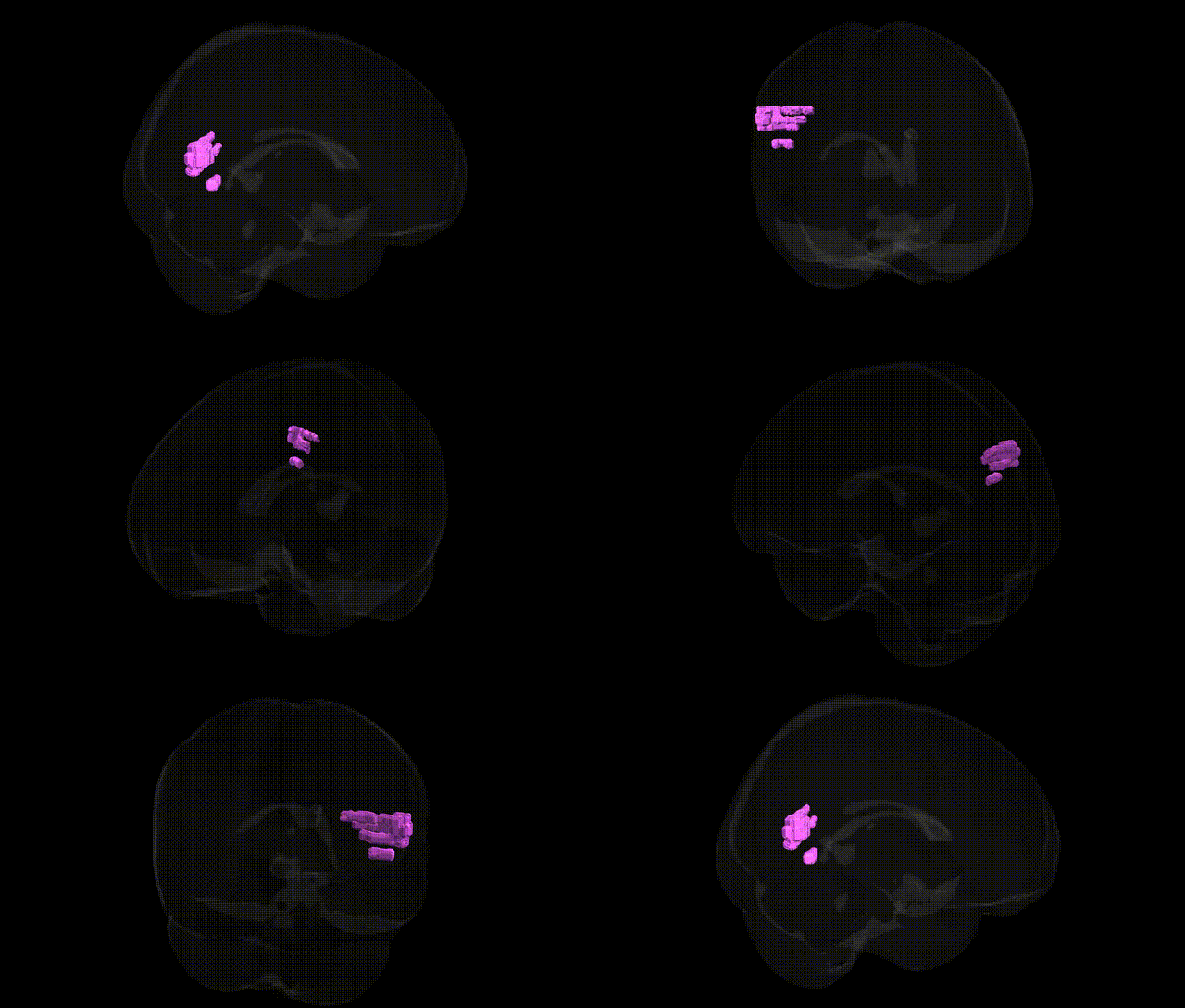
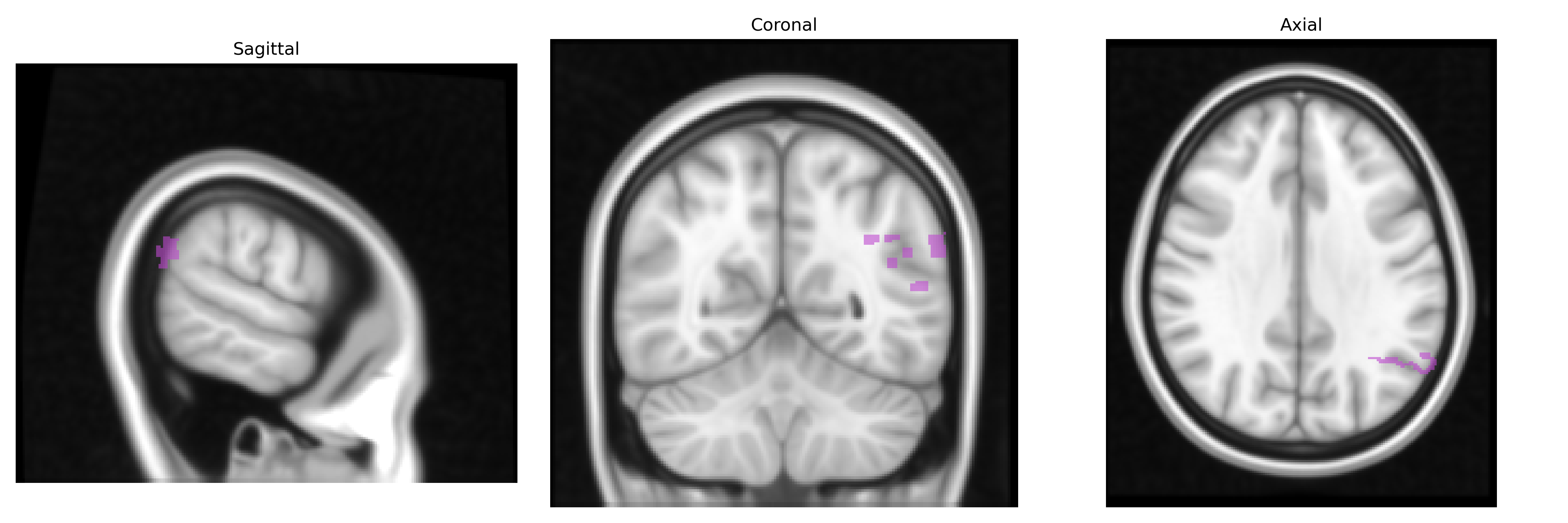
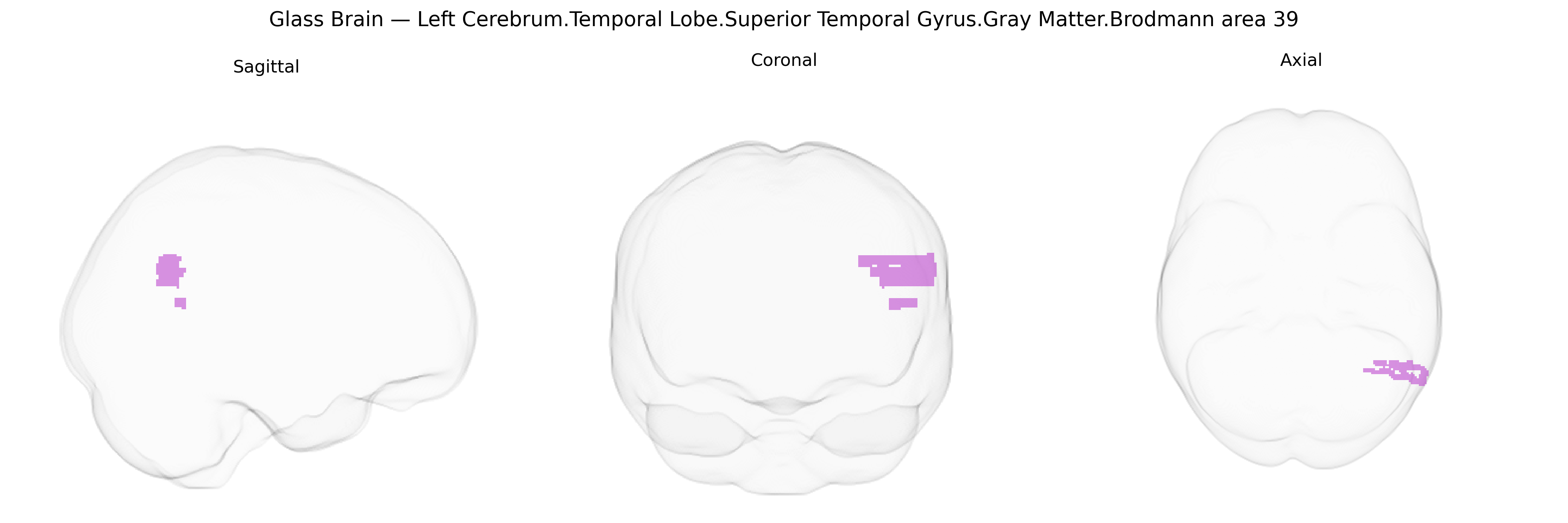
The bilateral Left Cerebrum.Temporal Lobe.Superior Temporal Gyrus.Gray Matter.Brodmann area 39 corresponds primarily to the left angular gyrus region situated at the junction of the temporal, parietal, and occipital lobes, though Talairach-based labels may vary slightly in precise gyral assignment. Functionally, Brodmann area 39 is a key multimodal association cortex involved in language processing (including reading and writing), semantic integration, number processing, spatial cognition, theory of mind, and aspects of memory retrieval. It receives and integrates input from visual, auditory, and somatosensory areas, supporting higher-order conceptual and symbolic processing. In the left hemisphere, this region is strongly associated with the dominant language network and can be implicated in aphasic symptoms and alexia when damaged. There is no direct Wikipedia article for this exact Talairach label; a closely related structure is the Angular gyrus.
The bilateral left superior temporal gyrus gray matter in Brodmann area 39 (angular/supramarginal border region of the temporoparietal junction) has been implicated in multiple genetically influenced cognitive and neuropsychiatric phenotypes: imaging–genetics and ENIGMA consortia studies show common variants near genes involved in neuronal development and synaptic plasticity (for example, MIR137, GRIN2B, SDC3, and genes in the Wnt and axon guidance pathways) associated with cortical thickness and surface area in this region, and polygenic scores for educational attainment and general cognitive ability correlate with structural variation in BA39. GWAS of reading and language-related traits, including dyslexia and specific language impairment, have linked variants in and around genes such as KIAA0319, DCDC2, and CNTNAP2 to altered structure and function in posterior superior temporal and angular gyrus territories, consistent with BA39’s role in phonological processing and semantic integration. Large-scale schizophrenia and bipolar disorder GWAS (e.g., implicating loci in CACNA1C, ZNF804A, and complement component C4 pathways) show convergent effects on temporoparietal cortical thickness and gray matter volume, including superior temporal and inferior parietal regions overlapping BA39, while autism spectrum disorder genetic risk (e.g., variants in SHANK3, NRXN1, and 16p11.2 CNVs) has been associated with atypical development of temporoparietal regions that support social cognition and language. Additional associations include Alzheimer’s disease risk loci (such as APOE ε4 and CLU) that predict accelerated atrophy in posterior temporal–parietal cortex encompassing BA39, and GWAS of depression and anxiety that identify polygenic influences on superior temporal and temporoparietal morphology, suggesting that BA39 serves as a convergence zone where diverse neurodevelopmental, neuropsychiatric, and neurodegenerative genetic risks manifest in structural and functional brain differences.
Overview generated by GPT-4o (2026).
Region ID: 708
Hemisphere: bilateral
Atlas: Talairach labels 1mm
Full Quality Version: Download MP4
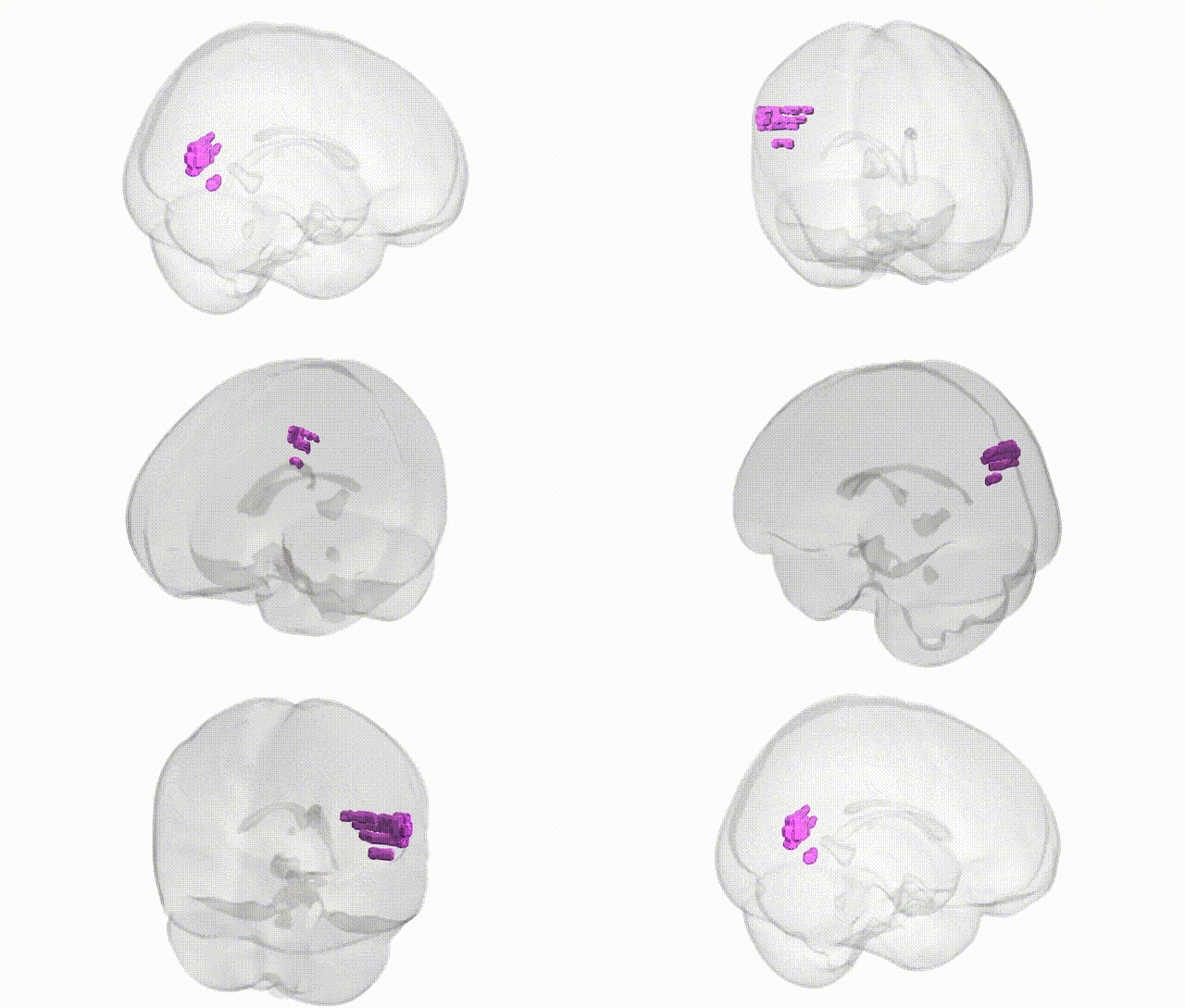
Full Quality Version: Download MP4
Wali Sidiqyar*, Gaurav Rudravaram*, Elyssa M. McMaster, Trent M. Schwartz, Adam M. Saunders, Kurt G. Schilling, Bennett A. Landman "Introducing SPINS: A Shared Public Visualization Library of Neuroanatomical Structures." Medical Imaging with Deep Learning- short paper
This resource is licensed under CC0 1.0 Universal (Public Domain).