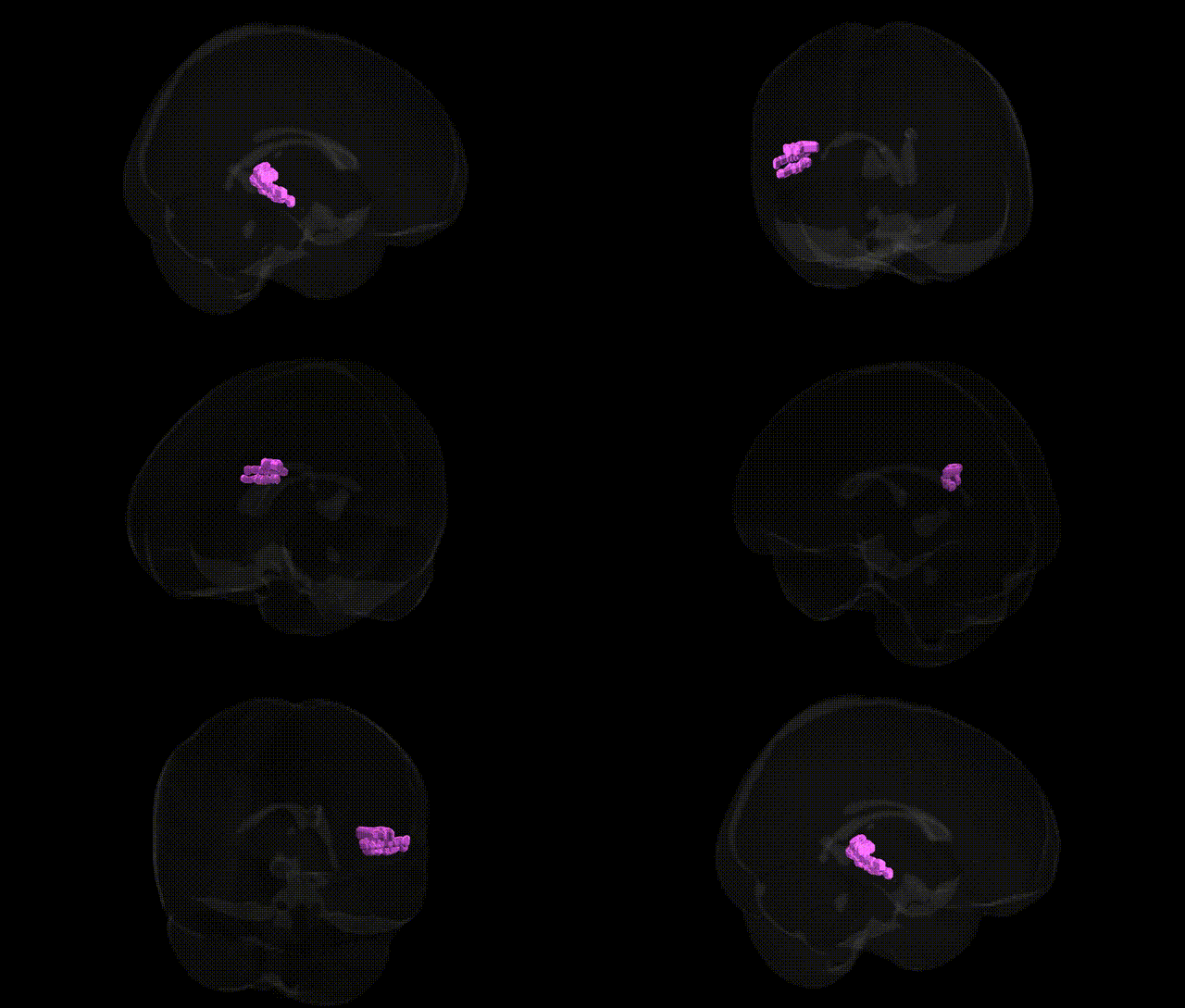
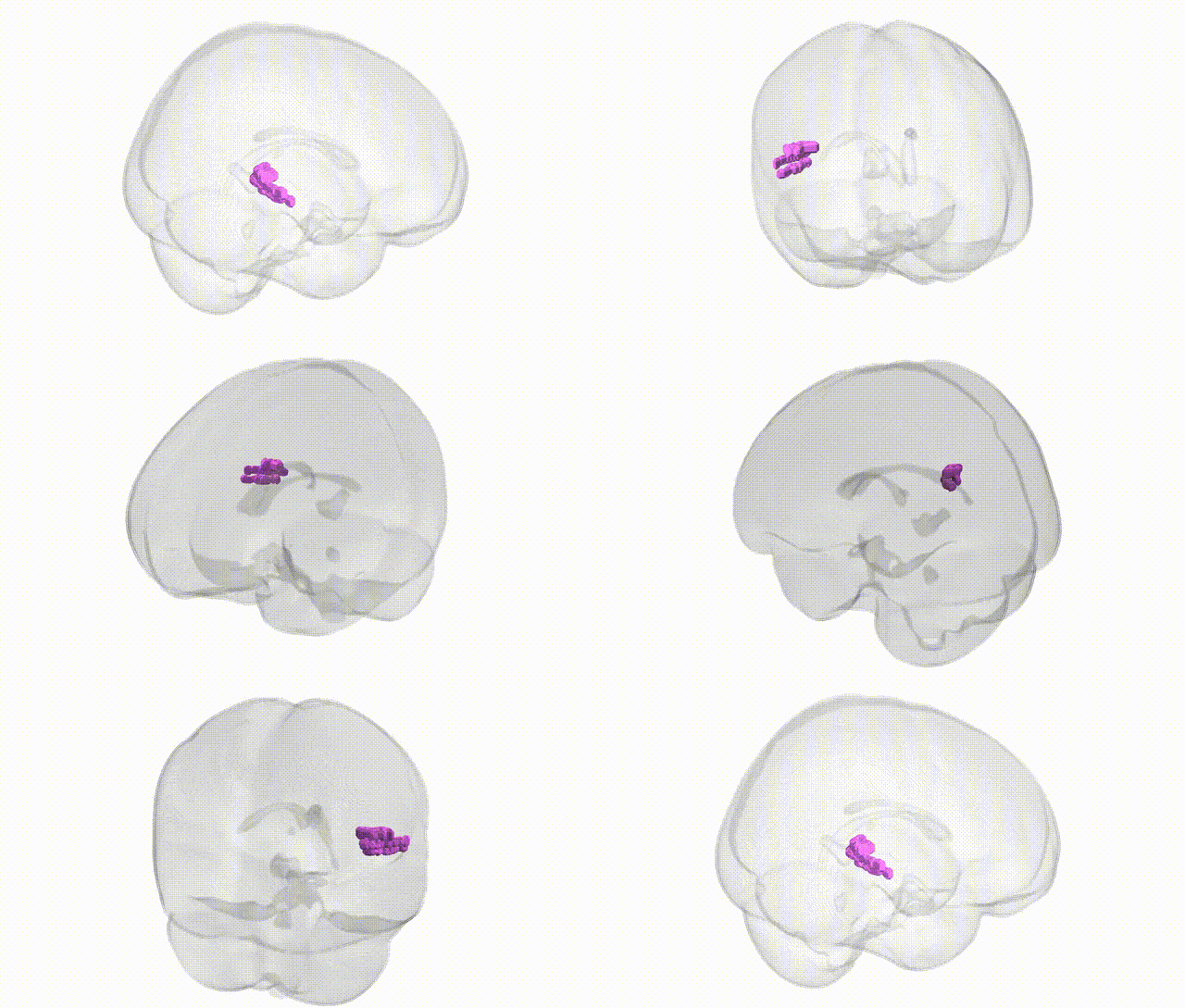
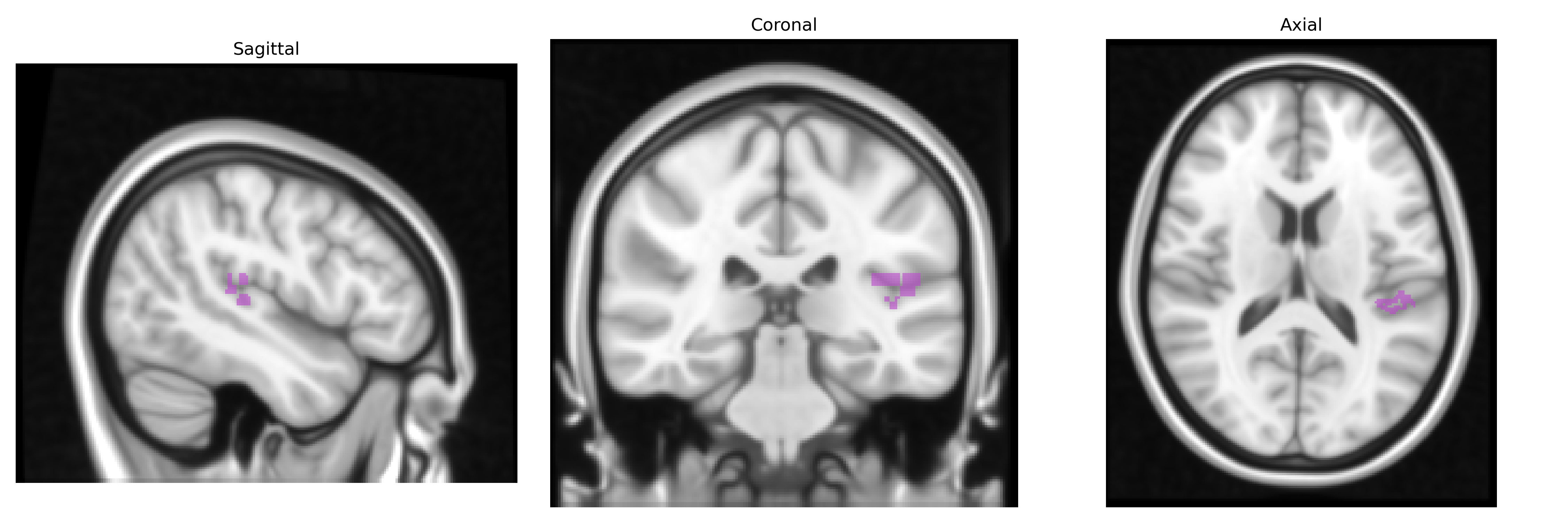
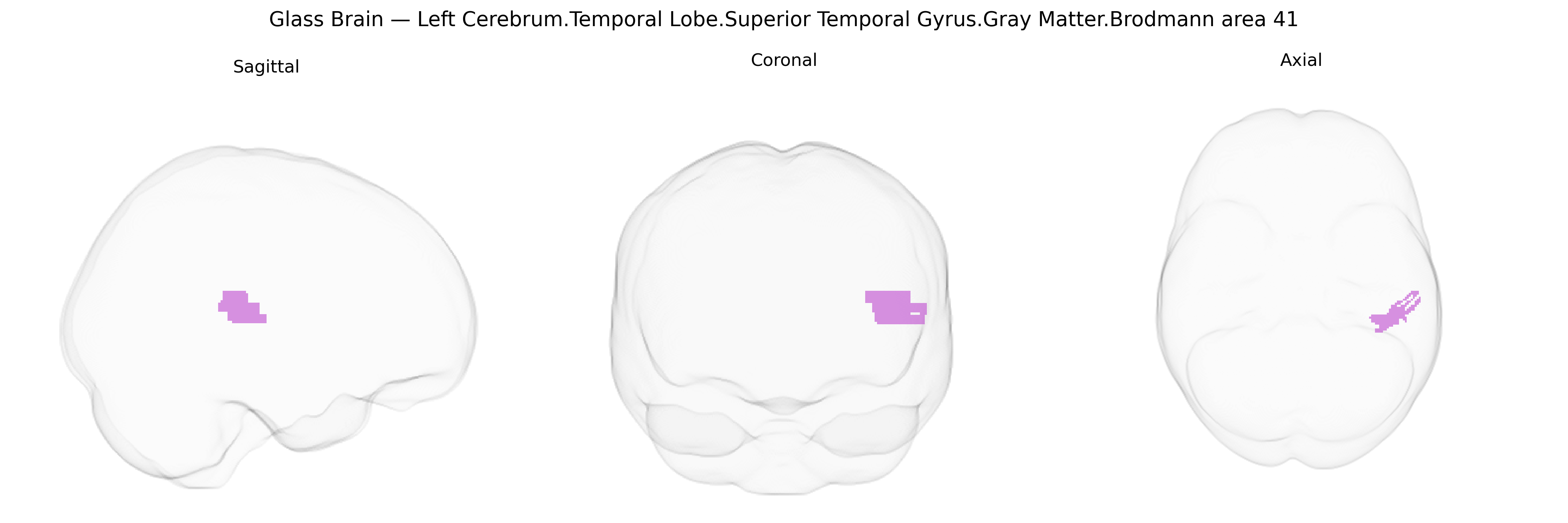
The bilateral Left Cerebrum.Temporal Lobe.Superior Temporal Gyrus.Gray Matter.Brodmann area 41 corresponds to the primary auditory cortex located in the transverse portion of the superior temporal gyrus (Heschl’s gyrus) within the temporal lobe. This region is a key entry point for auditory information relayed from the medial geniculate nucleus of the thalamus and is involved in the initial cortical processing of sound features such as frequency, intensity, and temporal patterns. Cytoarchitectonically, Brodmann area 41 is characterized by a granular appearance with a well-developed layer IV, reflecting its role as a primary sensory area, and it forms part of a broader auditory network that includes adjacent auditory association cortices in Brodmann areas 42 and 22. There is no direct link for “Brodmann area 41,” but it is encompassed within the Primary auditory cortex.
The bilateral left superior temporal gyrus gray matter in Brodmann area 41 (primary auditory cortex) has been implicated in several genetic and GWAS-based associations, particularly involving language, auditory processing, and neuropsychiatric traits. Twin and imaging-genetics studies show high heritability of superior temporal gyrus volume and cortical thickness, with variants in genes such as FOXP2, CNTNAP2, KIAA0319, and DCDC2 associated with structural and functional differences in this and adjacent temporal regions, especially in the context of speech and language disorders and developmental dyslexia. Large-scale GWAS from consortia like ENIGMA and UK Biobank have identified multiple common variants influencing temporal lobe morphology, including loci near genes involved in neuronal development, synaptic function, and cortical patterning (e.g., MIR137, GRIN2B, and other neurodevelopmental genes), some of which overlap with risk loci for schizophrenia, autism spectrum disorder, and major depression, conditions in which altered superior temporal gyrus volume, asymmetry, or activation is frequently observed. Additional associations include links between temporal lobe structural variation and cognitive traits such as general intelligence, verbal ability, and working memory, as well as auditory hallucinations in psychotic disorders, where genetic risk variants for schizophrenia appear to influence morphology and connectivity in primary and secondary auditory cortex, encompassing Brodmann area 41.
Overview generated by GPT-4o (2026).
Region ID: 672
Hemisphere: bilateral
Atlas: Talairach labels 1mm
Full Quality Version: Download MP4
Full Quality Version: Download MP4
Wali Sidiqyar*, Gaurav Rudravaram*, Elyssa M. McMaster, Trent M. Schwartz, Adam M. Saunders, Kurt G. Schilling, Bennett A. Landman "Introducing SPINS: A Shared Public Visualization Library of Neuroanatomical Structures." Medical Imaging with Deep Learning- short paper
This resource is licensed under CC0 1.0 Universal (Public Domain).