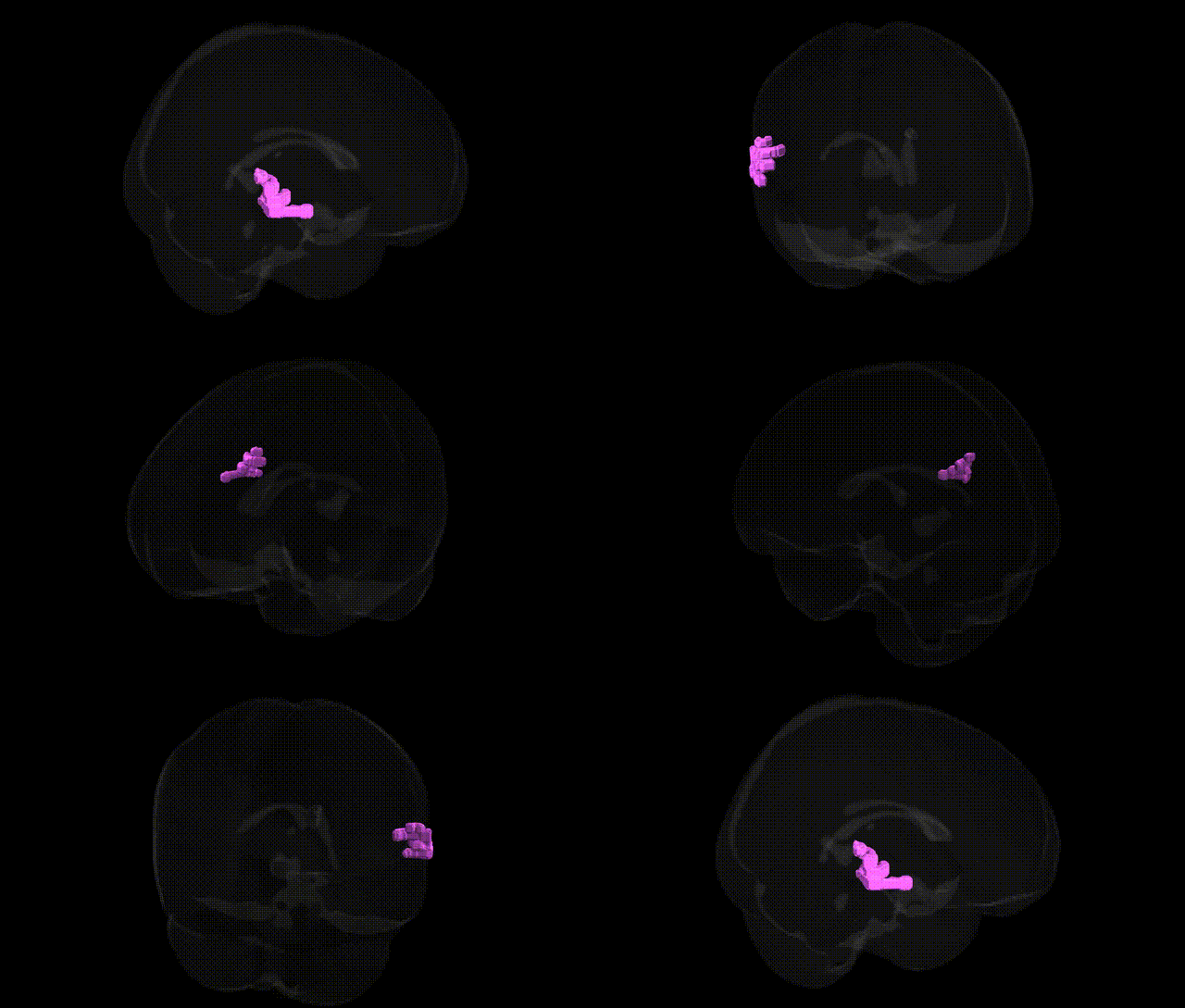
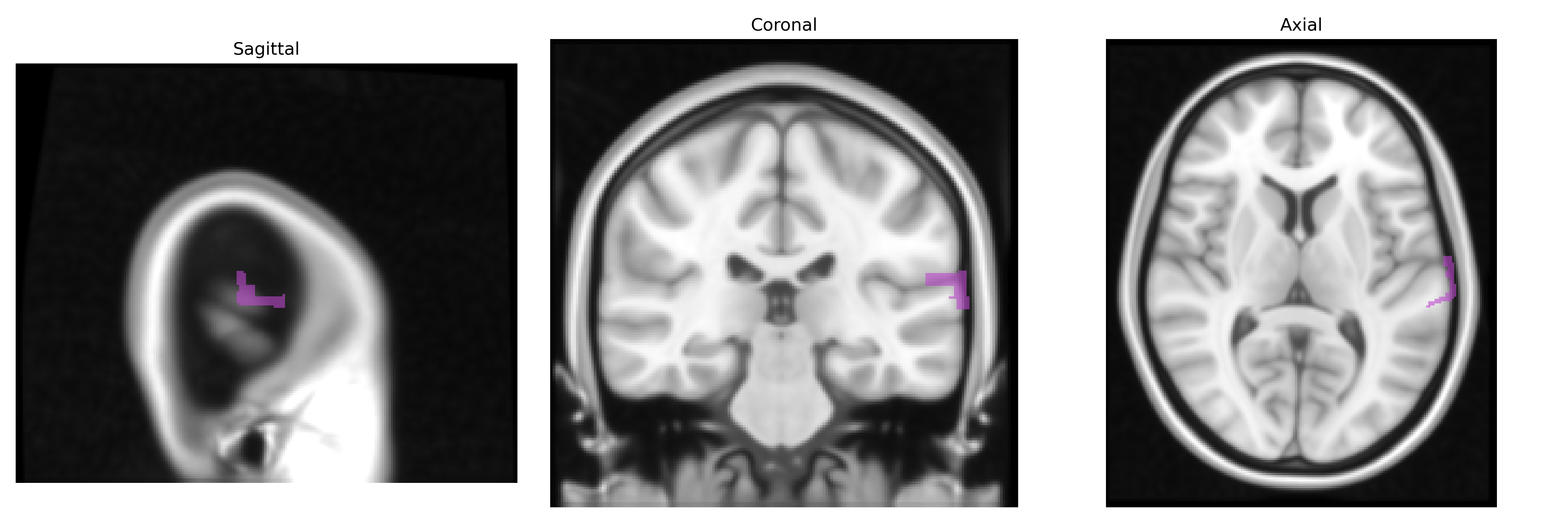
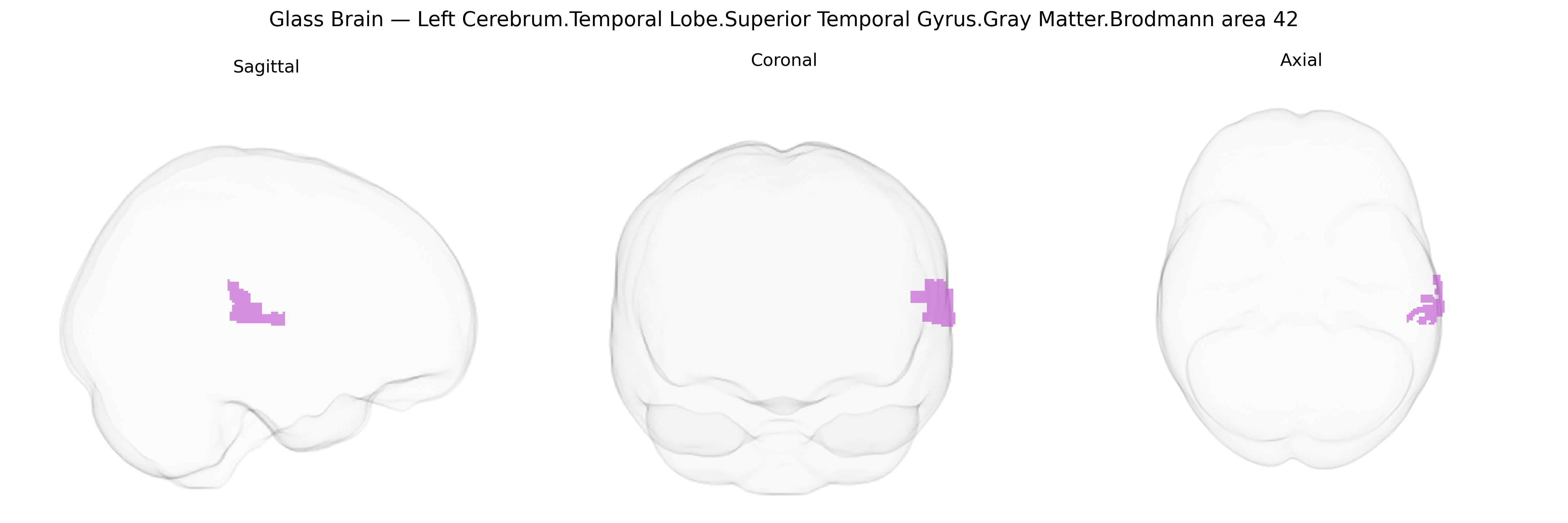
The bilateral Left Cerebrum.Temporal Lobe.Superior Temporal Gyrus.Gray Matter.Brodmann area 42 corresponds to a cytoarchitectonic field located on the superior temporal gyrus of the temporal lobe, bordering primary auditory cortex (Brodmann area 41) and adjoining higher-order auditory association areas such as Brodmann area 22. This region is part of the auditory cortex and is involved in processing complex acoustic features, including aspects of sound frequency, intensity, and temporal patterns that contribute to speech and language perception. In the Talairach 1 mm atlas, it is defined by its topographic position within the superior temporal gyrus gray matter of the left cerebrum, and functionally it participates in early stages of auditory information integration and transfer to more anterior and posterior temporal association cortices for higher-level linguistic and semantic processing. There is no direct link for Brodmann area 42; a related structure is Auditory cortex.
Genetic associations involving the bilateral left superior temporal gyrus (STG) gray matter in Brodmann area 42—a core auditory and language-processing region—emerge from GWAS of brain structure, language abilities, and neuropsychiatric disorders: common variants in genes regulating neurodevelopment and synaptic function (e.g., FOXP2, CNTNAP2, DCDC2, KIAA0319) have been repeatedly linked to language and reading abilities, dyslexia, and altered STG morphology; large-scale imaging-genetics consortia (such as ENIGMA and UK Biobank studies) show that polygenic scores for educational attainment, cognitive ability, and schizophrenia are associated with cortical thickness and surface area in superior temporal regions, including BA42; schizophrenia, autism spectrum disorder, and specific language impairment display convergent genetic risk in pathways that influence superior temporal structure and connectivity, with loci in or near genes such as NRG1, GRIN2A, and various calcium-channel and synaptic genes associated with auditory processing and hallucination-related activity in STG; and auditory cortex volume and function in this area have also been linked to genetic variants influencing hearing, musical aptitude, and speech perception, indicating that BA42 serves as a structural and functional hub where polygenic influences on language, cognition, and psychosis-related traits converge.
Overview generated by GPT-4o (2026).
Region ID: 674
Hemisphere: bilateral
Atlas: Talairach labels 1mm
Full Quality Version: Download MP4
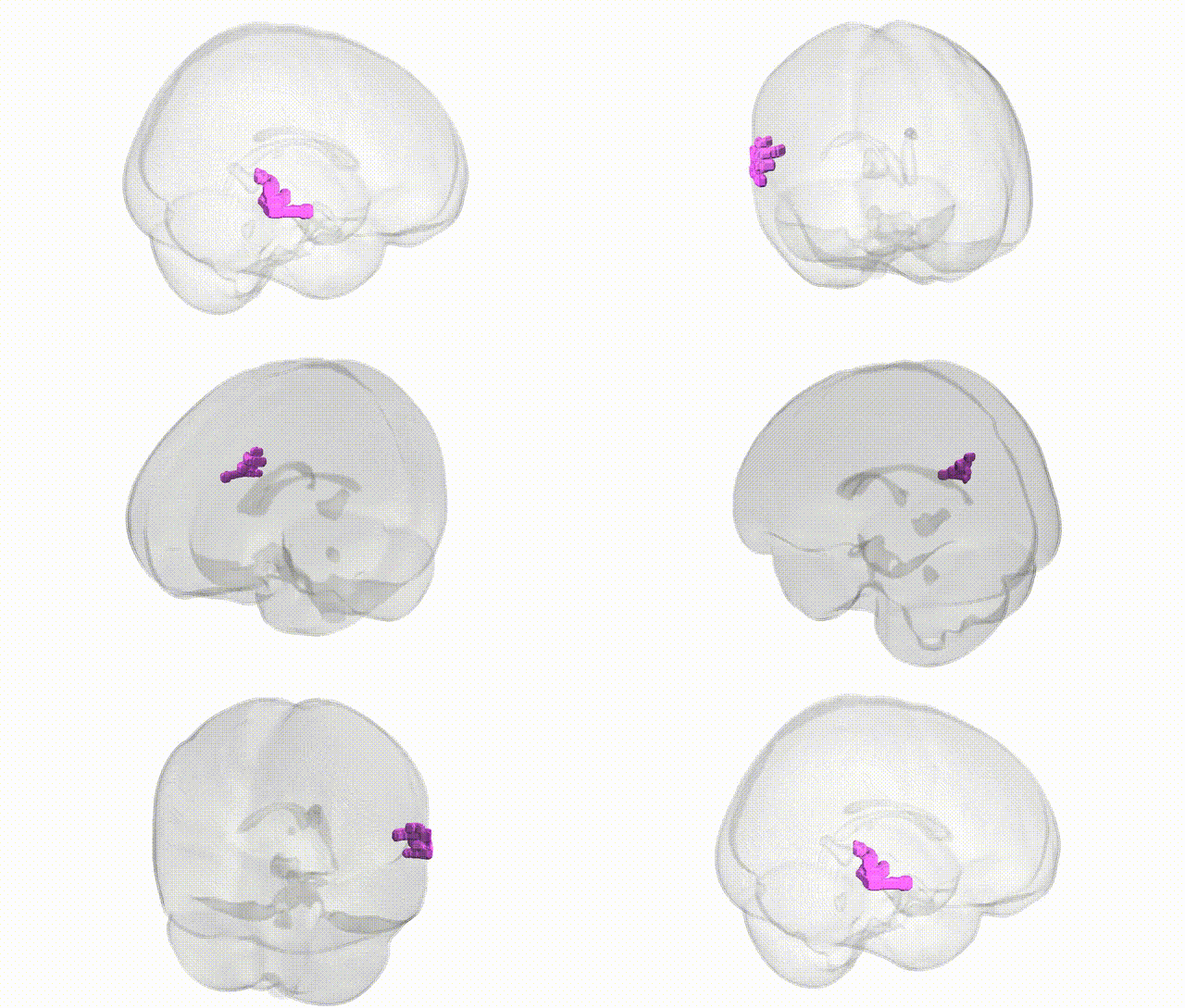
Full Quality Version: Download MP4
Wali Sidiqyar*, Gaurav Rudravaram*, Elyssa M. McMaster, Trent M. Schwartz, Adam M. Saunders, Kurt G. Schilling, Bennett A. Landman "Introducing SPINS: A Shared Public Visualization Library of Neuroanatomical Structures." Medical Imaging with Deep Learning- short paper
This resource is licensed under CC0 1.0 Universal (Public Domain).