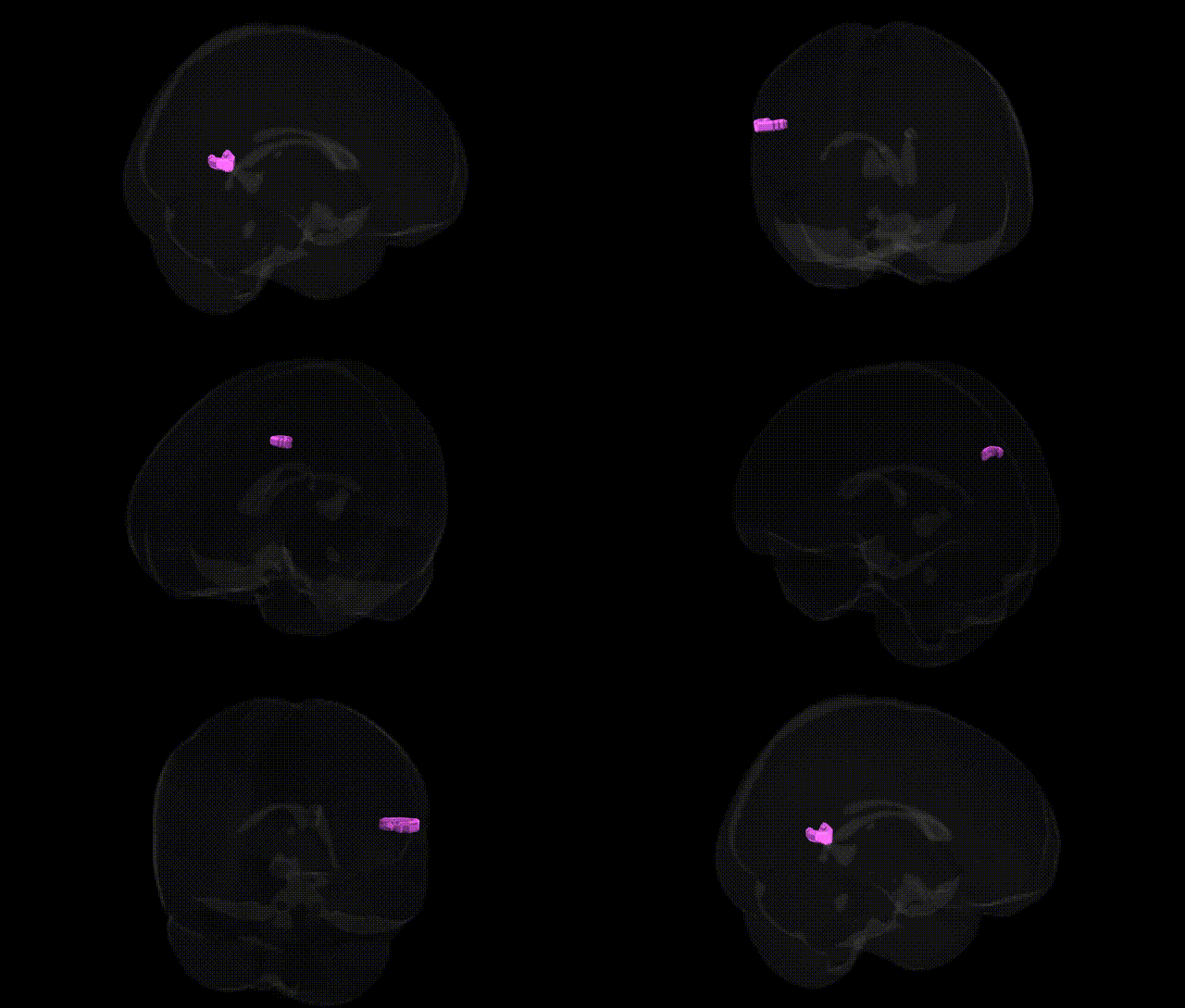
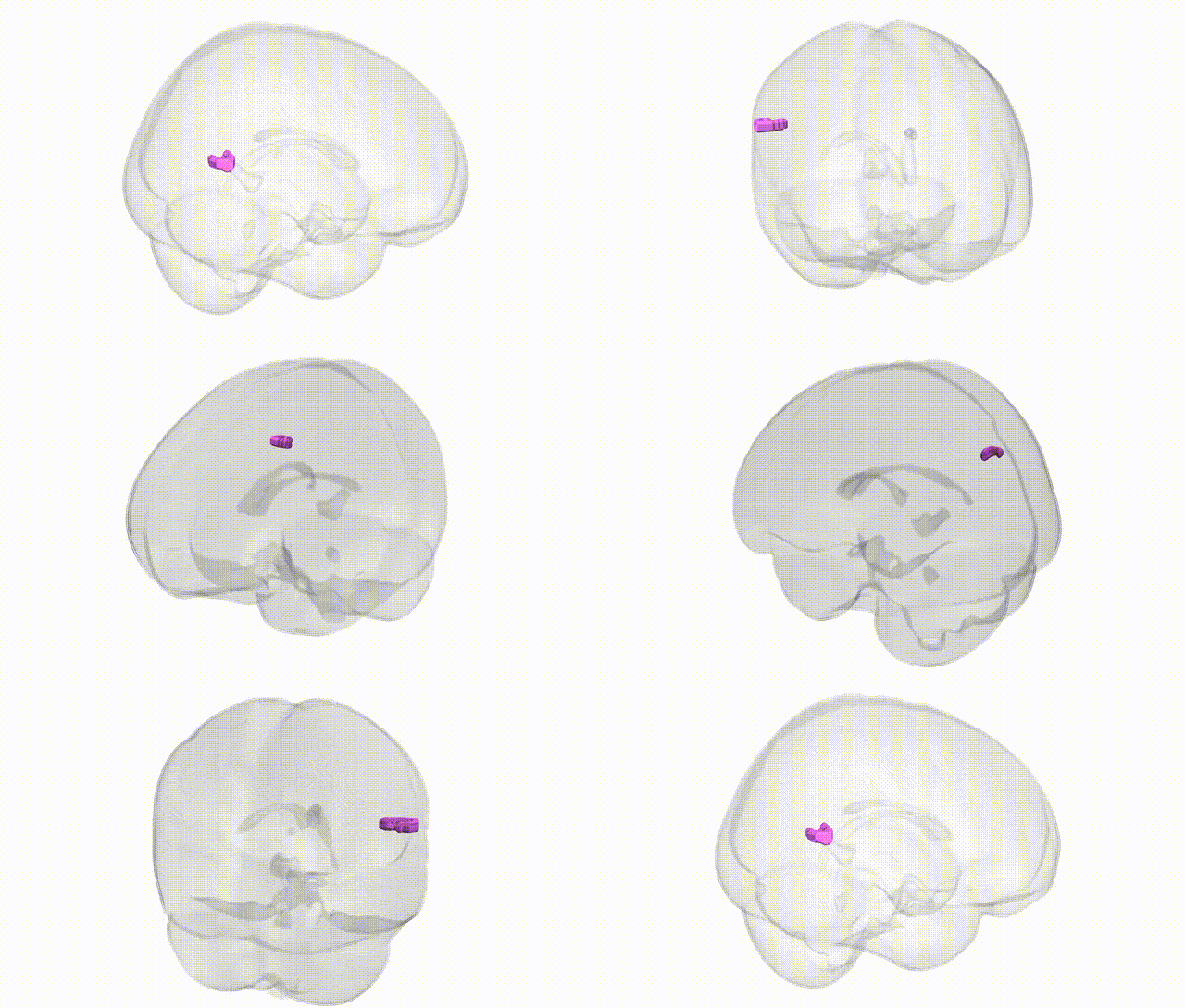
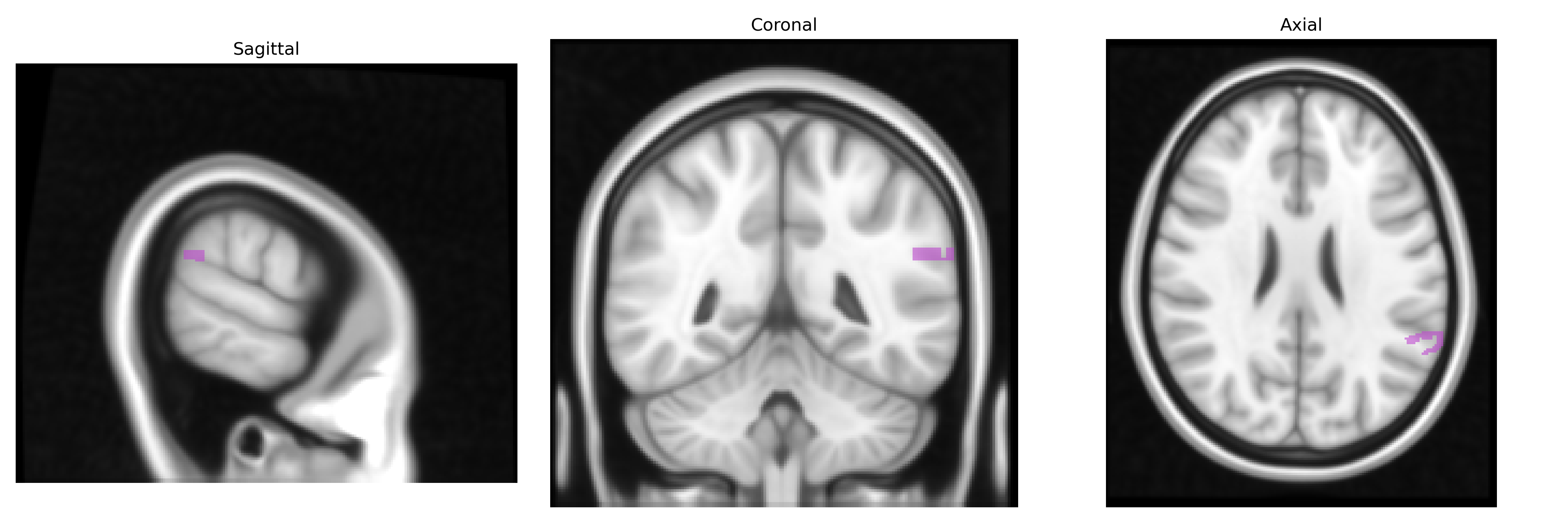
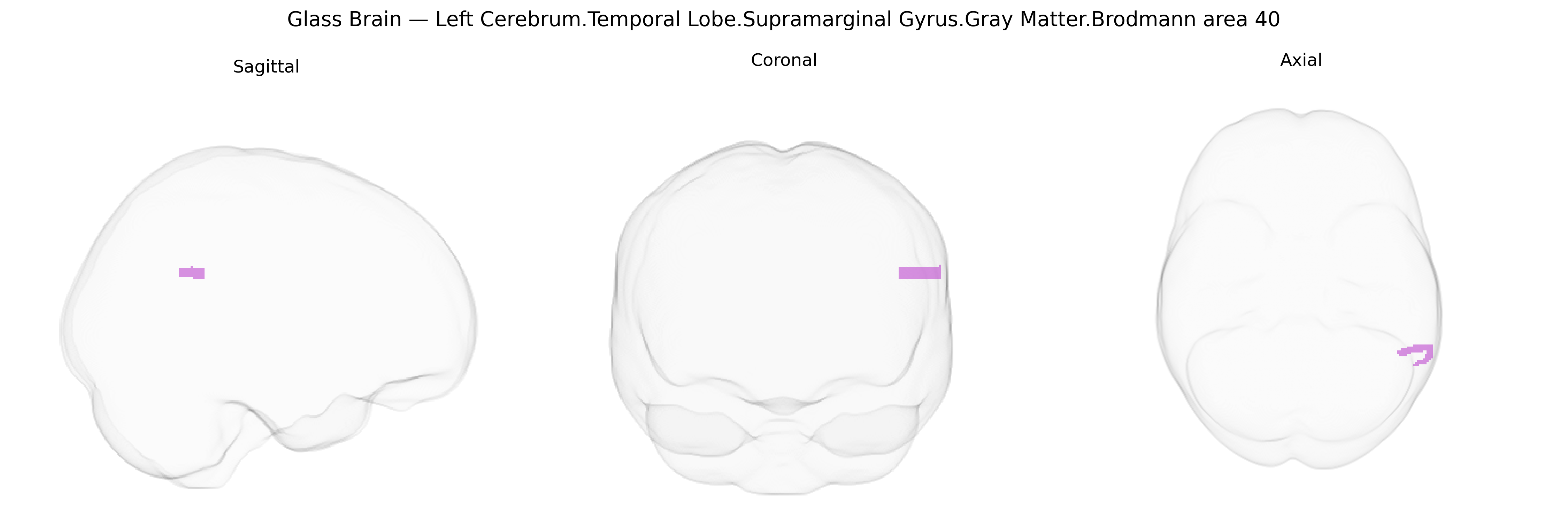
The bilateral Left Cerebrum.Temporal Lobe.Supramarginal Gyrus.Gray Matter.Brodmann area 40 corresponds to cortical territory in the inferior parietal lobule bordering the posterior superior temporal region, localized using the Talairach 1 mm atlas to the supramarginal gyrus portion of Brodmann area 40. This region is associated with multimodal integration of auditory, somatosensory, and visual information and plays key roles in language processing (particularly phonological and semantic aspects), praxis, and aspects of spatial attention. Functionally, BA40 within the supramarginal gyrus contributes to speech perception and production, working memory for verbal material, and the mapping of sounds to articulatory codes, and it is implicated in apraxia and language disorders when lesioned. There is no direct link for “Left Cerebrum.Temporal Lobe.Supramarginal Gyrus.Gray Matter.Brodmann area 40”; a related structure is the Supramarginal gyrus.
The left supramarginal gyrus (Brodmann area 40) has been repeatedly implicated in genetic studies of language, reading and writing disorders, and higher-order cognitive traits, with GWAS and imaging-genetics work linking variation in this region’s gray matter structure and function to multiple loci and pathways rather than a single dominant gene. Common variants near FOXP2, DCDC2, KIAA0319, CNTNAP2, and ROBO1—genes involved in neuronal migration, axon guidance, and synaptic plasticity—have been associated with structural or functional differences in left temporoparietal language regions that encompass BA40, and with phenotypes such as developmental dyslexia, specific language impairment, and speech-sound disorder. Large imaging-genetics consortia (e.g., ENIGMA) have reported heritable variation in cortical thickness and surface area of the supramarginal gyrus, identifying associations with loci near genes involved in neurodevelopment and cortical patterning (such as HMGA2, MIR2113, and others), while polygenic scores for educational attainment, general cognitive ability, and reading ability show correlations with BA40 morphology and activation during phonological and semantic tasks. In neuropsychiatric GWAS, risk variants for schizophrenia, autism spectrum disorder, and attention-deficit/hyperactivity disorder—particularly those affecting synaptic genes (e.g., NRXN1, GRIN2A, and other glutamatergic and GABAergic pathway genes)—have been linked to altered structure or connectivity of the left supramarginal gyrus, consistent with observed deficits in language, social cognition, and working memory. Moreover, stroke and aphasia genetics indicate that polymorphisms in genes related to vascular regulation and neuroinflammation (such as those in the nitric oxide and cytokine pathways) can modulate lesion patterns and recovery trajectories involving left temporoparietal cortex, including BA40, thereby influencing susceptibility to conduction aphasia and other supramarginal gyrus–related syndromes.
Overview generated by GPT-4o (2026).
Region ID: 869
Hemisphere: bilateral
Atlas: Talairach labels 1mm
Full Quality Version: Download MP4
Full Quality Version: Download MP4
Wali Sidiqyar*, Gaurav Rudravaram*, Elyssa M. McMaster, Trent M. Schwartz, Adam M. Saunders, Kurt G. Schilling, Bennett A. Landman "Introducing SPINS: A Shared Public Visualization Library of Neuroanatomical Structures." Medical Imaging with Deep Learning- short paper
This resource is licensed under CC0 1.0 Universal (Public Domain).